
ZOIDII RESOURCES
The Complete Maintenance Manager's Guide
Your comprehensive resource for mastering maintenance management, from daily operations to strategic leadership. Everything you need to optimize uptime, reduce costs, and lead high-performing teams.
01 — FOUNDATION
Role Definition & Overview
Maintenance management is one of those roles that only gets noticed when something goes wrong. A conveyor belt seizes up at 2 AM, a critical HVAC system fails during a heat wave, or a compliance audit reveals gaps that could cost six figures in fines. The maintenance manager who prevented those disasters? Invisible. The one who didn't? Suddenly very visible, and not in a good way.
In reality, a Maintenance Manager is the strategic and operational leader responsible for ensuring that all physical assets, equipment, and facilities operate at peak performance with minimal downtime. This role sits at the critical intersection of operations, safety, finance, and strategic planning.
The best maintenance managers operate like air traffic controllers, orchestrating dozens of moving parts while keeping planes from colliding. They balance reactive firefighting with proactive planning, manage teams that often work opposite shifts, and justify budgets for problems that haven't happened yet. It's a role that demands technical expertise, people skills, and business acumen in roughly equal measure.
Core Purpose
A maintenance manager is responsible for keeping an organization's physical assets operational, safe, and cost-effective. You're not just fixing things when they break—you're preventing failures before they happen, extending equipment lifespan, and ensuring that production or operations never miss a beat due to equipment issues.
Strategic Impact
Your decisions directly impact the bottom line. Every hour of prevented downtime translates to revenue protection. Every optimized maintenance schedule reduces unnecessary spending. You're a guardian of operational continuity and a driver of organizational efficiency.
Why This Role Matters
In manufacturing, unplanned downtime costs an average of $260,000 per hour. In facilities management, poor maintenance leads to 25-30% higher energy costs. Maintenance Managers are the frontline defense against these massive losses, making this one of the most financially impactful roles in any organization that depends on physical assets.
The term "physical assets" might include: manufacturing equipment worth millions , building systems that affect hundreds of occupants, vehicle fleets spanning multiple states, or specialized medical devices where failure isn't just expensive but dangerous.
02 — OPERATIONS
Key Responsibilities & Daily Activities
Strategic Responsibilities
- Develop and implement comprehensive maintenance strategies (preventive, predictive, reactive)
- Managing maintenance staff, including hiring, training, and scheduling
- Create annual maintenance budgets, forecast capital expenditure needs, and control spends
- Establish maintenance KPIs and continuously improve performance metrics
- Design and optimize preventive maintenance schedules for all critical assets
- Evaluate and recommend equipment upgrades, replacements, or major overhauls
- Develop long-term asset management strategies aligned with business objectives
- Ensuring compliance with safety regulations and industry standards
The scope varies dramatically by industry. A maintenance manager at a food processing plant deals with sanitation requirements that don't exist in commercial real estate. Someone managing hospital facilities faces regulatory scrutiny that would seem extreme in a warehouse setting. Understanding your specific industry's requirements is the first step toward effectiveness.
Daily Operational Tasks
The maintenance manager's day rarely follows a predictable pattern. That said, certain activities form the backbone of the role, even when emergencies disrupt the schedule.
Morning Priorities
Review overnight reports, assess emergency repairs, prioritize work orders, conduct safety briefings, allocate resources and team assignments
Team Leadership
Coordinate technician assignments, provide technical guidance, conduct training sessions, manage contractor relationships
Work Order Management
Approve and prioritize work requests, monitor work order completion rates, ensure proper documentation, manage backlog effectively
Vendor Management
Coordinate with external service providers, manage spare parts inventory, negotiate contracts, ensure service level agreements are met
Performance Monitoring
Track equipment performance, review maintenance metrics, identify trends and patterns, implement corrective actions
Reporting & Communication
Update stakeholders on equipment status, report on maintenance costs, communicate downtime impacts, present improvement initiatives
The Balance: Reactive vs. Preventive
While your goal is to minimize reactive maintenance, the reality is managing both. Best-in-class organizations operate with 80-90% planned maintenance and only 10-20% reactive. Your daily challenge is shifting the balance toward preventive while ensuring rapid response capability for emergencies.
03 — TECHNOLOGIES
Essential Technologies & Software
Modern maintenance management is technology-driven. The right tools transform you from a reactive firefighter to a strategic asset manager.
Computerized Maintenance Management Systems , known as CMMS, have become the central nervous system of modern maintenance operations. These platforms track work orders, schedule preventive maintenance, manage parts inventory, and generate the reports that justify budget requests.
Core Technology Stack
CMMS/EAM Systems
Purpose: Computerized Maintenance Management System—your central hub for all maintenance activities.
Key Players: Zoidii, SAP, IBM Maximo, Infor EAM, Fiix, UpKeep, MaintainX, Limble
What It Does: Work order management, preventive maintenance scheduling, asset tracking, inventory management, reporting and analytics
IoT Sensors & Monitoring
Purpose: Real-time equipment condition monitoring for predictive maintenance.
Technologies: Vibration sensors, temperature monitors, oil analysis sensors, ultrasonic detectors, flow meters
Benefits: Early failure detection, data-driven maintenance decisions, reduced unplanned downtime
Mobile Maintenance Apps
Purpose: Enable technicians to access work orders, update status, and document work from anywhere.
Features: Offline capability, photo/video documentation, barcode scanning, GPS tracking, digital checklists
Impact: Faster response times, better documentation, improved technician productivity
Predictive Analytics
Purpose: Machine learning algorithms that predict equipment failures before they occur.
Tools: Azure IoT, AWS IoT, IBM Watson IoT, Uptake, C3 AI
Capabilities: Failure prediction, optimal maintenance timing, remaining useful life calculations
Asset Management Software
Purpose: Comprehensive lifecycle management of all physical assets.
Features: Asset registry, depreciation tracking, warranty management, performance history, replacement planning
Inventory Management
Purpose: Optimize spare parts availability while minimizing carrying costs.
Capabilities: Automated reordering, par level optimization, parts usage tracking, supplier management
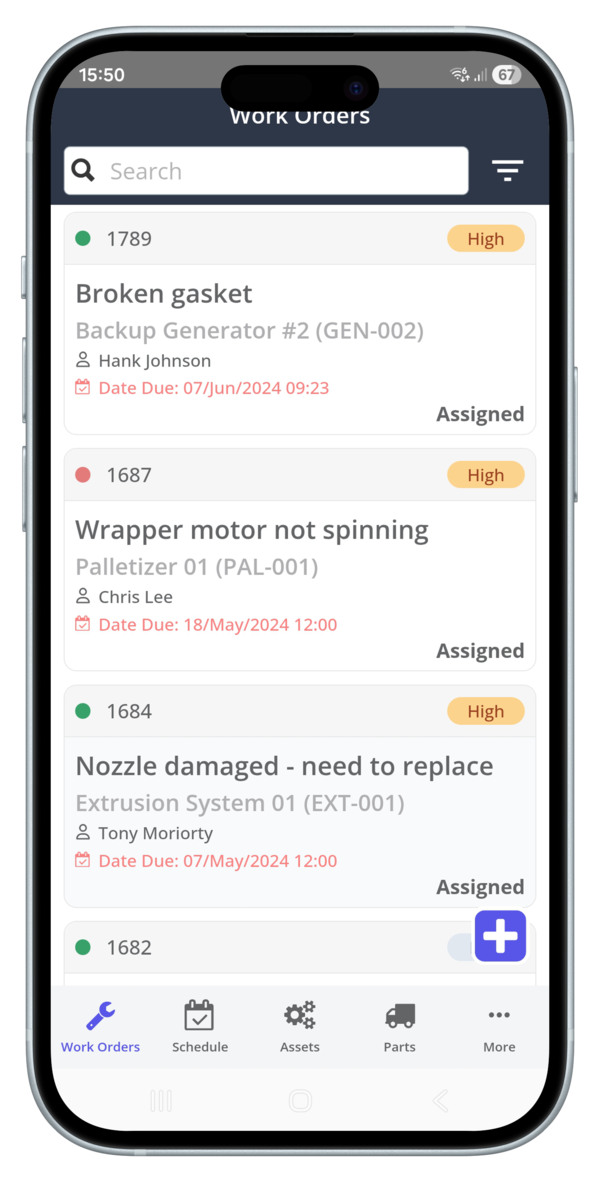
The integration between these systems determines their value. When your vibration sensors automatically generate work orders in your CMMS, you've created something powerful. When they exist as separate silos requiring manual data transfer, you've created extra work.
Training deserves emphasis here. Technology only helps if your team actually uses it. Budget for ongoing training, not just initial implementation. Designate power users who can help colleagues troubleshoot and get comfortable with new tools.
Technology Integration Strategy
Don't try to implement everything at once. Start with a solid CMMS foundation, then layer on mobile capabilities, then IoT monitoring for critical assets, and finally predictive analytics as your data maturity grows. Integration between systems is crucial—ensure your chosen tools can communicate effectively.
Emerging Technologies to Watch
04 — MEASUREMENT
Critical KPIs & Metrics
Measuring maintenance performance requires balancing multiple metrics that sometimes conflict. Focusing exclusively on one number creates blind spots that eventually cause problems.
You can't improve what you don't measure. The key is selecting metrics that align with your organization's priorities and reviewing them consistently. Monthly metric reviews with your team create accountability and surface problems before they become crises. Quarterly reviews with leadership demonstrate value and support budget requests.
The following metrics provide visibility into maintenance performance and guide strategic decisions.
The Essential KPIs
AVAILABILITY
Overall Equipment Effectiveness (OEE)
RELIABILITY
Mean Time Between Failures (MTBF)
PRODUCTIVITY
Mean Time To Repair (MTTR)
PLANNING
Planned Maintenance Percentage (PMP)
EFFICIENCY
Schedule Compliance
COST
Maintenance Cost Ratio
Detailed Metric Breakdown
- Overall Equipment Effectiveness (OEE): Measures total productive time. Calculated as Availability × Performance × Quality. World-class target: 85%+
- Mean Time Between Failures (MTBF): Average operating time between failures. Higher is better. Track by asset class to identify problematic equipment.
- Mean Time To Repair (MTTR): Average time to complete a repair. Lower is better. Benchmark: 2-4 hours for routine repairs.
- Planned Maintenance Percentage: Ratio of planned to total maintenance work. Target: 80-90% planned, 10-20% reactive.
- Schedule Compliance: Percentage of planned maintenance completed on time. Target: 90%+
- Maintenance Cost Ratio: Maintenance costs as a percentage of asset replacement value. Typical range: 2-5% annually
- Work Order Completion Rate: Percentage of work orders completed within target timeframe. Target: 95%+
- PM Compliance: Percentage of preventive maintenance tasks completed as scheduled. Target: 100%
- Emergency Maintenance Ratio:Emergency work as percentage of total work. Target: <5%
- Parts Availability: Percentage of time needed parts are available. Target: 95%+
- Maintenance Cost per Unit Produced: Total maintenance costs divided by production output. Track trends over time.
Leading vs. Lagging Indicators
Leading Indicators
Predictive measures that help prevent problems:
- PM compliance rate
- Work order backlog
- Predictive maintenance alerts
- Training hours per technician
Leading Indicators
Historical measures that show past performance:
- Actual downtime
- Maintenance costs
- Equipment failures
- Safety incidents
05 — METHODOLOGY
Best Practices & Methodologies
Maintenance Strategy Frameworks
Preventive Maintenance (PM)
Time-based or usage-based maintenance performed to prevent failures. Regular inspections, lubrication, adjustments, and parts replacement on a fixed schedule. Best for equipment with predictable wear patterns.
Predictive Maintenance (PdM)
Condition-based maintenance using real-time monitoring and analytics. Maintenance is performed only when indicators show degradation. Reduces unnecessary maintenance while preventing unexpected failures.
Reactive Maintenance
Run-to-failure approach where repairs are made after breakdown. Acceptable for non-critical equipment with low failure impact and when replacement costs are less than preventive maintenance costs.
Reliability Centered Maintenance (RCM)
Systematic approach to determining optimal maintenance strategy for each asset based on failure modes, consequences, and criticality. Ensures resources are allocated where they'll have the greatest impact.
Run to Failure
Run-to-failure maintenance (RTF) is a maintenance strategy that involves letting equipment or machinery run until a component fails.
Total Productive Maintenance (TPM)
Total Productive Maintenance (TPM) a holistic approach to physical asset management that seeks to achieve perfect production by involving all employees in maintaining and improving equipment performance.
Total Productive Maintenance (TPM) in Focus
A holistic approach that engages all employees in maintenance activities. When machine operators perform daily cleaning, lubrication, and inspection, they catch problems early and develop ownership over equipment condition. TPM requires cultural change but delivers impressive results when implemented fully. Eight pillars of TPM:
- Autonomous Maintenance: Operators perform routine maintenance tasks (cleaning, lubrication, inspections)
- Focused Improvement: Cross-functional teams eliminate losses and improve equipment effectiveness
- Planned Maintenance: Scheduled maintenance to prevent breakdowns
- Quality Maintenance: Focus on error-proofing and eliminating defects at source
- Early Equipment Management: Design maintenance-friendly equipment from the start
- Training and Education: Develop competent maintenance and operations staff
- Safety, Health, and Environment: Zero accidents and harmful environmental impacts
- Office TPM: Eliminate administrative waste and inefficiency
5S Methodology for Maintenance
SORT
Remove unnecessary items from workspace
SET IN ORDER
Organize tools and parts for easy access
SHINE
Keep workspace clean and conduct inspections
STANDARDIZE
Create consistent processes and procedures
SUSTAIN
Maintain discipline and continuous improvement
Implementing Best Practices
Start with critical assets and high-impact areas. Document current state, identify gaps, pilot improvements, measure results, and then scale successes. The key is continuous improvement—iterate and refine based on data and feedback.
06 - COMPETENCIES
Skills & Competencies
Success as a Maintenance Manager requires a unique blend of technical expertise, leadership capabilities, and business acumen. The best technician doesn't automatically make the best manager, a lesson many organizations learn the hard way. Technical knowledge forms the foundation, but successful maintenance managers need much broader skill sets.
Technical Skills
Mechanical & Electrical Knowledge
Deep understanding of equipment operation, troubleshooting, hydraulics, pneumatics, electrical systems, and control systems
CMMS Proficiency
Expert-level knowledge of maintenance management software, reporting capabilities, and system optimization
Root Cause Analysis
Ability to identify underlying causes of failures using tools like 5 Whys, Fishbone diagrams, and failure mode analysis
Data Analysis
Interpret maintenance metrics, identify trends, create meaningful reports, and make data-driven decisions
Leadership & Soft Skills
- Team Leadership: Motivate and develop technicians, manage performance, resolve conflicts, build high-performing teams
- Communication: Clearly convey technical information to non-technical stakeholders, write effective reports, present to executives
- Problem-Solving: Think critically under pressure, make quick decisions with incomplete information, balance competing priorities
- Project Management: Plan and execute maintenance projects, manage resources, meet deadlines and budgets
- Change Management: Lead organizational change, overcome resistance, implement new processes and technologies
- Negotiation: Negotiate with vendors, contractors, and internal stakeholders for resources and priorities
Business Acumen
Financial Skills
Budget development and management, cost-benefit analysis, ROI calculations, capital expenditure justification, variance analysis
Financial Skills
Budget development and management, cost-benefit analysis, ROI calculations, capital expenditure justification, variance analysis
Developing these skills requires intentional effort. Technical knowledge comes from hands-on experience and industry training. Leadership and communication skills often require formal education, mentorship, or deliberate practice. The managers who invest in their own development consistently outperform those who assume their technical background is sufficient.
07 - PROBLEM SOLVING
Common Challenges & Solutions
Every maintenance manager faces recurring challenges that test their skills and patience. Understanding these challenges and proven solutions accelerates your effectiveness.
Challenge: Budget Constraints
Issue: Insufficient funding for equipment, staff, or preventive maintenance programs
Solution: Build business cases with clear ROI data, prioritize critical assets, leverage predictive maintenance to optimize spending, and demonstrate the cost of downtime vs. prevention
Challenge: Reactive Firefighting
Issue: Constantly responding to emergencies with no time for preventive work
Solution: Implement PM schedules starting with critical assets, track reactive vs. planned work ratio, and gradually shift balance through data-driven prioritization
Challenge: Staff Shortages & Skill Gaps
Issue: Difficulty recruiting and retaining qualified technicians
Solution: Develop internal training programs, create career paths, improve working conditions, leverage contractors strategically, and cross-train team members
Challenge: Aging Equipment
Issue: Increasing failure rates and maintenance costs on old assets
Solution: Conduct asset lifecycle analysis, build replacement roadmap, implement condition monitoring, optimize maintenance for maximum remaining life
Challenge: Resistance to Change
Issue: Team members are resistant to new processes, technologies, or methods
Solution: Involve the team in planning, demonstrate quick wins, provide thorough training, communicate benefits clearly, and address concerns proactively
Challenge: Poor Communication
Issue: Disconnect between maintenance, operations, and management
Solution: Establish regular meetings, create transparent reporting systems, use shared metrics, and build cross-functional relationships
Challenge: Inadequate Data
Issue: Lack of historical maintenance records or equipment performance data
Solution: Implement CMMS immediately, focus on capturing forward data, conduct equipment assessments to establish a baseline, and prioritize critical asset documentation
Challenge: Conflicting Priorities
Issue: Operations pressure to skip maintenance for production demands
Solution: Demonstrate the cost of deferred maintenance, negotiate maintenance windows, align on shared metrics like OEE, and educate on long-term consequences
Challenge: Compliance & Safety
Issue: Maintenance work involves inherent risks and safety sometimes gets skipped
Solution: Use your CMMS to automatically schedule required inspections to generate the documentation auditors need, then compliance becomes routine rather than a scramble before inspections.
The Mindset Shift
The biggest challenge is often perception—moving from maintenance as a "necessary cost" to maintenance as a "strategic enabler." Your role includes continuously educating stakeholders on the value of proactive maintenance and building credibility through measurable results.
08 — ADVANCEMENT
Career Development Path
Maintenance management offers clear advancement opportunities for those who pursue them strategically. Maintenance managers can advance to director-level roles overseeing multiple facilities or larger operations. Some transition to related fields like reliability engineering, facilities management, or operations leadership. Others pursue specialized paths in areas like predictive maintenance technology or maintenance consulting.
Pathway to Maintenance Manager
- Entry Level: Maintenance Technician (2-5 years) - Hands-on equipment repair and maintenance
- Mid Level: Senior Technician or Maintenance Supervisor (3-5 years) - Lead small teams, specialized technical expertise
- Management: Maintenance Manager (5+ years in maintenance) - Strategic responsibility for all maintenance operations
- Senior Leadership: Director of Maintenance, Plant Manager, or VP of Operations - Multi-site responsibility, strategic asset management
Professional Certifications
CMRP
Certified Maintenance & Reliability Professional - Industry gold standard certification from SMRP. Covers maintenance management, reliability engineering, work management, and leadership.
CRL
Certified Reliability Leader - Advanced certification for senior practitioners. Focuses on strategic reliability, organizational development, and change leadership.
PMP
Project Management Professional - Valuable for managing large maintenance projects, shutdowns, and capital improvements.
CAM
Certified Apartment Maintenance Technician - For facilities and property maintenance professionals (industry-specific).
Continuous Learning
Stay current through industry conferences (SMRP, Reliability Conference), professional associations, online courses (LinkedIn Learning, Coursera), technical webinars, equipment manufacturer training, and peer networking.
Advancement Strategies
- Pursue certifications to demonstrate expertise and commitment
- Take on special projects to showcase leadership capabilities
- Develop expertise in emerging technologies (IoT, predictive maintenance, AI)
- Build strong cross-functional relationships with operations and finance
- Document and present measurable improvements and cost savings
- Mentor junior staff to develop leadership skills
- Consider lateral moves to gain diverse industry experience
09 — SPECIALIZATION
Industry-Specific Considerations
While core principles remain consistent, maintenance management varies significantly across industries.
Manufacturing
Focus: Maximizing uptime and OEE
Key Challenges: 24/7 operations, complex equipment, production pressure
Priorities: Predictive maintenance, spare parts optimization, rapid changeovers
Facilities Management
Focus: Building systems, HVAC, life safety
Key Challenges: Multiple locations, regulatory compliance, and tenant satisfaction
Priorities: Energy efficiency, preventive maintenance, vendor management
Healthcare
Focus: Patient safety and critical systems
Key Challenges: Regulatory requirements, 24/7 operations, specialized equipment
Priorities: Compliance documentation, medical equipment maintenance, infection control
Hospitality
Focus: Guest experience and aesthetics
Key Challenges: Cosmetic maintenance, rapid response, seasonal demands
Priorities: Preventive maintenance schedules, guest-facing equipment, energy management
Transportation & Fleet
Focus: Vehicle reliability and safety
Key Challenges: Mobile assets, DOT compliance, parts logistics
Priorities: Scheduled inspections, telematics, fuel efficiency
Utilities & Energy
Focus: Infrastructure reliability and regulatory compliance
Key Challenges: Distributed assets, safety-critical systems, environmental regulations
Priorities: Condition-based monitoring, outage management, regulatory reporting
Adapting Your Approach
Understand your industry's unique requirements, regulatory environment, risk tolerance, and customer expectations. Benchmark against industry peers and adapt best practices to your specific context.
10 — FINANCIAL CONTROL
Budget & Resource Management
Maintenance Budget Components
- Labor Costs: Internal staff salaries, overtime, benefits (typically 40-60% of budget)
- Materials & Parts: Spare parts inventory, consumables, lubricants (typically 25-35%)
- Contract Services: External contractors, specialized services, equipment rentals (typically 10-20%)
- Tools & Equipment: Maintenance tools, diagnostic equipment, safety gear (typically 5-10%)
- Training & Development: Certifications, courses, conferences (typically 2-5%)
- Software & Technology: CMMS licenses, IoT sensors, monitoring systems (typically 3-8%)
Building Your Budget
Top-Down Approach
Start with asset replacement value and apply industry benchmarks (2-5% annually). Adjust based on asset age, condition, and criticality. Defend with historical data and planned initiatives.
Bottom-Up Approach
Calculate required PM hours, estimate reactive work based on history, add project costs, sum materials and services. More accurate but time-intensive.
Cost Control Strategies
Optimize Inventory
Eliminate obsolete parts, implement min-max levels, negotiate vendor agreements, consider consignment inventory for expensive items
Extend Asset Life
Implement proactive maintenance, proper operation training, condition monitoring, timely interventions before failures
Improve Planning
Better work planning reduces wasted time, ensures parts availability, optimizes labor utilization, minimizes overtime
Energy Efficiency
Maintain equipment for optimal performance, identify energy waste, implement efficiency improvements
ROI Justification
When requesting budget increases or capital investments, quantify the value:
- Downtime Cost Avoidance: Calculate hourly production value × prevented downtime hours
- Maintenance Cost Reduction: Compare reactive vs. preventive maintenance costs
- Extended Asset Life: Delayed capital replacement = cash flow improvement
- Energy Savings: Quantify efficiency improvements in dollars per year
- Safety Improvements: Reduced incident costs and insurance premiums
The CFO Language
Speak in financial terms executives understand: ROI, payback period, NPV, cost per unit, budget variance, and cost avoidance. Every maintenance initiative should have a clear financial justification that demonstrates value to the organization.
11 — LEADERSHIP
Team Management & Training
Building High-Performing Teams
1. Recruiting & Hiring
Look for technical aptitude, problem-solving skills, safety mindset, teamwork capabilities. Consider attitude over experience—you can train technical skills but not work ethic.
2. Onboarding
Comprehensive orientation covering safety, equipment, procedures, systems. Pair new hires with experienced mentors for the first 90 days.
3. Skills Development
Create individual development plans, provide cross-training opportunities, invest in certifications, encourage continuous learning.
4. Performance Management
Set clear expectations, provide regular feedback, recognize achievements, address issues promptly and fairly.
Training Program Essentials
- Technical Skills: Equipment-specific training, troubleshooting methods, new technology adoption
- Safety Training: OSHA requirements, lockout/tagout, confined space, PPE, hazard recognition
- CMMS Training: Work order management, mobile app usage, reporting, data quality
- Soft Skills: Communication, customer service, time management, documentation
- Leadership Development: Mentoring, decision-making, project management for senior staff
Succession Planning
Identify high-potential team members, create development paths, document critical knowledge, cross-train for key roles, and prepare your organization for turnover and growth.
Motivation & Retention
What Technicians Want
Fair compensation, recognition for good work, career growth opportunities, modern tools and technology, safe working conditions, autonomy and trust
Retention Strategies
Competitive pay and benefits, clear career paths, invest in training, celebrate wins, give meaningful work, ensure work-life balance, create positive culture
Managing Contractors
For external service providers: clearly define scope and expectations, establish performance metrics, conduct regular performance reviews, maintain strong relationships, ensure safety compliance, and document all work thoroughly.
12. SAFETY & REGULATIONS
Compliance & Safety
Safety is non-negotiable. As Maintenance Manager, you're responsible for ensuring a safe working environment and maintaining regulatory compliance. Create a culture where technicians feel empowered to stop work when conditions are unsafe prevents the incidents that damage people and careers.
Safety Fundamentals
OSHA Compliance
Lockout/Tagout (LOTO), Confined Space Entry, Personal Protective Equipment (PPE), Hazard Communication, Machine Guarding, Fall Protection
Safety Culture
Lead by example, make safety discussions routine, encourage near-miss reporting, investigate incidents thoroughly, reward safe behaviors
Training Requirements
Annual refresher training, job-specific certifications, new equipment orientation, emergency response procedures, first aid and CPR
Documentation
Maintain safety training records, incident reports, safety audits, equipment inspections, permits, and compliance certificates
Regulatory Compliance by Industry
- Manufacturing: OSHA standards, EPA environmental regulations, industry-specific safety requirements
- Healthcare: Joint Commission standards, FDA medical device requirements, infection control protocols
- Food Processing: FDA food safety regulations, HACCP requirements, sanitation standards
- Transportation: DOT vehicle inspection requirements, driver qualification files, hours of service
- Facilities: Building codes, fire safety regulations, elevator inspections, boiler certifications
Documentation Best Practices
What to Document
All maintenance activities, safety inspections, training completion, equipment modifications, incident investigations, regulatory inspections
How to Document
Use standardized forms, maintain digital records in CMMS, ensure completeness and accuracy, retain per legal requirements, make easily accessible for audits
Audit Readiness
Be prepared for inspections at any time. Use your CMMS to automatically schedule required inspections to generate the documentation auditors need, then compliance becomes routine rather than a scramble before inspections.
Keep documents organized and accessible, conduct internal audits quarterly, address deficiencies immediately, train staff on compliance requirements, and maintain positive relationships with regulators.
Safety First, Always
No production deadline, cost savings, or efficiency goal is worth compromising safety. Empower every team member to stop work if they identify an unsafe condition. A strong safety culture protects your people and your organization.
The Future for Maintenance Managers
The maintenance profession is evolving rapidly, driven by technology advances and changing workforce demographics.
Predictive maintenance technology continues improving as sensors become cheaper and analytics more sophisticated. Maintenance managers who understand these tools and can implement them effectively will have significant advantages. The shift from calendar-based to condition-based maintenance will accelerate.
Sustainability pressures are changing how organizations think about maintenance. Energy efficiency, waste reduction, and equipment lifecycle management all fall within maintenance's scope. Managers who can quantify their department's environmental impact and demonstrate improvement will find receptive audiences.
Workforce challenges will persist as baby boomers retire faster than young workers enter maintenance careers. Organizations that solve this problem through better recruitment, training, and retention will outcompete those that don't. Maintenance managers play a crucial role in making the profession attractive to the next generation.
The maintenance manager who thrives in this environment combines traditional technical knowledge with data literacy, change management skills, and business acumen. They view technology as a tool rather than a threat and invest continuously in their own development and their team's capabilities.
For those building their careers in maintenance management, the opportunities are substantial. Organizations increasingly recognize that maintenance excellence drives operational performance, and they need leaders who can deliver it. The path forward requires commitment to continuous learning, willingness to embrace change, and the people skills to bring teams along on the journey.
Whether you're just starting out or looking to take your department to the next level, the principles in this guide provide a foundation for success. The specific tactics will evolve as technology and best practices advance, but the fundamentals of effective maintenance management remain constant: know your equipment, develop your people, measure what matters, and never stop improving.
Ready to Elevate Your Maintenance Management?
Discover how Zoidii can streamline your maintenance operations, improve reliability, and drive measurable results.