
Unlocking Efficiency
Quick Guide to Preventive Maintenance
What is Preventive Maintenance?
There are two types of maintenance:- "reactive" and "preventive." Maintenance technicians perform reactive maintenance when equipment breaks down and stops working. Purposely allowing parts to fail like this is also known as "run to fail". Technicians complete the reactive repair as soon as possible to limit downtime.
Preventive maintenance (also called preventative maintenance in Europe) refers to regular planned maintenance that helps minimize breakdowns and reactive repairs. The goal is to identify or prevent age-related failures before they happen by performing various preventive maintenance activities. Preventive maintenance is often called planned maintenance (PM) or planned preventive maintenance (PPM).
A real-life example is the easiest way to explain the difference between reactive and preventive maintenance. Consider your car. If your headlight fails, you replace the bulb. The action of repairing or replacing something that fails during use is reactive maintenance. On the other hand, you regularly put oil in your engine because oil is cheap and engines are not. The action of proactively changing your oil is preventive maintenance.
Preventive maintenance can include a range of different tasks and activities. Examples of preventive maintenance include:
- Inspections
- Lubrications
- Part replacements
- Cleaning
- Calibrations & testing
- Adjustments
- Rebuilds and overhauls
Failures in equipment are unavoidable; they will occur. The goal of preventive maintenance is to lower the probability of an equipment failure. Preventive maintenance can minimize breakdowns, keep employees safe, and save costs.
Types of Preventive Maintenance
Time-based preventive maintenance
Time-based preventive maintenance is scheduled based on calendar intervals, such as weekly or monthly. It is the easiest to implement and ideal for lower-cost PM activities.
Usage-based preventative maintenance
Usage-based maintenance triggers activate after specific usage of the asset, typically measured by a meter, such as kilometers, machine hours, differential pressure, or manufacturing cycles. Technicians perform preventive maintenance once the meter breaches the threshold. For example, a motor vehicle scheduled for service every 10,000 miles is an example of a usage-based trigger.
Predictive Maintenance
Predictive maintenance uses techniques and tools to track changes in equipment conditions so corrective maintenance actions can be executed before a failure occurs. For example, truck drivers check the condition of their tires daily, so they can schedule tire replacements before the tires fail.
Prescriptive maintenance
Prescriptive maintenance is a new concept. Similar to predictive, prescriptive details why the failure will happen so reliability engineers can asses the different options to correct the issue.
When should Preventive Maintenance be Performed?
You simply can't PM every asset in your facility as it would be too costly and time-consuming. The recommendation is to perform PMs on equipment and components with sufficient safety, operational or economic consequences when they fail. Ask these questions when deciding to perform PMs on an asset:
Is this a critical asset?
If a critical asset failure could halt production, it could have profound financial, quality, or reputational implications for the business.
Is the failure mode predictable?
For example, it is widely known that car tires will last approximately 25,000 miles (40,000 km), so it makes sense to replace them before they breach the minimum thread depth.
Is the failure preventable?
For example, by replacing the oil regularly in the engine, we can significantly reduce the chance of the engine seizing.
Could someone get hurt if this asset fails?
Airlines perform preventive maintenance on their aircraft, so they don't fall out of the sky.
Advantages of Preventive Maintenance
The goal of preventive maintenance is to lower the probability of a breakdown. Preventive maintenance has many advantages, including:
Improved reliability and reduced unplanned downtime
Preventive maintenance helps highlight issues that need addressing before they become serious problems.
Stay within warranty
Many assets have guarantees contingent on preventive maintenance at the manufacturer's recommended schedule.
Reduced repair costs
Unplanned maintenance costs 3-9x times more than planned maintenance due to overtime, loss of production, parts replacement, and emergency shipments. So it makes sense to perform preventive maintenance to reduce the chance of a breakdown. A stitch in time saves nine!
Increased equipment life
A well-designed PM program can help an asset meet or exceed its planned life expectancy. To see how effective preventive maintenance can extend an asset's lifespan, look at the American automobiles still running in Cuba, or the B52 bombers, designed and built in the 1950s and still running 60+ years later.
Improved safety
Preventive maintenance keeps equipment in good shape and helps prevent failures that could cause injuries.
It also improves safety for technicians, since planned maintenance allows time to prepare properly, unlike emergency repairs where there’s more pressure and risk.
Maintenance operations and costs are more predictable
Planning and scheduling in maintenance can increase labour productivity by 30%. Companies have advanced visibility into preventive maintenance parts and labour costs, so budgets are more accurate versus reactive maintenance.
Preventive maintenance planners design schedules to optimize resources and limit the impact on production.
Improved production capacity
Whereas breakdown maintenance can happen anytime, leading to extended downtime, impacting production numbers and causing waste, operations can plan weekly production around the scheduled preventive maintenance.
Increase energy efficiency
When assets are running smoothly, they consume less energy. Performing preventive maintenance activities such as lubrication and cleaning can ensure assets are running at their best.
For example, a dirty air filter restricts air flow, putting more load on the blower motor, which in turn consumes more energy.
Disadvantages of Preventive Maintenance
On the other hand, preventive maintenance can be time-consuming and expensive, and it may not always be possible to prevent all problems. The costs of the PM activity could outweigh the costs of the reactive repair. Here are some of the disadvantages to preventive maintenance
1. Superfluous tasks
Some manufacturers recommend performing more PM activities than necessary to encourage spare parts purchases. The best reliability organizations will create PM programs that mitigate against actual failure modes ensuring they only use the parts they need.
2. Collateral damage
By our very nature, humans make mistakes. The action of performing a PM on an asset can cause collateral damage. For example, the technician leaves some tooling in the equipment and starts it up, causing severe damage.
3. Additional capital tied up in spare parts
Organizations utilizing run-to-failure will likely hold little or no spare parts as the failures are difficult to predict. They then rush order the parts as needed. On the other hand, companies performing preventive maintenance will need to stock the spare parts required for the PM. Just-in-time parts delivery can minimize capital tied up in stock.
4. Difficult to organize
Folks running reactive maintenance have it easy. They fix issues as they come in. Adding and scheduling preventive maintenance requires additional organizational and time management skills. If not adequately prepared and organized, managing preventive maintenance can become overwhelming.
As you see above, preventive maintenance has several advantages and disadvantages. Therefore, finding the right balance between reactive and preventive maintenance is essential.
Tracking Preventive Maintenance
Preventive maintenance management can get very complicated, particularly in large businesses with many assets. The preventive maintenance required can also vary depending on the equipment, the process, the environment, and the operation performed.
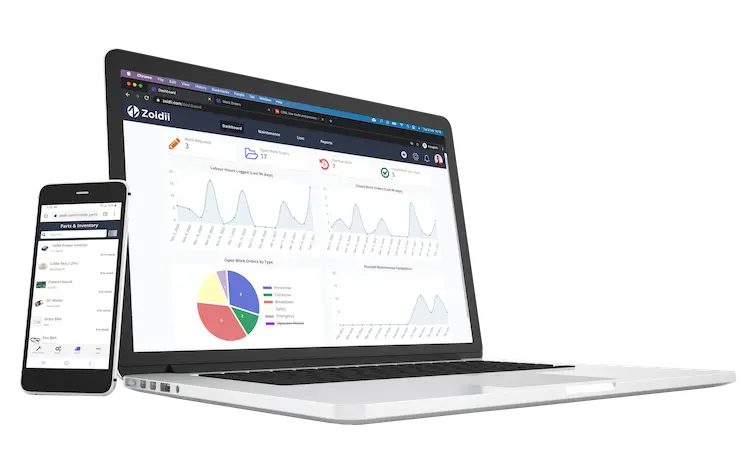
The best way to plan, track and optimize preventive maintenance is through preventive maintenance software (also known as CMMS software). In preventive maintenance software:
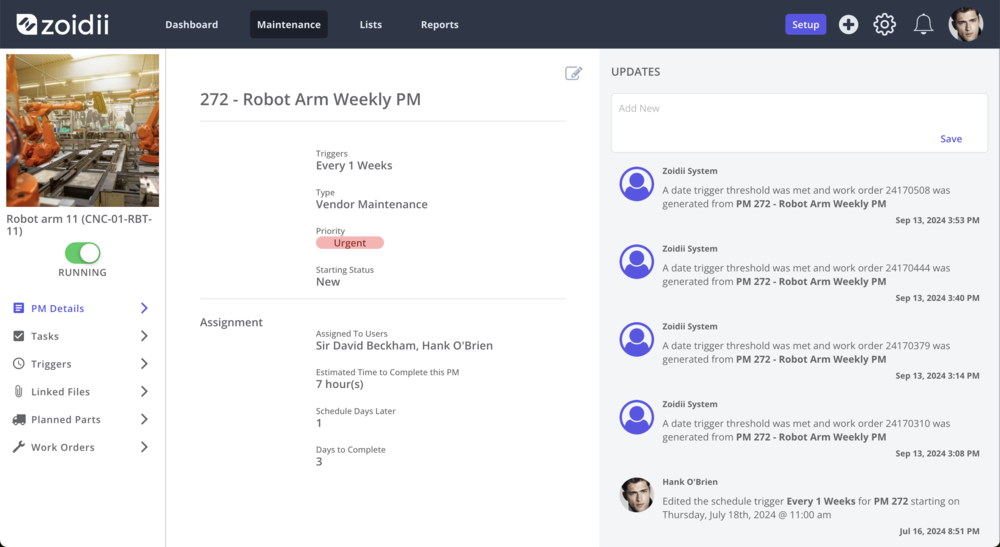
- System administrators can configure PMs with calendar or meter-based triggers that fire off a PM work order when equipment meets specific criteria.
- The CMMS automatically triggers the preventive maintenance when it's due.
- The CMMS links standardized operating procedures to the PM. As the SOPs are updated, those updates appear on all PMs referencing the SOP.
- The CMMS software outlines all the activities and parts required to complete the PM.
- The CMMS automatically adds failed tasks to follow-on work orders for further action.
- CMMS software will keep records of past preventive maintenance and inspections on the equipment.
Some CMMS software applications can manage complex PMs such as nested preventive maintenance. Nested preventive maintenance (nested PMs) is very relevant to organizations with multiple PMs on their equipment, increasing in complexity as the interval increases.
For example, performing preventive maintenance every month, quarter and year on an asset. When performing the annual PM, technicians also perform the tasks from the monthly and the quarterly at the same time.
Follow our tips for selecting the right CMMS software for your business.
Tips for Building a Preventive Maintenance Program
A well-designed preventive maintenance program should increase equipment reliability and reduce maintenance costs. Organizations introducing preventive maintenance will face numerous challenges, such as:
- Cultural - maintenance folks used to doing it the old way.
- Competency - skills not there to develop or implement a PM program
- Financial - additional costs required to kick off a PM program
- Logistical- the organization doesn't have the space to hold PM inventory
Here are some tips to get your PM program running:
- Implement CMMS software like Zoidii to track and schedule your PMs
- Start small by picking a few critical assets from the facility.
- Understand the costs of failure for those critical assets
- Start with the manufacturer's recommended preventive maintenance
- Conduct PM training with the team
- Monitor and adjust over time
What is Best-In-Class Maintenance?
Preventive maintenance is a scheduled service that a qualified technician performs to clean, inspect, adjust, and lubricate equipment to keep it running at peak efficiency and prevent unexpected downtime and repair costs.
It is virtually impossible to be at 100% preventive maintenance. The costs will outweigh the benefits, and equipment will inevitably break down. In addition, performing PMs can create issues in machines that don't have problems. As a result, organizations performing best-in-class maintenance target 85-90% preventive maintenance.
The Bottom Line on Preventive Maintenance
The primary goal of preventive maintenance is to anticipate equipment failure or take corrective action before the breakdown occurs. Preventive maintenance can reduce unplanned downtime, lower costs, improve reliability, increase safety, and extend an asset's economic life.
Starting a preventive maintenance program can be challenging if maintenance personnel are already overwhelmed by reactive maintenance. Start small with critical assets, as outlined above, and in no time, your organization will be well on its way to world-class maintenance.