
Key Takeaways
- What decides adoption is ownership: one person who makes the CMMS the only channel work runs through. Training is how they bring the team there.
- Train people on their own job inside the system, on real equipment, and confidence comes in minutes, not manuals.
- Match training depth to role: the technician needs the hands-on session, the occasional requester almost none.
Why does CMMS training alone fail to make a system stick?
Because training poured into an optional rollout drains away. When the system is a suggestion, people weigh it against the clipboard they trust, and the clipboard wins. What holds a CMMS in place is a decision that the system is how work gets recorded now, and training lands only once that decision is made.
We have watched capable teams abandon light systems, and others stick with SAP PM because management made it non-negotiable. The deciding factor was accountability, not comfort with software. Optionality is what kills adoption. One reason is ordinary. The system feels like more hassle than it is worth when the old way seems to work fine, and we have let the system in our own building lapse for exactly that. The other is quieter. For a technician whose standing rests on being the one who gets the machine running, logging work into a shared record can feel like handing that away. Neither yields to a better slide deck. Both yield to a champion. When it goes quiet, the cost lands on the person who pushed for it. Months of justification slide into a drawer, and the credibility spent to win it goes too.
What does training that respects the floor actually look like?
It happens on the floor, on equipment the team already maintains. The method we hand every new customer is small on purpose. Each technician picks five real assets, sets them up, then opens a work order against one and closes it. Five is enough to build the habit and still finish in a morning.
Setting up the assets is the first half, and it does more than fill a database. As a technician enters a machine they own, they name it the way the floor talks about it and note what they reach for when it breaks. That turns the system into their own record. The second half is one real work order. Open it, do the work, close it. After one real work order, the rest is variations on a motion they have already made.
The rules that keep the session honest to the floor:
- Real assets the team maintains, not demo data.
- One real work order each, opened and closed.
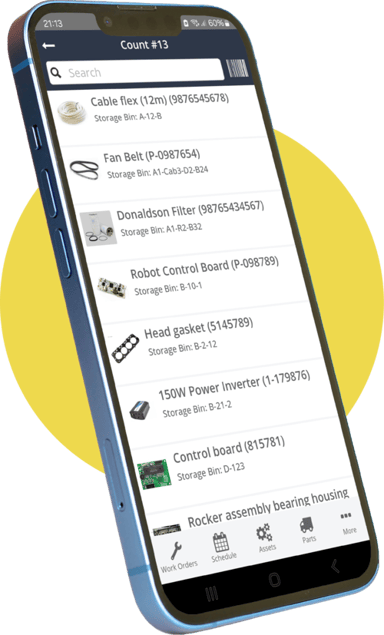
- On the phone, where the work happens.
- Stop at five. The rest waits until the habit is set.
Why "intuitive" beats "simple" when you train a team
Because the words promise different things. Simple says features were left out. Intuitive says a person knows what to do without being told. When the screens match how the job is done, most of a training manual disappears.
Intuitive is simplicity plus correctness, built around maintenance work rather than software logic. The word our newest customers reach for is intuitive, and they mean easiest to pick up without formal training, rather than most basic. At Tricel, a manufacturer, some technicians figured out the mobile app on their own, with little or no training. Ger Roche, their maintenance manager, never had to teach them.
Who actually needs training, and who does not?
Not everyone on site needs the same thing, and treating them as if they do is how training swells into a project the champion cannot sustain. Match the depth to the role.
The requester side is where teams overestimate the effort. At Grace Healthcare, facilities lead Michal Maslanka showed a colleague how to raise a guest work request in under 60 seconds. A person who logs the occasional issue needs a link, not a course.
How do you know the training worked?
You know it worked when the system becomes the channel the work runs through, and you can see it in behaviour a week later. Watch for the small tells:
- A technician opens the app before asking a colleague what to do next.
- Work orders get closed the same day, with no reminder from you.
- The team raises work orders you never assigned, because they found problems worth logging.
- The request that used to come as a phone call now arrives in the system, because "put it in the system" has become the standing answer.
Your team already knows the work. CMMS training just hands them a faster version of it, with less in the way. What decides whether it lasts is ownership. Someone treats the system as how work is recorded now, and holds that line until it no longer needs holding. Get the first week right, and give the team a reason to stay in it after. That is when it stops being one more thing to manage and becomes the place the work lives.
References
The outcomes cited here are from Zoidii customer case studies:
- Arcadia Cold Storage. Don Arsenault, Director of Maintenance Startup.
- Grace Healthcare. Michal Maslanka, Group Head of Facilities Management.
- Tricel. Ger Roche, Maintenance Manager.