Breakdown maintenance, also known as corrective maintenance or reactive maintenance, refers to the repair work done after equipment or machinery fails unexpectedly. This type of maintenance is often unplanned, and its urgency depends on how critical the failed asset is to production. Breakdown maintenance is different than preventive maintenance, which is maintenance that is scheduled regularly to keep equipment in good working condition and to prevent unexpected failures.
In a production environment, breakdown maintenance can lead to unanticipated downtime, productivity loss, and increased operational costs. For maintenance, reliability, and operations managers, breakdowns can present significant challenges, making it essential to have effective prevention strategies and robust response mechanisms in place.
What is Breakdown Maintenance?
Breakdown maintenance is a reactive approach to asset management where repairs or replacements occur only after equipment malfunctions or breaks down. It’s a “fix-it-when-it-breaks” part of a team’s maintenance strategy. This approach is sometimes necessary for non-critical equipment or when the cost of preventive maintenance outweighs the value of downtime.
However, relying too heavily on breakdown maintenance can be costly, especially when critical production equipment fails unexpectedly. This can lead to unscheduled downtime and potentially missed production targets.
For example, in manufacturing environments where machines run continuously, the failure of one component can halt entire production lines, causing ripple effects across the supply chain. Therefore, while breakdown maintenance may be part of an overall maintenance strategy, its role should be minimized to mitigate the risks associated with unexpected failures.
How Maintenance Teams Can Decrease Equipment Breakdowns
While breakdown maintenance is inevitable, companies can take proactive measures to minimize both the frequency and impact of equipment failures. Implementing a mix of preventive, predictive, and reliability-centered maintenance strategies can significantly decrease the occurrence of breakdowns.
1. Preventive Maintenance
Scheduling regular inspections, lubrication, cleaning, and part replacements based on manufacturer recommendations or operational history is a proactive way to catch potential issues before they result in breakdowns. Preventive maintenance helps reduce breakdown maintenance, extend the lifespan of equipment, and ensure that critical assets remain operational.2. Predictive Maintenance
Leveraging data analytics and condition-monitoring technologies like vibration analysis, ultrasonic testing (UT), thermal imaging, and oil analysis, predictive maintenance allows companies to forecast equipment failures before they happen. Monitoring equipment health in real-time helps maintenance teams identify potential issues before they become severe breakdowns.3. Operator Training
Equipment misuse or incorrect operation is a common cause of breakdowns. Ensuring that operators are trained in proper usage and early fault detection can prevent many breakdowns caused by human error.4. Root Cause Analysis (RCA)
When breakdowns occur, understanding the underlying root causes of problems and failures can help prevent future occurrences. By performing a root cause analysis (RCA) and identifying recurring failure modes, companies can address systemic problems, leading to a more reliable production environment.Examples of Breakdown Maintenance
Breakdown maintenance is commonly used across various industries when equipment fails unexpectedly. Here are a few real-world examples:
- HVAC System Failure: A building’s air conditioning unit stops working in the middle of summer. Technicians are dispatched to repair or replace parts only after the system fails.
- Conveyor Belt Breakdown: A conveyor belt motor burns out during production in a manufacturing plant. Maintenance is performed immediately to minimize downtime.
- Lighting System Outage: A warehouse light fixture stops functioning. Maintenance staff replace the bulb or wiring only after the issue is reported.
- Pump Malfunction in Water Treatment: A water pump fails without warning, halting operations. Emergency repairs are carried out to restore service.
- Vehicle Engine Failure: A company vehicle breaks down on the road due to a mechanical issue. Repairs are made after the failure to get the vehicle back in service.
How a CMMS Can Help Manage Breakdown Work Orders
A Computerized Maintenance Management System (CMMS) is critical in managing breakdown maintenance, especially in complex production environments with numerous assets. A CMMS provides a centralized platform for tracking maintenance activities, managing work orders, and improving overall asset reliability. Here’s how a CMMS can streamline the breakdown maintenance process:
1. Immediate Logging of Breakdown Work Orders
When equipment breaks down, a CMMS allows maintenance teams to log the issue immediately, assign it to the appropriate technician or team, and prioritize it based on the severity of the failure. This ensures critical breakdowns receive immediate attention while non-urgent issues are scheduled accordingly.2. Tracking Maintenance History
One of the most significant advantages of a CMMS is its ability to track the maintenance history of all assets. Maintenance managers can identify trends and adjust maintenance strategies by reviewing the frequency and types of breakdowns on specific machines. This data-driven approach enables more informed decision-making and a move towards preventive maintenance, which can reduce future breakdowns.3. Managing Spare Parts Inventory
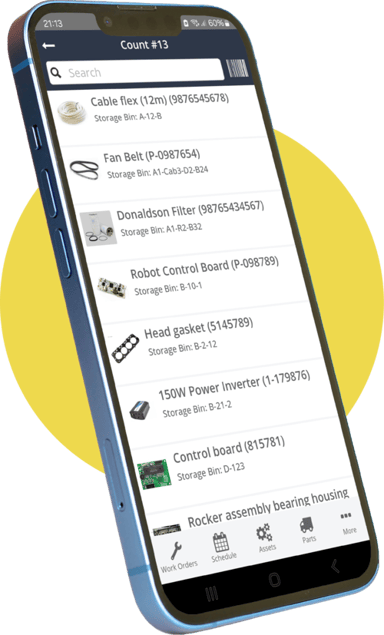
A CMMS can track spare parts inventory levels, ensuring replacement parts are readily available when breakdowns occur. Having parts in stock minimizes downtime by avoiding delays in sourcing parts. Additionally, the system can generate alerts when inventory levels are low, helping managers plan and budget for future repairs.4. Performance Reporting
A CMMS generates reports on key metrics such as Overall Equipment Effectiveness (OEE), mean time between failures (MTBF), mean time to repair (MTTR), and breakdown frequency. These reports help reliability and operations managers assess the effectiveness of their maintenance strategies and identify improvement areas.5. Mobile Access and Real-Time Updates
With mobile-enabled CMMS platforms, technicians can access work orders, asset information, and manuals in real-time, even on the shop floor. Access to all relevant information at their fingertips ensures faster response times to breakdowns and real-time updates to the maintenance backlog.Minimize the Impact of Breakdown Maintenance
Breakdown maintenance is an inevitable part of managing production environments, but by integrating preventive strategies and utilizing a CMMS, companies can significantly reduce the frequency and impact of equipment failures.
With a proactive maintenance approach and effective use of technology, managers can enhance asset reliability, minimize downtime, and ultimately improve operational efficiency.