Preventing equipment failure is crucial for maintenance teams. One of the most effective tools for preventing equipment failure is the use of inspection work orders. Equipment inspections ensure that equipment stays in peak condition, avoiding costly breakdowns and minimizing unplanned downtime.
For maintenance managers, understanding how to implement and manage inspection work orders effectively can significantly enhance the overall performance of the maintenance program. Let’s dive into inspection work orders, their key benefits, and industry best practices for leveraging them effectively.
What Are Inspection Work Orders?
An inspection work order is a formal directive that outlines a set of checks or evaluations that maintenance personnel must perform on equipment, systems, or infrastructure. These inspections are typically preventive, identifying early signs of wear and tear, malfunction, or other potential issues before they escalate into significant problems.
Inspection work orders are commonly issued through a Computerized Maintenance Management System (CMMS) or Enterprise Asset Management (EAM) software. They provide technicians with specific instructions on what to check, the frequency of inspections, and any tools or equipment required for the job.
Key Benefits of Inspection Work Orders
1. Preventing Equipment Failure
One primary objective of inspection work orders is to detect potential issues before they cause equipment failure. Maintenance teams can identify damage, early signs of wear, or misalignment by regularly inspecting critical components such as motors, pumps, or electrical systems.Identification of these early signs allows for timely intervention, such as performing minor repairs or adjustments, before a failure occurs that could result in costly downtime.
For example, a motor inspection work order might require a technician to check for unusual vibrations, excessive heat, or irregular noises—common indicators of potential bearing or shaft issues. Catching these issues early ensures they can be addressed before the motor fails.
2. Extending Equipment Lifespan
Regular inspections help ensure that equipment is maintained in optimal condition, extending its operational life. Components experience less wear and tear when routinely serviced, reducing the likelihood of significant failures. Regular inspections improve equipment reliability and reduce the need for expensive capital expenditures to replace prematurely worn-out assets.A well-implemented inspection regime for rotating equipment like pumps or compressors, for instance, can significantly reduce the occurrence of unplanned breakdowns, enabling the equipment to run for years beyond its expected life cycle.
3. Improving Safety and Compliance
Safety is a top priority in maintenance teams, and inspection work orders ensure safe operation. Regular inspections can identify hazards such as leaks, corrosion, or structural weaknesses that pose safety risks. Addressing these issues promptly prevents accidents and ensures equipment meets all safety and regulatory compliance requirements.In industries such as manufacturing, where equipment failures can lead to safety incidents or environmental hazards, inspection work orders are critical for ensuring compliance with industry regulations, laws, and standards while safeguarding operational safety and environmental integrity.
4. Enhancing Data-Driven Maintenance
Inspection work orders generate valuable data about equipment condition and performance. This data can be fed into a CMMS, allowing maintenance managers to analyze trends and make informed decisions about preventive maintenance schedules, equipment replacement, or upgrades.For example, suppose inspections reveal that a particular component regularly shows signs of wear after a certain number of hours. In that case, the maintenance team can adjust the preventive maintenance intervals to replace the part before it becomes problematic. This data-driven approach ensures that maintenance resources are used efficiently, minimizing downtime and maintenance costs.
Best Practices for Effective Inspection Work Orders
1. Tailor Inspections to Equipment Needs
Not all equipment requires the same level of inspection. Critical assets such as production line machinery may need more frequent and thorough inspections than less critical equipment. Maintenance managers should work with their teams to create tailored inspection work orders based on each asset’s specific risks and requirements.2. Use a CMMS for Scheduling and Tracking
A robust CMMS or EAM system is essential for effectively managing inspection work orders. These systems can automate inspection scheduling, ensuring that inspections are performed at the correct intervals. They also provide a centralized platform for tracking inspection results, creating follow-on work orders, managing work order history, and generating reports for analysis.
By integrating inspection work orders into a CMMS, maintenance managers can ensure consistency, accountability, and transparency in the inspection process.
3. Provide Clear, Detailed Instructions
Each inspection work order should include clear, step-by-step instructions that outline what needs to be checked and how. This level of detail ensures that inspections are carried out uniformly, even when different technicians are involved. It also reduces the likelihood of oversight or misinterpretation, which can lead to missed issues or incomplete inspections.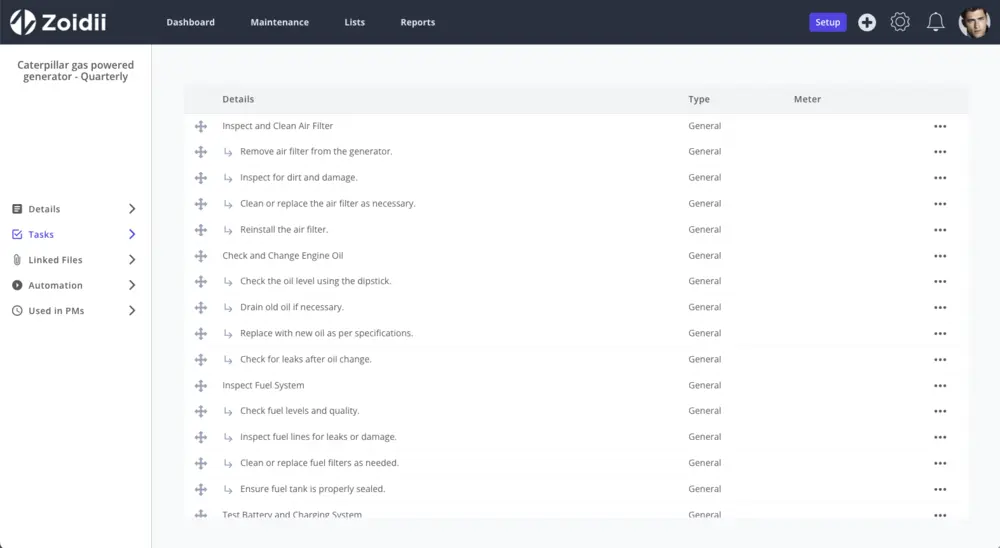
4. Act on Inspection Findings
An inspection work order is worthless unless the team takes action based on its findings. Maintenance managers should ensure that issues identified during inspections are tracked and addressed promptly, whether scheduling repairs, ordering replacement parts, or adjusting operating conditions.Improve Maintenance Efficiency Through Inspection Work Orders
Inspection work orders are a crucial component of any successful maintenance program. For maintenance managers, they offer a proactive approach to preventing equipment failure, extending asset lifespan, ensuring safety, and making data-driven decisions.
By effectively implementing inspection work orders, organizations can significantly improve equipment reliability and performance while reducing unplanned downtime and maintenance costs.
Bonus
If you run a maintenance program at your facility but need proper inspection checklists created, Zoidii CMMS can help. With Zoidii’s new AI Checklist Generator, you can create maintenance inspection checklists within seconds by simply entering the equipment details (make, model, type) and the inspection interval.