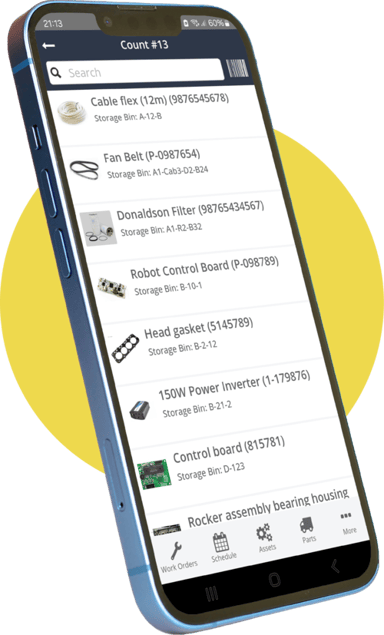
Enterprise Asset Management (EAM) software is a powerful tool for organizations, enabling them to oversee and manage their physical assets effectively throughout their lifecycle. From equipment maintenance to resource allocation, EAM software is pivotal in maximizing asset lifespan, productivity, reliability, and efficiency while reducing costs and downtime.
This article will explore EAM software, its key features, its differences from CMMS software, its benefits for organizations, how businesses can leverage it to streamline their asset management processes, and its future in the evolving technological landscape.
What is Enterprise Asset Management (EAM)?
Enterprise Asset Management (EAM) refers to the systematic approach to managing the lifecycle of physical assets within an organization. These assets include machinery, vehicles, infrastructure, and equipment necessary for daily operations. The goal is to ensure that assets are effectively maintained, optimized for peak performance, and monitored throughout their lifecycle.
Enterprise asset management encompasses processes such as planning, acquisition, maintenance, operation, and disposal to ensure that assets deliver value throughout their lifecycle.
EAM software is a specialized solution designed to facilitate this process by automating various asset-related tasks, such as maintenance, inventory management, and asset tracking. It provides a centralized digital platform for tracking, managing, analyzing, and optimizing asset performance, ensuring that resources are used efficiently and effectively.
It integrates with other business systems, such as finance, production, human resources, and supply chain management, offering a holistic view of asset-related activities and costs.
EAM vs. CMMS: Key Differences
While both EAM and CMMS systems focus on asset management, they serve different purposes and cater to varying organizational needs. Below is a table summarizing the primary differences:
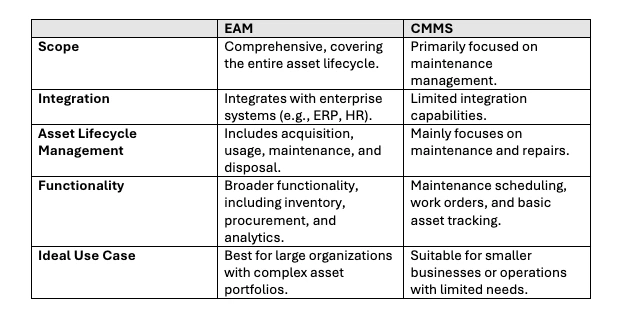
Essentially, CMMS is a subset of EAM. While CMMS focuses on maintenance-specific tasks, EAM provides a comprehensive view of asset management, encompassing planning, acquisition, maintenance, operation, and disposal.
Key Features of Enterprise Asset Management (EAM) Software
Effective EAM software offers a wide range of features to help streamline asset management processes. Here are the key features:
Asset Tracking and Management
EAM software provides a centralized repository for storing detailed information about assets, including location, condition, and maintenance history. This information helps organizations keep track of all assets, whether stationary or mobile.Work Order Management
EAM software enables businesses to create and manage work orders for maintenance tasks, repairs, or other asset-related activities. With EAM software, companies can easily create, assign, and track work orders. A proper work order management system helps technicians execute maintenance tasks promptly and efficiently.Preventive Maintenance Scheduling
One of the most critical features of EAM software is preventive maintenance. Preventive maintenance involves regularly scheduled checks and repairs to minimize unexpected equipment failures and improve reliability. EAM software automates the scheduling of these maintenance activities, ensuring that assets are serviced on time and minimizing unplanned downtime.Inventory and Spare Parts Management
EAM software integrates inventory management functionality to help businesses manage spare parts and other materials required for asset maintenance. EAM systems help track inventory levels, manage reordering, and ensure spare parts and materials are available when needed, reducing downtime and preventing overstocking.Regulatory Compliance
EAM software assists organizations in adhering to strict industry regulations and standards by maintaining detailed records of maintenance activities, inspections, and certifications. Detailed records help teams easily access the information they need to pass audits.Analytics and Reporting
EAM solutions provide advanced analytics and reporting tools, enabling organizations to monitor asset performance, identify trends, and make data-driven decisions. Businesses can generate reports on asset performance, maintenance costs, downtime, and other key metrics. These insights are essential for optimizing asset management strategies, reducing costs, and improving operational efficiency.Mobile Accessibility
Modern EAM systems offer mobile applications that enable field technicians to access work orders, update asset information, and report issues in real-time from anywhere. This improves workflow efficiency, allows for real-time updates, and enhances collaboration between team members.Condition Monitoring
EAM software often integrates with IoT (Internet of Things) devices to enable condition-based monitoring of assets. This feature allows organizations to track the health of their assets in real-time by collecting data on various performance parameters (e.g., temperature, vibration, and pressure). Using this data, the software can predict potential failures, triggering alerts to maintenance teams so they can address issues before they result in costly downtime.Integration with Other Systems
EAM software integrates with ERP, IoT, and other enterprise systems, providing seamless data exchange and a unified approach to asset management.Lifecycle Cost Analysis
EAM software evaluates the total cost of ownership (TCO) for assets, including acquisition, maintenance, operation, and disposal costs. The data helps managers make more informed decisions about whether to repair or replace assets.Sustainability Features
With an increasing focus on sustainability, EAM solutions often include features for energy monitoring, carbon footprint tracking, and waste management. Here are 7 ways an EAM/CMMS can help a business reduce its carbon footprint.
Why EAM Software is Important
EAM software is critical for organizations managing large and diverse asset portfolios. Its importance is underscored by the following benefits it brings to such organizations:
1. Improved Asset Utilization
EAM software ensures assets are being used efficiently, minimizing downtime and maximizing productivity. By tracking usage and maintenance needs, organizations can avoid under- or over-utilization.2. Cost Savings
EAM software helps reduce operational expenses and capital expenditures through preventive maintenance, inventory management, and lifecycle cost analysis. Businesses can minimize unplanned downtime, avoid costly repairs, and optimize resource allocation, resulting in significant savings.3. Enhanced Decision-Making
The analytics and reporting features of EAM systems provide valuable insights into asset performance, enabling data-driven decisions that align with organizational goals. By analyzing this data, businesses can make informed decisions regarding asset management strategies, budgeting, and resource allocation.4. Regulatory Compliance
In industries with strict regulatory requirements, EAM software helps ensure compliance by tracking maintenance schedules, inspections, and safety checks, generating audit trails, and ensuring that all necessary certifications and inspections are up to date. Maintaining compliance is essential to avoid costly fines and legal issues. EAM software simplifies compliance by automating record-keeping and audit processes.5. Extended Asset Lifespan
Performing regular preventive maintenance helps extend the lifespan of assets. EAM software automates preventive maintenance scheduling, ensuring that assets are properly serviced and maintained. This leads to fewer breakdowns, reduced wear and tear, and a longer asset lifecycle.6. Compliance and Risk Management
In industries with strict regulatory requirements (e.g., healthcare, utilities), EAM software helps ensure compliance by tracking maintenance schedules, inspections, and safety checks. Additionally, the software enables businesses to identify and address potential risks proactively, reducing the likelihood of accidents or regulatory violations.7. Enhanced Collaboration and Communication
EAM software improves team communication, whether between maintenance personnel, managers, or vendors. The ability to create, assign, and track work orders, share information, and access real-time data fosters better collaboration across groups and ensures everyone is on the same page.How EAM Software Benefits Various Industries
Different industries use EAM software to manage their assets in various ways. Below are some examples of how EAM software can benefit different sectors:
- Manufacturing: EAM software helps manufacturers keep production lines running smoothly by optimizing equipment maintenance schedules, tracking machinery performance, and reducing downtime.
- Transportation and Fleet Management: EAM software allows businesses to track vehicle maintenance and performance, ensuring they are in optimal condition, reducing operational costs, and extending the fleet's lifespan.
- Energy and Utilities: In the energy sector, EAM software enables the management of critical assets such as power plants, turbines, and grid systems, helping ensure optimal performance and regulatory compliance.
- Healthcare: Hospitals and healthcare facilities rely on EAM software to manage medical equipment, ensuring that machines are properly maintained, calibrated, and compliant with safety standards.
- Facilities Management: EAM software enables facilities managers to track and maintain infrastructure assets like HVAC systems, elevators, and plumbing. This ensures the smooth operation of buildings and reduces maintenance costs.
How to Choose the Right EAM Software
Selecting the right EAM software depends on several factors, including the available budget, the size of your organization, the complexity of your assets, and your business goals. Some key considerations include:
- Scalability: Look for systems that can scale as your organization grows, handling increasing assets and users.
- Integration: Ensure the EAM software can integrate with other systems you use, such as ERP (Enterprise Resource Planning) software, IoT sensors, or accounting software.
- Customization: Choose software that can be customized to your organization's unique needs, including system defaults, custom reports, workflows, and asset types.
- User-Friendliness: Select EAM software that is easy to use and provides a clear interface for technicians and managers.
- Support and Training: Effective training is key to the success of any software implementation project. Consider the level of customer support and training available to help you get the most out of your EAM software.
The Future of EAM Software
As technology continues to evolve, the future of EAM software promises even more significant advancements, transforming how businesses manage and maintain assets. Here are some key trends shaping the future of EAM:
Integration with IoT
The Internet of Things (IoT) revolutionizes asset management by enabling real-time monitoring and data collection. IoT sensors embedded in equipment provide insights into asset health, usage, and performance, allowing for predictive maintenance and reducing downtime.Artificial Intelligence (AI) and Machine Learning
AI and machine learning enhance the capabilities of EAM software by analyzing vast amounts of data to predict failures, optimize maintenance schedules, and improve decision-making.Cloud-Based Solutions
Cloud-based EAM software offers flexibility, scalability, and accessibility. Organizations can access their systems from anywhere, enabling better collaboration and efficiency. This related article covers 8 advantages of cloud-based solutions.Augmented Reality (AR) and Virtual Reality (VR)
AR and VR technologies are finding applications in asset management, particularly for training, troubleshooting, and remote maintenance. Technicians can use AR headsets to access real-time asset data and step-by-step repair instructions.Enhanced Cybersecurity
With asset management becoming increasingly digitalized, EAM systems are adopting advanced cybersecurity measures to protect sensitive data and ensure operational resilience.Increased Customization
Future EAM solutions will provide greater customization options to meet different industries and organizations' unique needs.Maximize the Impact of EAM Software
Enterprise Asset Management (EAM) software is critical for organizations looking to optimize the management of their physical assets. By offering a comprehensive suite of features, EAM solutions help businesses maximize asset utilization, reduce costs, and enhance decision-making.
With industries relying more heavily on physical assets than ever before, adopting EAM software is crucial for organizations that want to stay competitive, comply with regulations, and enhance operational efficiency. Whether you are in manufacturing, healthcare, or any other asset-intensive industry, EAM software can help transform how you manage your assets, leading to better decision-making and long-term success.
As technology advances, integrating IoT, AI, cloud computing, and other innovations promises to make EAM software even more indispensable in the future. Organizations that invest in robust EAM solutions today will be well-positioned to adapt to the evolving demands of tomorrow's business environment.