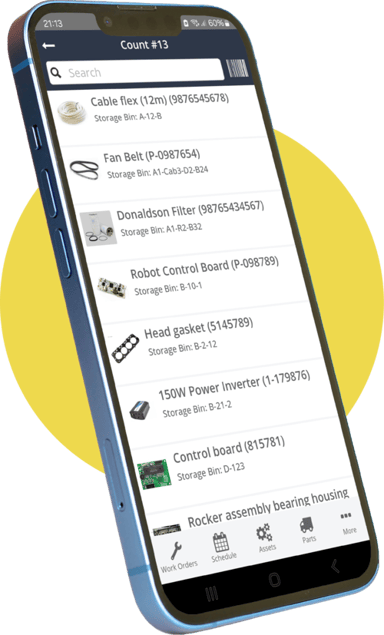
Inventory Management is a crucial aspect of any business, particularly those dealing with tangible goods. It involves the tracking, organizing, and controlling of stock, from its initial purchase to its final sale.
A critical tool in this process is the Computerized Maintenance Management System (CMMS), a software package designed to maintain a computer database of information about an organization's maintenance operations.
Understanding CMMS and its role in inventory management requires a comprehensive exploration of its features, benefits, and implementation. This article will dissect these aspects, providing a detailed understanding of how CMMS can revolutionize inventory management processes.
From automated tracking to predictive maintenance, CMMS offers a plethora of benefits that streamline operations, reduce costs, and enhance efficiency.
What is CMMS?
A Computerized Maintenance Management System (CMMS) is a digital tool that helps manage the maintenance activities within an organization. It is a centralized system that stores all relevant information about an organization's maintenance operations, including equipment details, maintenance schedules, and inventory levels.
This information is used to streamline maintenance tasks, improve efficiency, and reduce costs.
CMMS is a versatile tool that can be applied across various industries, including manufacturing and hospitality. It is particularly beneficial for organizations with complex maintenance operations that involve multiple pieces of equipment, large inventories, and numerous maintenance tasks.
By automating these tasks, CMMS reduces the risk of human error, enhances productivity, and allows for more effective resource allocation.
History of CMMS
The concept of CMMS emerged in the 1960s with the advent of mainframe computers. Initially, these systems were used to manage maintenance tasks in large manufacturing plants. However, as technology advanced, so did the capabilities of CMMS.
Today, these systems can manage a wide range of tasks, from preventive maintenance scheduling to inventory control, making them a vital tool for any organization seeking to optimize its maintenance operations.
Over the years, CMMS has evolved to incorporate new technologies and methodologies. For example, the integration of Internet of Things (IoT) devices allows for real-time monitoring and predictive maintenance, while the use of artificial intelligence (AI) enables more accurate forecasting and decision-making. These advancements have made CMMS an indispensable tool in today's digital age.
Types of CMMS
There are several types of CMMS, each designed to cater to different needs and requirements. These include on-premise CMMS, cloud-based CMMS, and mobile CMMS. On-premise CMMS is installed on the company's own servers and managed by its IT department. This type of CMMS offers greater control and customization but requires a significant upfront investment.
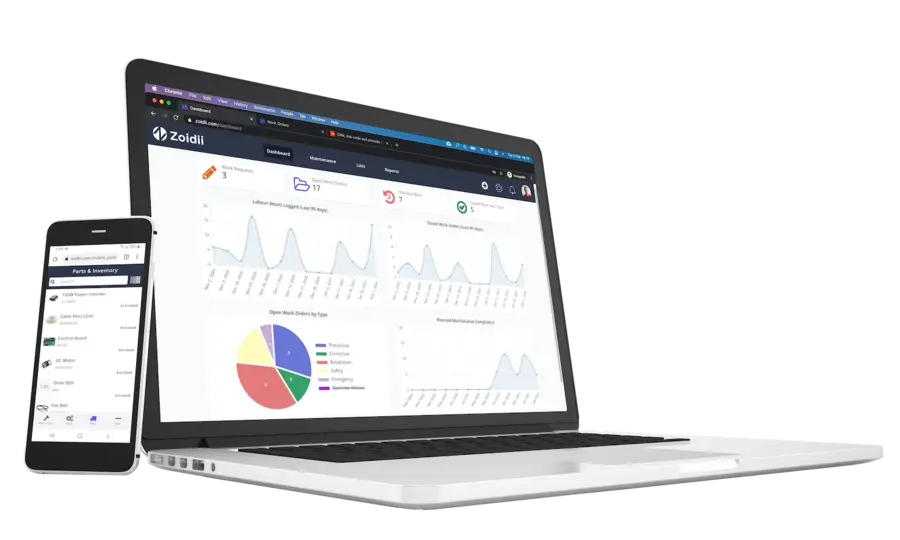
Cloud-based CMMS, on the other hand, is hosted on the vendor's servers and accessed via the Internet. This type of CMMS is more affordable and offers greater flexibility, as it can be accessed from anywhere at any time. However, it may not offer the same level of customization as on-premise CMMS. Finally, mobile CMMS is designed for use on mobile devices, allowing maintenance staff to access the system on the go.
This type of CMMS enhances productivity and efficiency by enabling real-time updates and communication. For more information on the difference between cloud-based CMMS and on-prem CMMS, see our Cloud versus on-premise CMMS software - which is best? blogpost.
Role of CMMS in Inventory Management
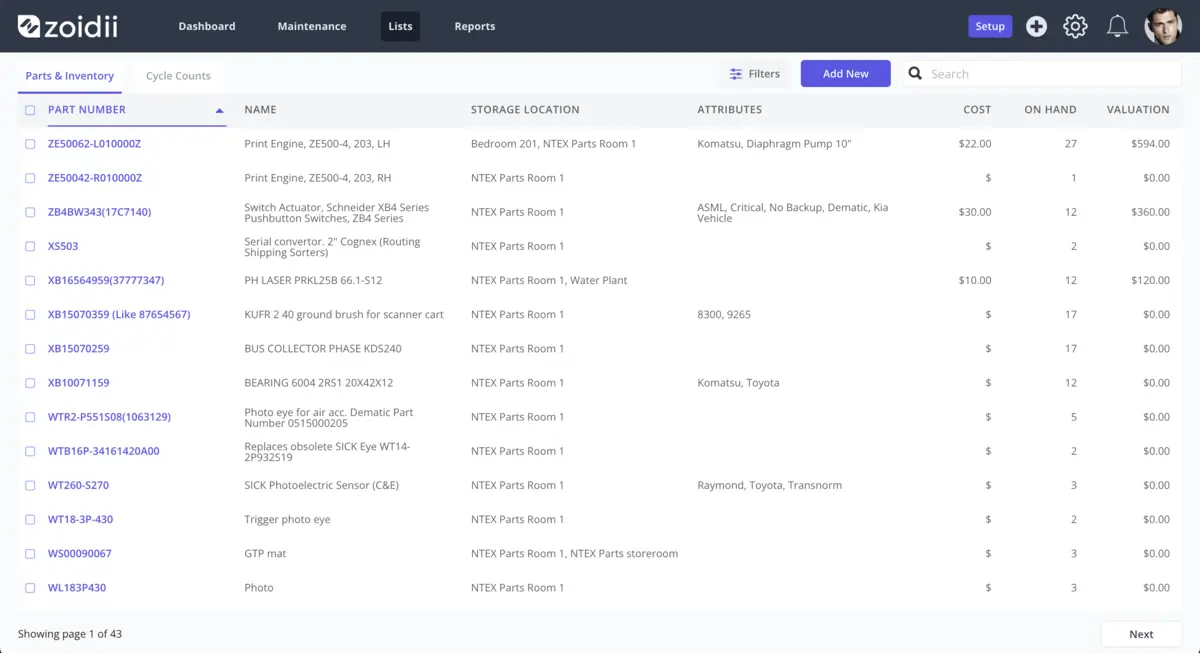
Inventory management is a key component of maintenance operations, and CMMS plays a crucial role in this process. With CMMS, organizations can track their inventory levels in real-time, automate reordering processes, and reduce the risk of stockouts and overstocking.
This not only ensures that the necessary parts and materials are always available when needed but also reduces inventory carrying costs.
CMMS also provides detailed reports on inventory usage, allowing organizations to identify trends and make informed decisions about their inventory levels.
Furthermore, CMMS can integrate with other systems, such as ERP and SCM, to provide a holistic view of the organization's operations. This integration enables more accurate forecasting, better resource allocation, and improved operational efficiency.
Automated Tracking
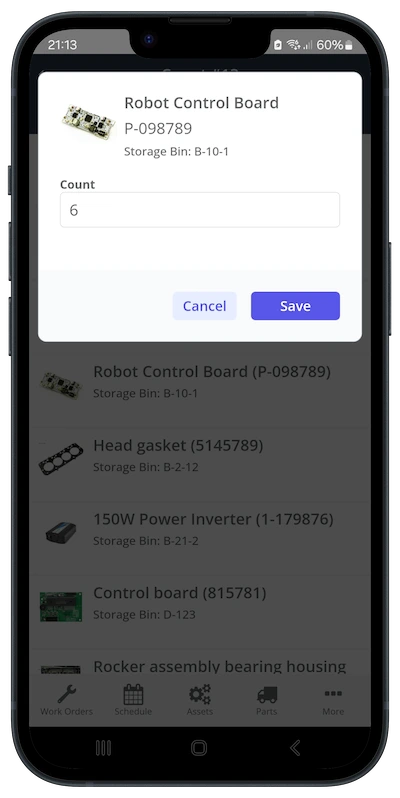
One of the primary benefits of using a CMMS for inventory management is the ability to automate tracking. With CMMS, organizations can automatically track their inventory levels, reducing the need for manual parts room cycle counting.
This not only saves time and resources but also reduces the risk of errors that can lead to stockouts or overstocking.
Automated tracking also provides real-time updates on inventory levels, allowing organizations to react quickly to changes in demand. For example, if a particular part is being used more frequently than expected, the system can automatically reorder it to prevent a stockout.
This level of automation enhances efficiency and ensures that maintenance operations are never disrupted due to lack of inventory.
Predictive Maintenance
Another benefit of using CMMS for inventory management is predictive maintenance. With predictive maintenance, organizations can anticipate when equipment will need maintenance and ensure that the necessary parts are available when needed.
This not only reduces downtime but also extends the equipment's lifespan.
Predictive maintenance is made possible by the integration of IoT devices and AI technologies. IoT devices monitor equipment in real-time and send data to the CMMS, which utilizes AI algorithms to predict when maintenance is needed.
This allows organizations to schedule maintenance tasks in advance and order the necessary parts before they are needed, reducing the risk of stockouts and ensuring that maintenance operations are carried out smoothly.
Implementing CMMS in Inventory Management
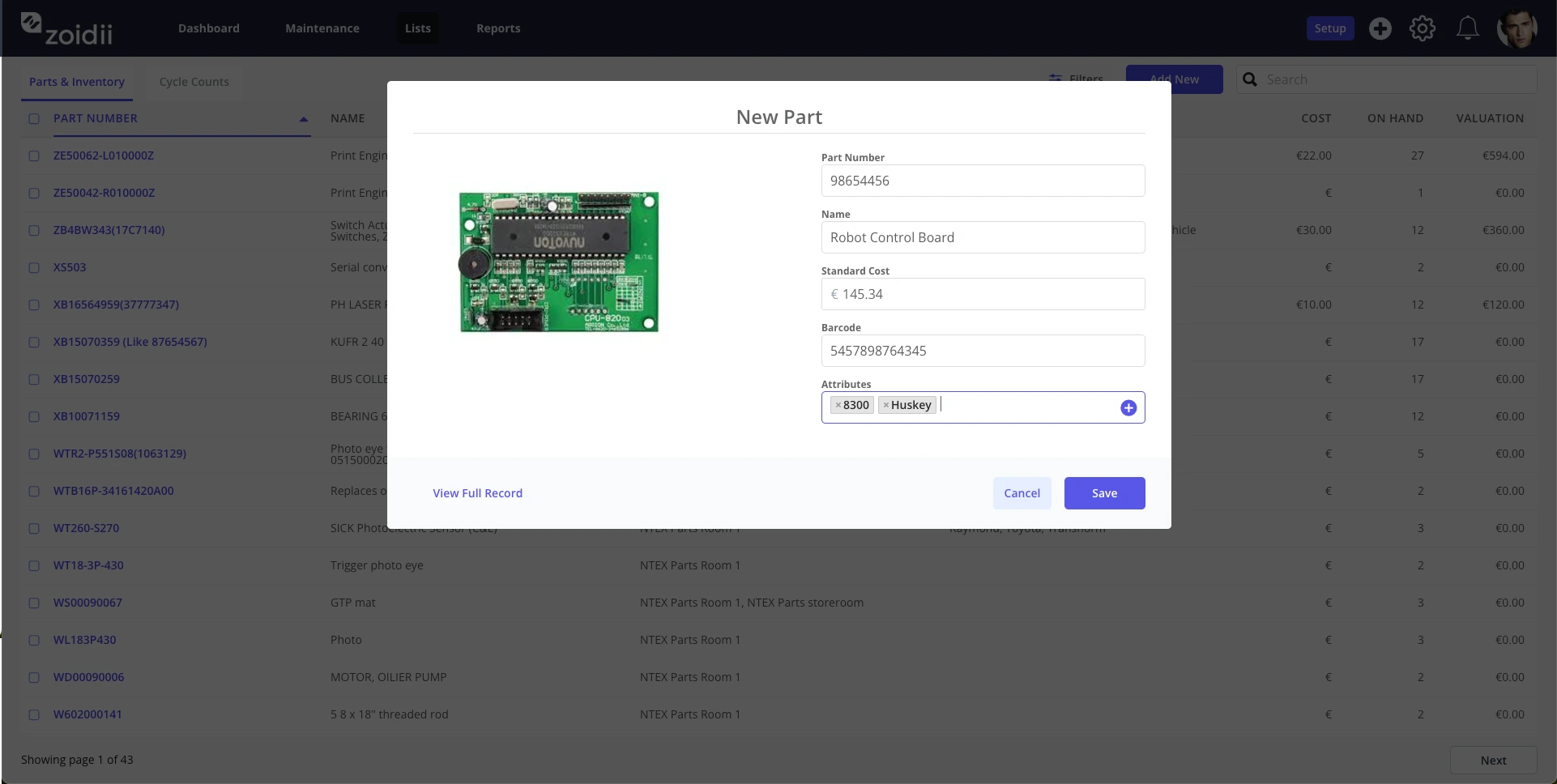
Implementing CMMS in inventory management involves several steps, from selecting the right system to training staff and monitoring performance. The first step is to identify the organization's needs and requirements.
This involves assessing the current inventory management processes, identifying areas for improvement, and defining the goals of the implementation.
Once the needs and requirements have been identified, the next step is to select the right CMMS. This involves researching various systems, comparing their features and benefits, and selecting the one that best suits the organization's needs.
The selected system should be easy to use, scalable, and capable of integrating with other systems.

Training and Support
After selecting the right CMMS, the next step is to train staff on how to use it. This involves providing comprehensive training on all aspects of the system, from data entry to report generation.
The training should be tailored to the needs of the staff, with different sessions for different roles. For example, maintenance staff may need training on how to enter and track maintenance tasks, while management may need training on how to generate and interpret reports.
In addition to training, ongoing support is crucial for the successful implementation of CMMS. This involves providing technical support to resolve any issues that may arise, as well as providing updates and upgrades to keep the system up-to-date.
Ongoing support also involves monitoring the system's performance and making adjustments as needed to ensure it continues to meet the organization's needs.
Monitoring and Evaluation
Once the CMMS has been implemented and staff have been trained, the final step is to monitor and evaluate its performance. This involves tracking key performance indicators (KPIs), such as inventory turnover rate, stockout rate, and overstock rate, to assess the effectiveness of the system.
These KPIs should be tracked regularly to identify trends and make adjustments as needed.
Monitoring and evaluation also involve gathering feedback from staff to identify any issues or challenges they may be facing. This feedback can be used to make improvements to the system and the training process, ensuring that the CMMS continues to meet the organization's needs and goals.
By continuously monitoring and evaluating the system, organizations can ensure that their CMMS is effectively managing their inventory and enhancing their maintenance operations.
Conclusion
Inventory management is a crucial aspect of maintenance operations, and CMMS plays a vital role in this process. By automating tasks, providing real-time updates, and enabling predictive maintenance, CMMS can significantly enhance inventory management processes, reduce costs, and improve operational efficiency.
However, implementing CMMS in inventory management is not a one-time task. It requires ongoing monitoring and evaluation to ensure that the system continues to meet the organization's needs and goals.
With the right system, proper training, and continuous support, CMMS can revolutionize inventory management and take an organization's maintenance operations to the next level.