In a manufacturing environment, managing assets effectively is critical for ensuring smooth operations, minimizing downtime, and extending the lifespan of expensive machinery. One fundamental asset management component is meter readings, which provide valuable data on the condition and performance of equipment.
Combined with meter-based preventive maintenance, these readings help manufacturers optimize their maintenance schedules, prevent unexpected breakdowns, and reduce overall maintenance costs.
What Are Meter Readings?
Meter readings refer to the data collected from various sensors and meters attached to industrial machinery. These readings measure several machine parameters, such as:
- Operating hours (runtime of the equipment)
- Energy consumption (electricity, gas, or water usage)
- Key performance indicators (KPIs) (such as temperature, vibration, or pressure)
- Wear indicators (e.g., fluid levels, oil pressure, or material thickness)
Meter-Based Preventive Maintenance: How It Works
Meter-based preventive maintenance is a proactive maintenance strategy that relies on meter readings to trigger maintenance activities. Instead of following a traditional time-based preventive maintenance schedule (e.g., performing maintenance every three months), meter-based preventive maintenance schedules activities based on actual asset usage or performance data.
For example, instead of scheduling maintenance for a machine every three months, a maintenance manager might schedule maintenance after running a machine for a specific number of hours (e.g., every 500 operating hours). This approach uses runtime triggers rather than calendar-based maintenance
Scheduling maintenance on meters ensures that maintenance is performed when needed—neither too early nor too late—based on actual usage and wear, leading to better asset performance and cost savings. This is a key difference between PM vs PdM (preventive maintenance vs predictive maintenance)
Benefits of Meter Readings in Preventive Maintenance
1. Optimized Maintenance Scheduling
Meter-based preventive maintenance allows maintenance managers to optimize their schedules based on actual data rather than arbitrary time intervals. Meter-based preventive maintenance means equipment gets serviced when needed, reducing unnecessary maintenance and minimizing downtime. It's a key aspect of pm in manufacturing2. Increased Equipment Uptime
By using meter readings to monitor asset performance, maintenance teams can address potential issues before they lead to equipment failures. For instance, if a motor shows signs of increased vibration or abnormal temperature, it can be serviced before it breaks down.This proactive approach increases overall equipment uptime and reduces unplanned downtime.
3. Extended Asset Lifespan
Meter-based preventive maintenance can help extend the life of equipment by servicing assets based on their actual condition rather than on a fixed schedule. Timely intervention based on actual data prevents excessive wear and tear, avoiding premature failures and costly replacements.4. Reduced Maintenance Costs
Time-based maintenance often leads to either over-maintenance or under-maintenance. Over-maintenance wastes resources by servicing equipment too frequently, while under-maintenance increases the risk of unexpected breakdowns.Meter-based preventive maintenance helps strike the right balance, ensuring technicians perform maintenance activities only when necessary, reducing maintenance costs and operational disruptions.
5. Improved Resource Allocation
With real-time meter readings, maintenance teams can prioritize their work more effectively. Assets requiring immediate attention can be serviced first, while others operating within normal parameters can continue to run without unnecessary interruptions.This ensures a more efficient use of resources, reducing labor and material costs.
Implementing Meter-Based Preventive Maintenance
For maintenance managers, implementing meter-based preventive maintenance requires a few key steps:
1. Install Sensors and Meters
Assets must have sensors, meters, or gauges that track relevant metrics such as runtime, temperature, energy consumption, or pressure. These sensors or meters can be integrated into existing systems or added to new machinery.2. Set Maintenance Triggers
Maintenance managers or reliability engineers should set specific thresholds that trigger maintenance activities based on the data. For example, maintenance could be scheduled after a machine reaches 1,000 hours of operation or if its energy consumption increases by a certain percentage, indicating inefficiency.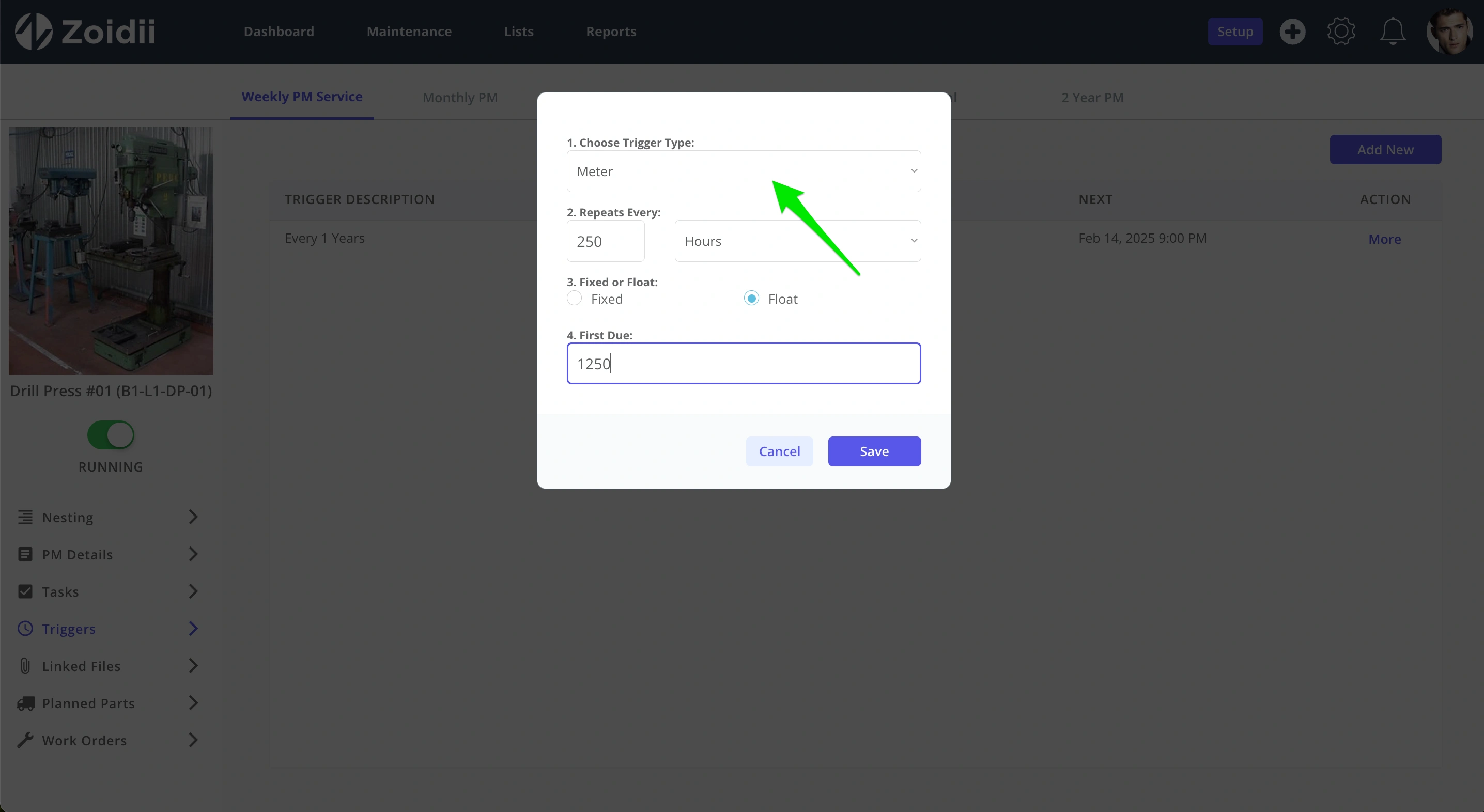
3. Configure Meter-Based Preventive Maintenance
Most organizations use a Computerized Maintenance Management System (CMMS) to manage meter-based preventive maintenance. System administrators configure PM triggers to fire at regular intervals, as decided in step 2.4. Collect and Analyze Data
Meter readings should be collected and analyzed regularly. Maintenance teams can collect and analyze the data manually, but again, in most cases, companies use a CMMS to automate data collection and analysis.The CMMS triggers the preventive maintenance work order when the meter reading hits the next PM threshold.
5. Monitor and Adjust
As meter-based preventive maintenance is implemented, the system should be continuously monitored and adjusted to optimize the timing of maintenance work orders. Over time, patterns in the data reveal opportunities to fine-tune maintenance schedules further, improving efficiency even more.Optimize Preventive Maintenance with Meter-Based Triggers
Meter readings and meter-based preventive maintenance are essential tools for asset management. By monitoring equipment in real time and scheduling maintenance based on actual usage and performance, maintenance teams can optimize their maintenance efforts, reduce costs, and extend the lifespan of critical assets.
Implementing this data-driven approach for maintenance managers provides better control over equipment performance, leading to fewer breakdowns, higher uptime, and improved operational efficiency.
Incorporating meter readings into a comprehensive asset management strategy ensures that operations remain efficient, cost-effective, and competitive in today’s demanding industrial environment.