Preventive maintenance is a crucial element of any effective asset management strategy, and one of the most common approaches is time-based preventive maintenance (TBPM). As a maintenance manager, you are responsible for ensuring that equipment remains operational and reliable while balancing costs and resources.
Time-based preventive maintenance is a systematic and proactive approach where maintenance tasks are scheduled at regular intervals, regardless of the asset’s condition, to prevent failures before they occur.
This article will explore time-based preventive maintenance, its benefits, challenges, and best practices, providing valuable insights on implementing and optimizing this approach in your organization.
What is Time-Based Preventive Maintenance?
Time-based preventive maintenance refers to performing scheduled maintenance tasks on equipment at predetermined intervals based on time or calendar dates. These intervals are often defined by the equipment manufacturer or determined based on operational experience and historical failure data.
Maintenance activities can include tasks such as:
- Inspections (e.g., checking for wear and tear),
- Lubrication of moving parts,
- Part replacements (e.g., belts, filters, bearings),
- Cleaning of components and
- Calibrations of instruments or sensors.
The Benefits of Time-Based Preventive Maintenance
Time-based preventive maintenance offers several advantages for organizations seeking to enhance equipment reliability and manage maintenance costs effectively:
1. Minimize Equipment Failures
Regularly performing maintenance can prevent many common issues that lead to equipment failure, such as wear, corrosion, or dirt buildup. TBPM helps ensure that components are in optimal working condition, reducing the likelihood of unexpected breakdowns that can disrupt operations.2. Extended Asset Life
Regular equipment maintenance according to a time-based schedule can extend the remaining useful life of assets. Routine activities like lubrication, cleaning, and part replacements help prevent premature wear and degradation, reducing capital expenditure on new equipment.3. Improved Operational Reliability
Scheduled maintenance ensures that critical systems and machinery are maintained in good working condition, improving reliability. Improved reliability is especially important for industries that rely on continuous production, such as manufacturing, power generation, and transportation.4. Simplified Maintenance Planning
One of the key advantages of TBPM is the ability to plan maintenance activities. Knowing when equipment will be maintained allows maintenance managers to allocate resources, manage spare parts inventory, and coordinate downtime to minimize disruptions to production.5. Cost Control
Although TBPM involves performing maintenance regardless of equipment condition, it can help avoid the higher costs associated with unplanned failures, such as emergency repairs, lost production time, or safety incidents. Over time, this approach helps balance maintenance costs with the benefits of increased equipment availability.Challenges of Time-Based Preventive Maintenance
Despite its benefits, time-based preventive maintenance is not without its challenges, and it may only sometimes be the most efficient strategy for every piece of equipment. As a maintenance manager, it’s important to be aware of these limitations:
1. Over-Maintenance One of the primary concerns with TBPM is the risk of over-maintenance. Since maintenance is performed based on a fixed schedule, it may be conducted on equipment still in good condition, leading to unnecessary work. Over-maintaining equipment can result in higher labor costs, downtime, and excessive use of spare parts.
2. Ignoring Condition-Based Needs Time-based maintenance does not account for the actual condition of the equipment. For example, one component may wear out faster than expected due to heavy usage, while another may remain functional beyond its scheduled maintenance date. Focusing solely on time intervals can lead to missed opportunities for more precise, condition-based maintenance.
3. Resource Intensity TBPM can be resource-intensive, requiring continuous scheduling, tracking, and execution of maintenance tasks. This can become challenging when dealing with a large number of assets, particularly if your maintenance team is already stretched thin.
How a CMMS Can Improve Time-Based Preventive Maintenance
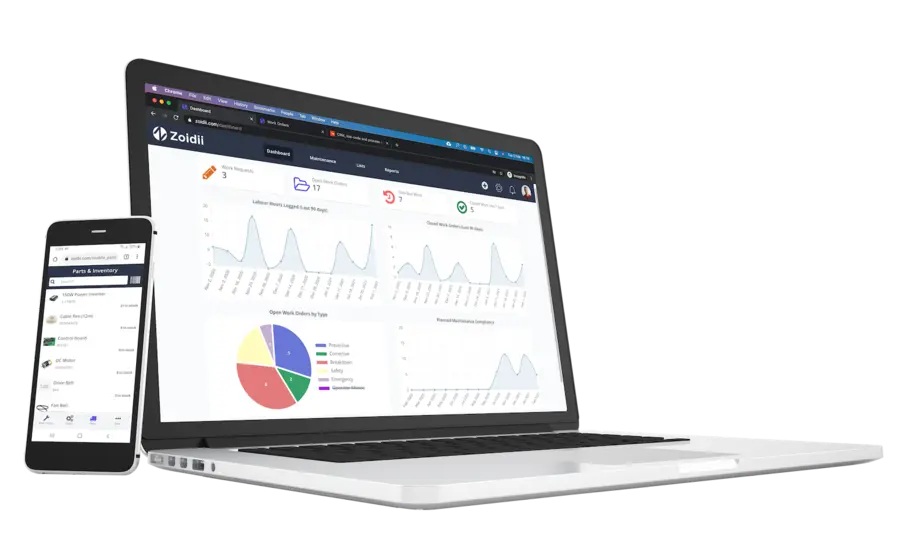
Implementing time-based preventive maintenance in a facility with many assets and maintenance tasks requires careful planning and management. A Computerized Maintenance Management System (CMMS) is an essential tool that simplifies and optimizes your TBPM program.
1. Automated Scheduling and Reminders
A CMMS automates the triggering and scheduling of time-based maintenance tasks. Once the preventive maintenance intervals are set, the system automatically generates work orders when tasks are due. This automation eliminates manual tracking and reduces the risk of missing important maintenance activities.2. Improved Visibility and Reporting
With a CMMS, maintenance managers have access to a centralized system that provides real-time data on the status of maintenance tasks. Maintenance managers can see which tasks have been completed, which are upcoming, and which are overdue. The system also generates detailed reports on asset performance, maintenance costs, and equipment history, helping them make data-driven decisions.3. Optimized Resource Allocation
A CMMS helps optimize resource management by assigning tasks to technicians based on availability and skill level. It ensures that the right person is assigned to the right task, improving efficiency. The system can also track spare parts inventory, ensuring that parts are available when needed and preventing maintenance delays.4. Data-Driven Maintenance Intervals
One of the main drawbacks of TBPM is the potential for over-maintenance. However, a CMMS can help you analyze historical maintenance data and failure trends to adjust maintenance intervals. You can fine-tune the schedule based on actual performance data rather than relying solely on manufacturer recommendations.5. Integration with Condition-Based Maintenance (CBM)
While TBPM is a time-based approach, combining it with Condition-Based Maintenance (CBM) can significantly enhance its effectiveness. A CMMS can integrate with sensors and IoT devices to monitor real-time equipment conditions. By setting thresholds for temperature, vibration, or pressure, you can trigger maintenance tasks based on the actual condition of the equipment.This hybrid approach ensures that maintenance is performed only when necessary, improving efficiency and reliability.
The First Step to Proactive Maintenance
Time-based preventive maintenance remains a foundational maintenance strategy that helps organizations prevent unplanned downtime, extend asset life, and maintain operational efficiency. However, it does have its limitations, such as the risk of over-maintenance and the lack of condition-based insights.
By leveraging a CMMS, you can automate scheduling, improve task tracking, optimize resource allocation, and adjust maintenance intervals based on data. The combination of time- and condition-based approaches allows maintenance managers to balance proactive maintenance and operational efficiency, ensuring that assets are maintained effectively without downtime or resource waste.
For maintenance managers seeking to improve reliability, safety, and cost control, leveraging a CMMS for time-based preventive maintenance is essential to building a more efficient and resilient maintenance program.