Keeping equipment operating smoothly and efficiently is crucial to the success and sustainability of any asset-intensive business.
Reliability Performance Indicators (RPIs) are essential metrics that provide insights into how physical assets perform. RPIs help organizations make informed decisions to improve reliability, reduce maintenance costs, and improve productivity.
These indicators help teams track performance trends, understand process weaknesses, and take action to extend the life of assets.
This article will explore RPIs, their significance in asset management, and how a Computerized Maintenance Management System (CMMS) can support tracking these indicators.
What are Reliability Performance Indicators?
Reliability Performance Indicators (RPIs) are metrics used to evaluate an organization’s assets’ reliability. They are critical components of an asset management strategy, providing a quantitative basis for understanding how effectively assets function and how well maintenance practices contribute to overall equipment effectiveness.
RPIs serve as a guide, empowering maintenance teams to pinpoint areas of improvement, recognize equipment failure trends, and align maintenance strategies to business goals.
Some common examples of RPIs include:
- Mean Time Between Failures (MTBF): MTBF represents the average time between component, system, or process failures. It is an essential indicator of asset reliability, as higher MTBF values suggest that equipment is operating for more extended periods without failure, leading to increased reliability and less downtime.
- Mean Time to Repair (MTTR): MTTR represents the average time required to diagnose, repair, and restore a system, machine, or equipment to full functionality after a failure. Reducing MTTR is crucial for minimizing downtime and improving overall asset availability.
- Overall Equipment Effectiveness (OEE): OEE is a comprehensive metric that considers asset availability, performance, and quality. It provides a high-level overview of how effectively an asset is utilized, incorporating downtime, speed loss, and quality loss into a single measurement.
- Failure Rate: This metric measures how often an asset fails over a specific period, giving insights into the frequency of breakdowns. Understanding failure rates is essential for assessing whether equipment reliability improves over time.
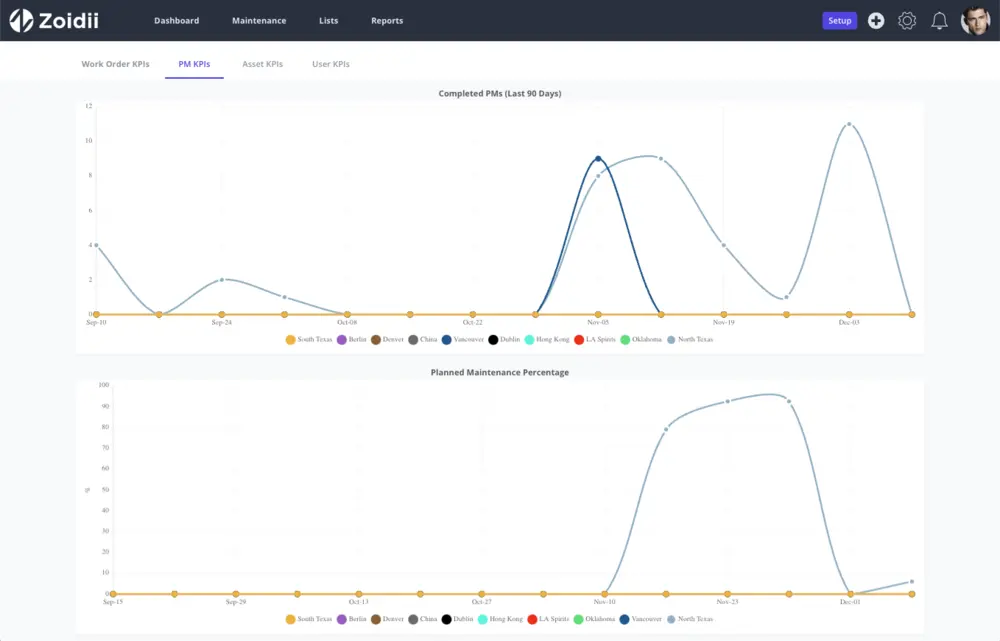
- Planned Maintenance Percentage (PMP): PMP tracks the percentage of total maintenance hours devoted to planned maintenance activities, such as preventive or scheduled maintenance, rather than reactive or unplanned repairs. A high PMP indicates that most maintenance is proactive rather than reactive, a key sign of effective reliability practices.
The Role of Reliability Performance Indicators in Asset Management
Incorporating RPIs into an asset management strategy is critical for optimizing asset performance, minimizing operational risks, and reducing costs. Here’s how RPIs contribute to effective asset management:
1. Data-Driven Decision Making
RPIs provide a quantitative basis for evaluating asset performance. This data-driven approach helps maintenance teams make informed decisions about when to perform maintenance, whether to replace an asset, or how to allocate resources effectively.2. Proactive Maintenance Planning
RPIs, by their nature, allow maintenance teams to identify early signs of asset deterioration, enabling proactive maintenance. This proactive approach helps organizations reduce unplanned downtime, increase asset longevity, and minimize repair costs.3. Identifying Trends and Patterns
By continuously monitoring RPIs, maintenance teams can identify recurring issues, pinpoint the root cause of failures, map failure codes, and implement corrective actions. This helps eliminate chronic problems and improve asset reliability over time.4. Aligning with Business Objectives
Reliability is a critical component of business success. RPIs align maintenance efforts with business goals, such as cost control, equipment uptime, and operational efficiency, ensuring that maintenance strategies support the organization’s objectives.How a CMMS Helps Track Reliability Performance Indicators
A Computerized Maintenance Management System (CMMS) is a powerful tool that can significantly enhance the tracking and analysis of RPIs. CMMS software provides a centralized digital platform for managing and optimizing maintenance activities, tracking asset performance, and generating detailed reports. Here are some ways a CMMS can support RPI tracking:
1. Data Collection and Analysis
A CMMS enables the collection of real-time data on asset performance, including downtime, repair times, and maintenance history. This data is crucial for calculating RPIs such as MTBF and MTTR. The CMMS system helps maintenance teams track trends, visualize data, and gain insights into asset reliability.2. Automated Reporting
The system can provide detailed reports on MTBF, MTTR, failure rates, and more, allowing maintenance teams to monitor performance. This information makes it easy to spot potential issues and assess the effectiveness of maintenance strategies.3. Maintenance Scheduling
A CMMS can optimize maintenance schedules based on RPI data. By understanding an asset’s reliability through metrics like MTBF, maintenance teams can develop a more effective preventive maintenance schedule, ensuring that equipment is serviced at the right time to prevent unexpected breakdowns and providing a sense of control over maintenance operations.4. Root Cause Analysis
When failures occur, CMMS software helps track the cause of failures and analyze the data to determine trends and recurring issues. By understanding root causes, maintenance teams can improve reliability and make data-backed decisions about modifications or process improvements.5. Work Order Management
CMMS also enhances work order management by tracking maintenance tasks, spare parts, labor hours, and other associated resources. This information helps measure metrics like MTTR and PMP, which contribute directly to overall reliability. By optimizing resource allocation, organizations can improve asset reliability and achieve higher maintenance efficiency.Maximize Asset Performance & Reliability
Reliability Performance Indicators (RPIs) play an essential role in asset management by providing critical insights into asset performance and reliability. These indicators help maintenance teams assess the effectiveness of their practices, identify weaknesses, and make informed decisions about optimizing maintenance strategies.
Using a CMMS takes RPI tracking to the next level by automating data collection, analysis, and reporting, providing a centralized platform for managing all aspects of maintenance.
By leveraging the power of RPIs and a CMMS, organizations can achieve greater reliability, reduced downtime, and improved overall asset performance, driving operational efficiency and business success.