
Unplanned equipment downtime now costs the average Fortune 500 company $2.8 billion every year—roughly 11% of annual revenue. For individual manufacturing plants, that number averages $253 million per year. Whether you manage a team of two or two hundred, the decisions you make as a maintenance manager have a direct line to the bottom line. The difference between a reactive team and a proactive one often comes down to a handful of habits. Here are five essential dos and don'ts that separate the best maintenance managers in 2026.
1 - Do: Use a CMMS to Centralize Your Maintenance Operations
If you're still managing work orders on spreadsheets, whiteboards, or paper binders, you're fighting with one hand tied behind your back. In 2026, nearly 65% of large facilities rely on CMMS tools to streamline asset operations, and adoption among mid-sized businesses has climbed past 48%—because the ROI is undeniable.
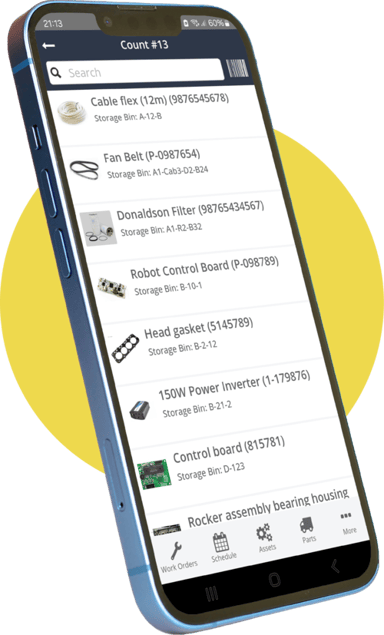
A modern CMMS (Computerized Maintenance Management System) gives your team a single source of truth: scheduled PMs, work orders, asset histories, parts inventory, and technician assignments, all in one place. Mobile-enabled CMMS platforms are now used by over 68% of large enterprises, eliminating the trip back to the office and putting information in the hands of technicians exactly when and where they need it. 2026 Stat: Facilities using mobile-first CMMS report a 15–25 percentage-point improvement in wrench time—the single largest execution-quality gain available to most teams today.
The CMMS market is expected to grow at a 10.1% CAGR through 2030, reaching over $3.5 billion. The adoption wave isn't slowing down—and neither are the competitors already riding it.
2 - Do: Prioritize Preventive Maintenance Scheduling
Reactive maintenance—fixing things after they break—is the most expensive strategy available to you. According to Forbes, 82% of equipment failures show no apparent pattern, which means waiting for failure is essentially gambling with your budget and your reputation.
Companies that implement systematic preventive maintenance through their CMMS report a 20–30% reduction in major equipment breakdowns. Predictive maintenance goes even further: organizations that have deployed it see uptime improvements of 10–20% and maintenance cost reductions of up to 25%. 2026 Stat: 88% of manufacturing companies now use some form of preventive maintenance—yet only 35% of facilities spend the majority of their time actually executing PM tasks. The gap between strategy and execution is where downtime hides.
Use your CMMS to build and enforce a rigorous PM schedule. Assign tasks, set recurring triggers, and track completion rates. Turning PM compliance into a visible KPI is the fastest way to shift your team from reactive firefighting to proactive reliability.
3 - Do: Track KPIs and Let the Data Drive Decisions
The best maintenance managers in 2026 are data-driven leaders. Key metrics like MTBF (Mean Time Between Failures), MTTR (Mean Time to Repair), PM compliance rates, and cost-per-work-order tell a story that gut feeling simply cannot.
The average MTTR has increased from 49 minutes to 81 minutes industry-wide, driven largely by skills gaps and supply chain delays. Managers who track this metric proactively can identify where the slowdowns are occurring—whether it's parts availability, technician capacity, or documentation gaps—and fix them before they compound.
2026 Stat: 45% of industrial facilities report improved equipment uptime after CMMS adoption, and 40% cite enhanced technician productivity as a direct outcome of implementing digital maintenance workflows. Your CMMS reporting dashboard is the fastest path from data collection to actionable insight. Review your KPIs weekly with your team, and monthly in strategic planning. Organizations that track maintenance performance consistently are the ones reducing costs and extending asset life—not the ones reacting to the next emergency.
4 - Don't: Don't Let Documentation Fall Through the Cracks
Incomplete or missing maintenance records are one of the most silent and costly problems a maintenance team can have. When a technician leaves, retires, or is out sick, the institutional knowledge they carry about each asset walks out the door with them. Without proper documentation in a CMMS, you're starting from zero—every time.
The average age of industrial fixed assets is now 24 years—the oldest average in nearly 70 years. Aging equipment is the top challenge cited by 33% of maintenance leaders. Detailed service histories, failure notes, and repair records stored in your CMMS are the difference between a team that can manage aging assets intelligently and one that's permanently in reactive mode.
2026 Stat: 39% of maintenance leaders say knowledge capture and sharing is the most valuable use case for AI in maintenance. The first step toward that future is capturing data in a CMMS today. Make it a non-negotiable: every work order closed in your CMMS should include what was done, what parts were used, how long it took, and what was observed. That data is the raw material for better decisions—and eventually for predictive maintenance.
5 - Don't: Don't Neglect Team Training and Buy-In
Implementing a CMMS is only half the battle. The most common reason CMMS rollouts underperform isn't the technology—it's adoption. Maintenance teams accustomed to traditional workflows often resist new digital processes, resulting in incomplete data entry, workarounds, and general skepticism that erodes the tool's value from the inside out.
A shortage of skilled labor is currently ranked as a primary challenge by 30% of maintenance leaders, and with the average age of the maintenance workforce rising, knowledge transfer is an urgent priority. Your CMMS is only as good as the people using it, and people only use tools they understand and trust.
2026 Stat: Companies facing higher downtime are more than 2x as likely to be early AI and technology adopters—meaning the teams that invest in training and technology today are the ones outperforming peers tomorrow.
Invest in proper onboarding, run hands-on training sessions, and designate CMMS champions on your team. A CMMS like Zoidii is purpose-built to be simple enough for teams coming off pen and paper for the first time—but that simplicity only delivers results when your team is actually empowered to use it.
Lead with the "why." When your technicians understand that logging their work orders accurately protects the whole team from being blindsided by the next failure, compliance becomes a team value—not a management mandate.