
The global food service equipment market reached $40.2 billion in 2025 and is projected to surpass $42.7 billion in 2026. Behind every dollar of that market is a restaurant, hotel, or food service operation that depends on commercial kitchen equipment running reliably every single service. Yet equipment failure remains one of the most common and costly disruptions in food service. A fryer that goes down during a Friday dinner rush can cost several hundred dollars in lost sales within a single hour. A refrigeration unit that fails overnight can spoil an entire walk-in's worth of inventory. And an equipment issue that triggers a health code violation can do damage that outlasts the repair itself.
The good news is that the overwhelming majority of these failures are preventable. Routine maintenance can reduce restaurant repair and replacement costs by approximately 50 percent compared to reactive approaches. And a modern Computerized Maintenance Management System (CMMS) takes that preventive maintenance from a good intention to a reliable, automated, documented practice.
Here are the five most important reasons to properly maintain your restaurant equipment in 2026, and how CMMS software delivers on each one.
Key Takeaways
Equipment failure is expensive and largely preventable. A fryer down for one hour costs hundreds in lost sales. A failed walk-in cooler can mean thousands in spoiled inventory. Routine preventive maintenance catches the small issues before they become costly shutdowns.
Health code violations carry serious financial and reputational consequences. Around 70% of diners say they are unwilling to visit restaurants that have been cited for health code violations. Equipment-related violations are among the most common citations. A CMMS creates the digital maintenance records that demonstrate compliance before, during, and after every inspection.
Poorly maintained equipment consumes significantly more energy. Commercial kitchens already use five times more energy per square foot than other commercial buildings. Dust on condenser coils, grease buildup in ventilation, and worn door seals all force equipment to work harder than it should. ENERGY STAR certified equipment operating in well-maintained condition can reduce energy consumption by 20 to 35 percent.
Regular maintenance extends equipment life by up to 25 percent. Commercial kitchen equipment is a major capital investment. Consistent servicing, lubrication, calibration, and cleaning extend the usable life of every piece of equipment and defer costly replacement purchases. A CMMS turns a good maintenance intention into a reliable system. Maintenance checklists and paper logs work until they are skipped during a busy service. A CMMS automates scheduling, enforces completion, generates digital records, and ensures nothing falls through the cracks, regardless of how busy the kitchen gets.
1. Prevent Costly Breakdowns and Unplanned Downtime
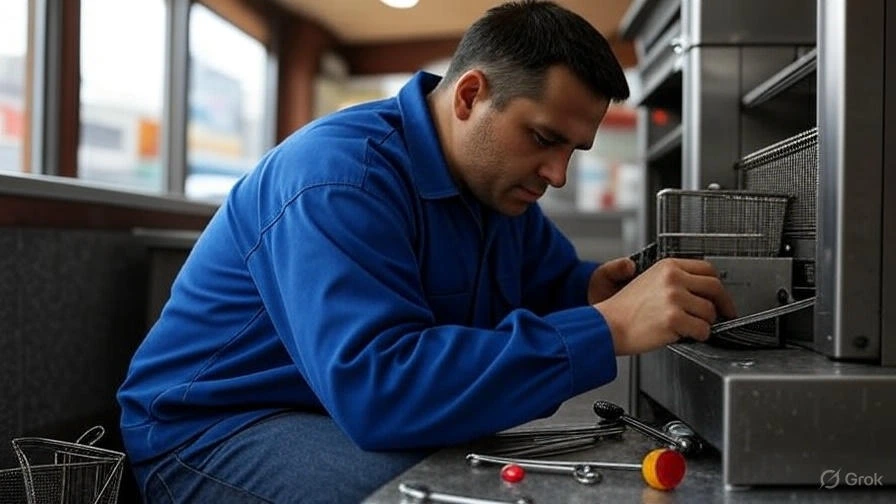
Every restaurant kitchen runs on tight timing. A breakfast rush, a lunch turnover, a dinner service: each window is short, the margin for error is small, and equipment failure at the wrong moment does not just disrupt the kitchen. It disrupts the guest experience, stresses the team, and costs money that was never budgeted.
Equipment failures in food service do not typically appear without warning. They build. A refrigeration unit that starts struggling to hold temperature. A fryer with inconsistent recovery times. A dishwasher filter that has not been cleaned in weeks and is running at reduced capacity. Each of these is a warning that a breakdown is coming, and each of them is detectable through routine maintenance before the failure occurs.
Industry data consistently shows that reactive maintenance in food service costs significantly more than preventive maintenance. Emergency repair calls carry premium labor rates. Parts sourced urgently are more expensive than parts ordered in advance. And the indirect costs, lost sales, waste of spoiled inventory, overtime for staff covering the disruption, and potential food quality issues, are often larger than the repair cost itself. Routine preventive maintenance catches these issues while they are still inexpensive to address. Regular cleaning of condenser coils, inspection of door seals and gaskets, calibration of cooking equipment, and scheduled servicing of mechanical components all reduce the likelihood of a breakdown during service. Research shows that routine maintenance can reduce overall repair and replacement costs by approximately 50 percent compared to reactive approaches.
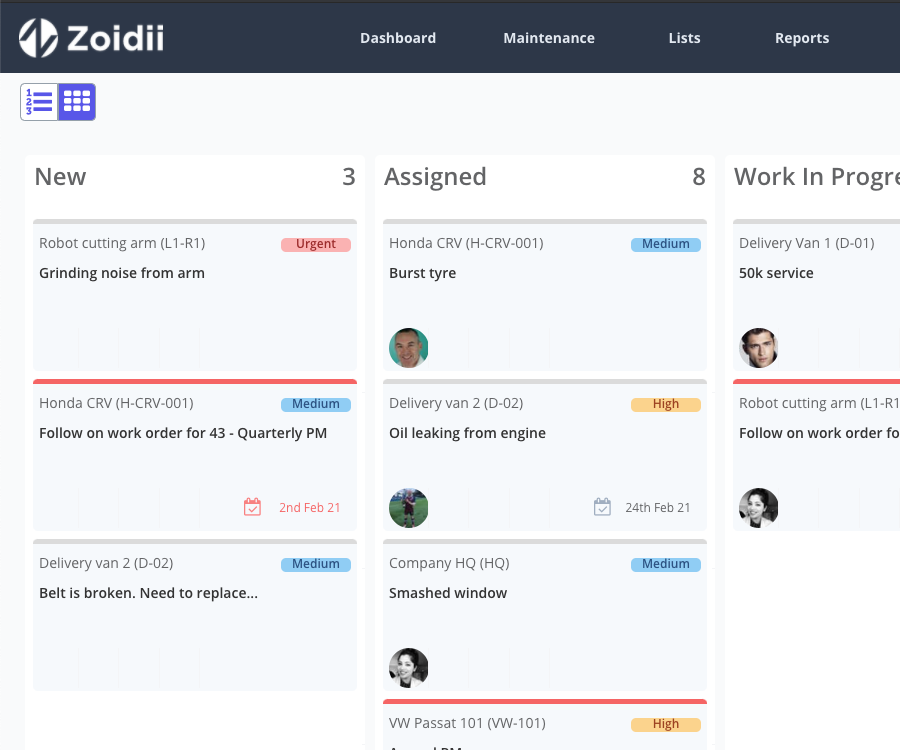
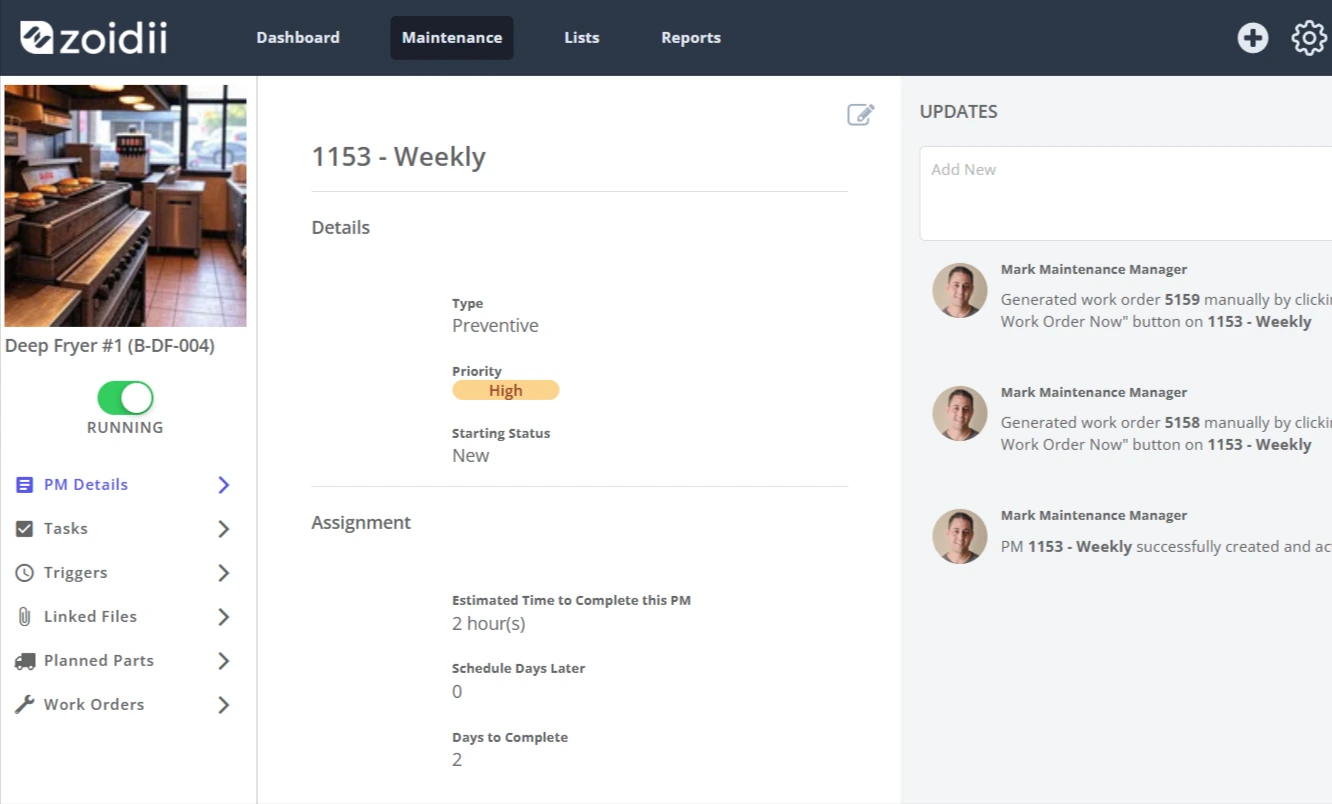
How CMMS helps: A CMMS automates the scheduling of preventive maintenance tasks across every piece of equipment in the kitchen. Daily, weekly, monthly, and quarterly tasks are generated automatically, assigned to the right person, and tracked through to confirmed completion. Nothing falls through the cracks because a service was busy. When maintenance is overdue, the system escalates automatically rather than waiting for someone to notice. Every completed task is logged with a timestamp and the name of whoever completed it, creating a maintenance history for every piece of equipment in the kitchen.
2. Protect Food Safety and Pass Health Inspections
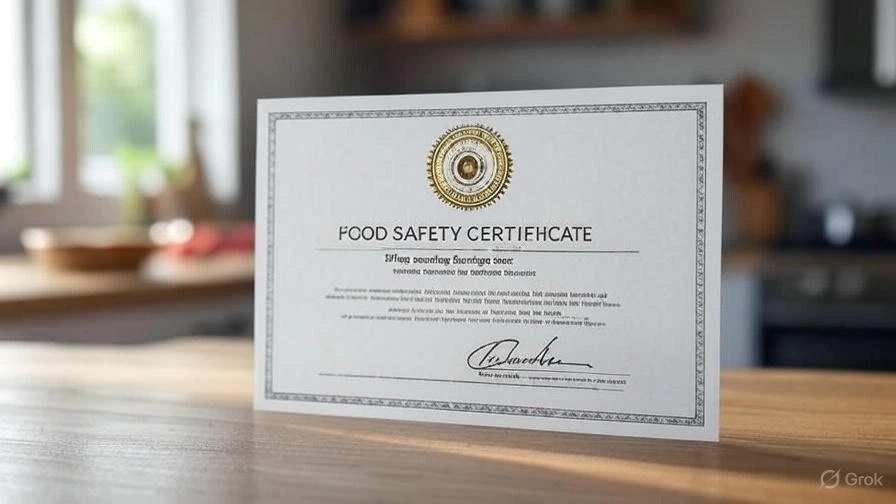
Food safety is not optional. The U.S. Food and Drug Administration requires food establishments to be inspected at least once every six months, and the FDA's Food Code 2022, with its 2024 Supplement, continues to tighten time-temperature controls and documentation expectations for commercial operations. Equipment is central to food safety. Refrigeration must maintain consistent temperatures to keep food out of the danger zone. Dishwashers must reach proper sanitizing temperatures to meet health codes. Ice machines, fryers, prep surfaces, and ventilation systems all have sanitation and maintenance requirements that inspectors examine. When equipment is not properly maintained, it is not just a compliance risk. It is a genuine public health risk.
The consequences of a failed health inspection reach well beyond the fine. Around 70 percent of diners say they are unwilling to return to a restaurant that has been cited for health code violations. Health inspection results are publicly posted in most jurisdictions, and social media coverage of a failed inspection can spread faster than any marketing campaign. For minor infractions, fines start around $200. For serious equipment-related violations, fines can exceed $500 per citation, and repeat offenders face significantly steeper penalties. In the most serious cases, partial or full closure is ordered until violations are corrected, stopping revenue entirely.
Equipment-related violations are among the most common citations inspectors issue. Refrigeration and mechanical dishwashing equipment requiring repair, food contact surfaces not properly cleaned, and ventilation systems with grease buildup all regularly appear on inspection reports. Every one of these violations traces back to a maintenance gap.
How CMMS helps: A CMMS stores equipment-specific maintenance checklists and schedules recurring safety-related tasks automatically. Temperature checks, seal inspections, coil cleaning, grease trap flushing, and dishwasher filter maintenance are all scheduled at the correct intervals and completed with digital confirmation. When an inspector arrives, a CMMS user can generate a complete maintenance history for any piece of equipment in minutes, showing exactly what was done, when it was done, and who completed it. This documented record is often the difference between a citation and a clean report.
3. Reduce Energy Costs in a High-Consumption Environment
Commercial kitchens are among the most energy-intensive environments in any building category. A commercial kitchen uses approximately five times more energy per square foot than any other type of commercial space. Energy costs represent one of the most significant and least controllable operating expenses for restaurant operators, and poorly maintained equipment makes the problem substantially worse.
When equipment degrades, it consumes more energy to deliver the same output. The mechanisms are straightforward. Dust and debris on refrigeration condenser coils prevent heat transfer, forcing compressors to run longer and harder to maintain temperature. Grease buildup in kitchen exhaust systems increases resistance on ventilation fans, raising their power consumption. Worn or damaged door seals on refrigerators and freezers allow cold air to escape, forcing compressors to cycle continuously. Dirty or clogged dishwasher filters reduce cleaning efficiency and increase water heating demands. Cooking equipment running out of calibration takes longer to reach and hold target temperatures, consuming more fuel or electricity in the process.
Each of these inefficiencies is invisible in the moment but accumulates steadily on the utility bill. ENERGY STAR certified equipment operating in well-maintained condition can reduce energy consumption by 20 to 35 percent compared to poorly maintained alternatives, even without replacing the underlying equipment. For a restaurant running high-volume service across multiple pieces of commercial equipment, that efficiency gap compounds into meaningful cost differences month over month. How CMMS helps: A CMMS schedules energy-related maintenance tasks at the intervals that keep equipment operating at peak efficiency. Condenser coil cleaning, filter replacements, door seal inspections, calibration checks, and lubrication schedules are all set up once in the system and then generated automatically for the life of the equipment. The result is consistent efficiency without relying on anyone to remember when the coils were last cleaned or whether the oven was calibrated this quarter. The CMMS also tracks maintenance costs per piece of equipment, making it straightforward to identify when a unit is consuming disproportionate maintenance resources relative to its output.
4. Extend Equipment Life and Protect Capital Investments
Commercial kitchen equipment is one of the most significant capital investments a restaurant makes. A commercial convection oven, a walk-in refrigeration system, a high-capacity warewasher: these are assets that represent tens of thousands of dollars each, and replacement cycles have a real impact on a restaurant's financial position.
The lifespan of commercial kitchen equipment is directly and significantly affected by the quality of maintenance it receives. Research shows that regular maintenance can extend the usable life of restaurant equipment by up to 25 percent. For a restaurant with $200,000 in commercial kitchen equipment, a 25 percent life extension represents $50,000 in deferred capital replacement. That number deserves to be part of every conversation about whether a maintenance program is worth investing in.
The relationship works in both directions. Well-maintained equipment that is monitored and serviced consistently tends to perform reliably until near the end of its design life. Equipment that is run reactively, serviced only when something breaks, degrades faster because small issues cascade into larger failures. A worn gasket becomes a refrigeration failure. An uncleaned fryer develops component damage from overheating. A misaligned dishwasher spray arm reduces throughput and increases cycle times, putting additional strain on heating elements and pumps.
Knowing when to repair and when to replace is also a decision that benefits from data. The general rule is that when repair costs approach 50 percent of the cost of a new unit, replacement is likely the better financial decision. But making that call requires documented cost history, which most restaurants running paper-based maintenance systems do not have. How CMMS helps: A CMMS tracks the complete maintenance and repair history for every piece of equipment, including every work order, every part replaced, every technician visit, and every associated cost. Over time, this history reveals exactly how much has been spent maintaining each asset and whether that spend is trending upward. Repair-versus-replace decisions become data-driven rather than intuitive. Operators can identify which units are approaching the point where replacement is more economical than continued servicing, and plan capital purchases accordingly, rather than being forced into emergency replacements.
5. Keep Staff Safe and Protect Against Liability
The kitchen is one of the highest-risk work environments in any commercial sector. High temperatures, open flames, sharp equipment, wet floors, heavy loads, and pressurized systems all create conditions where equipment failures can cause serious injuries. Proper maintenance of commercial kitchen equipment is not just a compliance obligation. It is a direct responsibility to the people who work in the kitchen every day.
Equipment-related incidents in food service environments include burns from malfunctioning cooking equipment, fires caused by grease buildup in ventilation systems and fryers, electrical hazards from damaged or improperly maintained equipment, and slips caused by leaks from poorly maintained refrigeration or plumbing connections. Fires caused by equipment failure remain a leading cause of insurance claims in the food service industry, and grease fires in particular can escalate rapidly in a commercial kitchen environment if suppression systems and ventilation are not properly maintained.
Beyond the immediate physical risk, equipment-related incidents carry significant liability exposure. Workers' compensation claims, legal action, insurance premium increases, and potential regulatory penalties all compound the cost of an incident that routine maintenance could have prevented. Staff who work in environments where equipment is well-maintained and properly functioning also report lower stress levels and higher confidence in the kitchen, which contributes to retention in an industry known for high turnover. How CMMS helps: A CMMS schedules and tracks safety-critical maintenance tasks, including hood and ventilation cleaning, fire suppression system checks, gas line inspections, and electrical equipment servicing. Mandatory completion steps can be built into work orders so that safety-critical tasks cannot be marked complete without every required step being signed off. Digital records of completed safety maintenance provide documentation that demonstrates due diligence in the event of an inspection or incident. This level of documented accountability is increasingly important as food service operators navigate rising insurance costs and tightening regulatory environments.
How CMMS Software Transforms Restaurant Maintenance in 2026
A clipboard with a maintenance checklist is better than nothing. But it relies entirely on human consistency, is vulnerable to being skipped during a busy service, and produces records that are difficult to search, summarize, or present to an inspector.
A CMMS removes those vulnerabilities by making restaurant equipment maintenance systematic rather than discretionary.
Automated scheduling across all equipment. Every piece of kitchen equipment has its own maintenance schedule configured in the CMMS: daily temperature checks for refrigeration, weekly filter inspections for dishwashers, monthly coil cleaning for refrigeration units, quarterly calibration for cooking equipment, and annual professional servicing for HVAC and ventilation systems. Tasks generate automatically and disappear only when they are completed and confirmed.
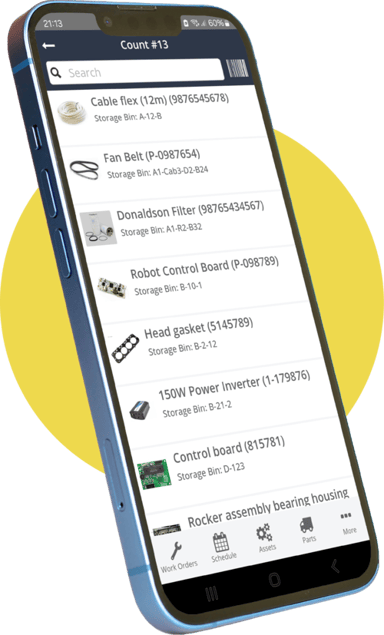
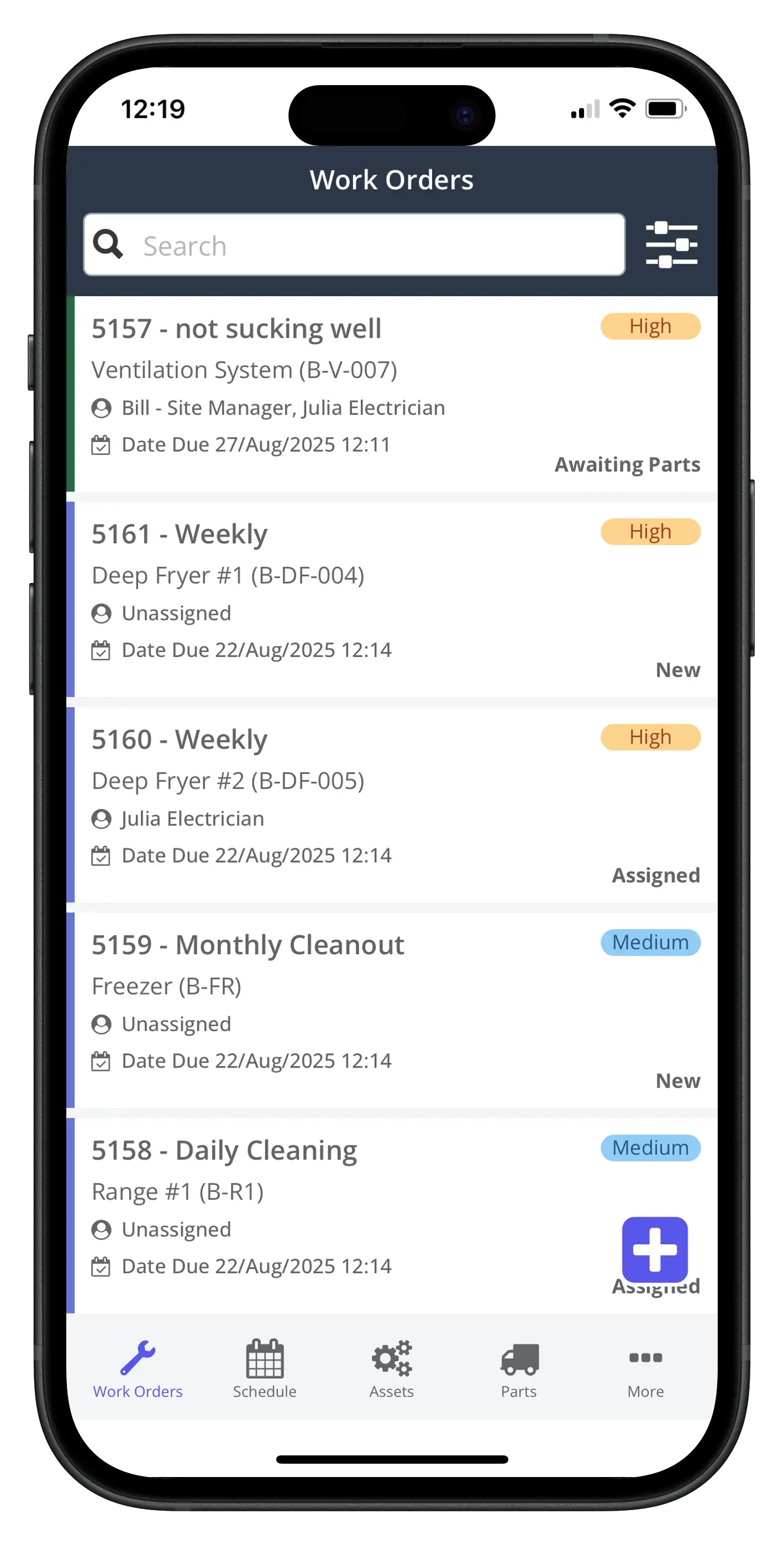
Mobile access for kitchen teams. By 2026, mobile-first maintenance tools will be standard across food service operations. Kitchen staff and maintenance personnel access work orders, checklists, and equipment histories directly on mobile devices, completing and signing off tasks in the moment rather than filling out paper logs after the fact or, more commonly, not filling them out at all.
Audit-ready documentation. Every completed maintenance task in a CMMS carries a timestamp, the name of the person who completed it, and any notes or photos attached at completion. When a health inspector asks for maintenance records on the walk-in cooler, the answer is a filtered report rather than a search through a binder. When an insurance company asks about maintenance history following an incident, the documentation is already there.
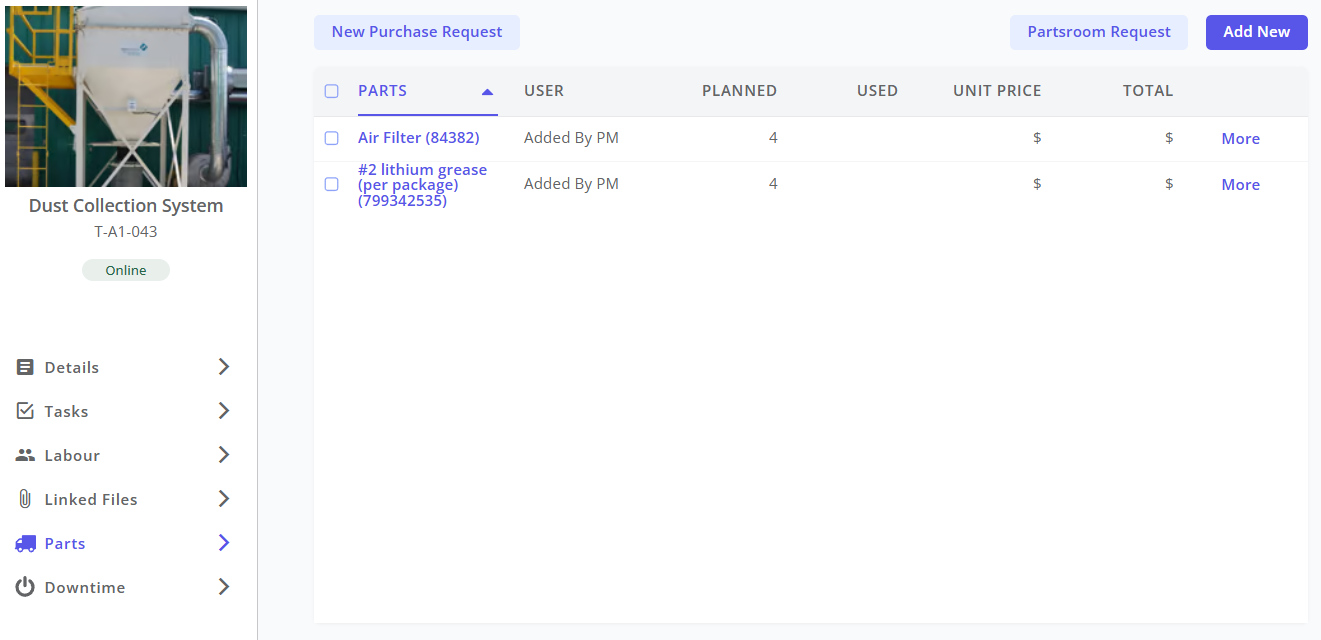
Cost tracking per asset. CMMS work orders log the parts and labor costs associated with every repair and maintenance task. Over months and years, this builds the cost history that supports smart repair-versus-replace decisions, maintenance budget planning, and vendor performance evaluation.
Vendor and technician management. Many restaurant maintenance tasks involve external service providers. A CMMS tracks vendor contacts, service histories, warranty information, and contract details for every piece of equipment, making it straightforward to manage external service relationships alongside internal maintenance tasks.
Building a Restaurant Equipment Maintenance Schedule with CMMS
A well-structured restaurant maintenance program covers tasks at four intervals. A CMMS manages all of them automatically.
Daily tasks include temperature monitoring for all refrigeration and freezer units, cleaning cooking surfaces and fryer baskets, inspecting door seals on refrigeration, checking dishwasher chemical levels, and wiping down exterior surfaces on all equipment. These take minutes but prevent the gradual degradation that leads to failures.
Weekly tasks include deep cleaning of fryers and cooking equipment, inspection of ventilation filters and grease traps, testing dishwasher sanitizer and rinse temperatures, checking ice machine for buildup or discoloration, and inspecting drain lines and plumbing connections for leaks.
Monthly tasks include cleaning refrigerator and freezer condenser coils, inspecting and replacing worn door gaskets, lubricating hinges and mechanical components, checking gas connections and pressure, and reviewing equipment performance logs for any anomalies.
Quarterly and annual tasks include professional calibration of cooking equipment, professional cleaning and inspection of ventilation and hood systems, fire suppression system testing, full HVAC servicing, and comprehensive review of all equipment maintenance histories for repair-versus-replace planning.
Frequently Asked Questions
What is CMMS and how does it help with restaurant equipment maintenance? A CMMS (Computerized Maintenance Management System) is software that centralizes all maintenance activity for a restaurant operation. It automates the scheduling of preventive maintenance tasks, tracks completion, stores digital maintenance records, manages parts and vendor contacts, and generates reports that support health inspections, budget planning, and repair-versus-replace decisions. It replaces paper logs, spreadsheets, and informal reminder systems with a reliable, documented process.
How much can preventive maintenance reduce restaurant repair costs? Industry data consistently shows that routine preventive maintenance reduces repair and replacement costs by approximately 50 percent compared to reactive maintenance approaches. The savings come from catching small issues before they become expensive failures, extending equipment life, and reducing emergency repair premiums that come with unplanned breakdowns.
How does restaurant equipment maintenance affect health inspection scores? Equipment condition is one of the primary areas that health inspectors evaluate. Refrigeration units that cannot hold safe temperatures, dishwashers that do not reach sanitizing temperatures, and ventilation systems with grease buildup are among the most commonly cited violations. A CMMS ensures these maintenance tasks are completed on schedule and documented with timestamps, giving operators defensible records for every inspection.
How does poorly maintained restaurant equipment affect energy costs? Poorly maintained equipment works significantly harder than well-maintained equipment to deliver the same output. Dirty condenser coils, blocked ventilation, worn door seals, and miscalibrated cooking equipment all increase energy consumption. Commercial kitchens already use five times more energy per square foot than other commercial buildings. Keeping equipment properly maintained, particularly refrigeration and cooking equipment, can reduce energy consumption by 20 to 35 percent.
What restaurant equipment should be on a preventive maintenance schedule? Every piece of equipment that affects food safety, energy consumption, or service capacity should have a maintenance schedule. This includes all refrigeration and freezer units, commercial cooking equipment (ovens, fryers, grills, ranges), dishwashers and warewashers, ice machines, ventilation and hood systems, HVAC equipment, grease traps and drain systems, and fire suppression systems. A CMMS manages maintenance schedules for all of these in a single system, ensuring nothing is overlooked.
Can a CMMS help manage external vendors for restaurant equipment servicing? Yes. A CMMS stores vendor contact information, service contracts, warranty details, and service history for every piece of equipment. When a piece of equipment requires a professional service call, all relevant vendor information and the equipment's complete maintenance history are available in one place. This improves communication with service providers, helps operators hold vendors accountable to response time expectations, and ensures warranty coverage is used appropriately.
Ready to stop managing restaurant equipment maintenance on paper and start running a reliable, documented, inspection-ready maintenance program? Zoidii CMMS is designed for food service operations that want to prevent breakdowns, control costs, and stay ahead of every health inspection. Start your free trial today.