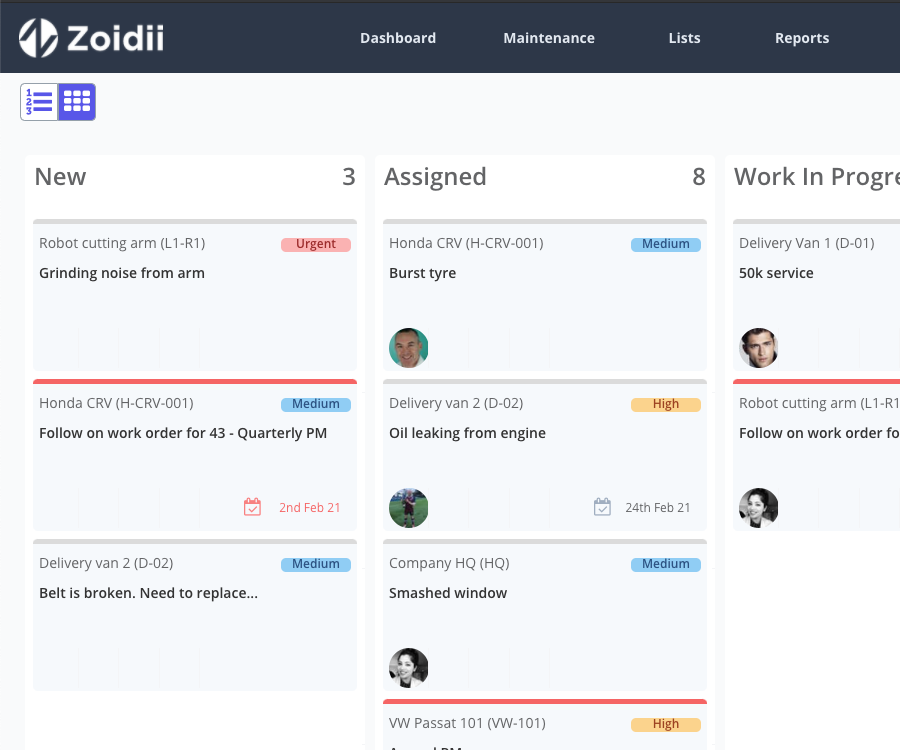

If you want to streamline your work order process, implementing a comprehensive parts kitting program may be part of the solution. It involves grouping all necessary parts and materials to complete a specific work order, making them easily accessible to your technicians.
Planned maintenance only delivers its promised savings if the parts are ready when the work begins. Yet in many facilities, a scheduled job arrives, the technician heads to the asset, and then discovers a required part was never staged. The planned window is lost to a storeroom hunt or an expedited order, and a job that was supposed to be predictable turns into a scramble. Parts kitting closes that gap. Because planned maintenance is scheduled in advance, you know exactly what each job will need and exactly when it's due — which means you can pull, verify, and stage every part before the technician starts. This guide explains what kitting is, why it's essential to a strong planned maintenance program in 2026, and how to start using your CMMS and bills of materials (BOMs).
What Is Parts Kitting?
Parts kitting is the practice of gathering all the parts and materials a planned maintenance work order requires into a single, ready-to-use kit, then staging that kit so it's waiting when the technician arrives. Instead of collecting components across the storeroom at the start of a job, the technician picks up a complete kit and goes straight to work.
A planned maintenance kit might bundle, for example, the mechanical seal, bearing set, O-rings, gaskets, and wear ring needed for a scheduled pump overhaul into one stocked, reservable item. Kitting works hand-in-hand with two other tools: the bill of materials (BOM), which lists exactly what each scheduled task requires, and the CMMS, which links those parts to the asset and the planned work order so nothing is missed.
Because kitting depends on knowing the task and timing ahead of time, it's a natural fit for planned and preventive maintenance — where the schedule tells you what's coming and gives you the lead time to prepare.
Why Parts Kitting Matters for Planned Maintenance in 2026
The whole point of planned maintenance is predictability: scheduled work, controlled costs, and protected uptime. Missing parts undermine all three. Kitting is what keeps a planned maintenance program actually running to plan.
- Parts hunting destroys wrench time. When storeroom catalogs aren't linked to assets, technicians can't see which parts are compatible and in stock — adding an estimated 35–60 minutes of search time per repair event. A structured kitting process cuts that non-productive transit time dramatically; one industry guide pegs the wrench-time gain at around 30%.
- Structured parts management pays off hard. Facilities that link parts to asset records with automated reorder points report roughly 40% lower parts expenditure and 58% faster repair completion — with corresponding reductions in mean time to repair (MTTR) and downtime.
- A stalled planned job becomes an expensive one. When a scheduled job can't proceed for want of a staged part, teams fall back on expedited procurement, which costs 3 to 5 times more than planned procurement, a premium of up to 4.8x per event. Kitting protects the cost advantage that justifies planned maintenance in the first place.
- Most storerooms are bloated and inaccurate. The average maintenance storeroom holds about 22% obsolete or over-stocked inventory, and manual quarterly stock counts run far less accurate than CMMS-integrated tracking. Building kits from your PM schedule forces the discipline that surfaces both problems.
How Parts Kitting Works: BOM + Forward-Looking Staging
The mechanics are straightforward once a CMMS and BOM are in place, and they map directly onto the planned maintenance cycle:
- A planned work order is generated from your preventive maintenance schedule (by calendar interval, runtime hours, or meter reading).
- The bill of materials identifies the parts required for that specific scheduled task.
- The storeroom team pulls and verifies those items ahead of the maintenance window, checking the condition.
- The kit is staged in a secure, labeled location, ready for the technician when the job comes due.
How to Start a Parts Kitting Program: Step by Step
1. Build Accurate Bills of Materials for Your PM Tasks
Kitting is only as good as the BOM behind it. For your recurring preventive maintenance tasks, document exactly which parts each scheduled job requires. This is the foundation — without a reliable BOM, you're guessing at what to stage.2. Link Parts to Assets in Your CMMS
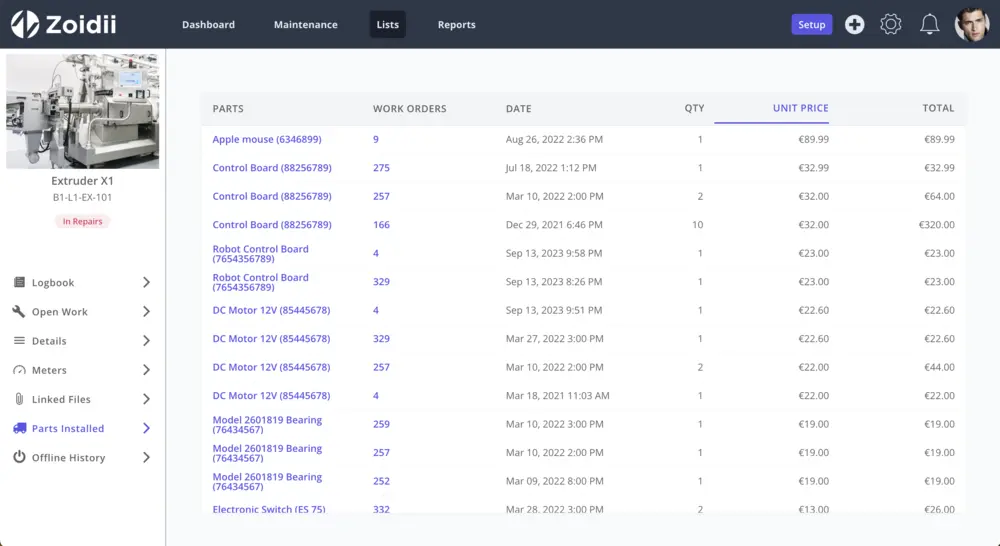
Connect every part in your storeroom to the assets it serves inside your CMMS, which can be done via attributes. This is the step that eliminates the 35–60 minute search problem: when a planned work order is created, the system already knows which parts are compatible, available, and in stock for that asset.3. Set Minimum Stock and Automated Reorder Points
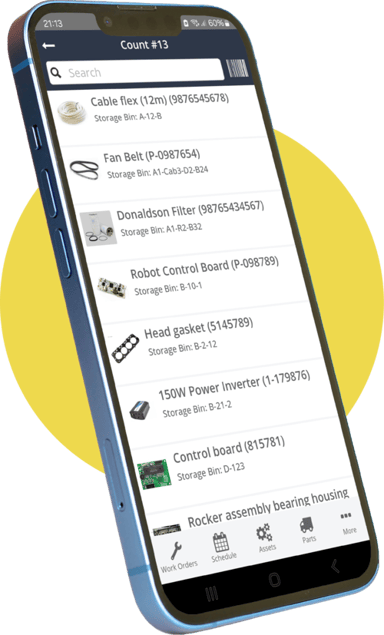
Planned maintenance depletes inventory predictably — so automate replenishment. Set minimum stock levels and reorder quantities so alerts fire before a stockout, well ahead of the next scheduled job. Mobile QR-code scanning lets technicians write off consumed parts instantly at the machine, keeping counts accurate and triggering reorders automatically.4. Read Your PM Schedule Forward and Stage Early
This is where planned maintenance gives kitting its biggest advantage. A CMMS can read your PM schedule forward and surface parts requirements before each maintenance window arrives — flagging the parts for a planned bearing replacement three weeks out for procurement today, not the day before the job. Stage each kit ahead of its scheduled date so the storeroom is always working in advance of the technician.5. Track the Right KPIs
Measure whether kitting is keeping your planned maintenance on plan. Useful targets include a stockout rate below 2% for critical parts, a fill rate of 95%+ overall (99%+ for critical items), and healthy MRO inventory turns (roughly 2–4x annually; turns below 1.5 signal dead stock to review). Watch your planned-maintenance schedule compliance, too — kits that arrive on time are what let scheduled work happen on time.The Role of a CMMS in Parts Kitting
You can run a basic kitting process on spreadsheets, but it breaks down fast at scale — and the data stays disconnected from your planned work orders. A modern CMMS is what makes kitting for planned maintenance reliable and self-sustaining:
- Parts-to-asset linking so the system knows what every planned work order needs.
- Automated reorder alerts triggered by real consumption, not quarterly counts.
- Forward-looking PM integration that surfaces and stages parts before each window.
- Mobile scanning for instant, accurate parts write-offs at the machine.
- Vendor and cost data so procurement isn't defaulting to the same supplier regardless of lead time or value.
Common Parts Kitting Mistakes to Avoid
- Kitting without a CMMS link. Staging parts manually, with no connection between scheduled work orders and inventory, relocates the guesswork.
- Not staging far enough ahead. The advantage of planned maintenance is lead time. If you build kits the day before the job, you've thrown that advantage away — read the schedule weeks forward.
- Stale BOMs. A bill of materials that's two parts revisions out of date will stage the wrong components. Review them.
- Ignoring the storeroom audit. Kitting often exposes that ~22% of stock is obsolete or overstocked. Treat that as a savings opportunity, not a nuisance.
Frequently Asked Questions
What is parts kitting in planned maintenance? It's the practice of gathering, verifying, and staging all the parts a scheduled maintenance work order requires before the technician begins. So the planned job never stalls for a missing component.
Why is kitting used for planned maintenance? Because planned and preventive maintenance is scheduled in advance, you know what each job needs and when it's due. That lead time is exactly what lets the storeroom pull and stage parts ahead of the work, which isn't possible when work is unplanned.
What is the difference between a BOM and a kit? A bill of materials (BOM) is the list of parts a scheduled task requires. A kit is the physical bundle of those parts, pulled and staged together and ready to use.
How does parts kitting reduce costs? It protects the cost advantage of planned maintenance — keeping scheduled jobs on schedule, avoiding expedited procurement (which costs 3–5x more than planned orders), and lifting wrench time. Facilities with structured parts management report up to 40% lower parts spend and 58% faster repairs. Which PM tasks should I kit first? Start with your most critical, highest-downtime-cost assets and your most frequent, parts-heavy preventive maintenance tasks. That's where staged kits deliver the biggest, fastest return.
The Bottom Line
Planned maintenance is only as reliable as the parts behind it. By using accurate bills of materials and a CMMS to stage every part a scheduled work order needs before the technician arrives, you protect your planned windows, reclaim wrench time, and keep the cost advantage that makes planned maintenance worthwhile. Read your PM schedule forward, link your parts to your scheduled work orders, and let your CMMS automate the rest. If stalled scheduled jobs and last-minute parts orders are undermining your planned maintenance program, a CMMS-driven kitting process is one of the highest-ROI moves you can make in 2026.