
Maintenance teams are under more pressure than ever. Budgets are tighter, equipment is aging, and skilled technicians are harder to find. Yet the expectation to reduce downtime, extend asset life, and prove ROI has never been higher.
The good news? CMMS software (Computerized Maintenance Management System) is purpose-built to solve exactly these problems — and in 2026, it's more powerful and accessible than ever.
The global CMMS market is projected to reach USD $1.45 billion in 2026 and expand to $3.56 billion by 2035, growing at a 10.51% CAGR. That explosive growth reflects what maintenance professionals across industries are discovering firsthand: a well-implemented CMMS doesn't just organize your work — it transforms how your entire team operates.
Key Takeaways
- CMMS software dramatically reduces unplanned downtime. Organizations that implement a CMMS report 25–35% reductions in maintenance costs and 40–50% improvements in equipment reliability compared to reactive-only maintenance approaches.
- Automation is the biggest time saver. From work order assignment to preventive maintenance scheduling and parts reordering, a CMMS eliminates hours of manual admin work every week — freeing technicians to focus on actual repairs.
- Mobile access changes how teams operate. With over 55% of maintenance teams using mobile-first CMMS workflows in 2026, technicians can access asset histories, close work orders, and update job status from the field — cutting unnecessary trips back to the office.
- Data replaces guesswork. Real-time KPI tracking (MTTR, MTBF, PM compliance, downtime by asset) gives maintenance managers the visibility they need to make smarter decisions, justify budgets, and prove ROI to leadership.
- The ROI is proven and fast. Most facilities achieve positive ROI within 12–18 months of CMMS implementation, with comprehensive deployments delivering 300–600% returns over three years. Quick wins in work order efficiency often appear within the first 90 days.
Here are seven of the most impactful ways CMMS software saves your maintenance team time — and money.
1. Automated Work Order Management
One of the biggest daily time sinks for maintenance teams is manually creating, assigning, and tracking work orders. Phone calls get missed. Whiteboards get erased. Spreadsheets become outdated the moment they're saved.
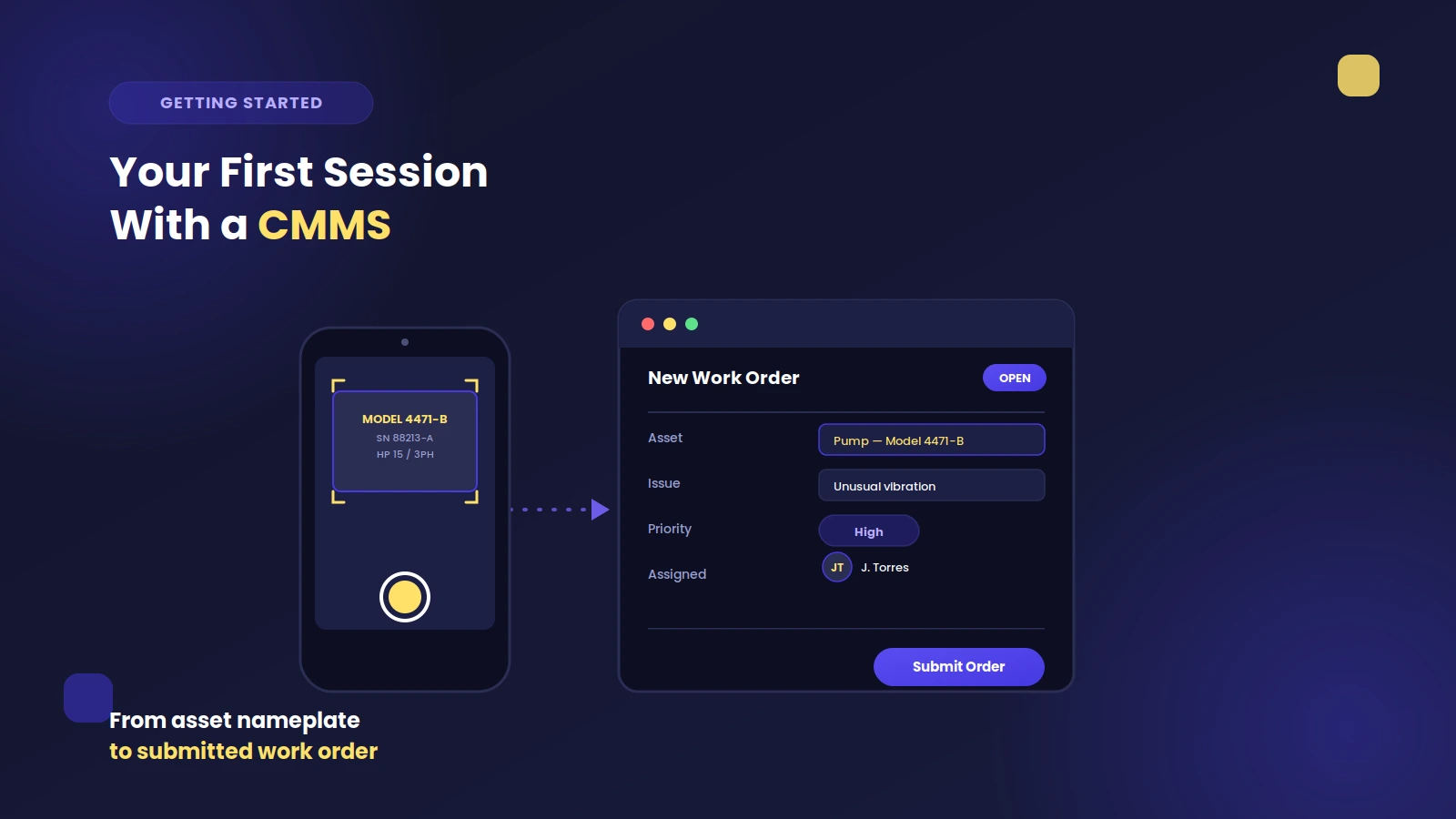
A CMMS eliminates this friction. Work requests can be easily assigned to the right technician based on skill set, availability, and priority — no dispatcher needed. Technicians receive real-time notifications on their mobile devices, update job status in the field, and close out tasks with photo and video documentation, all without setting foot in the office.
The result? 67% of maintenance professionals using a CMMS report improved ability to track and manage maintenance activities, and 61% see measurably better asset performance. Teams that make the switch from paper-based work orders consistently report completing more jobs per shift, with less administrative overhead and fewer tasks falling through the cracks.
For maintenance managers, this means less time chasing status updates and more time focusing on strategic priorities.
2. Preventive Maintenance Scheduling That Actually Gets Done
Ask most maintenance managers their biggest challenge, and they'll say the same thing: there's never enough time to be proactive. Emergency repairs eat up the day, and scheduled PMs keep getting pushed back.
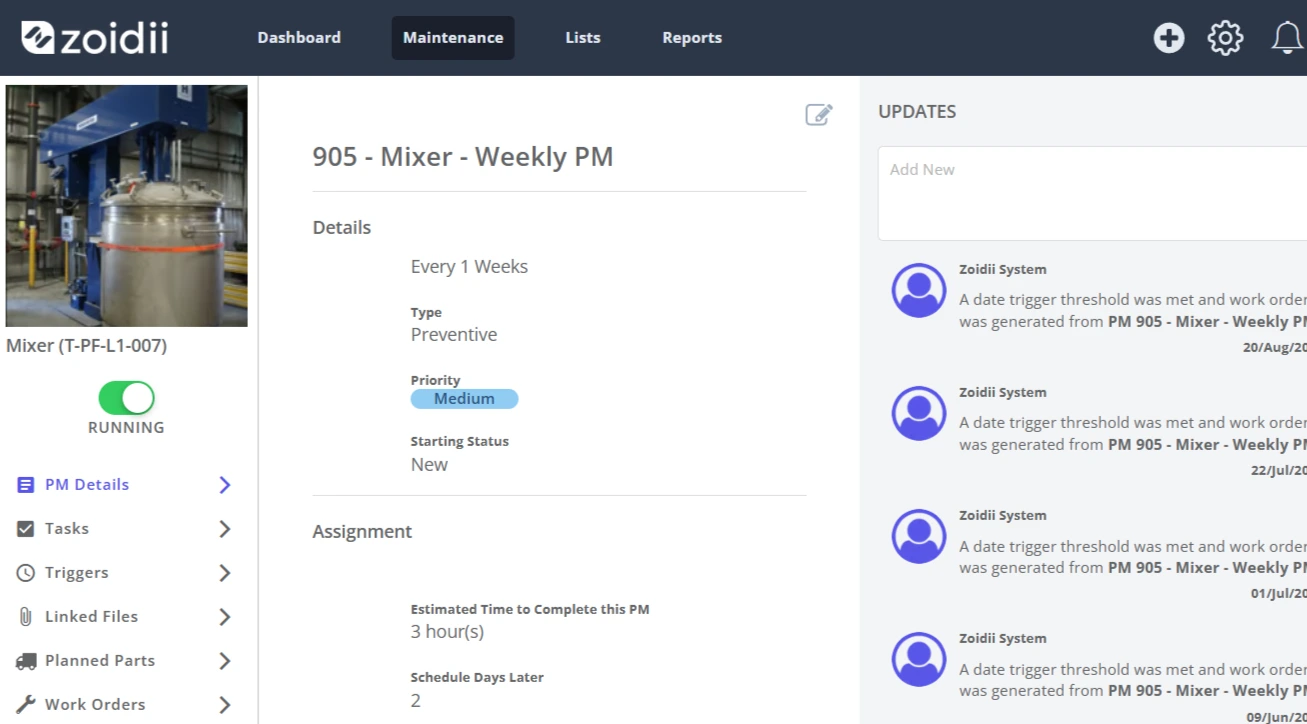
CMMS software breaks this cycle. By automating preventive maintenance schedules based on time intervals, usage hours, or equipment condition, the system ensures PMs are never forgotten — and technicians always know what's coming next.
The impact is significant. Preventive maintenance is the top strategy used by 71% of maintenance professionals, yet fewer than 35% of facilities currently spend a majority of their time on it. A CMMS closes that gap. Real-world examples include facilities reaching 100% PM completion rates within months of adoption — up from 60% or lower with manual processes. This shift from reactive to proactive maintenance matters for the bottom line, too. Preventive maintenance consistently saves organizations 12–18% on maintenance costs compared to run-to-failure approaches, with each dollar invested generating an average of $5 in returns.
3. Real-Time Inventory and Parts Management
Nothing kills a repair job faster than discovering the right part isn't in stock. Technicians waste hours driving to suppliers, waiting on emergency shipments, or tracking down parts that were already used on another job but never logged.
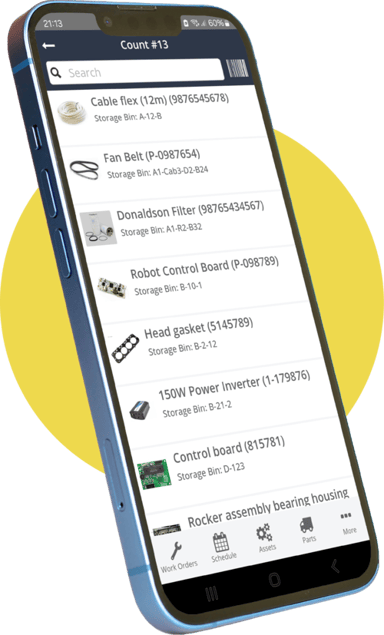
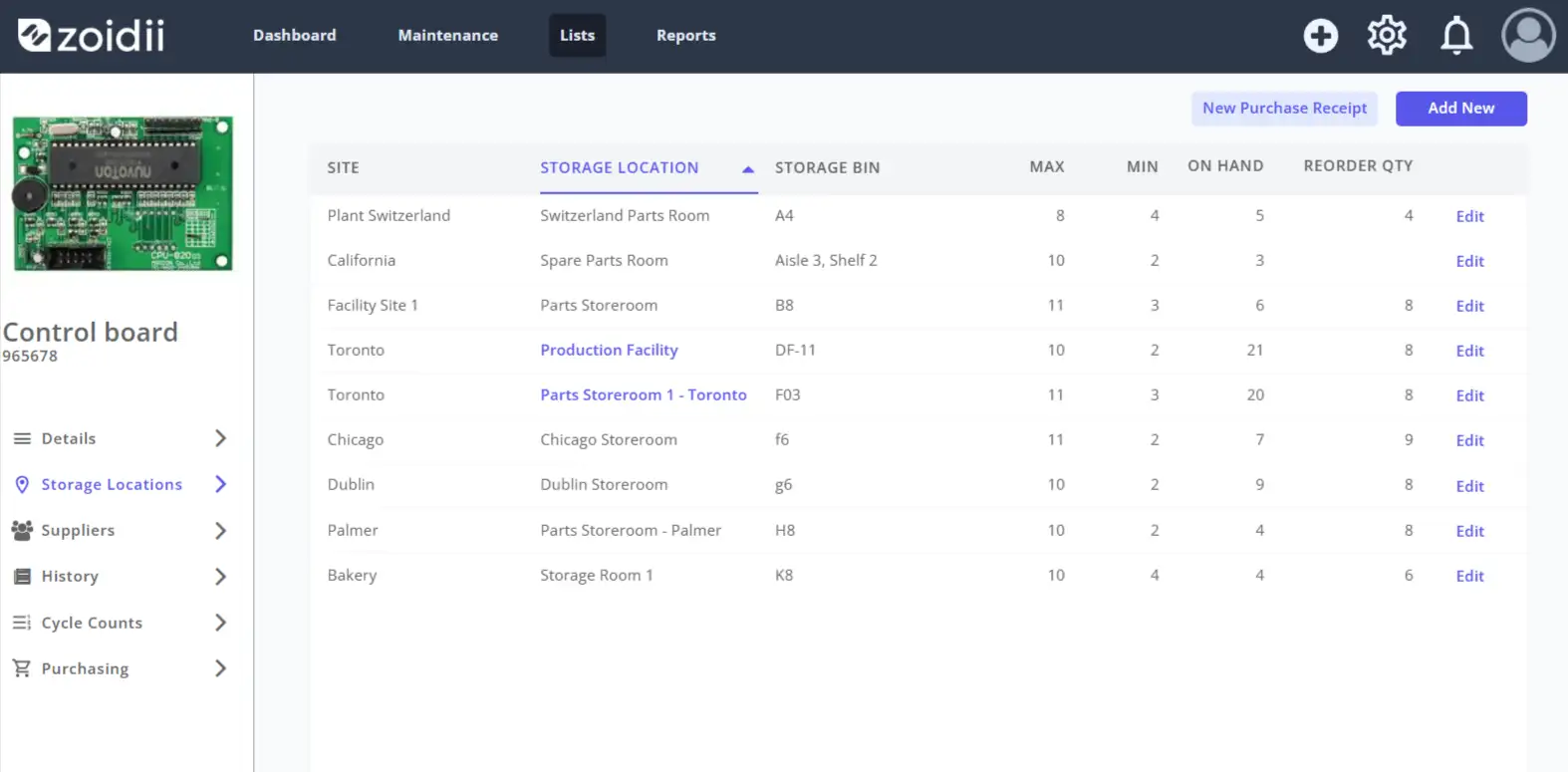
A CMMS brings order to the storeroom. It tracks every part in real time — what's on hand, what's been used, what needs to be reordered — and can automatically generate purchase orders when inventory drops below preset thresholds. Work orders are linked directly to parts consumption, so your records are always accurate.
Parts management matters at scale. Emergency spare parts in 2025–2026 are running 18–25% more expensive than planned purchases due to ongoing supply chain pressures. Every unplanned rush order is money left on the table. With a CMMS managing your MRO inventory, you avoid those costs while ensuring technicians have what they need when they need it. The time savings compound quickly: less time searching for parts, less time on the phone with suppliers, and less time waiting for deliveries before a repair can begin.
4. Mobile Access That Keeps Technicians in the Field
Before mobile-enabled CMMS, technicians spent a surprising portion of their day commuting between the shop floor and the office — picking up work orders, looking up equipment manuals, logging completed work. It was inefficient by design.
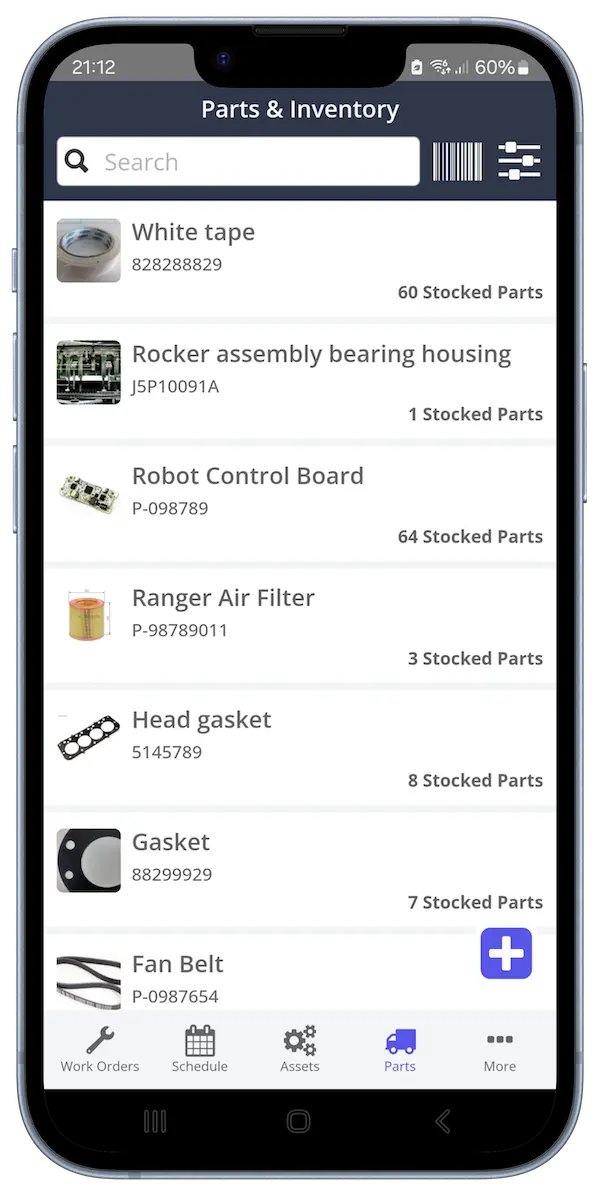
Modern CMMS platforms are built mobile-first. In 2026, over 55% of maintenance teams rely on mobile maintenance workflows, and that adoption is accelerating fast. Technicians can access complete asset histories, pull up schematics and SOPs, scan equipment QR codes to call up maintenance records, and close out work orders — all from their phone or tablet, directly on the job. Mobile access is more than a convenience upgrade. It's a structural shift in how maintenance work gets done. Less travel time. Fewer errors from manually transcribing field notes. Faster response to new requests. And for managers, real-time visibility into exactly where every technician is and what they're working on.
5. Smarter Reporting and KPI Tracking
Without a CMMS, measuring maintenance performance is largely guesswork. You might know roughly how many work orders got done last month, but do you know your Mean Time to Repair (MTTR)? Your planned vs. reactive maintenance ratio? Which assets are consuming the most labor hours?A CMMS turns that guesswork into data. Every work order, every part, every technician hour is captured and queryable. Dashboards surface KPIs in real time — MTBF, MTTR, PM compliance rates, downtime by asset, cost per repair — so managers can spot trends, identify bottlenecks, and make decisions grounded in facts rather than gut feel.
Reporting and KPI tracking are increasingly critical as organizations face pressure to demonstrate ROI from their maintenance operations. 91% of facilities report they are actively working to improve their data collection and analysis capabilities — the CMMS is the foundation of that effort. In 2026, the leading CMMS platforms are also adding predictive and prescriptive analytics powered by AI, moving beyond reporting what happened to recommending what to do next. For maintenance teams, that means actionable intelligence served up automatically, not hours spent building reports in Excel.
6. Reduced Unplanned Downtime
Unplanned downtime is the most expensive thing that can happen to a production operation. Manufacturers globally lose an estimated $260 billion annually to unplanned equipment failures (Siemens). For a typical mid-sized facility, a single unplanned shutdown can cost tens of thousands of dollars per hour in lost production, emergency labor, and expedited parts.A CMMS attacks this problem from multiple angles. Automated PM scheduling prevents failures that would otherwise happen. Asset history records help technicians recognize patterns that precede breakdowns. IoT integration — now used by 40% of assets in connected facilities — feeds real-time sensor data directly into the CMMS, triggering work orders before failures occur.
The results in practice are compelling. Organizations implementing comprehensive CMMS solutions report 25–35% reductions in maintenance costs and 40–50% improvements in equipment reliability compared to reactive-only approaches. Facilities that adopt predictive maintenance through their CMMS typically cut unplanned downtime by an additional 30–50% within the first year. For maintenance teams, fewer emergency callouts means less overtime, less stress, and more time available for planned, productive work.
7. Centralized Knowledge and Faster Technician Onboarding
Maintenance operations run on tribal knowledge — experienced technicians who know exactly how a finicky compressor behaves or which step gets skipped in the manual. When those technicians retire or leave, that knowledge walks out the door with them.
A CMMS is the antidote. By capturing asset histories, SOPs, troubleshooting guides, and repair notes in a centralized, searchable system, organizations build institutional knowledge that outlasts any individual. In 2026, AI-powered CMMS features are making this even more powerful: the top reported AI benefit among maintenance teams is knowledge capture and sharing, ahead of even failure prediction.
New technicians can get up to speed faster because the information they need is structured and accessible. Experienced technicians spend less time re-diagnosing the same intermittent issues because past fixes are documented. And for compliance and audit purposes, every action is timestamped and traceable. This knowledge sharing pays dividends far beyond onboarding. Standardized job plans reduce variability in how tasks are performed. Documentation ensures safety procedures are followed consistently. And teams that capture knowledge systematically build a foundation for continuous improvement that's impossible to achieve with whiteboards and memory alone.
The Bottom Line: CMMS ROI in 2026
The return on CMMS investment is well-documented. Most facilities achieve positive ROI within 12–18 months of implementation, with comprehensive deployments delivering 300–600% returns over three years. Quick wins in work order efficiency and labor productivity typically appear within the first 3–6 months.
With 62% of organizations now using a CMMS — up from 49% the year before — the question is no longer whether CMMS software delivers value. It's whether your team can afford to operate without it.
Whether you're just getting started or looking to get more out of an existing system, the seven areas above represent the clearest and most proven paths to meaningful time savings for your maintenance operation.
Frequently Asked Questions About CMMS Software
Q: What does CMMS stand for, and what does it do? CMMS stands for Computerized Maintenance Management System. It's software that centralizes and automates the core functions of a maintenance operation — work order management, preventive maintenance scheduling, asset tracking, parts inventory, and reporting. Rather than relying on spreadsheets, paper logs, or memory, a CMMS gives your entire team one shared system with real-time visibility into every task, asset, and resource.
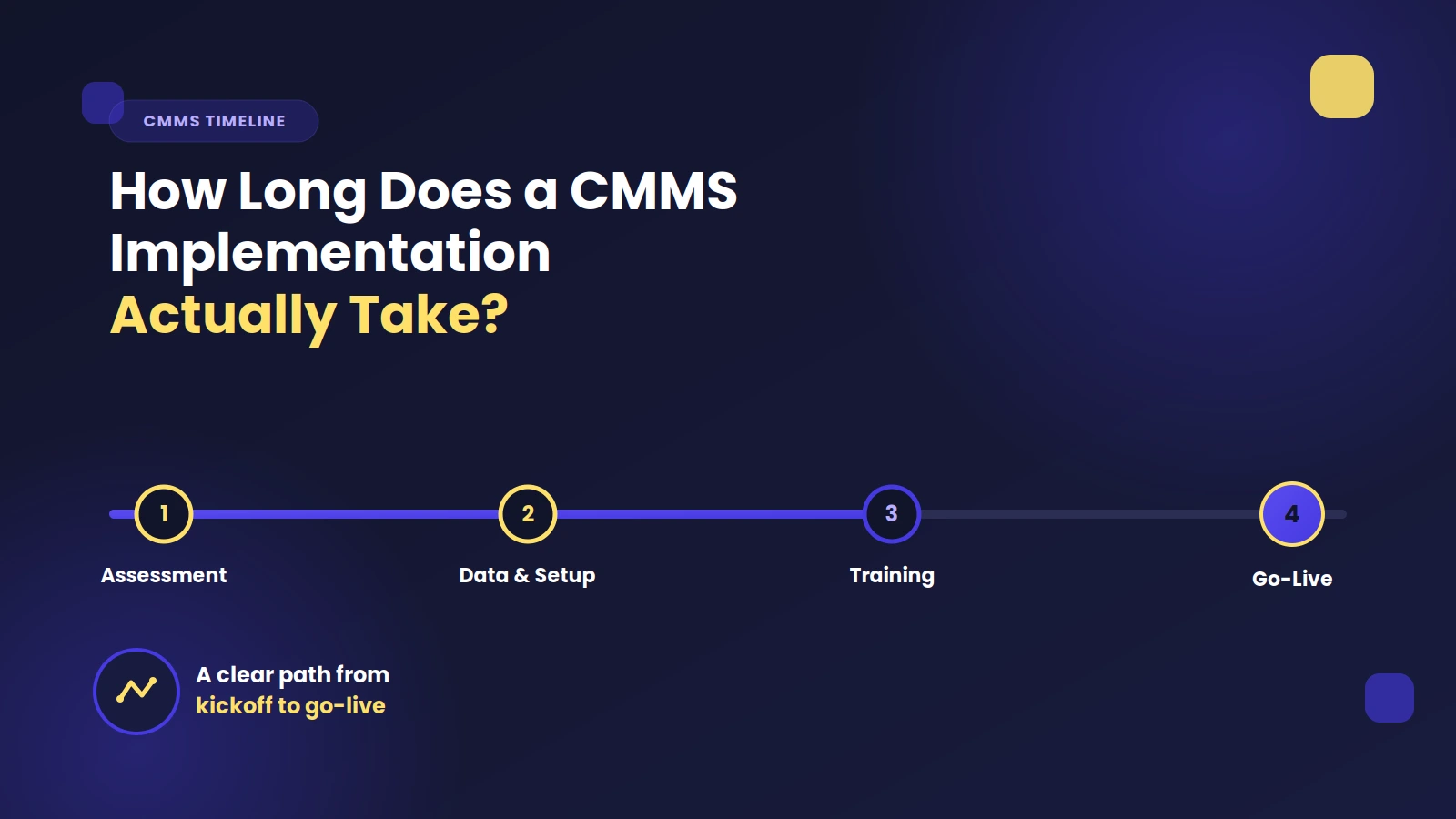
Q: How long does it take to see results after implementing a CMMS? Most teams see quick wins within the first 30–90 days, particularly in work order efficiency and reduced admin time. More significant gains — like measurable downtime reduction and lower maintenance costs — typically materialize within 6–12 months as the system accumulates asset data and PM schedules bed in. Industry benchmarks put full positive ROI at 12–18 months, with comprehensive implementations returning 300–600% over three years.
Q: Is CMMS software only for large facilities or enterprise teams? Not at all. While enterprise platforms exist for complex, multi-site operations, modern cloud-based CMMS solutions are designed to scale down just as effectively. Small and medium-sized businesses actually represent the largest segment of CMMS users — accounting for around 69% of market share in 2026. If your team manages equipment, tracks assets, or runs any maintenance schedule, a CMMS will save you time and money regardless of your size.
Q: How is a CMMS different from just using spreadsheets? Spreadsheets are static — they only reflect what someone last typed in, they can't send alerts, they don't auto-assign work, and they break down fast when multiple people need to access and update them simultaneously. A CMMS is a live, connected system. It automatically triggers work orders, notifies technicians, tracks parts in real time, logs every action with a timestamp, and generates performance reports without any manual effort. The gap in productivity and accuracy between the two approaches widens significantly as your operation grows. Q: What should I look for when choosing a CMMS? The most important factors are ease of use, mobile accessibility, preventive maintenance capabilities, and quality of customer support during implementation. A CMMS that's powerful but difficult to use won't get adopted — and an unadopted CMMS delivers zero ROI. Look for a platform your technicians will actually use in the field, with intuitive work order management, clear dashboards, and a vendor that offers hands-on onboarding rather than just a help centre link.
Looking for a CMMS that's built for teams who want fast implementation and an intuitive experience? Explore Zoidii CMMS and see how your team can start saving time from day one.