
Key Takeaways
- A first-time team can be logging real work orders on day one; the months-long rollout you remember belongs to enterprise systems built a different way.
- "Implemented" is the wrong finish line. The date that decides everything is the day the team reaches for the system on its own, and that lands in weeks, not quarters.
- What stretches a timeline is how much you switch on at once and whether anyone owns getting the team to use it, far more than which software you chose.
How long does a CMMS implementation actually take?
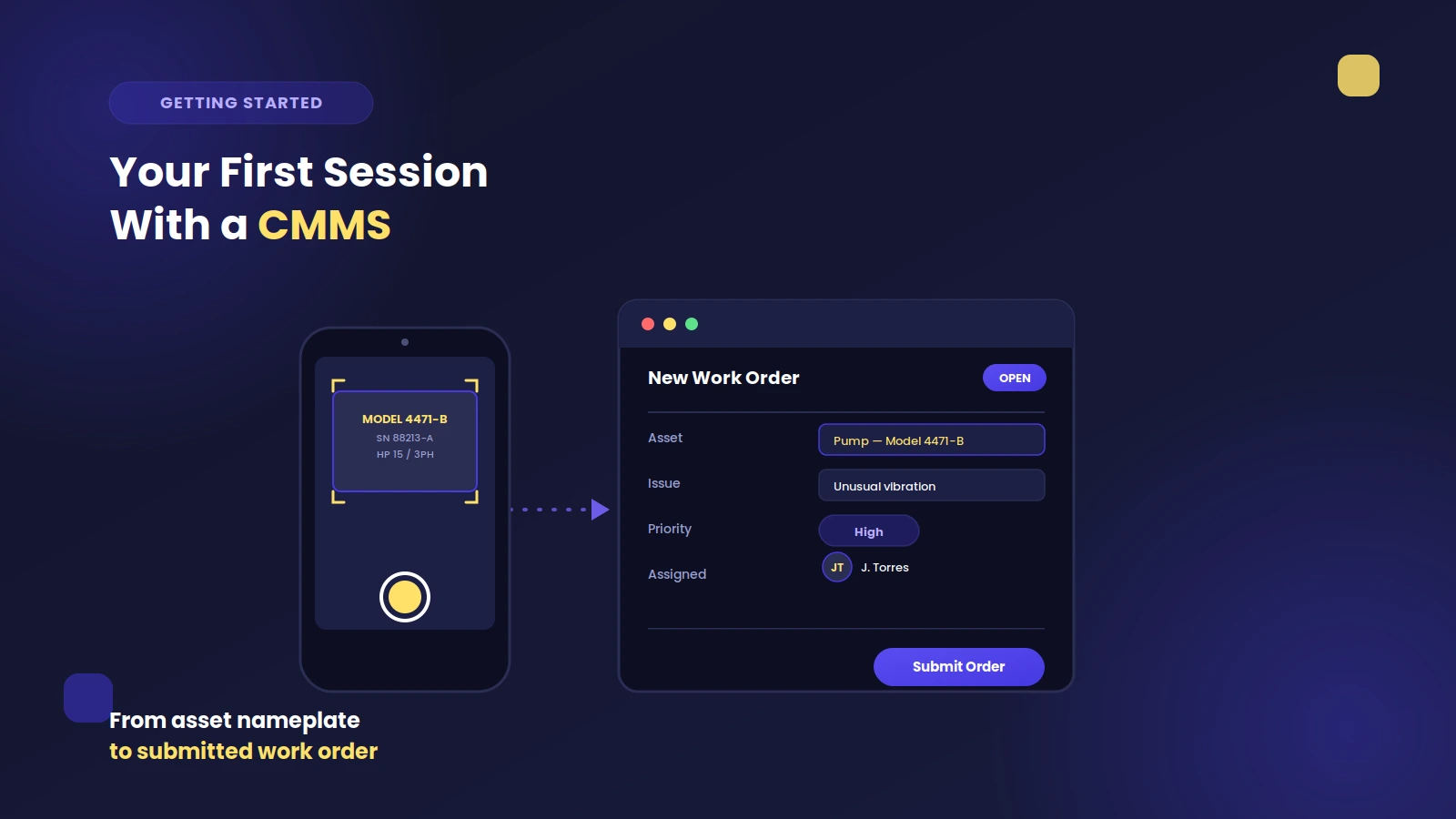
Hours to your first work order, and about a month to a team that uses the system without being asked. A maintenance team that has never touched software more involved than a phone can set up a handful of assets and log real work orders by the end of day one. We have watched it happen across first-time adopters. Broderick's, a food producer, was live in a few days, and the person who stood it up was a summer intern.
The trap is the word "implemented." Enterprise rollouts defined done as fully configured: every asset loaded, every integration wired, every module switched on before anyone logged a thing. Measured that way, of course it runs to months. The finish line that counts is the first real work order, and then the first week the team logs work without a reminder.
Why do CMMS implementations have a reputation for taking months?
Because the systems that set the expectation were built for a heavier job. SAP PM and Maximo-class platforms carry large data migrations, dedicated admin staff, consultant-led configuration, and formal training that pulls technicians off the floor for days. For a fifteen-person team coming off paper, that setup is a second job stacked on the one they already have. The scar tissue is earned, and it is specific. Months of work went by before a single benefit showed up.
A system architected for fast time-to-value runs the other way around. The team sees value first and adds depth later. The horror stories are accurate, and they describe tools built for a scale and a problem most maintenance teams simply do not have.
What does the CMMS implementation timeline actually look like, week by week?
Value arrives at each step instead of all at the end. The rollout moves in phases, and the order those phases run in is its own subject; here the point is how the time stacks up as the team crosses from paper to a working system.
The 30-day mark is the one to watch, because that is when using the system stops being a rule and becomes a reflex. One customer, Holistic Industries, put it plainly: every employee starts out calling the CMMS the worst thing, and 30 days in they call it the best thing they have. Standing up a brand-new location stays inside the same order of magnitude. When B&M Retail opened a new distribution center, cloning an existing site's setup configured it in hours rather than days.
What actually determines how long it takes?
Two things, and neither is the feature list. The first is how much you switch on at once. A team that starts with assets and work orders is live in a day. A team that insists on loading parts inventory and every PM schedule before go-live buys back the months it was trying to avoid. The second is ownership. A system gets used on the timeline that someone drives it to. When one person makes the system the single place the work lives, the team crosses over in weeks. Leave that to chance and the software can be flawless while the go-live date means nothing. The path from paper to a running operation is shorter and more specific than the horror stories suggest, and it holds only when someone owns the crossing.
Setup is the fast part. The slow, expensive stretch is the months a half-used system sits waiting to feel finished, which is the timeline that actually costs you. A CMMS implementation timeline you can trust is measured the way the team lives it. A first work order on day one, a daily habit inside a week, a team that reaches for it inside a month. So the question to put to any vendor is not how long setup takes. Ask how soon a technician who has never used software is logging their own work orders, and which week most of their teams stop needing reminders. The answer tells you whether you are buying hours or months.
References
- Broderick's Handmade (Zoidii case study; implemented in a few days).
- B&M Retail (new distribution center configured in hours via site cloning).
- Holistic Industries (Zoidii case study; 30-day adoption turnaround).