
What Is a Facilities Manager?
A facilities manager is the person responsible for ensuring that the physical environments of an organization — its buildings, infrastructure, equipment, and grounds — operate safely, efficiently, and cost-effectively. Far from a purely reactive role, modern facilities management is a strategic discipline that sits at the intersection of operations, finance, compliance, and technology.
Whether overseeing a hospital, manufacturing plant, corporate campus, or school, facilities managers are the backbone of any organization's physical operations. They ensure that every light stays on, every HVAC unit runs efficiently, every safety regulation is met, and every repair is logged and completed on time.
In 2026, the role has evolved significantly. Facilities managers are no longer just maintenance coordinators — they are data-driven leaders leveraging CMMS (Computerized Maintenance Management System) software, IoT sensors, AI-powered analytics, and sustainability frameworks to drive real business outcomes.
The Global Facilities Management Market in 2026
The scale of the industry underscores just how critical this profession has become:
- The global facility management services market is projected to reach $1.38 trillion in 2026, growing to $1.94 trillion by 2034 at a CAGR of 6.0%.
- The CMMS software market alone is valued at approximately $1.45 billion in 2026, forecast to surpass $3.5 billion by 2035 at a growth rate of ~10.5% CAGR.
- 64% of new CMMS installations in 2026 are cloud-based deployments, driven by lower upfront costs and faster implementation timelines.
- 65% of maintenance teams plan to adopt AI-powered maintenance tools by the end of 2026.
What Does a Facilities Manager Do? Key Responsibilities
The day-to-day responsibilities of a facilities manager span a wide spectrum. No two days are alike — one morning may involve presenting a capital expenditure proposal to the CFO, and that afternoon may find you on the roof assessing HVAC damage. Here are the core responsibility areas:
1. Building Operations & Maintenance
Facilities managers oversee all mechanical, electrical, plumbing, HVAC, and life safety systems. This oversight includes both reactive maintenance (responding to breakdowns) and, more importantly, preventive maintenance — scheduling and tracking routine inspections before failures occur. With a CMMS, these schedules are automated, work orders are tracked in real time, and nothing falls through the cracks.2. Work Order Management
Every repair, inspection, or service request generates a work order. Facilities managers are responsible for the full work order lifecycle: creation, assignment, tracking, completion, and documentation. A CMMS streamlines this process end-to-end, replacing paper forms and email chains with a centralized digital system accessible from any device.3. Asset Lifecycle Management
From HVAC units and elevators to lighting systems and industrial equipment, facilities managers track assets from installation to decommissioning. CMMS software enables detailed monitoring of asset health, maintenance history, and total cost of ownership — allowing data-driven decisions on repair vs. replace.4. Compliance & Safety
Regulatory compliance is a non-negotiable pillar of facilities management. Managers must ensure that buildings meet health and safety codes, environmental regulations, fire safety standards, and industry-specific requirements. A CMMS generates audit-ready documentation automatically, reducing the compliance burden significantly.5. Vendor & Contractor Management
Facilities managers coordinate third-party contractors for specialized work — electrical, plumbing, landscaping, cleaning, security, and more. This includes managing contracts, tracking service level agreements (SLAs), and ensuring work is completed to standard and within budget.6. Budget & Financial Management
Managing facility operating budgets requires forecasting maintenance costs, tracking expenditures, and identifying cost-saving opportunities. CMMS reporting tools give facilities managers the data they need to justify spending decisions and demonstrate ROI to leadership.7. Space Planning & Utilization
Optimizing how physical space is used — especially in the era of hybrid work — is an increasingly important function. Facilities managers track occupancy data, reconfigure layouts, and plan renovations to match evolving organizational needs.8. Energy & Sustainability Management
ESG commitments and rising energy costs have made sustainability a core FM responsibility. Facilities managers monitor energy consumption, identify inefficiencies, and implement green initiatives that reduce both operational costs and carbon footprint.
How a CMMS Transforms Facilities Management
A Computerized Maintenance Management System (CMMS) is the single most impactful technology investment a facilities team can make. It serves as the operational intelligence backbone for all maintenance activities — replacing spreadsheets, paper logs, and disconnected email threads.
What a CMMS Does
A modern CMMS centralizes:
- Work order management — create, assign, prioritize, and close work orders digitally.
- Preventive maintenance scheduling — automate recurring maintenance tasks based on time intervals or asset condition.
- Asset management — maintain a complete digital record of every asset, including specs, maintenance history, warranties, and costs.
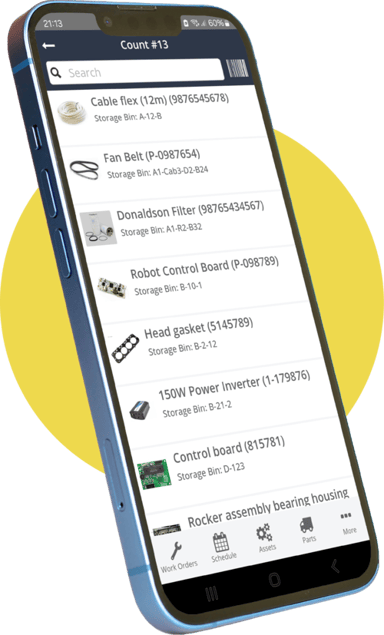
- Inventory management — track spare parts and supplies to avoid stockouts and over-ordering.
- Compliance documentation — generate audit-ready reports with complete maintenance histories.
- Analytics & KPI dashboards — monitor MTTR (mean time to repair), MTBF (mean time between failures), PM compliance rates, and cost per work order.
The Business Case for CMMS in 2026
The ROI numbers are compelling:
- Organizations using AI-integrated CMMS with predictive maintenance have documented maintenance cost reductions of up to 25% (Deloitte).
- Preventive maintenance enabled by a CMMS has been shown to extend equipment lifespan and reduce unplanned downtime. IoT—connected CMMS systems cut unplanned downtime by over 38% in manufacturing and commercial facilities.
- Approximately 45% of industrial facilities report improved equipment uptime after adopting CMMS.
- Mobile-enabled CMMS has crossed 55% adoption, improving technician productivity by up to 40%.
- Nearly 65% of large facilities now rely on CMMS tools to streamline asset operations.

Preventive vs. Reactive Maintenance: Why It Matters
One of the most impactful shifts a CMMS enables is moving from reactive (fix it when it breaks) to preventive (maintain it before it breaks) maintenance. The cost difference is dramatic:
- Reactive maintenance costs can be 3–5x higher than planned preventive maintenance when you factor in emergency labor, expedited parts, and production downtime.
- A U.S. Department of Energy study found that preventive maintenance can generate energy savings and increased operational efficiency across manufacturing facilities.
- According to a Tech-Clarity survey, 79% of firms reported that maintenance had a moderate to high impact on overall business success.
Essential Skills for a Facilities Manager in 2026
Success in this role requires a diverse blend of technical knowledge and soft skills:
Technical Skills:
- Knowledge of building systems: HVAC, electrical, plumbing, fire suppression, BMS
- CMMS and facilities management software proficiency
- Preventive and predictive maintenance practices
- Budget management and financial reporting
- Project management (renovations, capital projects)
- Health, safety, and environmental compliance
- Energy management and sustainability principles
- Leadership and people management
- Communication (with C-suite, technicians, contractors, and occupants)
- Problem-solving under pressure
- Vendor negotiation
- Time management and prioritization
- Adaptability — no two days are the same
- AI-assisted maintenance analytics
- ESG reporting and carbon footprint tracking
- Hybrid workspace planning
Facilities Manager Salary in 2026
Facilities management offers strong and growing compensation across experience levels. Here's where salaries stand in 2026:
- Entry-level (under 1 year): ~$58,000–$65,000
- Mid-career (4–9 years): ~$80,000–$105,000
- Senior / Director level: $130,000–$180,000+
- Top earners (90th percentile): $176,000–$228,000
Facilities Manager Career Path & Certifications
Typical Career Progression
Most facilities managers begin in operational or technical roles — building engineers, maintenance supervisors, or operations coordinators — before moving into management. Typical pathways include:
- Maintenance Technician / Building Engineer
- Facilities Coordinator or Supervisor
- Facilities Manager
- Director of Facilities
- VP of Real Estate & Facilities / Chief Facilities Officer
Relevant Degrees
- Bachelor's in Business Administration, Engineering, Operations Management, or Facilities Management
- Some roles accept equivalent experience instead of a degree
- Master's degrees (MBA, MS in Facilities Management) for senior leadership roles
Industry Certifications
Certifications significantly enhance employability and earning potential:
- FMP (Facility Management Professional) — IFMA's foundational credential
- CFM (Certified Facility Manager) — IFMA's advanced certification, covering 11 core competency areas
- SFP (Sustainability Facility Professional) — IFMA's sustainability credential
- LEED AP (Leadership in Energy and Environmental Design) — for sustainability-focused roles
- PMP (Project Management Professional) — valuable for capital project oversight
The Role of CMMS in Different Facility Types
CMMS software is not one-size-fits-all, but it delivers measurable value across virtually every industry:
Commercial Real Estate & Corporate Offices: Work order tracking, space management, vendor coordination, and preventive maintenance for HVAC and elevators.
Healthcare Facilities: Strict compliance documentation, biomedical equipment maintenance, emergency work order prioritization, JCAHO/regulatory audit trails.
Manufacturing Plants: Equipment reliability, production uptime, predictive maintenance using IoT sensor integration, and spare parts inventory management.
Educational Institutions: Campus-wide asset tracking, scheduled maintenance for classrooms and labs, and compliance with building safety codes.
Government & Public Infrastructure: Long asset lifecycles, budget transparency, compliance reporting, multi-site management. Retail & Hospitality: High-frequency work orders, vendor SLA management, reactive maintenance response times, seasonal PM schedules.
Challenges Facing Facilities Managers in 2026
Despite technological advances, facilities managers face real and growing pressures:
1. Skilled Labor Shortages Rising labor costs and a shortage of skilled maintenance technicians are accelerating the adoption of CMMS and automation tools to maximize productivity with leaner teams.
2. Aging Infrastructure Many facilities are operating with equipment well past its expected lifespan. A CMMS helps prioritize capital expenditure and plan asset replacements based on real maintenance cost data.
3. Sustainability & ESG Mandates Environmental reporting requirements are intensifying. Facilities managers are increasingly expected to track, report, and reduce their buildings' energy consumption and carbon emissions.
4. Budget Pressure Demonstrating value to leadership requires hard data. CMMS analytics give facilities managers the financial reporting tools to quantify savings, justify spending, and secure budget approvals.
5. Technology Integration Complexity Integrating modern CMMS platforms with legacy building management systems, ERP software, and IoT devices can be technically complex. Cloud-based CMMS solutions are reducing this friction significantly — now accounting for 64% of new installations in 2026.
Key CMMS Metrics Every Facilities Manager Should Track
A CMMS is only as powerful as the data you pull from it. The top KPIs facilities managers should monitor regularly include:
- PM Compliance Rate — percentage of scheduled preventive maintenance tasks completed on time (target: >90%)
- Mean Time to Repair (MTTR) — average time from work order creation to resolution
- Mean Time Between Failures (MTBF) — average operating time between equipment breakdowns
- Planned vs. Unplanned Maintenance Ratio — higher planned percentage = better proactive management
- Cost Per Work Order — tracks maintenance efficiency over time
- Backlog of Open Work Orders — signals resource or scheduling issues
- Asset Downtime — total time critical assets are offline
- Inventory Turnover — ensures parts availability without excess stock
How to Choose the Right CMMS for Your Facility
With over 200 CMMS platforms available in 2026, selecting the right one matters. Here's what to evaluate:
- Ease of use — will your technicians actually adopt it? Mobile-first UX matters.
- Preventive maintenance automation — does it auto-schedule and trigger work orders?
- Asset management depth — can it track complete asset histories and failures?
- Reporting & analytics — does it surface the KPIs that matter to your operation?
- Deployment model — cloud-based SaaS offers faster implementation and lower upfront cost
- Scalability — will it grow with your organization across multiple sites?
- Implementation timeline — the best CMMS platforms get teams up and running within 48 hours
Final Thoughts
Being a facilities manager in 2026 means operating at the intersection of technology, operations, finance, and sustainability. The role is demanding — but it's also one of the most impactful positions in any organization.
The facilities managers who will thrive are those who embrace the tools available to them. A modern CMMS isn't just a maintenance scheduling tool — it's the operational intelligence platform that empowers you to reduce costs, extend asset life, maintain compliance, and demonstrate your team's value with hard data.
Whether you're new to facilities management or a seasoned professional looking to modernize your operations, Zoidii gives you everything you need to run a proactive, efficient, and cost-effective facility.
Ready to see how a CMMS can transform your facilities management operation? Start your free trial of Zoidii today →
Frequently Asked Questions
What is a facilities manager responsible for? A facilities manager oversees the maintenance, safety, compliance, and operational efficiency of buildings and physical assets. Responsibilities include managing work orders, coordinating vendors, planning preventive maintenance, managing budgets, and ensuring regulatory compliance.
What is a CMMS, and why do facilities managers need it? A CMMS (Computerized Maintenance Management System) is software that centralizes all maintenance operations — work orders, asset records, PM schedules, inventory, and compliance documentation. It replaces manual tracking with automated, data-driven workflows that reduce costs and downtime.
What certifications do facilities managers need? Common certifications include the FMP and CFM from IFMA, LEED AP for sustainability roles, and the PMP for project-focused positions. Certifications are not always required, but they significantly improve career advancement and earning potential.
How much does a facilities manager earn in 2026? The average facilities manager salary in the U.S. ranges from approximately $104,690 (BLS median) to $134,867 (Glassdoor average), depending on experience, industry, and location. Senior and director-level roles routinely exceed $150,000.
What is the job outlook for facilities managers? Strong. Employment is projected to grow approximately 10% — faster than the national average — driven by increasing demand for efficient, technology-enabled building operations, aging infrastructure, and ESG requirements.