
Most maintenance software fails because it’s built for the C-suite, not the person holding the wrench. According to data from the Maintenance Institute, 40% of software implementations fail because teams find the interface too frustrating to use.
You've likely felt this pain while chasing down a technician for a job status that should've been updated three hours ago. If you're tired of manual data entry and "ghost" work orders, you need the best work order management software designed for the field, not just the boardroom.
We agree that a management tool is worthless if it sits idle on a tablet because it's too complex to navigate. You want real-time visibility into every asset and a clear way to prove maintenance ROI to your bosses without wasting your entire Sunday in a spreadsheet.
This guide promises to cut through the over-engineered fluff to show you exactly which platforms deliver results without the headache. We're breaking down the top-rated solutions for 2026 that keep things stupid simple and ensure your maintenance team stays organized and productive.
Key Takeaways
- Stop drowning in data and start prioritizing team sanity by defining what "the best" looks like for your specific asset complexity.
- Master the five non-negotiable features-from mobile-first execution to guest portals-that ensure your maintenance team actually uses the tool.
- Cut through the fluff to find the best work order management software by comparing high-level enterprise systems against agile, modern apps.
- Follow a "stupid simple" two-step pilot program to trial and implement new software without the usual corporate implementation headaches.
- Learn how to eliminate over-engineered complexity and finally realize your maintenance KPIs with a straight-shooting approach to facility management.
What Makes a Work Order System "The Best" in 2026?
The best work order management software in 2026 isn't just a database for collecting tickets. It's a tool for team sanity. Maintenance managers are tired of being buried under a mountain of "urgent" requests that could have been prevented. Modern software acts as a central hub that stops the constant phone calls and shoulder taps. It organizes chaos into a clean, digital queue.
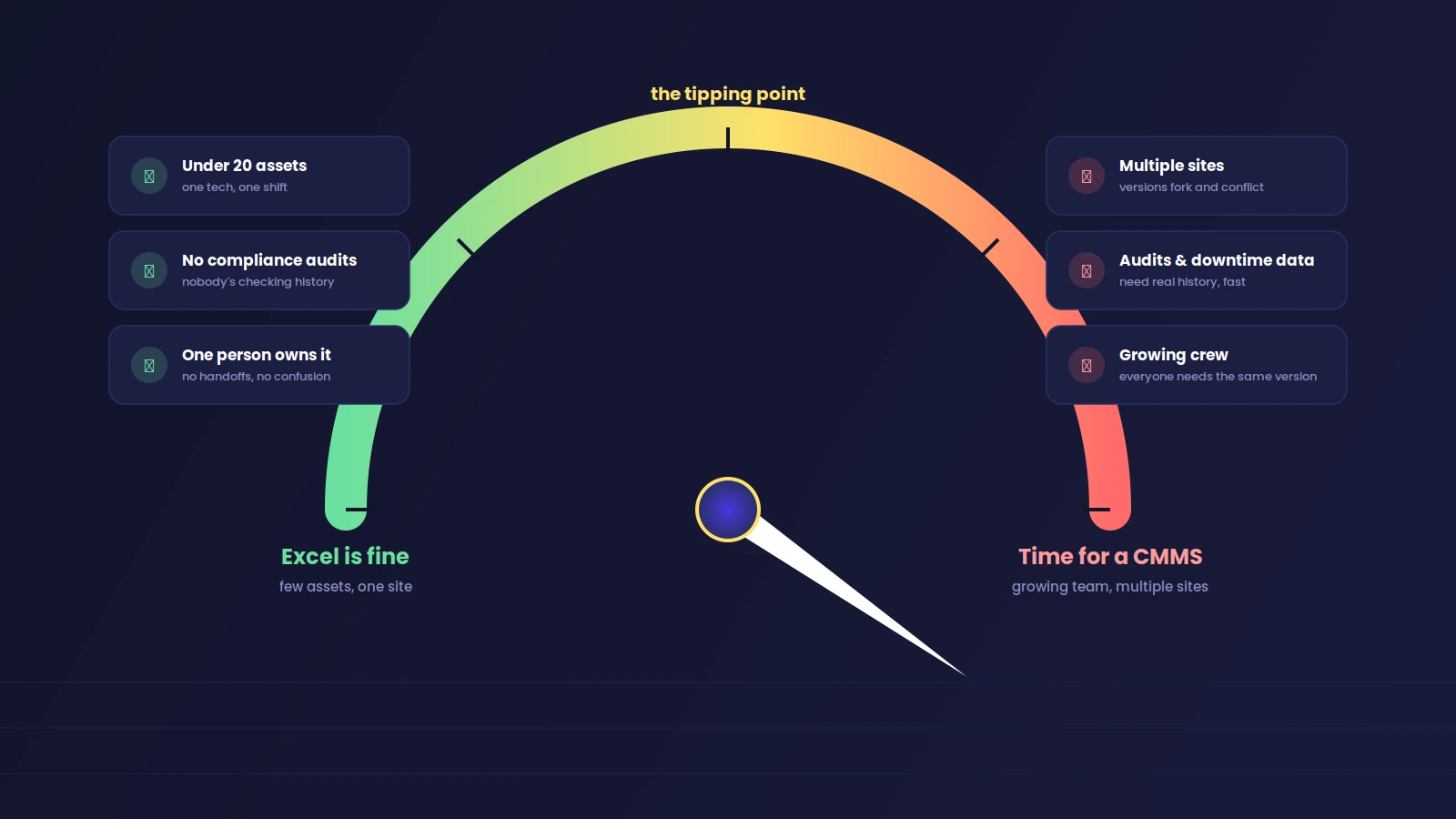
However, "best" is always subjective. A small facility with 40 assets needs a different approach than a global enterprise managing 4,000. The right choice depends on your team size and asset complexity, but the goal remains the same: moving from reactive firefighting to organized, preventive workflows.
To reach this goal, teams rely on a Computerized Maintenance Management System (CMMS) to provide structure. Without a reliable system, 30% of a technician's day is often wasted just looking for parts or instructions. Zoidii focuses on a core philosophy: if it is not simple, it will not be used. Software shouldn't require a PhD to operate. It should empower your team to get the job done and get home on time.
Moving Beyond Paper, Spreadsheets, and Whiteboards
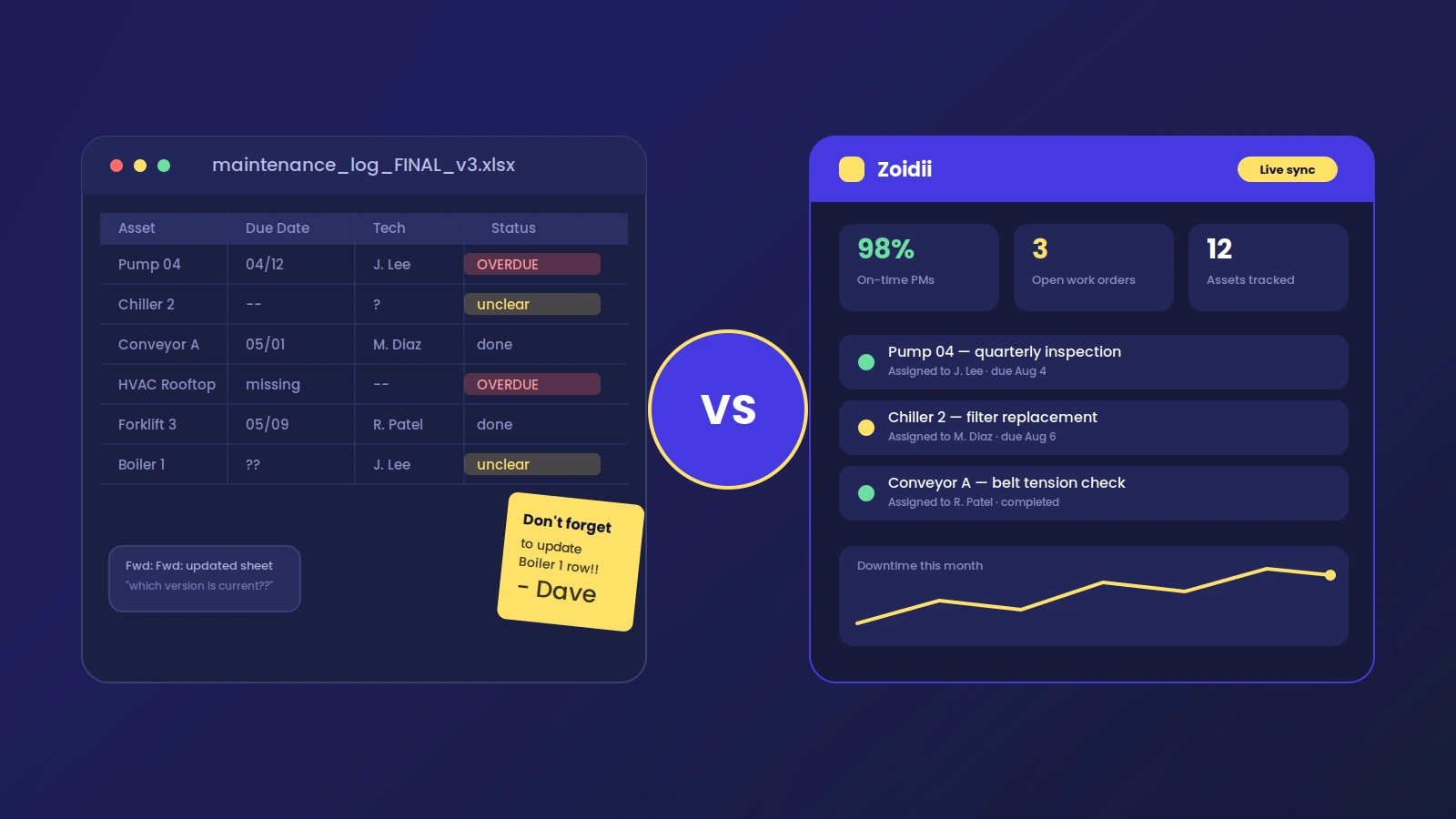
Relying on "free" Excel templates or paper stacks is a recipe for disaster. These methods carry hidden costs that drain your budget. Manual data entry has an error rate of roughly 25%, leading to missed inspections and catastrophic equipment failure.Digital work orders provide a single source of truth for the entire facility. Whether a manager is sitting in a Dublin office or a Toronto plant, they can see real-time updates. You don't need to hunt down a technician to see if a repair is finished. The data is right there, updated the second the job is closed.
The True Cost of Over-Engineered CMMS Software
Enterprise software is frequently a trap for unsuspecting maintenance departments. Industry data suggests that 80% of features in high-end CMMS platforms go completely unused by the average team. This creates a "Complexity Tax" where your staff spends more time fighting the software than fixing machines. Hard-to-use apps lead to technician burnout and massive data gaps because people simply stop logging their work.If an app requires 12 clicks just to record a meter reading, it's a failure. Stupid Simple is the ultimate 2026 software requirement for any team that actually wants to realize its maintenance goals.
5 Non-Negotiable Features for Modern Work Order Management
To find the best work order management software, you need to look past basic digital forms. Modern maintenance teams need tools that actually solve the chaos of the plant floor. Efficiency isn't about more features; it's about the right ones. If your software is too complex, your team won't use it. If it's too simple, you won't get the data you need to realize your goals.
A centralized request portal is your first line of defense against disorganized emails and sticky notes. It handles everything from internal equipment failures to external guest requests. For example, a work order system in a university setting often manages thousands of requests across various departments, distinguishing between routine repairs and billable projects. This keeps your inbox clean and your team focused on high-priority tasks.
Mobile-First Execution for Technicians
A mobile maintenance app is the most critical tool for a modern technician. If your software requires a trip back to the office to close a ticket, you're losing money. You need a platform that works where the work happens. Look for offline access so work continues in basements, remote sites, or areas with poor Wi-Fi.Photo uploads and e-signatures provide instant proof of work and simplify compliance. This approach significantly reduces "wrench time" lost to administrative bloat. When technicians have the right data in their pockets, they spend 20% to 30% more time actually fixing assets rather than walking back to a desk. It's about giving your experts the tools to be successful without the friction of old-school paperwork.
Visual Maintenance with Kanban Boards
Stop digging through spreadsheets to find out what's happening. A Kanban maintenance board lets you identify bottlenecks at a glance. You move tasks from "To Do" to "In Progress" with a simple drag-and-drop functionality. This visual oversight improves team communication without the need for constant, time-consuming morning meetings.It's a "stupid simple" way to see exactly who is working on what right now. When everyone can see the workflow, accountability increases. You'll quickly notice if one technician is overloaded or if a specific asset is constantly stuck in the "waiting for parts" column.
PM Scheduling and Inventory Tracking
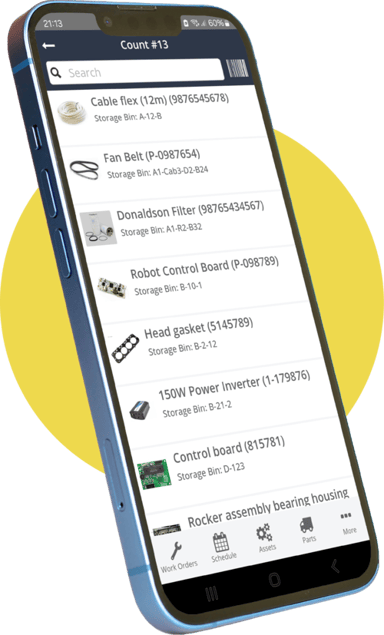
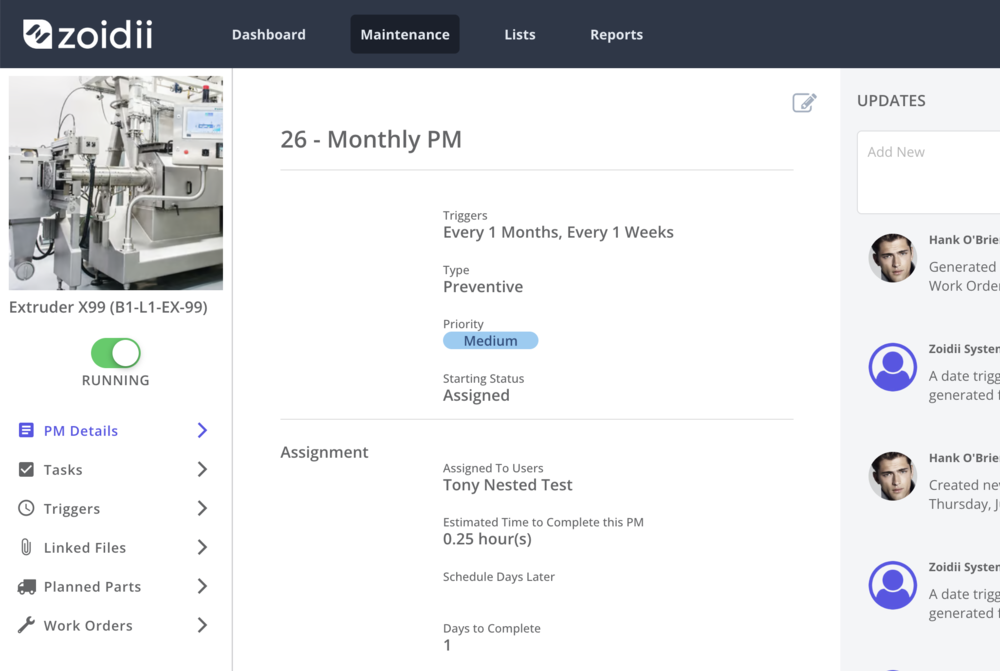
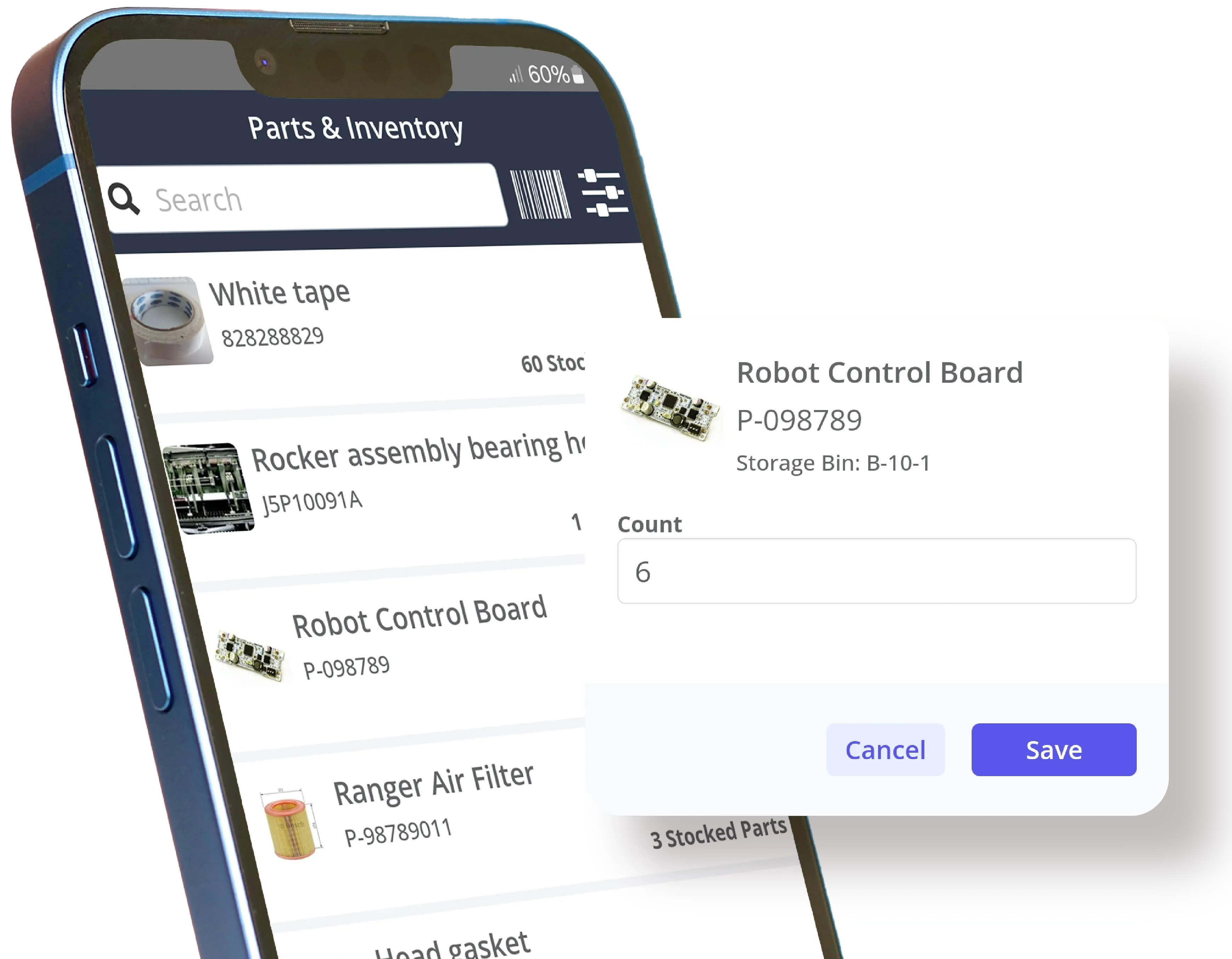
Automated preventive maintenance (PM) scheduling stops failures before they start. You shouldn't have to remember to grease a motor or change a filter; the best work order management software tells you when it's time. This proactive approach can reduce unexpected equipment downtime by as much as 45% based on industry benchmarks.Pair this with inventory and parts tracking linked directly to tasks. When a technician opens a work order, they should see exactly which part is needed and where it's located in the storeroom. This eliminates the "hide and seek" game that often happens in disorganized shops. If you want to see how these features can organize your facility, chat with a product expert.
Evaluating Top Work Order Software Categories
Choosing the best work order management software isn't just about ticking boxes on a feature list. It's about matching the tool to your team's actual pace. In 2026, the market will have split into two distinct paths: heavy enterprise systems and agile, mobile-first apps. One offers depth at the cost of speed; the other offers speed at the cost of data. You need a solution that refuses to compromise on either.
Security is the other non-negotiable factor. Modern IT departments now require Single Sign-On (SSO) as a baseline. SSO reduces password fatigue and can lower unauthorized access risks by up to 80 percent. If a platform doesn't integrate with your existing identity provider, it's a security liability, not an asset.
Enterprise CMMS vs. Agile Work Order Apps
Traditional Enterprise Computerized Maintenance Management Systems (CMMS) are often over-engineered. They require months of implementation and expensive consultants. You only need a full-scale legacy CMMS if you're managing a nuclear power plant or a global airline. For most organizations, these systems become "shelfware" because they're too hard to use.Agile work order apps focus on the user. They prioritize the technician in the field who needs to close a ticket in three taps. Zoidii bridges this gap perfectly. It provides deep maintenance analytics and asset history of a heavy CMMS, but keeps the interface stupid simple. You get the data you need without the 200-page manual.
- Scalability: Start with 50 assets and grow to 5,000 without changing your workflow.
- Deployment: Agile platforms go live in days, not fiscal quarters.
- User Adoption: If the software is easy, the data stays clean.
Industry-Specific Needs: From Manufacturing to Facilities
The best work order management software for a factory looks very different from that used in a high-rise office. Manufacturing teams live and die by Overall Equipment Effectiveness (OEE). They need to track downtime down to the second to identify why a production line stopped. If your software doesn't link work orders to machine downtime, you're losing money on every shift.Facility managers have different headaches. They deal with guest work orders from tenants who don't have system logins. Speed of reactive repair is their primary metric. A facility-focused tool must allow anyone to scan a QR code and report a leak instantly. Whether you're in North America or Europe, ensure the software handles regional date formats and compliance standards like ISO 55001 or GDPR automatically.
The cloud vs. on-premise debate is officially over. Gartner reports that by 2026, 95 percent of new digital workloads will be deployed on cloud-native platforms. On-premise software is a stagnant trap. Cloud-based systems ensure your team always has the latest security patches and features without a manual update. It's the only way to stay competitive in a fast-moving industry.
How to Trial and Implement Software Without the Headache
Picking the best work order management software is the easy part. Getting your team to actually use it is where most facilities fail. A 2024 study found that nearly 60% of CMMS implementations fail because of poor user adoption.
You don't need a six-month rollout plan that gathers dust. You need a process that proves value in weeks, not years. Follow these five steps to get running without the typical software migraine.
- Step 1: Define your 3 biggest maintenance KPIs. Don't try to track every metric under the sun. Focus on Mean Time to Repair (MTTR), PM compliance, and unplanned downtime. Aim for a specific goal, like increasing PM compliance by 20% during the trial period.
- Step 2: Run a "Stupid Simple" pilot. Pick one department or one asset class, such as your fleet or a single production line. This limits the noise and lets you see exactly how the software handles your specific workflows.
- Step 3: Get technician feedback early. Your technicians are the lifeblood of your data. If they hate the mobile interface, they'll stop entering details. If the data is garbage, your ROI reports will be garbage too.
- Step 4: Audit your data after 30 days. Take a hard look at the entries. Are work orders being closed out with meaningful notes? Is parts usage being logged? Fix these habits early before they become permanent.
- Step 5: Roll out facility-wide. Once you've proven the ROI in your pilot department, scaling becomes a matter of logic, not a sales pitch.
Setting Up a Pilot Program in 15 Minutes
Speed is your best friend during a trial. Start by importing your assets and parts list from a CSV file. Most modern systems handle this in seconds, so don't waste time manual typing. Set up your first preventive maintenance schedule immediately to see how the automation kicks in. Finally, invite a "Guest" to submit a work order. This tests the request portal flow and ensures anyone in the building can report a leak or a break without needing a login or a manual.Training Your Team: The "No-Manual" Test
The best work order management software shouldn't require three-day formal training sessions. If the app isn't intuitive enough for a tech to use on day one, it's the wrong tool for a high-pressure environment. Skip the sales reps and demand to speak with product experts during your setup phase. They understand the practical reality of the shop floor.Also, ensure the vendor provides 24/7 support. Maintenance doesn't stop at 5:00 PM, and your team needs answers across every time zone to keep the facility moving.
Stop wasting time on over-engineered tools and start your stupid simple trial with Zoidii today.
Why Zoidii is the Straight-Shooting Choice for Your Team
Traditional maintenance software often fails because it's too heavy. It requires weeks of training and a manual the size of a phone book. Zoidii takes a different path by stripping away the bureaucratic layers that slow your team down. We've built the best work order management software for teams that value their time more than complex feature lists. By focusing on a "stupid simple" interface, we ensure that your technicians spend their shift fixing equipment rather than fighting with an app.
One of the biggest bottlenecks in facility management is the intake process. Zoidii solves this with the Guest Work Order feature. This tool allows external vendors, tenants, or floor staff to submit requests via a simple QR code or link without needing a dedicated user account. It eliminates the "drive-by" request and the endless stream of emails. You get clean data from the start, which keeps your backlog organized and your response times sharp.
While the interface is easy for the boots on the ground, the backend provides the heavy-duty analytics the C-suite requires. Zoidii’s reporting suite tracks key performance indicators like PM compliance, mean time to repair, and total cost of ownership for every asset. You don't have to spend hours building spreadsheets. The data is ready when you are, allowing you to prove the value of your maintenance department with hard numbers and clear visuals.
Simplicity That Drives Real Results
Zoidii helps facilities quickly realize their operational goals through an intuitive design that mirrors how maintenance actually happens. As a #1 cloud-based CMMS, the platform offers 99.9% uptime and instant accessibility from any location. You don't need an IT degree to get started; you just need a desire to get organized. Our straight-shooting expert approach means we provide the tools you need and nothing you don't.- Rapid Deployment: Most teams are fully onboarded and logging work orders in less than 48 hours.
- Reliable Support: You speak with product experts who understand the grit of maintenance work.
- User Adoption: Because it is easy to use, 92% of technicians report higher satisfaction compared to legacy systems.
Ready to Stop Fixing and Start Planning?
Move away from the "break-fix" cycle and into a world of scheduled reliability. Zoidii’s Kanban board gives you a visual birds-eye view of your entire operation, while the mobile app keeps your team connected in the field. You can attach photos, scan parts, and close out jobs with a few taps. It's time to stop letting your software be the hardest part of your job.Maintenance is hard enough; your software shouldn’t be. If you’re ready to see how the best work order management software can transform your facility, Book a demo with a Zoidii product expert today. Realize your maintenance goals without the stress and start running your facility with the precision it deserves.
Stop Chasing Paper and Start Mastering Your Maintenance
Choosing the best work order management software for 2026 comes down to one simple question: Does it actually make your life easier? You need a system that ditches the fluff for features that matter, like stupid-simple Kanban maintenance boards and lightning-fast cloud access. Facility managers in Dublin, Toronto, and across the globe already trust Zoidii to keep their assets running without the usual software headaches.
We've built the #1 cloud-based CMMS for ease of use because we know you don't have time for a three-month learning curve or complex manuals. You need to organize your PMs, track your assets, and realize your operational goals right now.
Don't settle for over-engineered tools that your team will end up ignoring. Instead, choose a straight-shooting partner that prioritizes your uptime and keeps your workflow moving. It's time to get your facility organized and keep it that way for good. If you're ready to see how a no-nonsense approach transforms your maintenance department, take the next step today.
Book a demo with a Zoidii product expert to see the difference for yourself. Your team is going to love how much simpler their workday becomes.