
In the world of material and plant management, safety is a top priority. While historically known as Material Safety Data Sheets (MSDS), these documents accompanying hazardous chemicals are now more commonly referred to as Safety Data Sheets (SDS) under the Globally Harmonized System (GHS) of Classification and Labelling of Chemicals.
This transition from MSDS to SDS reflects the adoption of updated global standards. An SDS contains essential information about the hazards, composition, handling, and disposal of hazardous substances.
SDS management can be daunting for organizations, but that's where CMMS software comes in handy. This article will explore the requirements for SDS management and how CMMS can make this task more accessible and efficient.
SDS Requirements and OH&S Compliance
Organizations that handle hazardous materials must maintain an up-to-date Safety Data Sheet (SDS) for each substance they handle. This requirement is a key part of the Occupational Health and Safety (OHS) framework and falls under regulations like the Occupational Safety and Health Administration (OSHA) Hazard Communication Standard (HCS).
This standard mandates that all employers with hazardous chemicals must have SDS readily available for their employees and emergency responders, ensuring they meet SDS compliance requirements.
Manufacturer and Supplier SDS Obligations
The primary manufacturer's responsibility for SDS includes creating and providing accurate, GHS-compliant documents, as well as similar chemical supplier SDS responsibilities and importer SDS requirements for the products they handle.
An SDS is needed to identify potential hazards and provide instructions for responding to accidents or emergencies involving dangerous substances. It is a central component of any hazard communication program, with making SDS available to all relevant personnel being a top priority for employers.
Sections of a Safety Data Sheet (SDS)
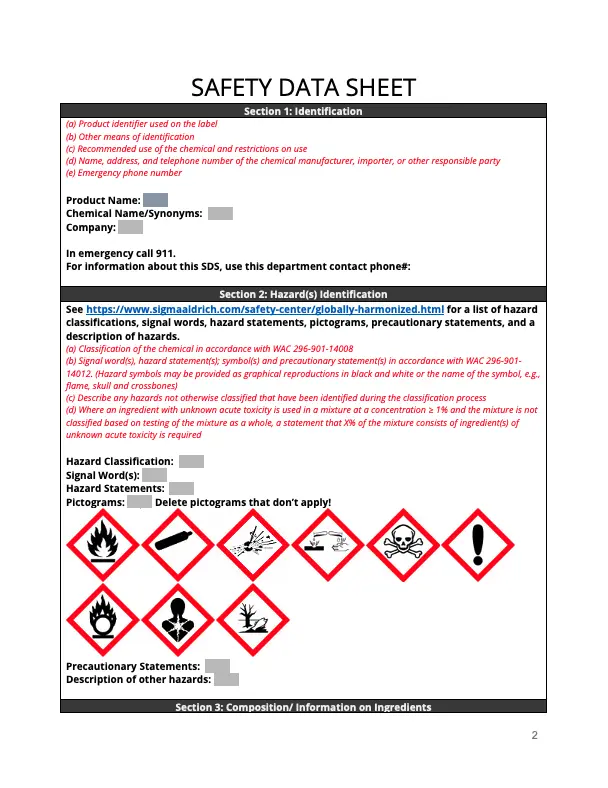
The SDS is a detailed document that outlines important information about hazardous materials, including chemical composition, physical properties, potential hazards, safety precautions, storage and handling, and disposal requirements. The document is typically organized into several sections, including:
Section 1: Identification
This section includes the product name, manufacturer information, and emergency contact information.
Section 2: Hazard(s) Identification
This section outlines the potential hazards associated with the substance, including physical and health risks and the degree of each hazard.
A key part of this identification involves GHS pictograms, which are specific hazard symbols providing standardized hazard warnings at a glance. This visual information supports the detailed chemical hazard classification provided in the text, making it easier to quickly understand the risks.
Section 3: Composition/Information on Ingredients
This section lists the chemical ingredients of the substance, including the CAS number, percentage composition, and any impurities or additives.
Section 4: First-Aid Measures
This section outlines the first-aid procedures that should be followed in case of exposure to the substance, including symptoms of exposure, emergency procedures, and recommended treatment.
Section 5: Fire-Fighting Measures
This section provides information on handling fires involving the substance, including suitable extinguishing media, special firefighting procedures, and protective equipment.
Section 6: Accidental Release Measures
This section outlines the procedures to follow in case of a spill or release of the substance, including containment measures, cleanup procedures, and personal protective equipment.
Section 7: Handling and Storage
This section provides guidance on how to handle and store the substance safely, including recommendations for ventilation, temperature, and storage conditions.
Section 8: Exposure Controls/Personal Protection
This section outlines the recommended exposure limits for the substance and the personal protective equipment that should be worn when handling the substance.
Section 9: Physical and Chemical Properties
This section provides information on the physical and chemical properties of the substance, including its appearance, odor, boiling point, and solubility.
Section 10: Stability and Reactivity
This section outlines the stability and reactivity of the substance, including any conditions that may cause it to decompose or react with other substances.
Section 11: Toxicological Information
This section provides information on the toxicological effects of the substance, including acute and chronic effects, as well as the route of exposure.
Section 12: Ecological Information
This section outlines the potential environmental effects of the substance, including its impact on aquatic and terrestrial organisms.
Section 13: Disposal Considerations
This section provides guidance on how to dispose of the substance safely, including any special considerations or regulations that apply.
Section 14: Transport Information
This section provides information on the transportation of the substance, including any special handling or labeling requirements.
Section 15: Regulatory Information
This section outlines any regulations that apply to the substance, including OSHA standards, EPA regulations, and other relevant laws and regulations.
Section 16: Other Information
This section provides any additional information that may be relevant to the substance, including the date of preparation, the name of the preparer, and any changes made to the document.
Integrating SDS into Safety Programs
Employers must ensure that employees have access to SDS and are trained to read and use this document. Comprehensive SDS employee training, or dedicated SDS training sessions, are essential.
Employees should be able to locate and interpret the information in the SDS and understand the potential hazards associated with the substance. Regular training and refresher courses should be provided, including SDS in workplace safety programs, to keep employees up to date on the latest safety procedures and regulations.
By following OSHA Hazard Communication Standard requirements and maintaining current SDS for all hazardous substances, organizations help prevent accidents and protect their employees and the environment.
SDS Management with CMMS
Although an SDS is important for workplace safety, managing this document effectively, often referred to as SDS management, can be difficult and time-consuming. With digital advancements, organizations can now use CMMS to handle their SDS repositories.
CMMS is a computer-based software program that helps organizations manage maintenance operations.
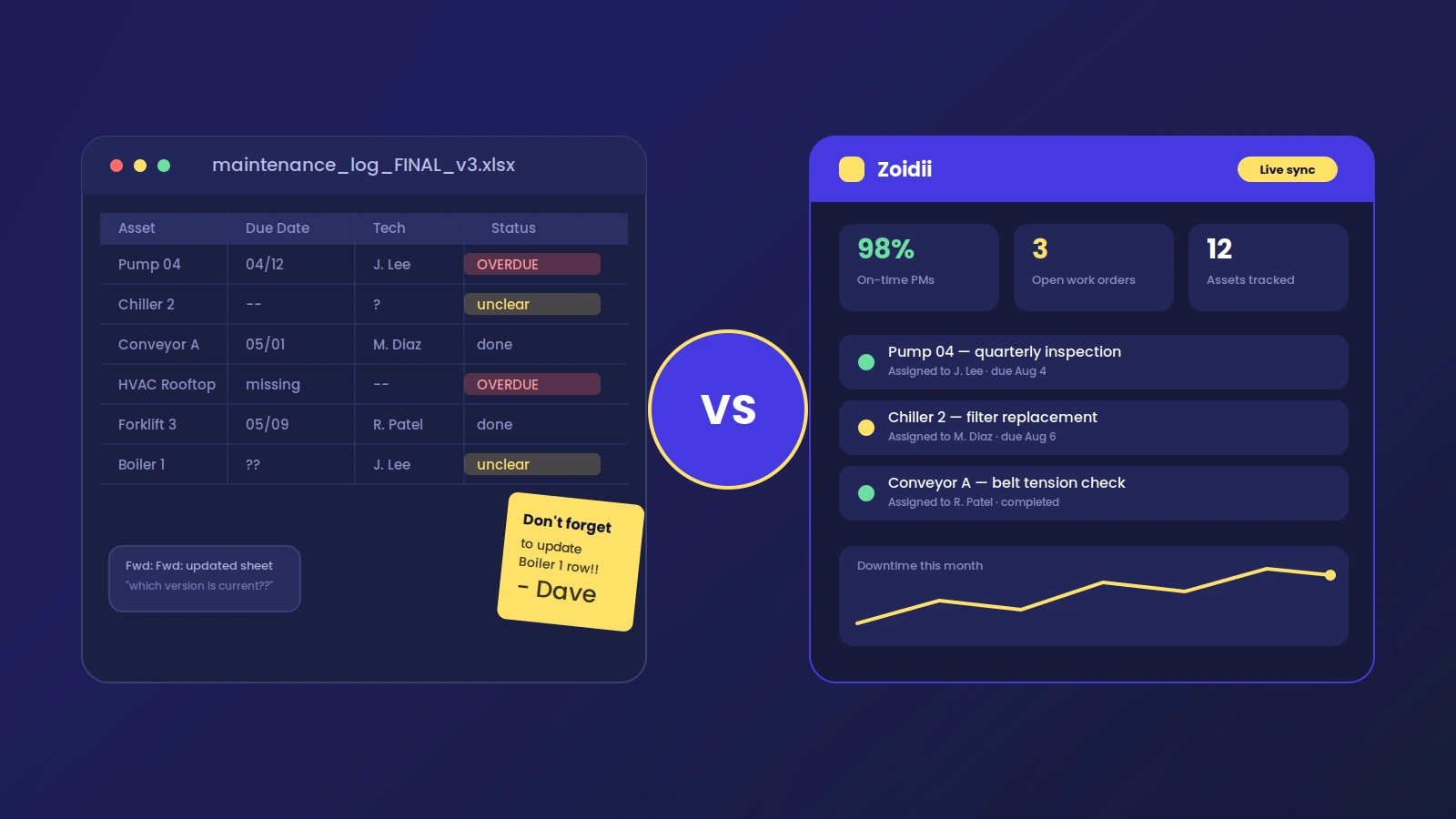
In the context of SDS management, CMMS automates the process of storing and updating hazardous substance documents, which can be tedious and challenging. This includes facilitating electronic SDS storage and creating a digital SDS library that is easily searchable.
Electronic SDS Storage and Accessibility
Organizations can use a CMMS to create a centralized repository of all their SDS documents, making it easy to access and retrieve information, ensuring SDS are easy to access for all employees. CMMS allows for quick and easy searches of the SDS database, significantly increasing the efficiency of managing hazardous materials. Furthermore,
Updating and Managing SDS Revisions
CMMS can simplify the process of keeping safety data sheets up to date by tracking revision dates and facilitating the replacement of outdated versions.
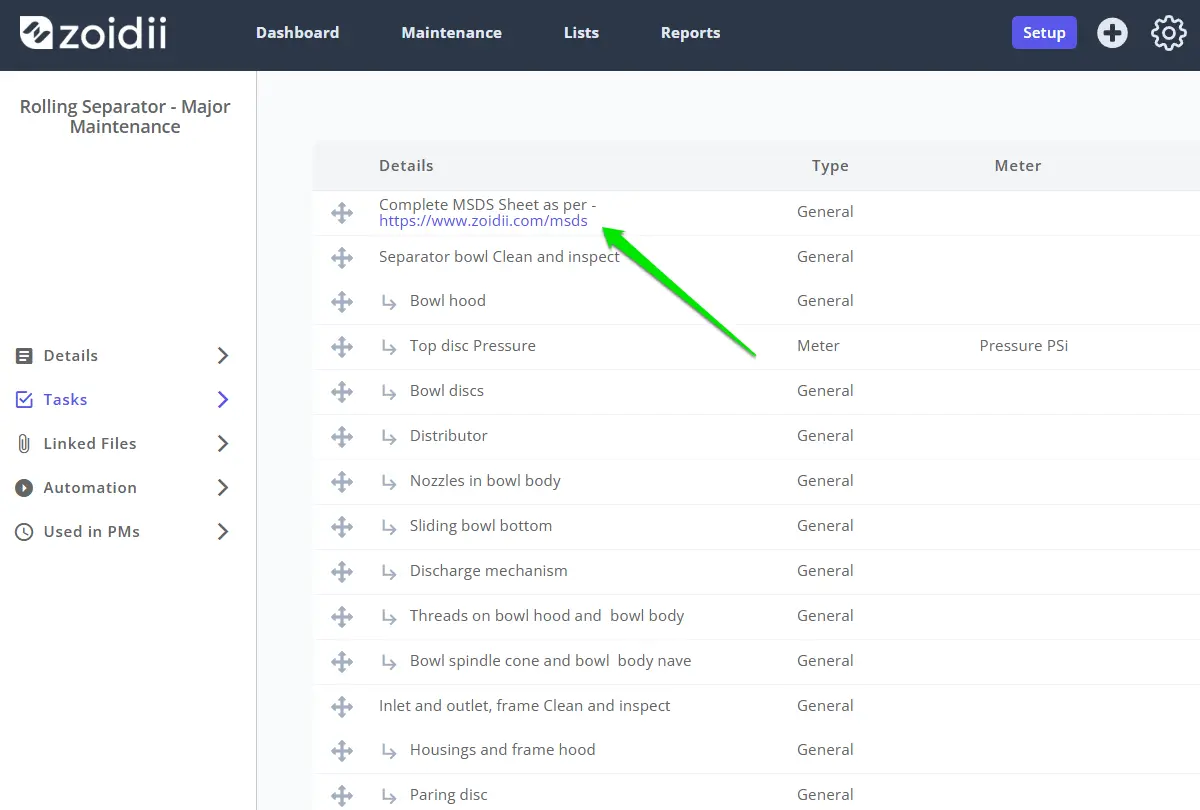
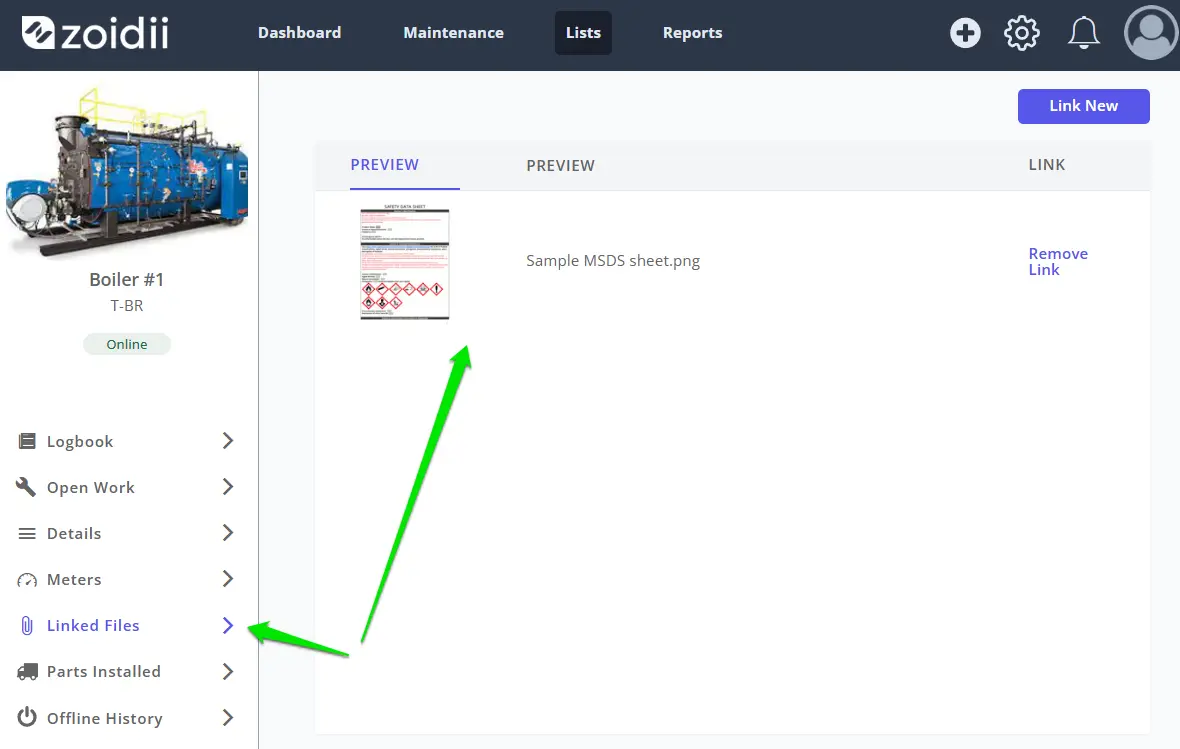
Some systems even allow for attaching SDS to assets or inventory items.
Risk assessments can also be automatically added to a work order via Zoidii CMMS' automated checklists software, helping identify and mitigate potential risks associated with handling and using hazardous materials.
Benefits of Effective SDS Practices
Effective SDS management, facilitated by a CMMS, is important for workplace safety and offers benefits beyond compliance. Good SDS practices lead to directly reducing chemical risk in daily operations.
Cost Savings and Risk Reduction
This can result in significant cost savings by maintaining safety compliance by avoiding fines and reducing incident-related expenses. By using CMMS to manage SDS, organizations can automate time-consuming and complex tasks, increasing efficiency and accuracy in handling hazardous materials, thereby supporting worker health.
Protecting Worker Health and the Environment
A CMMS also simplifies conducting risk assessments for hazardous materials, a vital part of SDS management, which aids in reducing environmental hazards by ensuring proper handling and disposal information is always available.
CMMS can be integrated with other software programs, making it possible to transfer data and ensure that all documents are consistent throughout the organization. Furthermore, some CMMS solutions provide notifications when an SDS needs to be updated, making it easy for organizations to stay up to date with their SDS compliance.
Make Safety Simpler with CMMS
In summary, SDS management is an important aspect of occupational safety, and CMMS has proven to be a helpful tool in this area. Organizations can streamline the SDS management process through CMMS, reducing errors and improving accuracy, ultimately contributing to safer work environments.
Have questions or want to see how Zoidii CMMS can help your team?
Contact us for a personalized demo or answers from our maintenance experts. Or, visit Zoidii to explore how our platform makes SDS management simple, accurate, and stress-free, no matter the size of your team.