
Implementing a new Computerized Maintenance Management System (CMMS) is a significant undertaking, especially in an environment where downtime and efficiency directly impact the bottom line. Many organizations start with a pilot project to ensure a smooth CMMS implementation. This approach allows maintenance teams to test the system on a small scale, work out kinks, and prove its value before a full rollout.
This article explores what CMMS pilot projects entail and how to make them successful. We’ll cover the definition and purpose of a CMMS pilot, the essential components to include when planning a pilot, the key performance indicators (KPIs) maintenance managers should track, and common reasons why CMMS pilot projects fail (and how to avoid them).
The goal is to provide maintenance managers with clear, actionable insights to run an effective CMMS pilot that sets the stage for long-term success.
Definition of a CMMS Pilot Project
A CMMS pilot project is a trial implementation of maintenance management software with a limited scope. It is a proof of concept before an organization commits to deploying the CMMS across all operations. The purpose is to verify that the CMMS can deliver the expected improvements and uncover any issues on a manageable scale.
When successful, pilot projects allow the maintenance team to learn and adjust with minimal risk and build stakeholder confidence. This confidence, from technicians to upper management, is a testament to the worth of the CMMS, making the effort and cost of implementation worthwhile.
What to Include in a CMMS Pilot Project
1. Scope
Define which assets, production lines, or facilities will be part of the pilot. Keep the scope manageable—typically a single plant or a specific area with a representative mix of equipment.Clearly outline which CMMS functionalities will be tested (e.g., preventive maintenance scheduling, work order management, inventory tracking) and which processes are in scope.
2. Objectives
Establish specific, measurable objectives and success criteria for the pilot. Examples include:- Reduce unplanned downtime by 30%
- Improve work order completion rate to 60%
- Increase technician wrench time by 30%
3. Timeline and Milestones
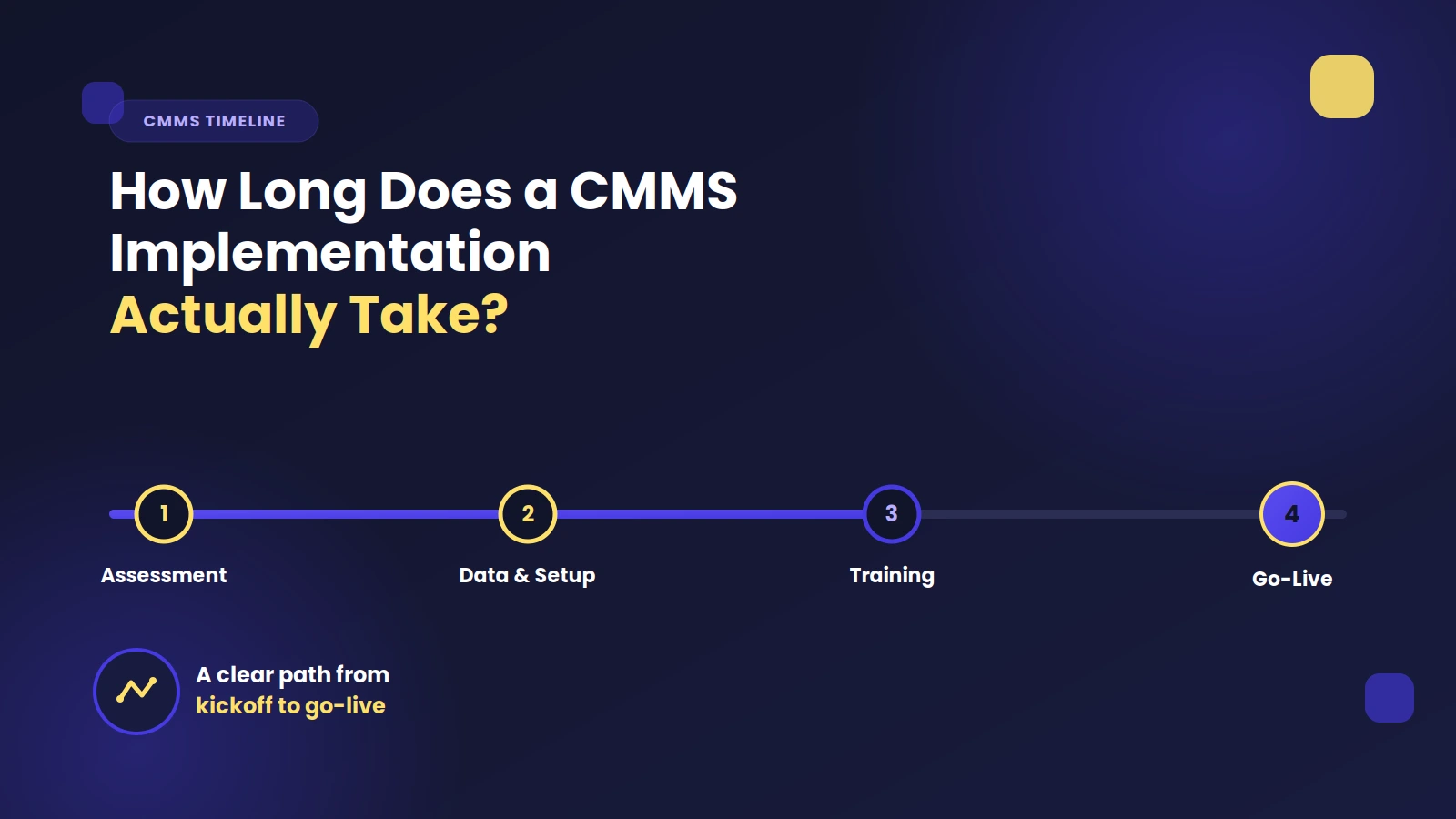
Create a timeline for the pilot, typically lasting 60-90 days. Include:- Setup and Configuration (data migration, CMMS customization)
- Training (ensuring users are comfortable with the system)
- Pilot Operation (real-time testing and usage)
- Assessment and Review (evaluating performance, identifying issues)
4. Team Roles and Responsibilities
Assign a CMMS champion or project manager to oversee implementation. Other key roles include:- Maintenance leads (for execution and troubleshooting)
- Technicians (end users who provide feedback)
- Management sponsor (ensures buy-in and budget approval)
5. Data Requirements
Ensure that accurate and standardized data is loaded into the CMMS. Key data points include:- Asset lists
- Preventive maintenance schedules
- Spare parts inventory
6. Integration Needs
During the pilot, identify whether the CMMS must integrate with ERP systems, production schedules, or IoT sensors. A complete integration will be difficult to achieve during the pilot so plan for manual data entry or partial connections to simulate real-world usage.
Key Performance Indicators (KPIs) to Track
Tracking the right KPIs helps measure the success of a CMMS pilot project. Establish baseline values before the pilot begins for meaningful comparisons.
1. Maintenance Efficiency
Measure how effectively maintenance work is being executed. Important KPIs include:- Mean Time to Repair (MTTR) – average time taken to fix equipment
- Wrench Time – the time maintenance technicians spend directly working on the equipment
2. Downtime Reduction
Track unplanned downtime hours for the assets included in the pilot. A successful CMMS should reduce downtime by improving preventive maintenance, response times, and Mean Time to Repair (MTTR).3. Work Order Compliance
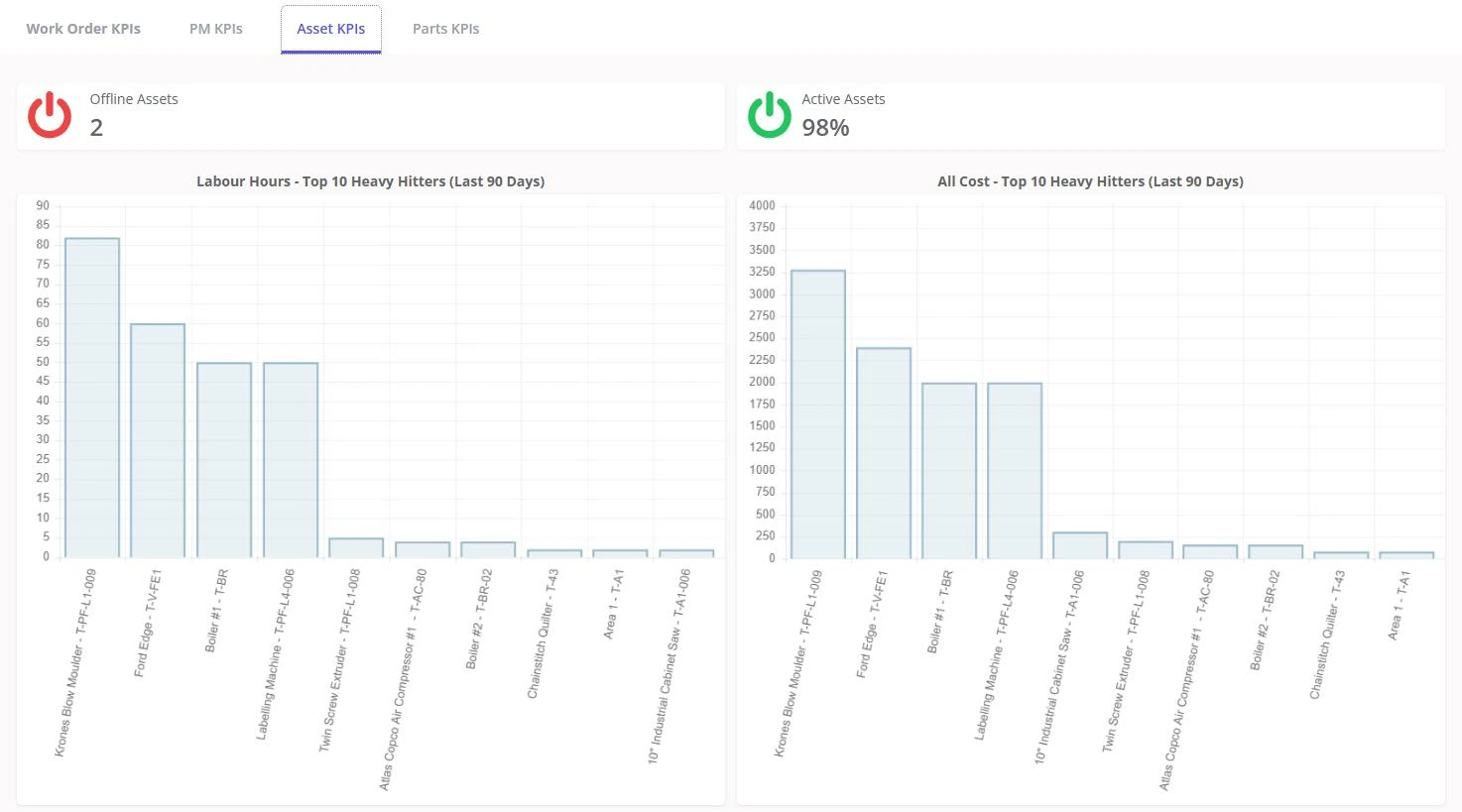
Monitor the number of work orders completed on time. A CMMS should improve scheduling and accountability, leading to higher on-time completion rates.4. Maintenance Costs and Savings
Track costs such as:- Labor costs
- Parts costs
- Total maintenance cost per asset
5. Compliance and Preventive Maintenance Execution
A CMMS should improve compliance by ensuring that required safety inspections and preventive maintenance (PM) tasks get completed on time. Track:- PM Compliance Rate – the percentage of scheduled PMs completed
- Regulatory compliance incidents (fewer missed inspections means fewer fines or audit failures)
Reasons Why CMMS Pilot Projects Fail
Understanding common pitfalls helps prevent failure. Here are the top reasons CMMS pilots fail:
1. Poor Planning and Scope Creep
Clear objectives and a focused scope are crucial for the success of a CMMS pilot project. Defining what success looks like and keeping the scope limited and realistic helps to maintain focus and determination.2. Lack of User Adoption
The pilot won’t demonstrate value if maintenance technicians and planners don’t use the CMMS. Combat resistance by:- Providing hands-on training
- Encouraging daily usage
- Assigning CMMS champions to guide the team
3. Data Inconsistencies and Poor Data Quality
Messy data leads to inaccurate reporting and frustration. Before entering data into the CMMS, ensure asset names, maintenance schedules, and work orders follow standardized formats.4. Inadequate Training and Support
A lack of training can cause users to revert to old methods. To ensure adoption, provide ongoing support and dedicated training sessions. 5. Failure to Align with Business Goals
If the CMMS pilot doesn’t demonstrate value to upper management, securing funding for full implementation will be difficult. Communicate quick wins (e.g., reduced downtime, higher work order completion rates) and show how the CMMS contributes to overall business goals.Get Your Pilot CMMS Started
A CMMS pilot project is a crucial step toward improving maintenance efficiency in manufacturing. Maintenance managers can ensure a successful pilot that demonstrates value and secures buy-in for full-scale implementation by defining clear objectives, tracking the right KPIs, and avoiding common pitfalls.
Starting with a structured pilot phase increases the likelihood of a smooth transition to a fully operational CMMS, ensuring long-term benefits such as reduced downtime, improved work order management, and cost savings.
A CMMS pilot can lay the foundation for a more efficient, data-driven maintenance strategy with careful planning, engagement, and continuous improvement. Contact Zoidii CMMS to learn how to execute a proper CMMS pilot at your organization.