
The most expensive tool in your facility isn't a CNC machine or a boiler; it's the CMMS software your team refuses to use. Industry data shows that nearly 80% of software implementations fail because the interface is too complex for the people actually doing the work. You're likely tired of drowning in reactive maintenance and losing track of spare parts while your technicians stick to paper notes or memory. It's a cycle of disorganized chaos that makes it impossible to prove your department's value to the rest of the company.
We're here to fix that. This guide cuts through the enterprise fluff to help you find a tool that's stupid simple and built for the frontline. You'll learn how to transform your operations with organized work orders and automated preventive maintenance that can reduce equipment downtime by 25% within the first six months of use. We'll also show you how to generate the clear ROI reports you need to justify your budget and keep the C-suite happy as we head into 2026.
Key Takeaways
- Stop buying "shelfware" and learn why 80% of enterprise features are a waste of your time and budget.
- Identify the non-negotiable features of modern cmms software that turn reactive chaos into a predictable, automated calendar.
- Discover why cloud-based SaaS is the only logical choice for 2026 and how to find the right operational fit for your team.
- Master a 5-step migration plan to move from Excel to a digital system without importing "junk data" or broken processes.
- Realize your maintenance goals with a "stupid simple" approach that puts mobile tools and Kanban boards in your technicians' hands.
Why Most CMMS Software Ends Up as "Shelfware"
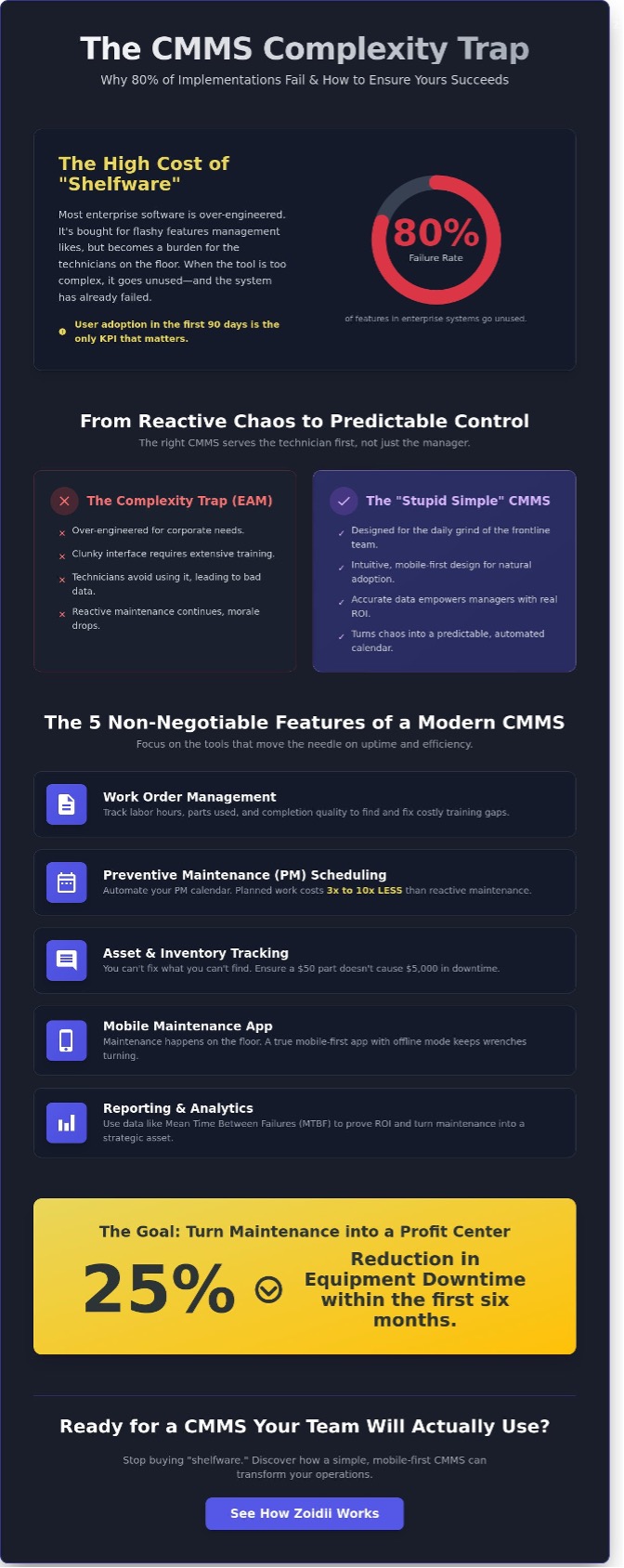
A Computerized Maintenance Management System isn't supposed to be a massive IT project. At its core, it's a tool to centralize your maintenance data, track PMs, and keep your assets running. Yet, industry data suggests that up to 80% of features in high-end enterprise systems go completely unused. This is the complexity trap. When software is over-engineered, it stops being a tool and starts being a burden. Management buys it for the flashy reports, but the guys on the floor never touch it.
The real cost of "shelfware" goes beyond wasted subscription fees. It kills team morale. When you force a technician to spend 20 minutes navigating a clunky interface just to close a 5-minute repair, they'll stop using the system. Data becomes unreliable. Maintenance becomes reactive again. During your first 90 days of implementing CMMS software, user adoption is the only KPI that actually matters. If your team isn't logging work daily, the system has already failed.
The Difference Between EAM and CMMS
Small-to-midsize plants often get sold on Enterprise Asset Management (EAM) systems they don't need. EAM is built for global corporations managing entire lifecycles and accounting integrations. It's heavy. For a single facility or a growing plant, you need a straight-shooting approach. You need to do the basics exceptionally well. Complexity starts hurting productivity the moment a technician needs a manual to find a work order. Stick to a cmms software that prioritizes the daily grind over corporate bloat.The "Stupid Simple" Philosophy
We believe in the KISS principle: Keep It Stupid Simple. A clean interface isn't just a design choice; it's a strategy to reduce the training burden for technicians who have spent 30 years with a wrench, not a tablet. If the software is intuitive, adoption happens naturally. A User-First CMMS is a tool that serves the tech, not just the manager. When the tech wins, the data is accurate, and the manager gets the reports they need without the friction.The 5 Non-Negotiable Features of a Modern CMMS
Most maintenance teams are drowning in "feature bloat." You don't need a thousand buttons; you need a system that actually gets used. A modern cmms software should simplify your life, not add another layer of digital paperwork. To move the needle on uptime and efficiency, your platform must excel in five specific areas.
- Work Order Management: This isn't just a digital to-do list. It's about tracking labor hours and completion quality. If one technician finishes a pump rebuild in two hours while another takes six, you've found a training gap that's costing you money.
- Preventive Maintenance (PM) Scheduling: Reactive maintenance costs between 3x and 10x more than planned work. Your CMMS should turn that daily chaos into a predictable, automated calendar.
- Asset & Inventory Tracking: You can't fix what you can't find. Knowing you have exactly four spare bearings in Bin B ensures a $50 part doesn't cause $5,000 in downtime.
- Mobile Maintenance App: Maintenance happens on the plant floor, not in an office. If your team has to walk back to a desk to close a ticket, they won't do it.
- Reporting & Analytics: You need to prove ROI to the C-suite. Hard data on Mean Time Between Failures (MTBF) turns maintenance from a "cost center" into a strategic asset.
Visual Maintenance: Kanban Boards and Guest Requests
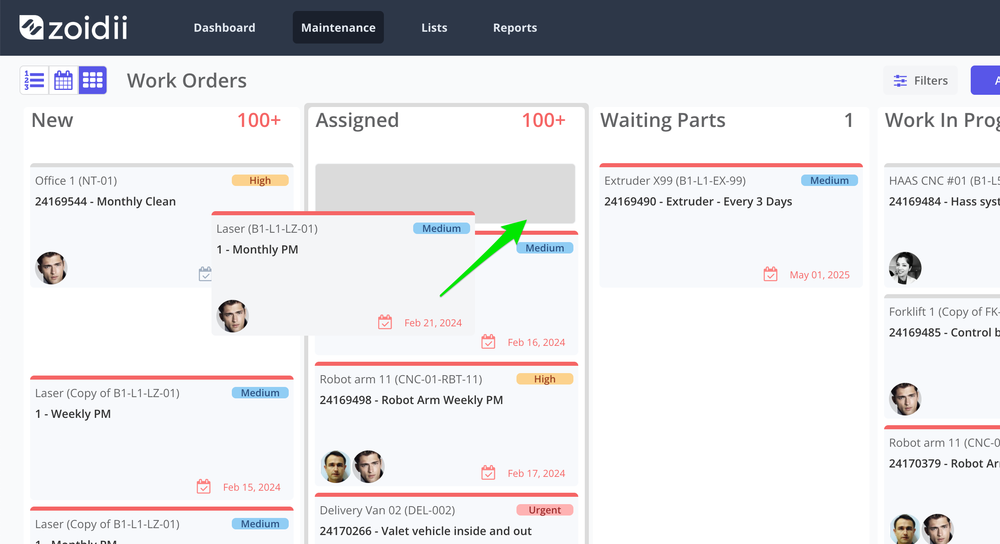
List views are where tasks go to die. Visual Kanban boards allow managers to see the entire facility's health at a glance. You can drag and drop tasks from "To Do" to "In Progress" without clicking through five menus.This transparency stops the "missing bolt" syndrome, where small issues are ignored until they become catastrophic failures. Guest Work Orders take this a step further. They allow anyone in the building to report a leak or a weird noise in under 20 seconds without needing a login. This reduces friction and ensures nothing falls through the cracks.
Mobile-First vs. Mobile-Also
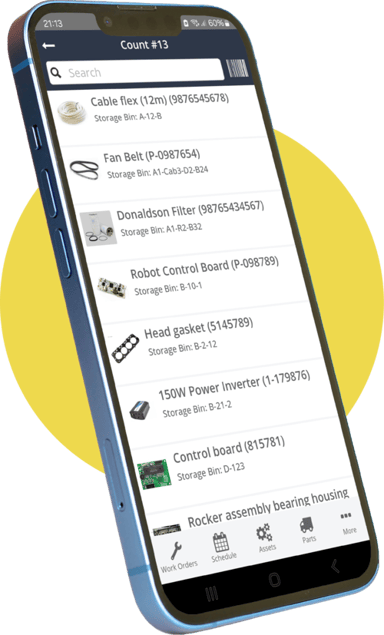
There is a massive difference between a dedicated app and a clunky website shoved into a mobile browser. A true cmms software app works in "offline mode" because Wi-Fi rarely reaches the back of a mechanical room. It should feel intuitive, allowing techs to snap photos of broken parts and attach them directly to the record. Efficiency is the goal here.Scanning a QR code on an asset can save 10 minutes per work order by instantly pulling up the manual, safety checklists, and part history without a single search query. This keeps your wrenches turning and your data accurate.
Evaluating CMMS Solutions: Finding Your Operational Fit
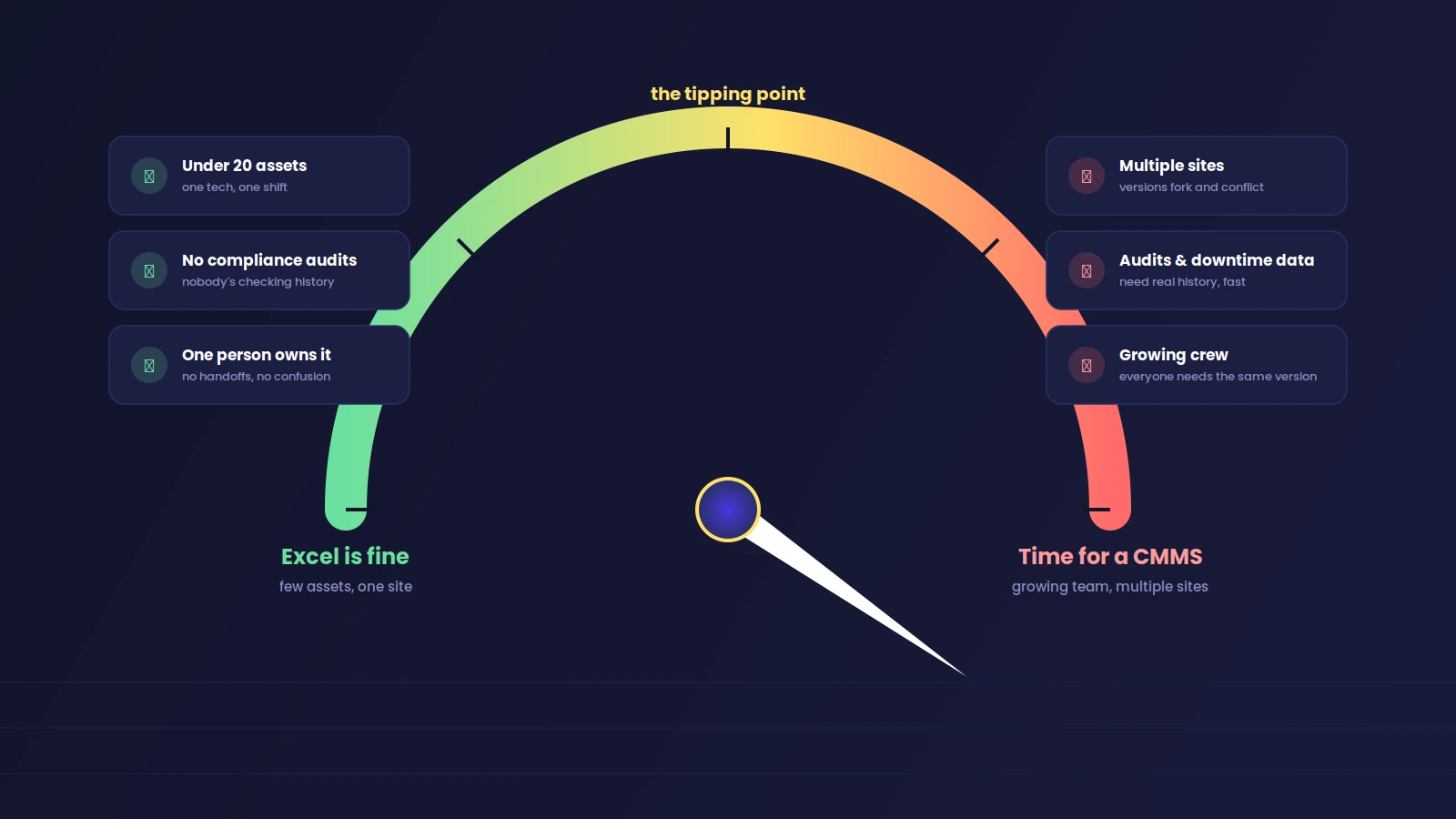
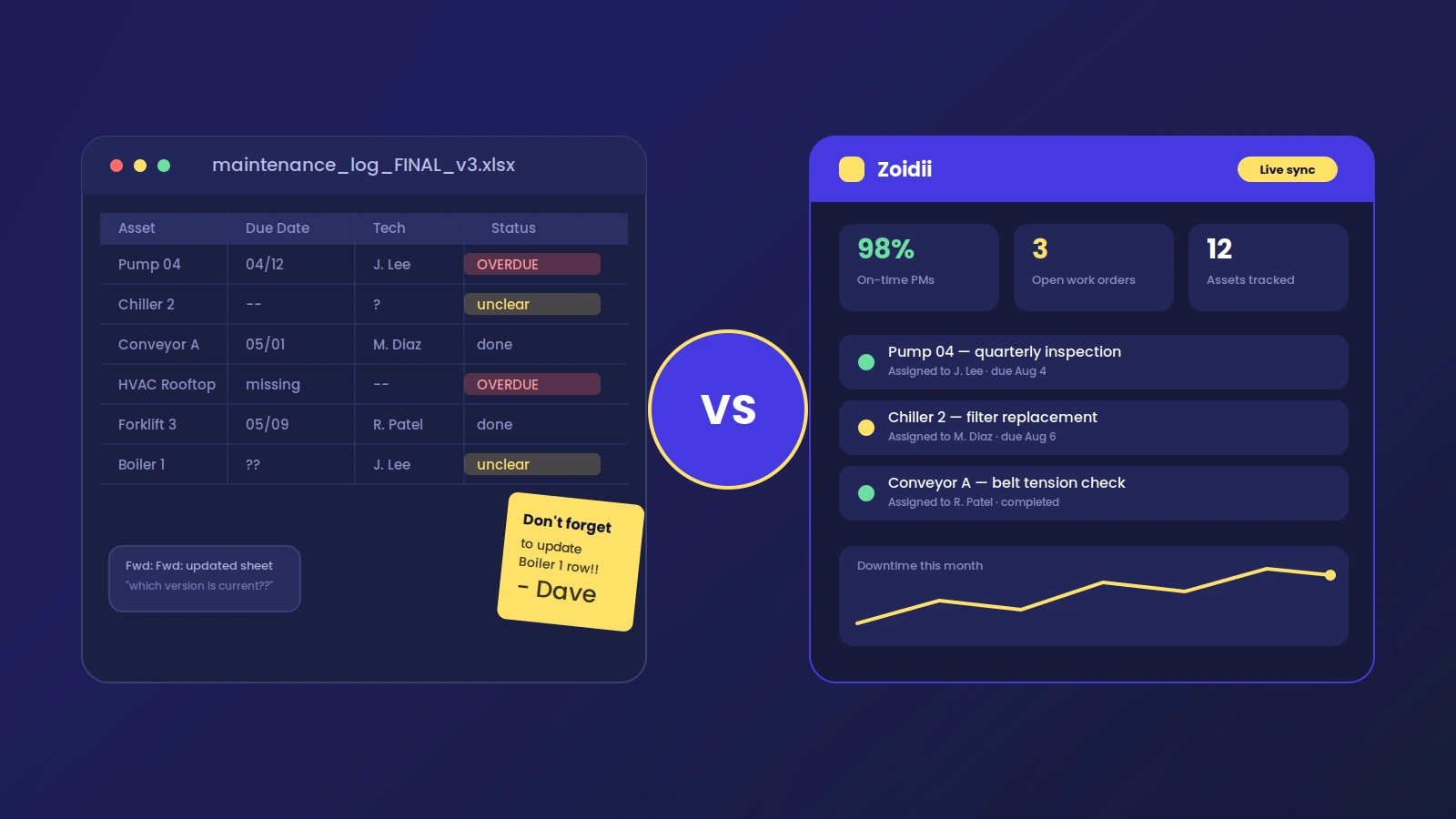
Stop guessing if you're ready for a change. Your maintenance maturity determines your path. If you're still using paper or Excel, you're likely part of the 80% of facilities struggling with disorganized data and lost history. Legacy systems are just as bad. They're slow, rigid, and keep your team chained to a desk. In 2026, cloud-based SaaS is the only choice that makes sense. It's about mobility and real-time updates. If your technicians can't close a work order on their phone, your cmms software is failing you.
Watch out for the hidden costs of cmms software. Some vendors lure you in with a low monthly rate but then hit you with $10,000 implementation fees and paid support tiers. You need a solution that stays stupid simple and scales without locking you into a clunky, expensive mess. Consider these factors before signing any contract:
- Implementation speed: Can you get up and running in days, or will it take six months?
- Training requirements: If the software requires a week-long course to understand, your team won't use it.
- Support accessibility: Don't pay extra for "premium" support just to get a human on the phone.
- Scalability: Your software should grow from 10 assets to 10,000 without a headache.
The ROI of Preventive Maintenance
Calculating the cost of downtime is the fastest way to get a budget approved. According to the Aberdeen Group, the average cost of unplanned downtime is $260,000 per hour across various industries. Even if your facility is smaller, the price of one major equipment failure often exceeds the annual cost of a subscription.Use your own data to show your Finance Director that "doing nothing" is actually your most expensive option. Transitioning from reactive to preventive maintenance can reduce total maintenance costs by 12% to 18% within the first year.
Integration and Security
Modern IT departments won't look at a tool unless it's secure. Single Sign-On (SSO) is a must-have for any serious operation. It reduces password fatigue and keeps your data locked down. Beyond security, your software needs to talk to the rest of your tech stack. Look for a tool with a robust API so you can connect your maintenance data to ERPs or sensors. This creates a unified flow of information instead of a data silo that nobody checks. Ensure your provider offers automatic cloud backups so you never lose your asset history.Implementation: Moving from Excel to CMMS in 5 Steps
Transitioning from messy spreadsheets to cmms software doesn't have to be a nightmare. Most failed implementations happen because teams try to do too much at once. If you try to digitize a decade of bad habits, you'll just end up with digital chaos. Follow this no-nonsense 5-step plan to get organized without the stress.
- Step 1: Audit your assets. Don't just bulk-upload your old Excel files. Industry audits show that up to 25% of spreadsheet data is outdated or flat-out wrong. Clean your list first. If you haven't touched a machine since 2022, don't put it in the system.
- Step 2: Define your critical PMs. You can't automate everything on day one. Identify the 15% of assets that cause 80% of your production delays. Build your preventive maintenance schedules for those high-impact machines first.
- Step 3: Pick your "Champions." Identify two technicians who are comfortable with tablets or smartphones. Train them first. When the rest of the crew sees the tech-savvy guys finishing work orders faster, they'll want in.
- Step 4: Set a "Go-Live" date. Pick a hard deadline, like the first Monday of the month. Stop the parallel running of paper and digital systems immediately. If you allow paper backups, your team will never fully commit to the new process.
- Step 5: Review the data. After 30 days, run your first report. Look for your "Planned vs. Unplanned" work ratios. Use these actual numbers to tweak your schedules. If a machine didn't break once, maybe you're over-maintaining it.
Common Implementation Pitfalls
The biggest trap is "Over-Configuring." You don't need 40 custom fields to track a simple centrifugal pump. Start with the basics: name, location, and manual. You don't need to track every nut and bolt in week one. Focus on the big picture. When you encounter resistance, use a "help us help you" approach. Explain that the goal isn't to monitor their every move; it's to prove they need more staff or better parts availability.Training Your Team for Success
Forget long, boring classroom sessions. Keep training under 25 minutes and do it on the shop floor. Focus entirely on the mobile app because that's where the real work happens. Show your techs how cmms software eliminates the "where is that part?" scavenger hunt. Highlight the "chat with a product expert" feature so they get answers in seconds. Success happens when the tool makes their life easier, not more bureaucratic.Ready to see how easy maintenance can be? Book a demo and let's get your team organized.
Realize Your Maintenance Goals with Zoidii
Most CMMS software is built by people who have never set foot on a factory floor. They give you a labyrinth of menus when all you need is a way to track a failing pump. Zoidii is different. We built it to be "stupid simple" because maintenance is hard enough without fighting your tools. We focus on getting your team out of reactive chaos and into a rhythm of planned reliability.
Modern maintenance teams don't have time for a three-month training course. Zoidii delivers the advantage through three core pillars:
- Kanban Boards: See your entire workflow at a glance. Drag and drop work orders to balance the load across your team instantly.
- Guest Work Orders: Let production staff report issues without needing a full license. They scan a QR code, submit the request, and get back to work.
- The Mobile App: A killer mobile tool that works where your technicians do. It's fast, intuitive, and works even when the Wi-Fi in the plant basement fails.
Stop Guessing, Start Managing
Data shouldn't just sit in a database; it should tell you what to do next. Zoidii turns your daily logs into a competitive advantage by highlighting exactly which assets are draining your budget. Our "No-Nonsense" promise means you get the tools you need to get the job done, without the fluff that bloats enterprise systems. You'll see where your time goes and why your PMs are falling behind.Book a demo with a Zoidii product expert today and see how clarity changes your operations.
The Future of Your Facility
2026 is the year to finally ditch the spreadsheets. Managing a multi-million dollar facility with a 2005-era Excel file isn't just outdated, it's a liability. Join the ranks of organized, high-performing maintenance departments that have stopped firefighting. We don't hide behind long-term contracts because we know the results speak for themselves. You get results, or you don't stay. It's that simple.Whether you're managing a single site or a global network, Zoidii scales with you. It's time to stop hoping things won't break and start ensuring they don't. Chat with a product expert to start your free trial and experience maintenance management that actually makes sense.
Take Control of Your Maintenance Future
Maintenance management shouldn't feel like a second job. Most operations fail because they choose bloated systems that their teams eventually abandon as shelfware. You've learned that success requires focusing on the 5 non-negotiable features and following a structured 5-step transition from messy spreadsheets.
By 2026, the gap between organized facilities and those stuck in reactive mode will only widen. You don't need a complex enterprise beast; you need a CMMS software solution that your team will actually use every day.
Zoidii is currently the #1 rated cloud-based CMMS for a reason. Top facilities across Ireland and Canada have already ditched the paperwork for our platform because it gets results. We specialize in rapid deployment, getting your system fully operational in days instead of the months required by traditional vendors. It's time to stop over-complicating your workflow and start realizing your operational goals with a tool built for real-world maintenance professionals.
Ready to see the "stupid simple" CMMS in action? Book a demo with a Zoidii expert. Your facility deserves better than disorganized chaos. Let's get to work.