
Why CNC Preventive Maintenance Can't Be an Afterthought in 2026
The global CNC machine market is valued at approximately $108.58 billion in 2026 and is projected to reach $251.61 billion by 2034 — a clear signal that manufacturers are doubling down on precision automation. But that investment only pays off if your machines are running.
The cost of letting that investment fail is severe. According to Zoidii's 2026 Maintenance Statistics Report, unplanned downtime consumes approximately 11% of annual revenue for large global manufacturers, translating to roughly $1.4 trillion annually. For a single large plant, that can mean losses of $253 million per year, averaging 27 hours of downtime every month.
In CNC-heavy environments like automotive or aerospace, the numbers are even more alarming. The cost of one hour of unplanned downtime in automotive manufacturing can reach $2.3 million, and since 2019, those costs have doubled. The solution isn't simply "do more maintenance" — it's doing maintenance smarter, with a CMMS (Computerized Maintenance Management System) at the center of your strategy.
What Is a CMMS and Why Does It Matter for CNC Machines?
A CMMS is software that centralizes and automates your maintenance operations — work orders, asset history, PM schedules, parts inventory, and compliance records — all in one place. For CNC machine operators, a CMMS means the difference between scheduled downtime (planned, short, predictable) and unplanned failures (costly, disruptive, and avoidable).
When you manage CNC preventive maintenance through a CMMS, you gain:
- Automated PM scheduling based on runtime hours, calendar intervals, or machine cycles
- A complete asset register with full service history for every CNC machine
- Work order management that assigns tasks, tracks completion, and captures technician notes
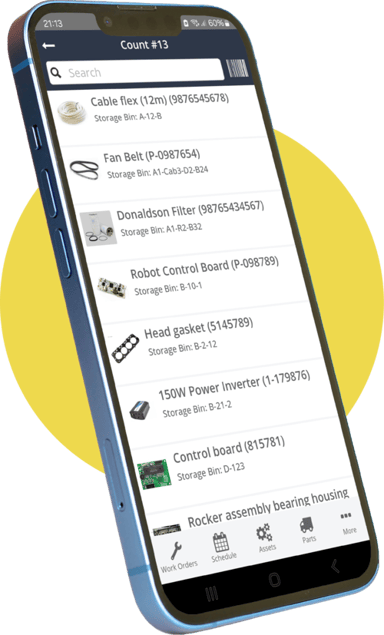
- Parts inventory tracking so critical that spare parts are always on hand
- Compliance documentation for audits, safety checks, and regulatory requirements
- Mobile access so technicians can view tasks and log work on the shop floor in real time
The Real Cost of Reactive CNC Maintenance
Before diving into what good preventive maintenance looks like, it's worth understanding what reactive maintenance actually costs.
CNC machines are precision instruments. A spindle bearing that's allowed to fail doesn't just cost the price of the bearing — it can damage the spindle housing, cause tool crashes, scrap expensive workpieces, and put the machine offline for days or weeks. The downstream effects ripple through your production schedule.
From 2019 to 2024, the number of unplanned downtime incidents per plant per month dropped from 42 to 25 — a significant improvement. But the hours lost per month only fell from 39 to 27, meaning each incident is taking longer to resolve. That's a sign that reactive maintenance is becoming more complex and costly, not less. For CNC operators, the message is clear: shifting from reactive to preventive maintenance, managed through a CMMS, is one of the highest-ROI moves a maintenance team can make in 2026.
Core CNC Preventive Maintenance Tasks (and How a CMMS Manages Them)
Effective CNC preventive maintenance covers five main areas. A CMMS ensures each one is scheduled, tracked, and documented consistently.
1. Lubrication and Coolant Management
CNC machines rely on precision lubrication across spindle bearings, ball screws, guideways, and the tool changer. Coolant systems also require regular checks for concentration, contamination, and bacterial growth.
In a CMMS, lubrication PMs are set up as recurring work orders — daily, weekly, or based on spindle hours. Technicians receive automated alerts, complete the task on mobile, and the system logs the completion with a timestamp. Nothing gets missed because a technician was busy or on leave.
2. Mechanical Inspections
Ball screw backlash, spindle runout, axis alignment, and toolholder taper conditions all degrade gradually. Left unchecked, they produce out-of-tolerance parts long before a hard failure occurs — a problem that's often only discovered after scrap rates climb.
A CMMS-driven PM schedule ensures these checks happen at defined intervals. Standardized task checklists ensure consistency regardless of who performs the inspection, and any findings are logged against the machine's asset record for trend analysis.
3. Electrical and Control System Checks
CNC controllers, servo drives, encoders, and electrical cabinets need periodic inspection. Loose connections, contaminated cooling fans, and degraded components are common causes of unplanned shutdowns.
With a CMMS, electrical PMs are assigned to qualified technicians, include step-by-step task instructions, and capture findings in a structured format. If a technician flags a potential issue, the CMMS generates a corrective work order automatically.
4. Filtration and Fluid Systems
Hydraulic filters, air filters, chip conveyor systems, and coolant filtration all have defined service intervals. In a busy shop, these are easy to overlook — until a contaminated hydraulic system causes a tool change failure or a blocked air filter causes thermal issues in the control cabinet.
A CMMS eliminates the risk of these tasks slipping through the cracks by treating them with the same scheduling rigor as any other PM.
5. Calibration and Accuracy Verification
CNC machine accuracy drifts over time due to thermal effects, wear, and vibration. Regular calibration checks and ballbar testing help detect issues before they affect part quality.
In a CMMS, calibration tasks can be linked to compliance requirements and automatically generate upcoming due-date alerts. Calibration certificates and results are stored against the asset, making audit preparation straightforward.
Building a CNC PM Program in Your CMMS: A Step-by-Step Approach
Getting your CNC preventive maintenance program off the ground in a CMMS is more straightforward than most teams expect. Here's how to structure it.
Step 1: Build your asset register. Enter every CNC machine as an asset in your CMMS — make, model, serial number, location, and installation date. The asset register becomes the foundation for all PM scheduling, work history, and reporting.
Step 2: Review OEM documentation. Most CNC machine manufacturers provide recommended PM intervals in their manuals. Use these as your baseline, then adjust based on your actual operating conditions and shift patterns.
Step 3: Create standardized PM task lists. For each machine type and service interval, build a checklist in your CMMS. Include step-by-step instructions, safety notes, and required materials. This ensures consistent execution regardless of technician experience level.
Step 4: Set your scheduling triggers. Decide whether PMs should trigger on calendar time (e.g., every 90 days), runtime hours (e.g., every 500 spindle hours), or production cycles. A good CMMS supports all three.
Step 5: Assign work orders and enable mobile access. Technicians should be able to view, start, and complete PM work orders from their phones or tablets on the shop floor — without having to walk back to a computer. Step 6: Track compliance and analyze trends. Your CMMS should report on PM completion rates, overdue tasks, and mean time between failures (MTBF) per machine. Use this data to refine intervals and identify machines with recurring issues.
CMMS vs. Spreadsheets: Why the Gap Matters in 2026
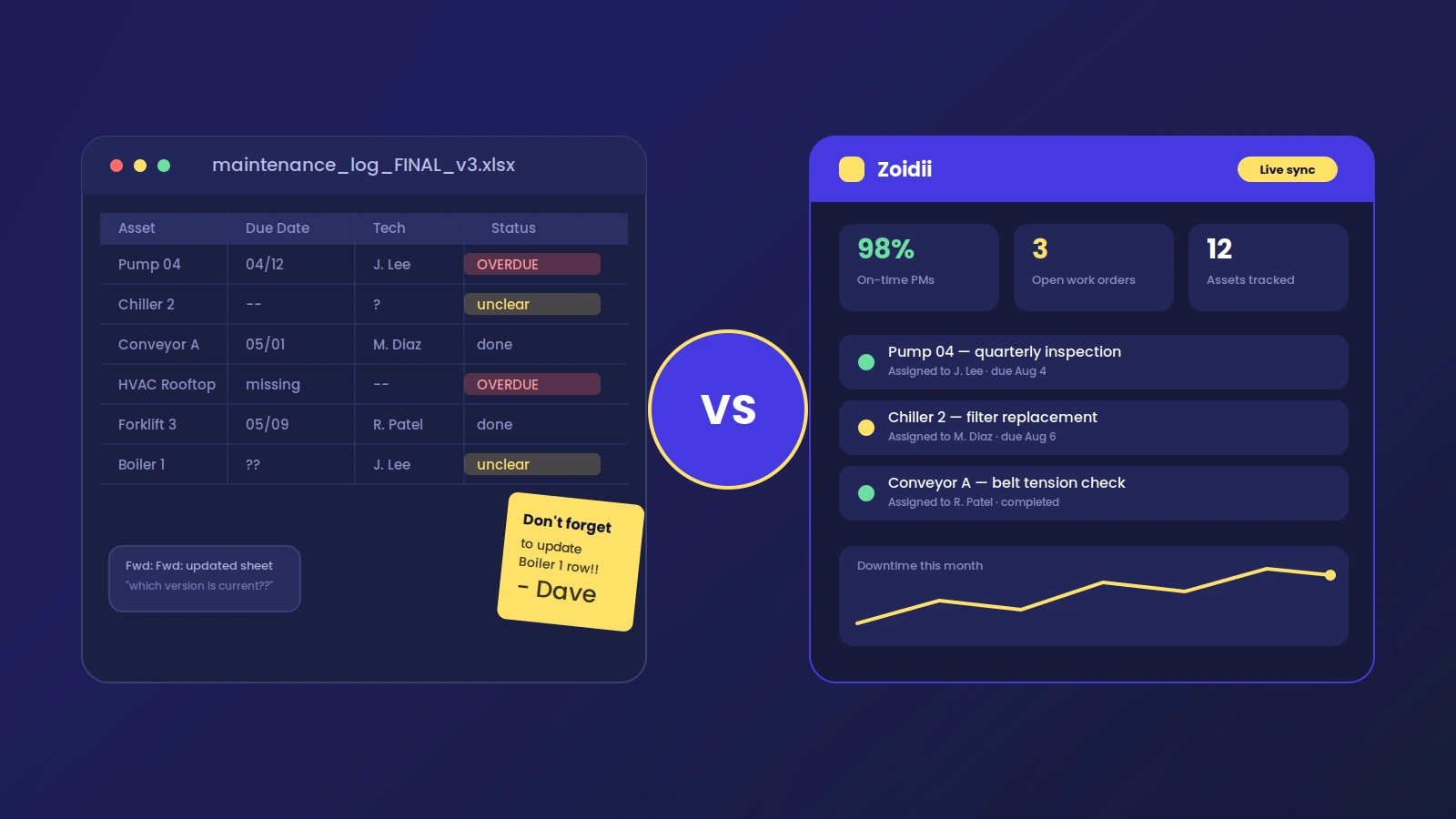
Many CNC shops still manage maintenance on spreadsheets or paper-based systems. In 2026, that approach is increasingly difficult to defend. Spreadsheets don't send automated reminders. They don't track work order completion in real time. They can't generate reports on MTBF or PM compliance rates. They can't be accessed by a technician standing next to a machine. And when a spreadsheet-based program relies on one person's knowledge, it's one resignation away from collapse. With the manufacturing workforce under significant pressure — U.S. maintenance and repair roles see around 159,800 job openings per year according to Zoidii's 2026 report — knowledge retention and process standardization have never been more critical. A CMMS captures institutional knowledge in structured, searchable records. Your PM program doesn't walk out the door when a senior technician does.
Predictive Maintenance and the Role of CMMS in Smarter CNC Operations
The next evolution beyond preventive maintenance is predictive maintenance — using sensor data, vibration analysis, thermal imaging, and oil analysis to detect failure signatures before a breakdown occurs. As noted in Zoidii's 2026 Maintenance Statistics Report, nearly half of manufacturers now have dedicated predictive maintenance teams, and condition monitoring has become mainstream.
A CMMS plays a central role in making predictive maintenance programs operational. It's where condition monitoring alerts are converted into work orders, where findings are logged and trended, and where the maintenance team can act on data rather than collect it. Without a CMMS as the management layer, even the best sensor data tends to get lost in inboxes or unread dashboards.
The CNC machine market's shift toward IoT connectivity, digital twins, and AI-driven maintenance scheduling — trends clearly visible in 2026 market data — makes the integration of CMMS with machine data increasingly valuable. Shops that invest in this capability now will be well-positioned as CNC technology continues to evolve.
Key Takeaways: CNC Preventive Maintenance and CMMS in 2026
The combination of rising CNC investment, escalating downtime costs, and workforce pressures makes preventive maintenance through a CMMS one of the most strategic decisions a manufacturing operation can make right now.
To summarize the core principles:
- Unplanned downtime costs manufacturers an average of $253M per year per large plant — preventive maintenance through a CMMS directly attacks this number
- The global CNC machine market reached $108.58 billion in 2026, making asset protection a financial priority
- A CMMS automates PM scheduling, standardizes task execution, tracks compliance, and preserves institutional knowledge
- Lubrication, mechanical inspections, electrical checks, filtration, and calibration are the five pillars of CNC PM — all managed more effectively with a CMMS
- Nearly 90% of manufacturers use condition monitoring; a CMMS is what makes those programs operationally effective
Start Managing CNC Preventive Maintenance with Zoidii CMMS
Zoidii is a cloud-based CMMS designed to be simple and easy to use — on web and mobile. Maintenance teams use Zoidii to manage work orders, build preventive maintenance schedules, track assets, and manage parts inventory across manufacturing, facilities, and food and beverage environments.
If your CNC maintenance program is still running on spreadsheets, whiteboards, or memory — or if you're looking to move from reactive to preventive maintenance — Zoidii is built to help you make that transition quickly and without complexity. Book a Zoidii demo today and see how a CMMS can protect your CNC investment.
Frequently Asked Questions: CNC Preventive Maintenance and CMMS
What is the difference between preventive maintenance and predictive maintenance for CNC machines? Preventive maintenance (PM) is time- or usage-based tasks that are performed at set intervals regardless of the machine's current condition, such as lubricating guideways every 500 spindle hours or checking coolant concentration weekly. Predictive maintenance (PdM) goes a step further by using sensor data, vibration analysis, or thermal imaging to detect early signs of failure before an interval is even reached. Most shops start with a solid PM program managed through a CMMS, then layer in predictive capabilities over time. A CMMS supports both approaches by converting condition monitoring alerts into actionable work orders and tracking the results.
How often should CNC machines be serviced? Service frequency depends on the machine type, operating environment, and hours of use. As a general guideline, daily checks should cover lubrication levels, coolant concentration, and chip conveyor operation; weekly tasks typically include filter inspections and way cleaner checks; monthly or quarterly PMs cover mechanical inspections, electrical cabinet checks, and axis alignment verification; and annual services should include full calibration, ballbar testing, and spindle analysis. Your CNC manufacturer's OEM documentation is the best starting point for setting intervals, which you can then refine based on real-world data captured in your CMMS.
Can a CMMS be used to manage multiple CNC machines across different shifts? Yes — this is one of the core strengths of a cloud-based CMMS. Each CNC machine is set up as an individual asset with its own PM schedule, work order history, and parts list. Work orders can be assigned to specific technicians or shifts, and managers get a real-time view of what's been completed, what's overdue, and what's coming up across all machines and all shifts. Mobile access means technicians on night shifts can log work without any paperwork handoff, keeping records accurate and up to date around the clock.
What are the most common causes of unplanned CNC machine downtime? The most frequent culprits are inadequate lubrication leading to bearing or guideway wear, contaminated or depleted coolant causing thermal issues, electrical faults from dirty or loose connections in control cabinets, toolholder taper wear causing runout and vibration, and chip management failures blocking conveyors or coolant systems. The good news is that all of these are preventable with a consistent PM program. A CMMS helps by ensuring no task slips through the cracks and by building a maintenance history that reveals which failure modes are most common on each machine.
How long does it take to set up a CMMS for a CNC maintenance program? With a modern, user-friendly CMMS like Zoidii, most teams can go from sign-up to an active PM schedule within a few days. The core setup steps are: entering your CNC machines as assets, importing or building PM task lists from your OEM manuals, setting scheduling triggers, and inviting your technicians to the platform. Cloud-based CMMS software doesn't require any IT infrastructure or lengthy implementation projects — you can start simple with a few machines and expand as your confidence grows. Most teams see measurable improvements in PM compliance and downtime reduction within the first 90 days.