
Switching to a CMMS goes beyond picking a software package. You’ll need a clear plan for data migration, hands-on training, and reliable, ongoing support. A partner who shares your goals keeps your rollout on track and avoids wasted time and money.
Before you decide, ask about their onboarding approach, support response times, upgrade path, and customer success resources. The ten questions below will help you tell real commitment from marketing talk.
New to the idea? See What is a CMMS? for a quick intro.
Part 1: Questions About the Software & Your Team's Needs
The best CMMS software has to fit how your team actually works. It needs to be strong enough to solve your biggest challenges but simple enough for everyone to use without getting frustrated.
1. How will your CMMS solve our specific maintenance challenges?
A potential partner should want to understand your specific pain points. Are you struggling to track reactive maintenance? Is scheduling preventive tasks a constant headache? Or is managing spare parts inventory eating up your time?
A generic sales demo won't cut it. You need a partner who listens and can show you precisely how their platform solves your problems.
Discuss how their main features address your specific needs. For example, see how their Work Order Software can simplify job assignments and tracking. Ask how their Preventive Maintenance Software can automate scheduling to reduce unplanned downtime.
Inquire about their Inventory Management tools to see how they can help you control costs and avoid stockouts. A good partner will connect their features directly to your operational goals.
2. How intuitive is the platform for technicians in the field?
User adoption is everything. If the software is complicated or hard to navigate, your team just won't use it. The platform should feel natural, even for team members who aren't tech-savvy.
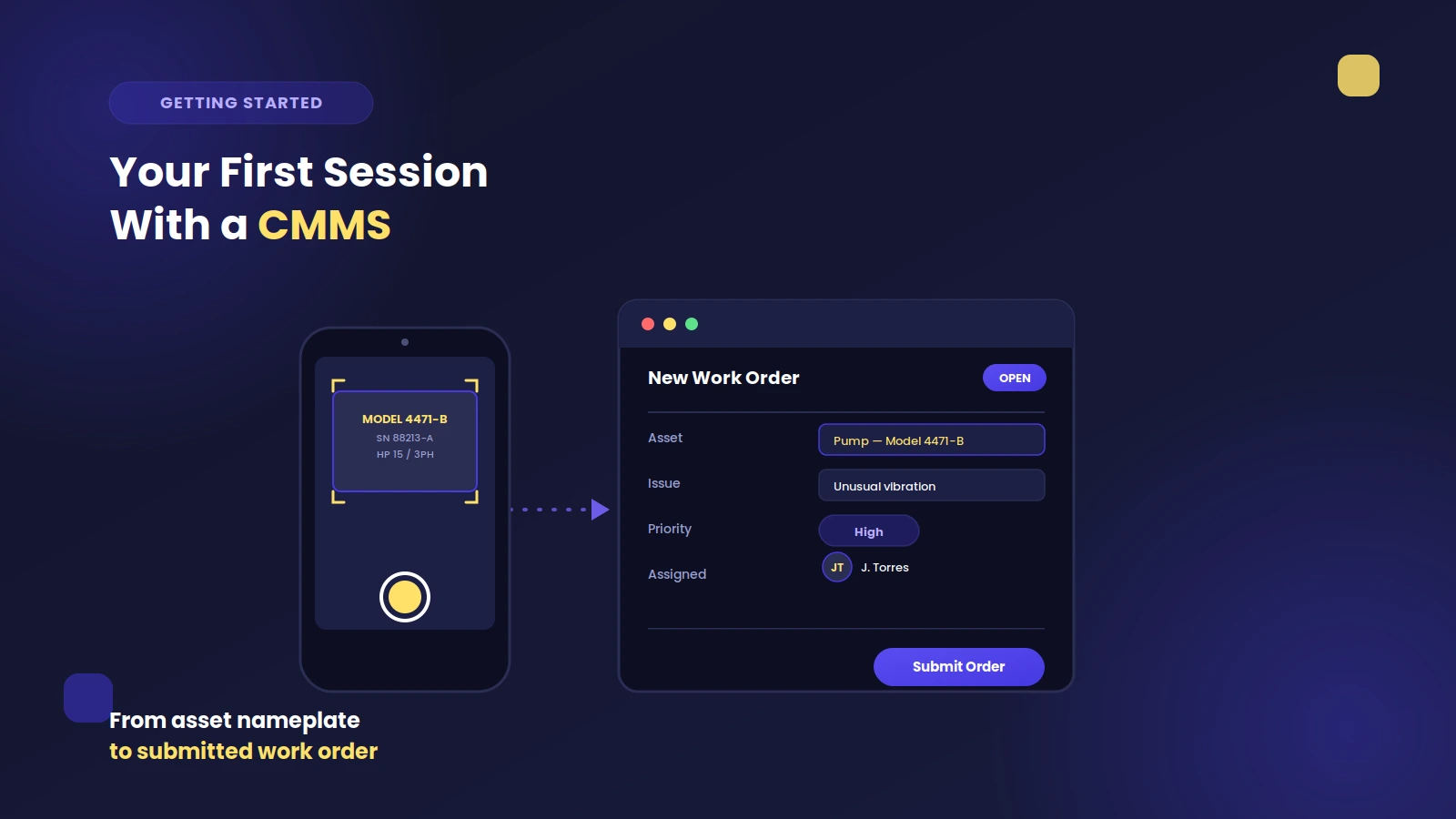
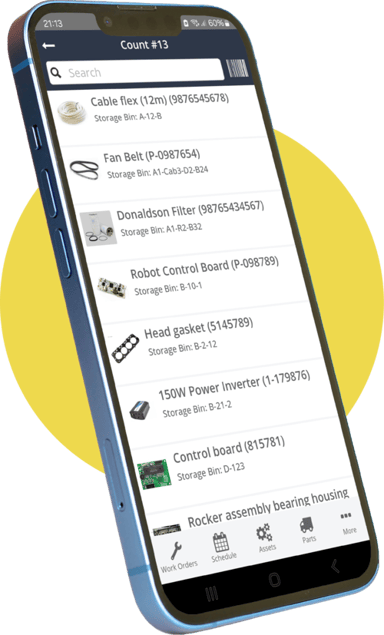
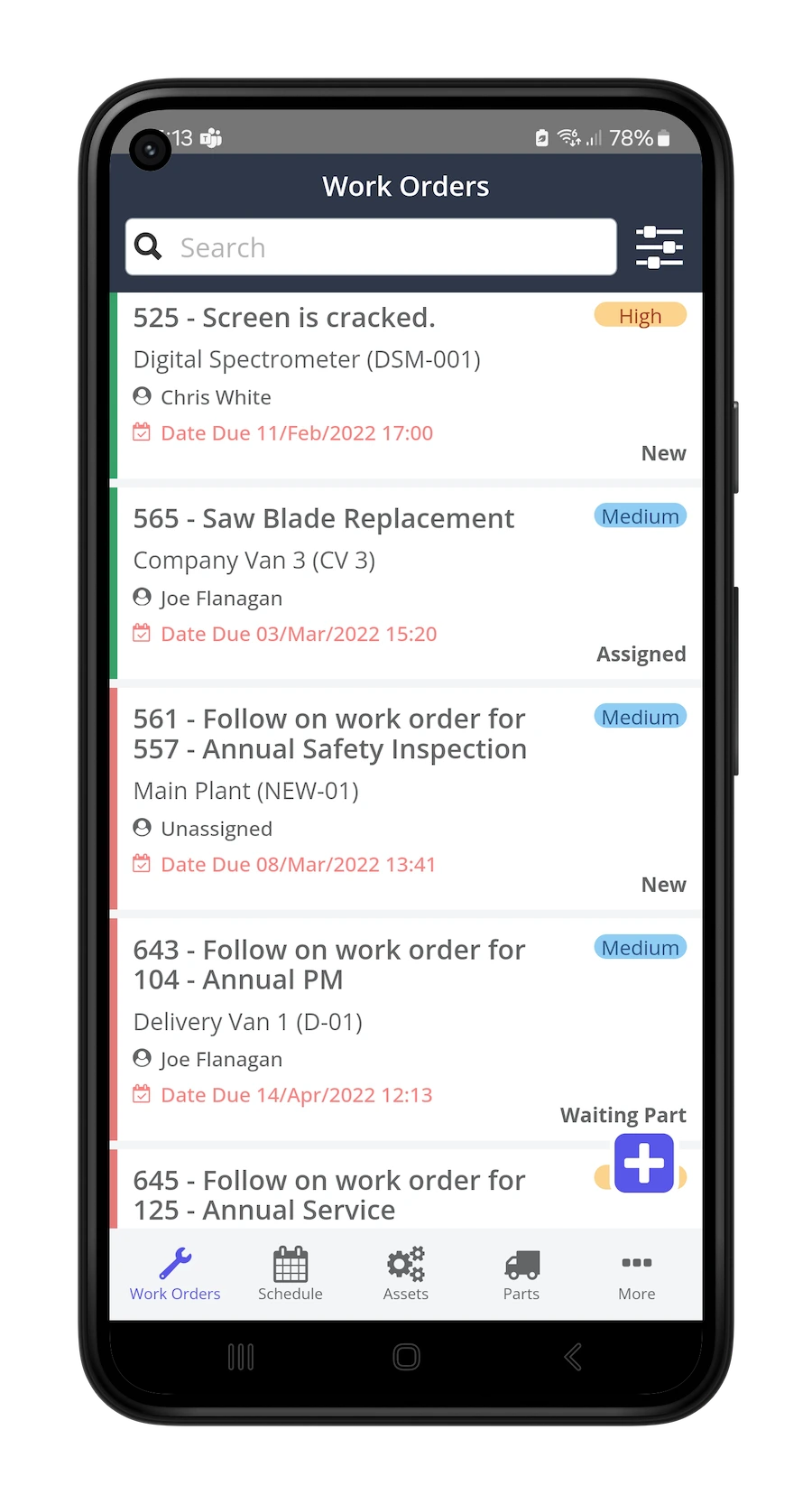
Check the user interface and mobile features so technicians can access info, update statuses, and close work orders on their phone or tablet. A strong Mobile CMMS lets your team work anywhere in your facility, improving data accuracy and productivity.
3. Can the software be configured for our specific industry and workflow?
Your operation has its own processes, terminology, and asset types; so a one-size-fits-all CMMS won’t cut it. Look for a partner who adapts their platform to your workflows and data setup rather than forcing you to change how you work.
Flexibility like this is vital in industries with strict demands. In Manufacturing, you need uptime-focused scheduling; in Facilities Management, detailed tracking of varied assets; in Food & Beverage, tools built for sanitation and safety compliance.
A quality partner shows exactly how their solution aligns with your sector’s standards and terminology.
Part 2: Questions About Implementation & Onboarding
A smooth launch is vital for long-term success. A great partner will have a clear plan to get you from the initial purchase to a fully working system without the usual headaches.
4. What does your implementation and data migration process look like?
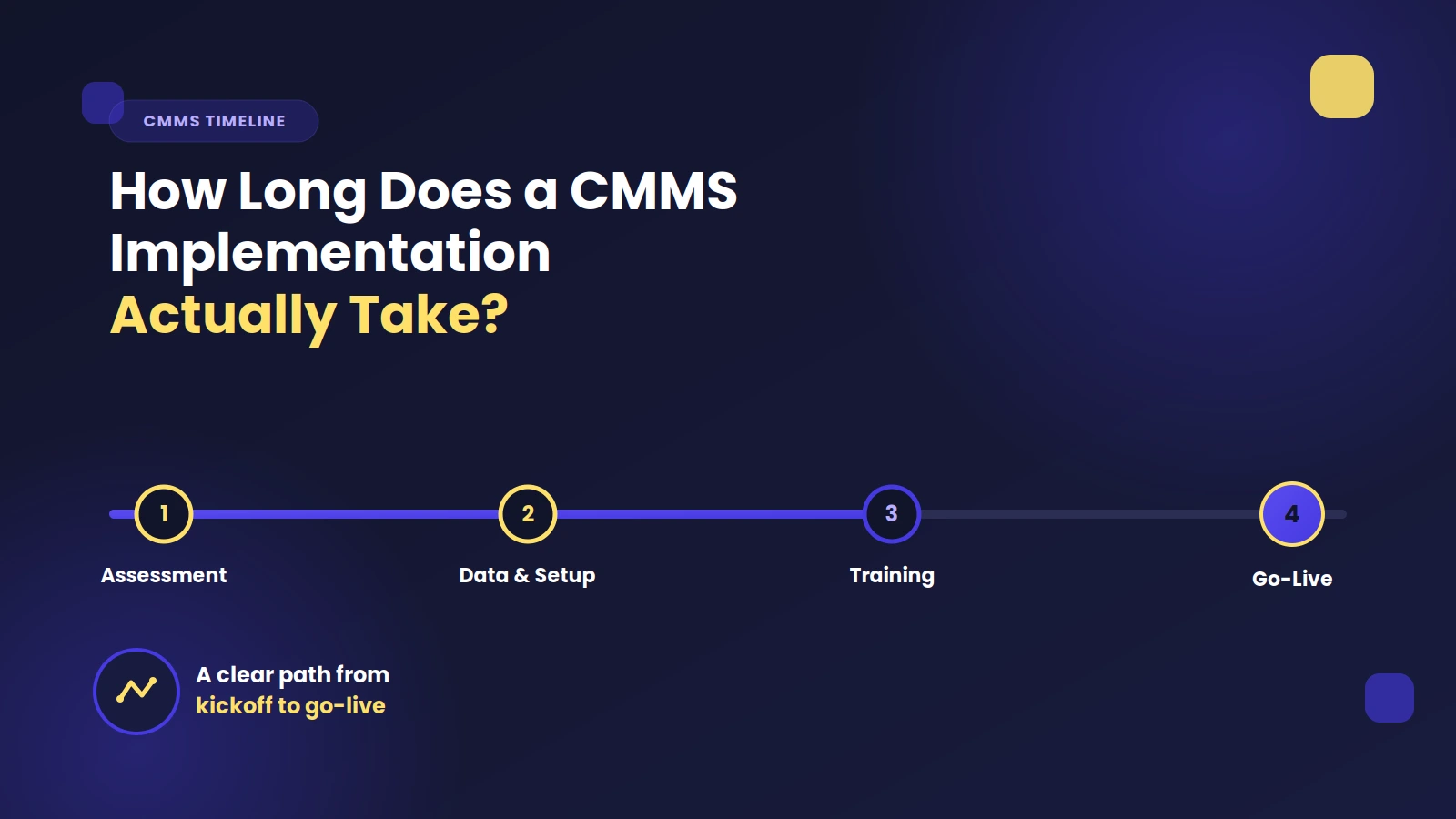
A good partner should give you a clear, step-by-step look at their implementation process. Ask them to walk you through the first 30, 60, and 90 days. Who from their team will be your main contact? What milestones should you expect to hit?
Data migration is another big piece of the puzzle. Inquire about how they help you transfer your existing data, such as asset lists, parts inventory, and maintenance schedules, into the new system.
A partner with proven Implementation Services can make this transition straightforward, saving you hundreds of hours of manual data entry and making sure you start with accurate information from day one.
5. What kind of training do you provide to ensure our team is successful?
The right training gives every user, from managers to technicians, confidence in the new system. A single, one-hour webinar isn't enough to make it work.
- Ask about the different kinds of training they offer.
- Do they provide live sessions tailored to your team?
- Are there on-demand video tutorials or a deep knowledge base?
Part 3: Questions About Long-Term Partnership & Support
Your business needs will change. Your CMMS partner should be there to support you long after you've signed up. The quality of this ongoing relationship is a good sign of a vendor's commitment.
6. What does your ongoing customer support model look like?
When you have a question or hit a snag, you need to know you can get help from a real person, fast. Ask potential partners about their customer support model.
- What channels can you use?
- Can you reach them by phone, email, or live chat?
- What are their hours, and what are their typical response times?
7. How do you incorporate customer feedback into product updates?
A great software partner is always improving its product based on the actual needs of its users.
Ask for proof.
- How feedback is gathered (in-app, CSM calls, surveys)
- Release notes that reference customer input
- Public roadmap themes and timelines
8. What is the total cost of ownership, including all fees and potential add-ons?
You need clear pricing. The first price you see should not be the only cost you consider.
Ask for a full breakdown of the pricing structure. Ensure you understand what's included in your subscription and what additional costs may arise in the future.
- Are there additional fees for more users, extra modules, or premium support tiers?
- Are there limits on data storage or the number of assets you can track?
Part 4: Questions About Scalability & Business Value
A CMMS is a big investment. Your chosen partner should help you show a clear return on that investment and be able to grow with you as your business gets bigger.
9. How does the system scale as our operations grow?
Think about your company's future.
- Can the software support more users, more assets, or even new locations as your business expands?
- A scalable platform prevents you from outgrowing your system and dealing with the hassle of switching vendors in a few years.
- Can you easily add new users and sites without a complicated process?
- Does the software's performance remain fast and reliable as your database grows?
10. How does your CMMS help us track KPIs and demonstrate ROI?
A modern CMMS does more than manage work orders. It should be a data powerhouse that helps you prove the value of your maintenance department. Your system should make it easy to pull reports on key performance indicators (KPIs) such as asset downtime, maintenance costs, and team productivity. Ask about the platform’s reporting and analytics tools.
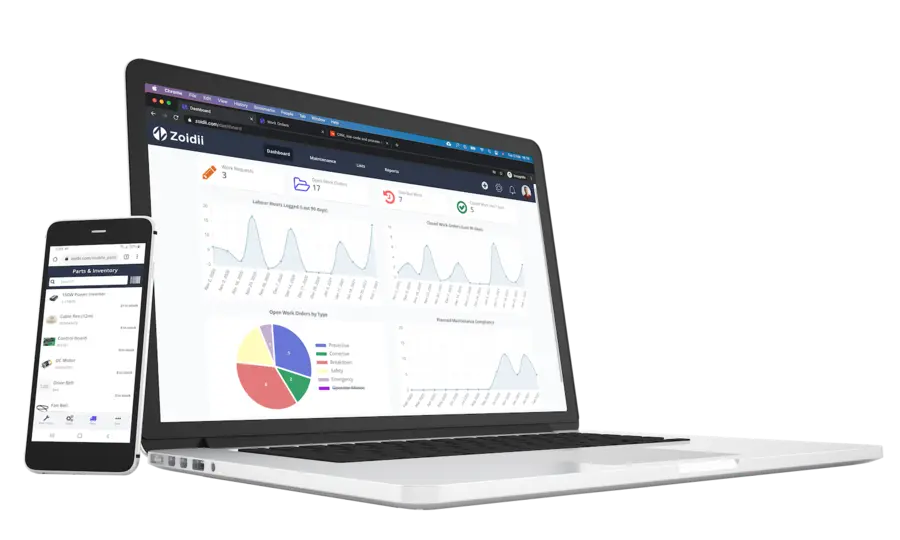
- Can you create custom dashboards to track the metrics that matter most to your business?
- Does the vendor offer tools like a CMMS ROI Calculator to help you measure the financial impact of better maintenance?
Why teams choose Zoidii
At Zoidii, we built our CMMS and our service model to be the answer to these questions. We believe success comes from a real partnership, not just a software sale.
We provide a very easy-to-use platform that your team will actually want to use. Our commitment is to help your employees work better with a partner who understands your needs.
Make the Right Choice for Your Maintenance Team
Selecting a CMMS software partner is a decision that will impact your operations for years. Ready to see what a real partnership looks like? Book a tour of Zoidii and let us show you how we can help transform your maintenance operations.