
Unplanned equipment failures are one of the most expensive and preventable problems in manufacturing today. According to Zoidii's 2026 Maintenance Statistics Report, unplanned downtime now consumes approximately 11% of annual revenue for large global manufacturers — translating to roughly US$1.4 trillion in annual losses industry-wide. A single large plant loses an average of US$253 million per year, with around 27 hours of unplanned downtime every month.
For manufacturers still running on a reactive maintenance model — fixing equipment only after it breaks — these numbers represent a serious competitive disadvantage. The solution is a structured transition to preventive maintenance, and the most effective enabler of that transition is a Computerized Maintenance Management System (CMMS). This guide explains exactly what that shift looks like, why it matters in 2026, and how CMMS software makes it achievable at any scale.
What Is Reactive Maintenance — and Why Is It Costing You More Than Ever?
Reactive maintenance (also called run-to-failure or corrective maintenance) means responding to equipment problems only after they occur. While it sounds like a simple approach, the true cost extends far beyond the repair itself.
The 2026 cost of one hour of unplanned downtime now ranges from US$36,000 in fast-moving consumer goods (FMCG) to US$2.3 million in automotive manufacturing — and those figures are rising fast. Since 2019, automotive downtime costs per hour have doubled, while heavy industry downtime costs have quadrupled.
"Unplanned downtime remains one of the biggest hidden drains on manufacturing performance, even as incident rates improve." — Jeff O'Brien, Co-Founder, Zoidii (January 2026)
Beyond the direct financial impact, reactive maintenance drives:
• Unplanned labor overtime and emergency contractor fees • Urgent (and expensive) spare parts procurement • Cascading production delays and missed delivery commitments • Accelerated equipment degradation and shortened asset lifespan • Heightened safety risks for maintenance technicians
The good news: while the frequency of unplanned downtime incidents has decreased (from an average of 42 incidents per plant per month in 2019 to 25 in 2024), the severity and cost of each incident continue to rise. This makes proactive strategies more important, not less.
The Case for Preventive Maintenance in Manufacturing
Preventive maintenance (PM) involves scheduling and completing maintenance tasks at regular, planned intervals — before failures occur. The ROI data in 2026 is compelling:
• 67% of manufacturers are actively implementing preventive maintenance as their primary downtime-reduction strategy • Preventive maintenance delivers approximately a 5:1 return on investment compared to reactive approaches • A Jones Lang LaSalle study found that for every $1 spent on preventive maintenance, manufacturers can expect a return exceeding 545% • Facilities that invest in structured maintenance and repair programs reduce overall downtime by an average of 44%
Despite this, the same data shows that many facilities still spend the majority of their time on unplanned, reactive work — not because they don't want to do preventive maintenance, but because they lack the systems and visibility to plan it effectively. This is where a CMMS becomes essential.
What Is a CMMS? (And What It Isn't)
A CMMS — Computerized Maintenance Management System — is software designed to centralize, organize, and automate maintenance operations. It gives maintenance managers and technicians a single platform to manage:
• Work orders (planned and reactive) • Preventive maintenance schedules • Asset registers and equipment history • Spare parts inventory • Maintenance KPIs and reporting
A CMMS is not just a digital work order system. Used properly, it is the operational backbone of a world-class maintenance program. Today, approximately 52–70% of manufacturing facilities use a CMMS or Enterprise Asset Management (EAM) system, yet many still struggle with inconsistent data, manual scheduling workarounds, and reactive firefighting.
The differentiator is not whether you have a CMMS — it's how effectively you use it to make the shift from reactive to preventive.
How a CMMS Enables the Reactive-to-Preventive Maintenance Transition
1. Centralizing Your Asset Register
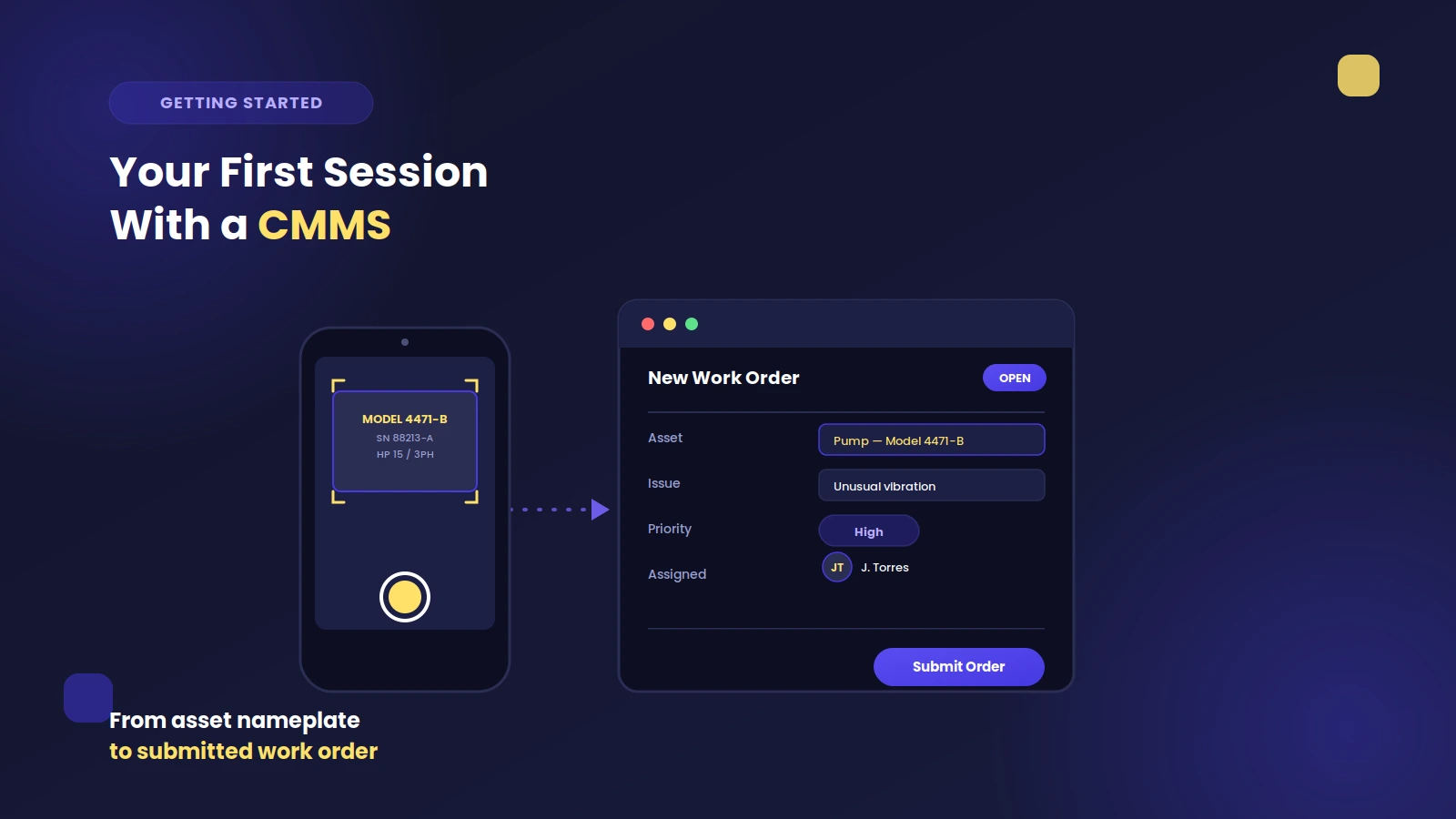
The foundation of any preventive maintenance program is a complete, accurate asset register. A CMMS gives every piece of equipment its own digital record — including make, model, installation date, service history, failure patterns, and associated PM tasks.
Without this visibility, maintenance teams can't rioritize effectively, can't learn from past failures, and can't plan work with confidence. With it, they can target high-risk assets before problems escalate.
2. Automating Preventive Maintenance Schedules
One of the most powerful features of a CMMS is automated PM scheduling. Instead of relying on spreadsheets, tribal knowledge, or manual calendars, the system generates and assigns work orders automatically — triggered by time intervals, meter readings, or condition-based thresholds.
This automation removes the single biggest barrier to preventive maintenance adoption: the administrative burden of planning and tracking it manually. PM completion rate is the most commonly tracked maintenance KPI (used by 56% of facilities), and automation is the key to improving it consistently.
3. Standardizing Work and Capturing Institutional Knowledge
In 2026, knowledge capture has emerged as the top reported benefit of AI and digital maintenance tools — ahead of even failure reduction. As experienced technicians retire, the risk of losing undocumented know-how is one of the industry's biggest operational threats.
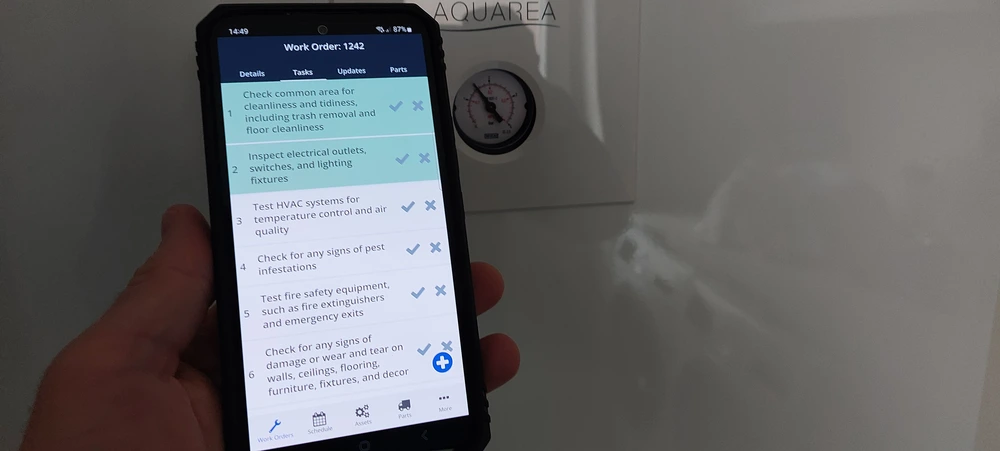
A CMMS allows teams to build standardized checklists and procedures into every work order, ensuring that critical knowledge is captured, repeatable, and transferable — regardless of who is doing the work.
4. Improving Spare Parts Inventory Management
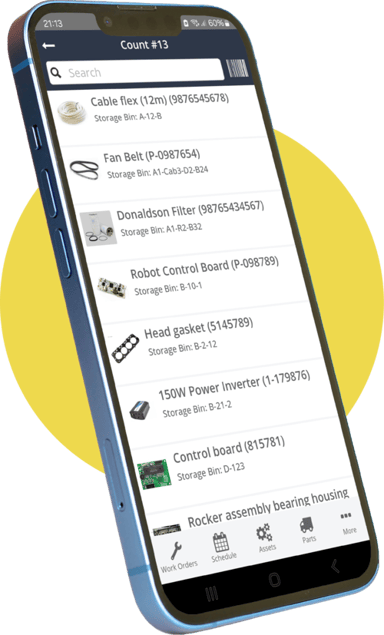
Reactive maintenance creates unpredictable, urgent demand for spare parts — leading to either costly emergency procurement or production-halting stockouts. A CMMS links parts inventory to scheduled maintenance tasks, enabling teams to anticipate demand and maintain the right stock levels.
Research shows that clean, standardized spare parts data can reduce unplanned downtime by as much as 50% through improved inventory optimization and part tracking.
5. Enabling Data-Driven Maintenance Decisions
A CMMS generates the maintenance data that makes continuous improvement possible. Over time, teams can analyze failure patterns, identify chronic problem assets, measure PM compliance, track MTBF (Mean Time Between Failures) and MTTR (Mean Time to Repair), and build the business case for capital investment.
This is also the data foundation required to move toward predictive maintenance eventually — the next evolution beyond preventive maintenance for high-value, failure-critical equipment.
The Road Beyond Preventive: Predictive Maintenance in 2026
Preventive maintenance is the right foundation for most manufacturing facilities. For high-value assets where the cost of failure justifies the technology investment, predictive maintenance (PdM) represents the next step.
2026 predictive maintenance benchmarks:
• Predictive maintenance can reduce machine downtime by 30–50% and boost operational efficiency • PdM delivers 8–12% additional cost savings over preventive maintenance and up to 40% savings over reactive approaches • McKinsey research indicates organizations achieve 10:1 to 30:1 ROI within 12–18 months of PdM implementation • Fortune 500 companies are estimated to save $233 billion in maintenance costs annually with full adoption of condition monitoring and predictive maintenance • 65% of maintenance teams say they plan to incorporate AI into their maintenance programs by the end of 2026
The most successful manufacturers in 2026 aren't choosing between preventive and predictive maintenance — they're deploying both strategically. Preventive maintenance handles predictable, time-based tasks across the equipment base. Predictive maintenance, powered by IoT sensors and analytics integrated with the CMMS, handles the highest-value, most failure-critical assets. A CMMS is the connective tissue that links sensor data to work orders, ensuring that real-time insights actually trigger action on the shop floor.
Common Challenges in the Reactive-to-Preventive Transition (and How to Overcome Them)
Challenge: No structured asset register
Solution: Start by digitizing your top 20% of assets — the ones responsible for 80% of your downtime. Build out the asset register incrementally, with your CMMS as the central record for all equipment data.Challenge: The maintenance team is overwhelmed with reactive work
Solution: Use your CMMS to identify and eliminate root causes of repeat failures. Even reducing emergency calls by 20–30% creates capacity to build out a PM program.Challenge: Inconsistent PM compliance
Solution: Automate PM scheduling in the CMMS, assign ownership clearly, and track PM completion rates as a key KPI. What gets measured gets managed.Challenge: Poor parts availability during planned maintenance
Solution: Link your CMMS parts inventory to your PM schedule so that required components are identified and checked before work orders are generated.Challenge: Difficulty proving ROI to leadership
Solution: Use your CMMS reporting to quantify the before-and-after impact of your PM program: reduction in unplanned downtime hours, emergency repair costs, and overtime labor. The 5:1 ROI benchmark for preventive maintenance is a strong starting point for the business case.What to Look for in a CMMS for Manufacturing
Not all CMMS platforms are built for the complexity and pace of a manufacturing environment. When evaluating CMMS software for your facility, prioritize: • Mobile-first design: Ease of use for technicians in the field • Automated PM scheduling: Auto-generation of PMs based on time, meter readings, or condition triggers • Comprehensive asset management: Full equipment history, failure logs, and service documentation in one place • Parts inventory management: Spare parts tracking linked to maintenance tasks and asset requirements • Built-in reporting and KPIs: PM completion rates, work order backlog, downtime by asset, MTBF, and MTTR • Integration capabilities: Ability to connect with IoT sensors, ERP systems, and other plant technology as your program matures • Quick implementation: Fast onboarding that gets your team productive quickly without months of configuration
Making the Shift: Where to Start
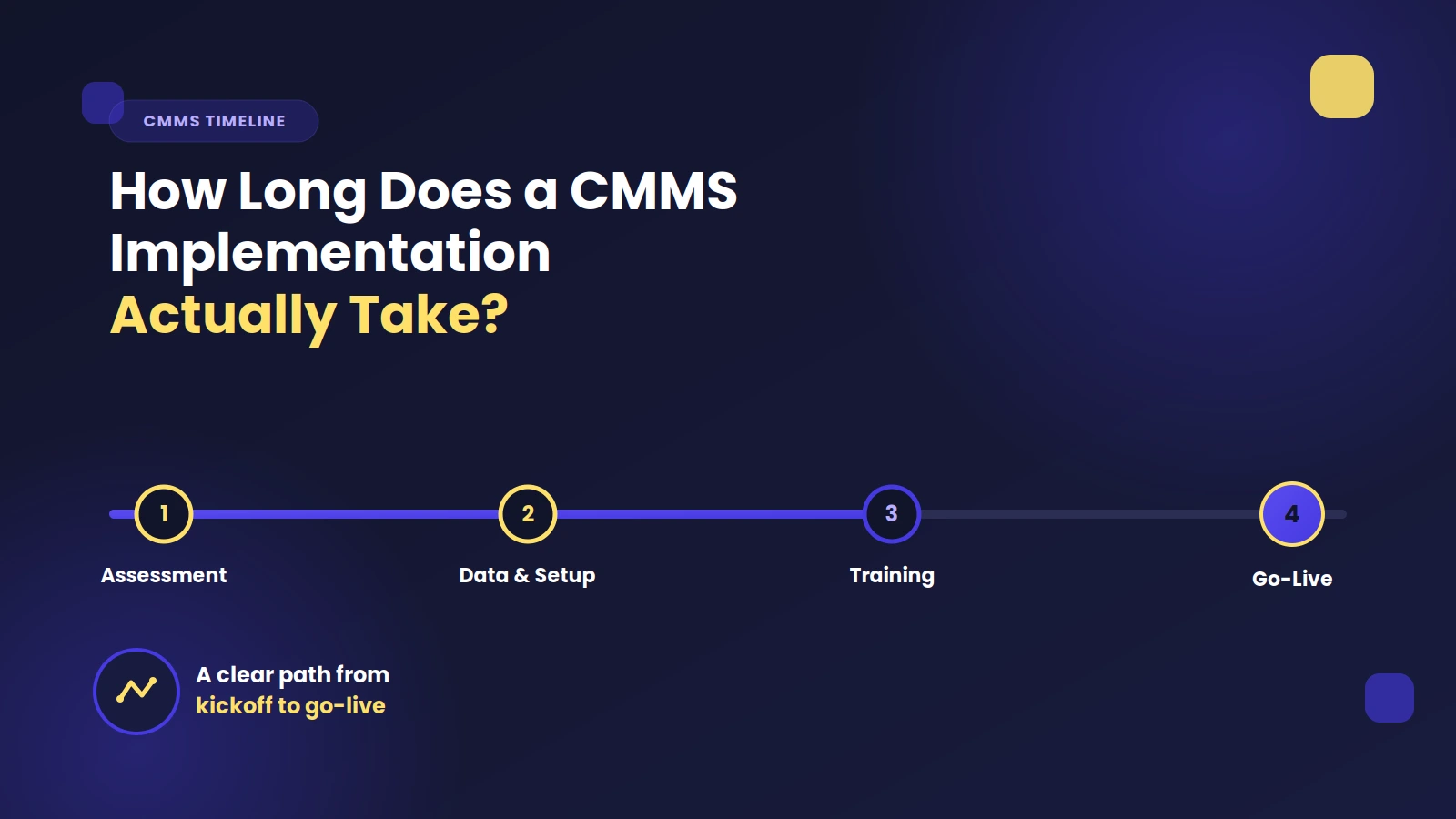
Transitioning from reactive to preventive maintenance is not an overnight change. But with the right CMMS, it is entirely achievable — and the compounding returns are significant.
The manufacturers winning in 2026 are the ones who have moved from firefighting to planning. They've digitized their asset base, standardized their work, and built PM programs that run reliably whether or not a key technician is on shift. Their CMMS is not just a database — it is an active operational tool that drives efficiency, reduces risk, and creates a measurable competitive advantage.
The starting point is simpler than most teams expect: build your asset register, schedule your first preventive maintenance tasks, and track the results. A modern CMMS like Zoidii is designed to make exactly this transition as fast and straightforward as possible — with no complex implementation and no steep learning curve.