
Why Businesses Are Searching for IBM Maximo Alternatives in 2026
IBM Maximo has long been a fixture in the enterprise asset management (EAM) space. But in 2026, more maintenance teams than ever are evaluating EAM/CMMS alternatives — and for good reason.
The global CMMS software market reached $1.31 billion in 2025 and is projected to climb to $1.45 billion in 2026, growing at a 10.51% CAGR toward $3.56 billion by 2035. Nearly 58% of companies are shifting toward automated maintenance workflows, and over 52% are prioritizing predictive monitoring, driving demand for modern, agile CMMS platforms.
Yet despite its comprehensive capabilities, IBM Maximo continues to face criticism for high implementation costs, long deployment timelines, complex interfaces that lead to low technician adoption, heavy reliance on consultants, and limited mobile functionality without third-party partner apps. The good news: the market for IBM Maximo alternatives has matured significantly, with modern CMMS tools now delivering enterprise-grade asset management while addressing its key weaknesses — offering intuitive interfaces, rapid deployment, and transparent pricing
What Is a CMMS? (And Why It Matters in 2026)
A Computerized Maintenance Management System (CMMS) is software that helps organizations manage, track, and optimize their maintenance operations. Core CMMS functions include work order management, preventive and predictive maintenance scheduling, asset lifecycle tracking, spare parts and inventory management, compliance documentation, and reporting dashboards.
In 2026, nearly 65% of large facilities rely on CMMS tools to streamline asset operations, while adoption among mid-sized enterprises has climbed past 48%. Around 52% of manufacturing plants have integrated CMMS with IoT sensors, cutting unplanned downtime by over 38%. Mobile-enabled CMMS use has crossed 55%, improving technician productivity by up to 40%. Preventive maintenance features rank as the top priority for 62% of buyers, followed by asset lifecycle management at around 47%. Integration capabilities with ERP and facility systems influence nearly 50% of total purchase decisions.
IBM Maximo: A Quick Overview
IBM Maximo Application Suite (MAS) is one of the most established EAM platforms on the market. It leverages artificial intelligence (AI), the Internet of Things (IoT), and deep analytics across modules, including Maximo Manage (core CMMS), Maximo Monitor (AI anomaly detection), Maximo Predict (predictive maintenance via ML), Maximo Visual Inspection, and Maximo Health (asset replacement planning).IBM Maximo is most commonly used in energy and utilities, oil and gas, manufacturing, travel and transportation, and the public sector.
Key Reasons to Consider an IBM Maximo Alternative
1. Total Cost of Ownership: IBM Maximo requires substantial upfront investment in licensing, implementation, and customization. For many organizations, the cost of maintaining the system rivals the cost of the assets it manages.
2. Deployment Complexity: Typical Maximo implementations take 6–18 months. Modern alternatives offer full implementation in 30–60 days with no consultant dependency.
3. User Adoption: Maximo's complex interface is a persistent barrier. Maintenance managers frequently discover that the platform's complexity creates barriers rather than solutions, particularly when technicians struggle with daily workflows.
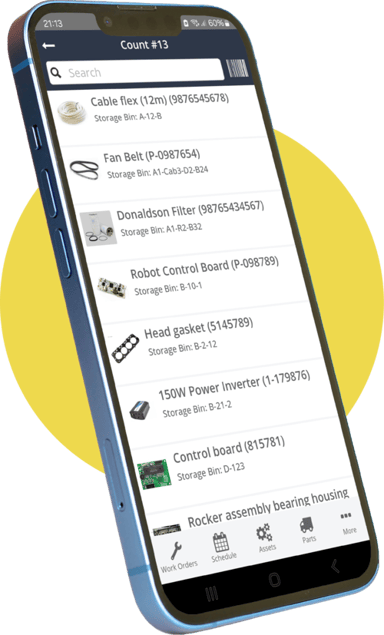
4. Mobile Limitations: IBM Maximo does not offer its own mobile application — you would have to use a partner application to access and manage work orders on the go.
5. Integration Overhead: Connecting Maximo with existing enterprise systems typically demands custom development work, creating ongoing maintenance overhead and dependencies on specialized consultants for even minor workflow adjustments.
The 7 Best IBM Maximo Alternatives for 2026
1. Zoidii CMMS
Best for: Small to mid-sized teams looking for simplicity and speed
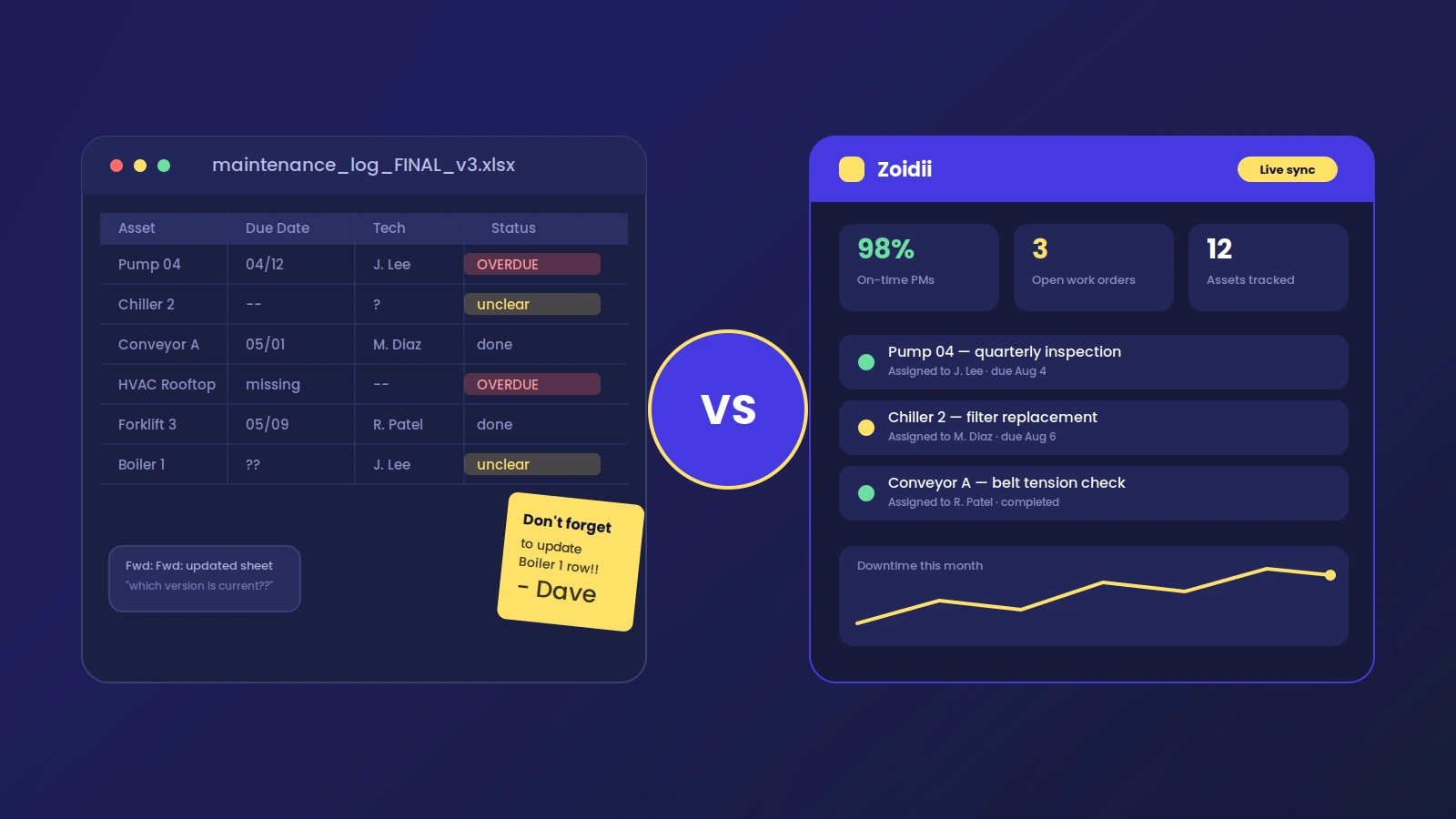
Zoidii is the #1 cloud-based CMMS application, designed to be simple and easy to use. It enables teams to manage assets, PMs, work orders, parts, and work requests on the web or mobile.
Where Zoidii stands out is its focus on practical adoption. Rather than loading teams with configuration complexity, it gets technicians and supervisors up and running quickly — without the learning curve of legacy EAM systems.
Key features: work order and PM scheduling, asset management with maintenance history, mobile CMMS for field technicians, inventory and parts tracking, and a work request portal for non-technical users.
Ideal for: Manufacturing, facilities management, property maintenance, and any team ready to move beyond spreadsheets or overly complex EAM systems.
2. Limble CMMS
Best for: Teams wanting powerful customization with fast implementation
Limble CMMS is one of the highest-rated CMMS platforms, known for its clean interface and strong customization options. Limble offers an intuitive interface, strong customization, faster implementation, and less complexity compared to traditional systems like IBM Maximo. It is designed to support both small teams and large enterprises, making it a versatile and scalable solution.
Pricing: Standard from $28/user/month (preventative maintenance, real-time KPI reports); Premium+ from $69/user/month (automated workflows, streamlined inventory management); Enterprise: custom quote.
3. Fiix CMMS (by Rockwell Automation)
Best for: Multi-site operations and AI-driven maintenance insights
Fiix CMMS is a cloud-based maintenance management platform that enhances maintenance efficiency and provides AI-driven insights. It is ideal for multi-site operations, helping businesses manage assets across multiple locations.
Pricing: Free tier available with limited users; Basic from $45/user/month; Professional from $75/user/month; Enterprise custom pricing with advanced integrations.
4. MaintainX
Best for: Mobile-first teams and frontline worker engagement
MaintainX is built around the premise that maintenance software should be as easy to use as a consumer app. It's designed for frontline teams with a messaging-style interface that drives high adoption. MaintainX is rated among the top IBM Maximo alternatives on G2 for 2026.
Ideal for facilities, hospitality, food and beverage, and any organization where technician adoption has historically been a challenge.
5. UpKeep
Best for: Asset-heavy teams prioritizing mobile accessibility
UpKeep is a mobile-first maintenance management system (CMMS) that simplifies asset tracking, preventive maintenance, and work order management for industrial teams. It enables field technicians to complete work orders, log asset conditions, and receive updates remotely.
6. eMaint CMMS (by Fluke)
Best for: Manufacturers and utilities needing flexible, customizable workflows
eMaint is a flexible and robust alternative to IBM Maximo, recognized for its affordability and customizable maintenance workflows, making it well-suited for manufacturing, facilities management, and utilities.
7. HxGN EAM (formerly Infor EAM)
Best for: Large enterprises needing a full EAM replacement for Maximo
The best overall IBM Maximo Application Suite alternative according to G2 is HxGN EAM. It offers comprehensive asset lifecycle management, strong ERP integration (SAP, Oracle), mobile EAM for field teams, and advanced analytics — with a more modern interface than Maximo.
IBM Maximo vs. Modern CMMS: Side-by-Side Comparison

How to Choose the Right CMMS Software in 2026
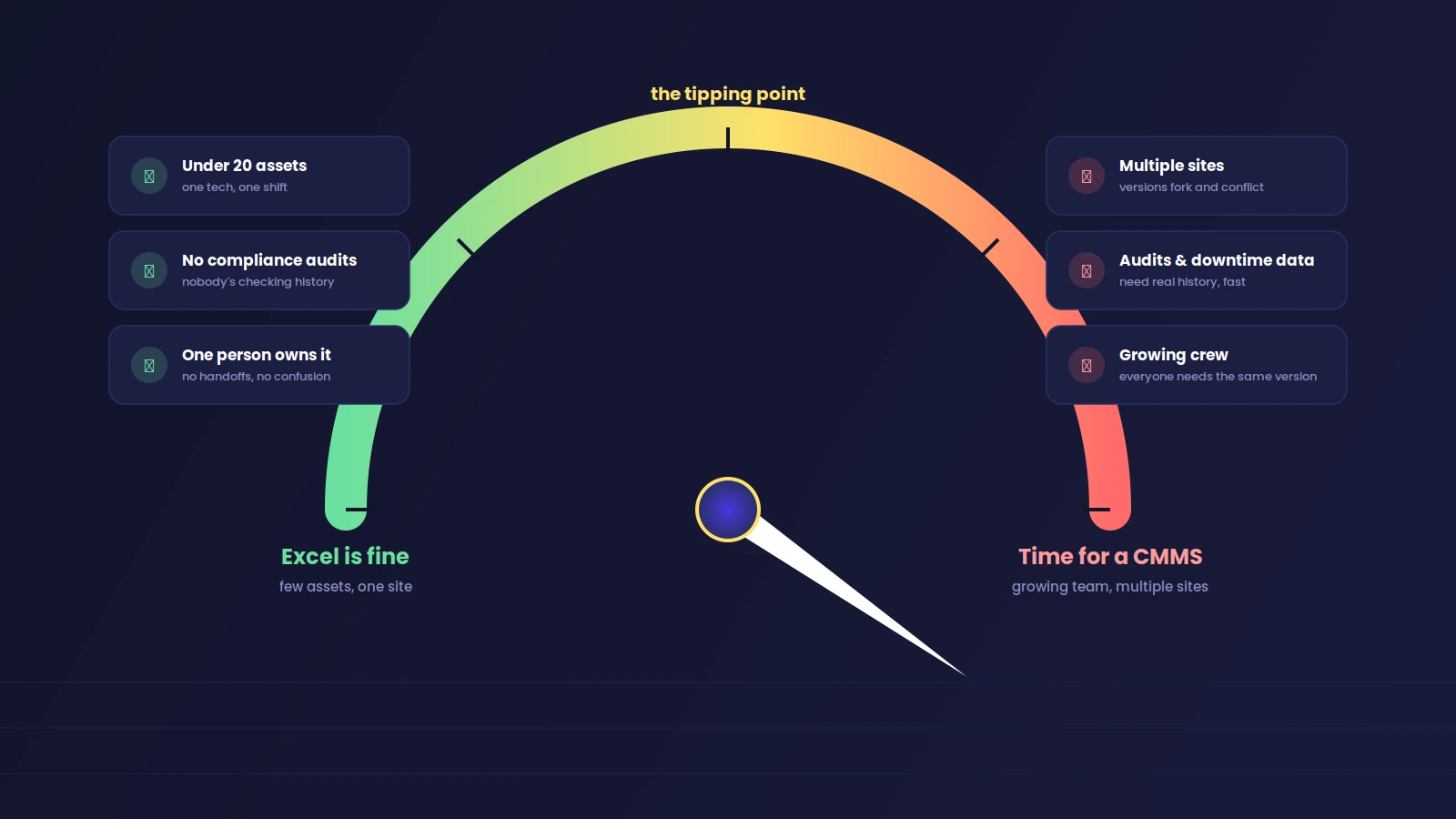
Team size and complexity — Small to mid-sized teams get the most value from Zoidii, MaintainX, or UpKeep. Larger enterprises with complex regulatory or integration needs may lean toward HxGN EAM or eMaint.
Deployment speed — If you need to go live quickly after a failed Maximo implementation, prioritize platforms with rapid onboarding.
Mobile requirements — With mobile CMMS adoption at 55% in 2026, ensure your chosen platform has a fully-featured native app.
Integration needs — Look for API-based integrations and pre-built connectors for your ERP. Avoid platforms requiring middleware or custom development to sync basic data.
Predictive maintenance roadmap — Over 45% of AI integration has reshaped industry operations, with 40% of IoT-linked assets driving the shift toward intelligent maintenance. Confirm your platform supports these capabilities.
The Bottom Line
IBM Maximo remains a legitimate choice for large enterprises managing critical, complex assets at scale — where its depth and configurability justify the investment. But today's alternatives match Maximo's core capabilities while addressing its key weaknesses, making advanced functionality accessible to organizations beyond large enterprises.
Whether you're replacing Maximo or choosing a CMMS for the first time, the best platform is the one your team will actually use — from the maintenance manager to the technician on the floor.
Frequently Asked Questions
What is the best IBM Maximo alternative for small businesses? Zoidii, Limble CMMS, and MaintainX are among the top-rated alternatives for small to mid-sized businesses, offering intuitive interfaces, fast deployment, and transparent pricing.
What is the difference between CMMS and EAM software? A CMMS focuses on maintenance operations — work orders, preventive maintenance, and asset tracking. An EAM platform covers the full asset lifecycle, including acquisition, accounting, and disposal. IBM Maximo is an EAM; many modern CMMS platforms now offer comparable functionality with far less complexity.
Can I migrate data from IBM Maximo to a new CMMS? Yes. Most modern CMMS platforms offer data migration support and can import asset records, maintenance history, and work order data from Maximo exports.
Is cloud-based CMMS better than on-premises? Cloud-based CMMS accounts for nearly 58% of total deployments in 2026, reflecting accelerated digital transformation driven by lower upfront costs, easier updates, and remote accessibility. Looking for a CMMS that's simple, powerful, and ready to go? Try Zoidii free and see why maintenance teams are switching from legacy EAM platforms.