
Most manufacturers know lean manufacturing as a philosophy built around eliminating waste. Fewer recognize that lean manufacturing is only as effective as the maintenance program that supports it. In 2026, that connection has never mattered more.
The numbers make the case: the average factory operates at just 55–65% OEE (Overall Equipment Effectiveness), meaning as much as 45% of planned production capacity is consumed by waste. Meanwhile, unplanned downtime continues to cost the world's largest manufacturers $1.4 trillion annually — roughly 11% of total revenue. And despite widespread adoption of lean principles — nearly 70% of factories have adopted lean methods in some form — nearly half of all maintenance work remains reactive.
The gap between lean in theory and lean in practice comes down to one thing: whether your maintenance program is built to support lean goals or work against them. This article explains the connection between lean manufacturing and lean maintenance, why that connection matters more than ever in 2026, and how a CMMS (Computerized Maintenance Management System) is the tool that makes both work.
Key Takeaways
- Lean manufacturing depends on reliable equipment. Every unplanned breakdown creates waiting, defects, and overproduction waste — undermining lean goals at the source. A proactive maintenance program isn't optional for lean; it's the foundation on which lean is built.
- The average factory wastes 35–45% of its production capacity due to poor OEE. Maintenance drives the Availability component of OEE directly — meaning every prevented breakdown is recoverable production capacity, no new equipment required.
- Reactive maintenance is the enemy of lean. In 2026, nearly 49% of all maintenance work is still reactive, and emergency repairs cost 150–200% more than planned work. Shifting to preventive and predictive maintenance is the single biggest lever for closing the lean–maintenance gap.
- TPM (Total Productive Maintenance) is the bridge between lean manufacturing and lean maintenance. By distributing basic maintenance responsibilities to operators and using structured improvement cycles (Kaizen), TPM creates the equipment reliability that lean production requires to function.
- A CMMS turns lean maintenance principles into daily practice. By automating PM schedules, centralizing asset history, managing parts inventory, and generating performance data, CMMS software eliminates the maintenance-side wastes — waiting, motion, excess inventory — that lean programs aim to remove from production.
What Is Lean Manufacturing?
Lean manufacturing is a systematic approach to eliminating waste from production processes — where "waste" means any activity that consumes resources without adding value for the customer. Originating from the Toyota Production System (TPS) in post-war Japan, lean has since become the operational backbone of manufacturers across every major industry.
The foundational framework of lean is the 8 Wastes of Manufacturing, commonly remembered by the acronym DOWNTIME:
- Defects — Products that require rework or are scrapped entirely
- Overproduction — Making more than what's needed, when it's needed
- Waiting — Idle time caused by delays, breakdowns, or missing materials
- Non-utilized talent — Skills and experience going unused on the shop floor
- Transportation — Unnecessary movement of materials or products
- Inventory — Excess stock is tying up capital and masking inefficiencies
- Motion — Unnecessary movement of people or equipment
- Extra-processing — Doing more work than the customer requires
The Lean Manufacturing–Maintenance Connection
Lean manufacturing and maintenance are not separate disciplines. They are deeply interdependent. Here's why:
Every one of the 8 wastes is affected by maintenance performance:
- Waiting is one of the most common wastes in manufacturing, and equipment breakdown is one of the most common causes of waiting. An unplanned failure stops the production line, idles operators, and disrupts downstream processes.
- Defects often trace back to equipment running out of calibration or below optimal condition. A machine that hasn't been properly maintained produces inconsistent output — rework and scrap are the result.
- Overproduction is frequently triggered by unreliable equipment. Teams overproduce as a buffer against anticipated downtime, building up inventory to cover for breakdowns that shouldn't be happening.
- Inventory builds up when maintenance is reactive. Parts stockpiles grow to hedge against emergency repairs, tying up working capital that lean programs aim to free.
- Motion increases when equipment problems force workarounds — technicians traveling farther, operators adjusting their process to accommodate a machine that isn't working correctly.
What Is Lean Maintenance?
Lean maintenance applies the same principles of waste elimination and continuous improvement that define lean manufacturing — but applies them specifically to maintenance operations. Rather than focusing exclusively on production, lean maintenance asks: where is waste occurring in how we maintain our assets, and how do we eliminate it?
Lean maintenance waste takes many forms in practice:
- Technicians are waiting on parts that aren't in stock
- Redundant or unnecessary tasks on PM schedules that haven't been reviewed in years
- Paperwork and manual data entry consume time that should be spent on the floor
- Reactive repairs that take 3–5x longer than planned maintenance for the same work
- Institutional knowledge is trapped in individuals' heads rather than documented in the system
Total Productive Maintenance (TPM): The Engine of Lean Maintenance
TPM is the maintenance strategy most closely aligned with lean manufacturing. Its goal is to achieve zero unplanned breakdowns, zero defects, and zero accidents by making equipment reliability a shared responsibility across the entire organization — not just the maintenance team.
TPM is built on eight pillars:
- Autonomous Maintenance: Operators take ownership of routine tasks: cleaning, lubrication and inspection. This frees skilled technicians for more complex work and catches problems at the source.
- Planned Maintenance: Scheduled, proactive maintenance replaces reactive firefighting. CMMS software automates the scheduling and tracking of these tasks.
- Focused Improvement (Kaizen): Cross-functional teams identify and eliminate recurring equipment losses through root cause analysis and structured improvement projects.
- Quality Maintenance: Equipment is maintained within the precise operating tolerances needed to produce conforming product, so defects are prevented at the machine, not caught at inspection.
- Early Equipment Management: Maintenance knowledge is built into new equipment from the design stage, making assets inherently easier and cheaper to maintain.
- Training and Education: Operators and technicians develop multi-skill competencies so the right person can address the right problem, faster.
- Safety, Health, and Environment: Proactive maintenance reduces hazards. Well-maintained equipment is safer equipment.
- TPM in Administration: Lean and continuous improvement principles extend beyond the shop floor to maintenance planning, scheduling, and reporting processes.
5S: The Foundation Beneath TPM and Lean Maintenance
Before any lean maintenance program can scale, the work environment has to be organized. That's where 5S comes in. The five steps — Sort, Set in Order, Shine, Standardize, Sustain — create the physical and operational foundation on which TPM and lean maintenance are built.
A clean, organized maintenance environment means:
- Tools and parts are where they're supposed to be (fewer delays, less motion waste)
- Early signs of equipment problems — oil leaks, unusual wear, loose fittings — are visible and caught before they escalate
- Standardized work areas make training new technicians faster and more consistent
- Safety hazards are identified and addressed proactively
OEE: The Metric That Connects Lean and Maintenance
If lean manufacturing and lean maintenance had a single shared KPI, it would be OEE (Overall Equipment Effectiveness). OEE measures the percentage of planned production time that is truly productive, broken into three components:
OEE = Availability × Performance × Quality
- Availability — Is the equipment running when it should be? (Unplanned downtime, setup time)
- Performance — Is it running at the speed it should? (Slow cycles, minor stops)
- Quality — Is it producing good parts? (Scrap, rework)
OEE benchmarks in 2026:
- 40% — Typical for manufacturers without structured TPM or lean programs
- 60% — Fairly common for discrete manufacturers
- 85% — World-class performance for discrete manufacturing
- 100% — Perfect production (theoretical)
Maintenance drives OEE directly through availability. Every unplanned breakdown is an availability loss. Every PM completed on time is a breakdown that didn't happen. A CMMS that tracks equipment downtime, logs PM compliance, and surfaces failure patterns gives you the data to improve OEE systematically — and gives lean teams the visibility to know where to focus improvement energy.
How CMMS Software Powers Lean Maintenance in 2026
Lean maintenance demands visibility, consistency, and data — three things that paper-based systems and spreadsheets cannot reliably deliver at scale. A CMMS (Computerized Maintenance Management System) is the digital infrastructure that makes lean maintenance principles operational and sustainable.
In 2026, 80% of manufacturing executives plan to invest 20% or more of their improvement budgets in smart manufacturing initiatives — and CMMS is foundational to those investments. Here's exactly how it supports lean:
Eliminating Maintenance Waste With CMMS
Waiting waste — A CMMS with real-time asset status and mobile work order access means technicians get the right information at the right time. No searching for paperwork, no calling back to the office for asset history.
Motion waste — Digital work orders routed directly to technicians' mobile devices eliminate trips back to the shop, duplicate visits, and miscommunication about job scope.
Inventory waste — CMMS parts management tracks usage, sets reorder points, and attaches parts to work orders at the planning stage. Teams stop hoarding emergency buffer stock because they trust the system.
Defect waste — CMMS asset history surfaces repeat failures on specific equipment. When the same motor fails for the third time in six months, a CMMS makes that pattern visible — so the root cause gets addressed, not just the symptom. Non-utilized talent — When SOPs, checklists, and asset notes are stored in the CMMS, institutional knowledge becomes a team resource. Less reliance on individual expertise means a more resilient, adaptable team.
Supporting Lean Maintenance Pillars With CMMS
Planned Maintenance — Automate PM schedules by time interval or meter reading. Zoidii generates work orders automatically, so nothing gets missed and nothing is left to memory.
Autonomous Maintenance — Operators can submit work requests directly through the CMMS the moment they notice a problem. This bridges the gap between production and maintenance — problems get logged immediately rather than verbally reported and forgotten.
Focused Improvement — CMMS reporting identifies which assets are generating the most reactive work orders, the highest downtime, and the greatest parts spend. That data directs Kaizen efforts to where they'll have the greatest impact on OEE.
Quality Maintenance — Inspection checklists within the CMMS ensure assets are maintained within specification. Pass/fail results are logged, tracked, and reportable — creating an audit trail that supports quality management and regulatory compliance. Training and Education — Attach SOPs, manuals, and instructional content directly to assets and work orders in the CMMS. Technicians get the information they need at the point of work, not after a trip back to find a binder.
Lean Manufacturing Results: What's Achievable in 2026
Organizations that align lean manufacturing with a strong maintenance program — powered by a CMMS — see results across every dimension of operations:
These aren't theoretical projections. When lean principles are combined with a well-implemented CMMS, well-documented industry benchmarks show an average 200% ROI within 12–18 months. The key is closing the gap between lean in theory and lean in practice — and that gap closes when maintenance operations become as systematic, data-driven, and waste-conscious as production operations.
Making the Connection: Practical Steps to Align Maintenance With Lean
If your organization is implementing or improving a lean manufacturing program, here's how to build the maintenance side of that foundation: 1. Implement a CMMS as your operating platform. Lean maintenance cannot scale without a single system of record. A CMMS like Zoidii centralizes work orders, PM schedules, asset history, and parts inventory — giving everyone visibility into maintenance performance. 2. Shift from reactive to preventive maintenance. In 2026, nearly 49% of all maintenance work is still reactive. Every reactive repair costs more and takes longer than planned work, and every breakdown risks a line stoppage. Start by scheduling PMs for your highest-criticality assets and track compliance religiously. 3. Launch an autonomous maintenance program. Train operators to perform basic care — cleaning, lubrication, visual inspection — and give them a CMMS work request channel so they can report anomalies immediately. This extends your maintenance team's reach without adding headcount. 4. Measure OEE and tie it to maintenance KPIs. If you're not already measuring OEE on your critical assets, start now. Track the availability component specifically — it tells you exactly how much production time you're losing to maintenance-related failures. Then set PM compliance rate and MTTR targets that support OEE improvement. 5. Use CMMS data to drive Kaizen. Run monthly reports on your top five assets by reactive work orders, downtime hours, and parts spend. Those are your Kaizen targets. Every focused improvement project should start with CMMS data, not anecdote. 6. Standardize and document everything. Use your CMMS to store SOPs, inspection criteria, failure code taxonomies, and maintenance checklists. Standardization is the prerequisite for improvement — you can't improve a process that isn't consistent.
How Zoidii CMMS Supports Lean Manufacturing
Zoidii is a cloud-based CMMS designed to be the operational backbone of lean maintenance programs. It's built for the teams that are moving off spreadsheets and paper-based systems for the first time — simple enough for every technician to use on day one, with the depth maintenance managers need to run data-driven operations.
For lean manufacturing teams, Zoidii delivers:
- Work Order Management — Create, assign, track, and close every maintenance task. Nothing reactive goes unlogged. Nothing planned gets missed.
- Preventive Maintenance Scheduling — Automate PM tasks by time or meter. Keep your assets on schedule and your lean program on solid equipment.
- Asset Management — Full maintenance history for every asset. Know which equipment is generating the most failures, the most downtime, and the most cost.
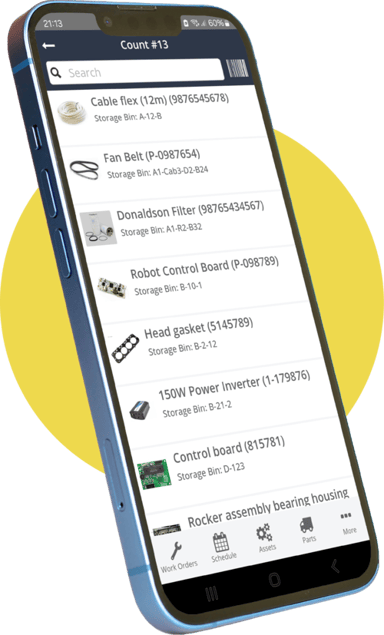
- Parts & Inventory Control — Eliminate waiting and inventory waste. Track stock, set reorder points, and plan parts into work orders before technicians take their first step.
- OEE-Supporting Reports — Generate work order and downtime reports that feed directly into lean improvement discussions.
- Mobile Access — Technicians update work orders from the floor in real time. No paperwork delays. No data entry backlogs.
Frequently Asked Questions
What is the connection between lean manufacturing and maintenance? Lean manufacturing aims to eliminate waste in production — but reliable equipment is the foundation on which lean production depends. Every unplanned breakdown creates waiting, defects, overproduction, and inventory waste. A proactive maintenance program, built on lean principles like TPM and supported by a CMMS, is what keeps production stable enough for lean to deliver results.
What is lean maintenance? Lean maintenance applies lean manufacturing principles — waste elimination, continuous improvement, standardization — to maintenance operations specifically. It uses tools like Total Productive Maintenance (TPM), 5S, and Kaizen to make maintenance more proactive, efficient, and data-driven.
What is OEE and why does it matter for lean maintenance? OEE (Overall Equipment Effectiveness) measures the percentage of planned production time that is truly productive. It is calculated as Availability × Performance × Quality. Maintenance directly drives the Availability component — every unplanned breakdown is an OEE loss. World-class manufacturers achieve 85%+ OEE; the average facility runs at 55–65%, leaving significant capacity on the table.
How does a CMMS support lean manufacturing? A CMMS supports lean manufacturing by eliminating the maintenance-related wastes that disrupt production: waiting, defects, unnecessary inventory, and motion. It automates PM scheduling to prevent breakdowns, tracks asset performance to surface failure patterns, manages parts inventory to eliminate stockouts, and generates the data maintenance teams need to drive continuous improvement. What is TPM and how does it relate to lean manufacturing? TPM (Total Productive Maintenance) is a holistic maintenance strategy built on eight pillars — including autonomous maintenance, planned maintenance, and focused improvement — that aims to achieve zero breakdowns, zero defects, and zero accidents. It is the primary maintenance methodology within lean manufacturing, creating the equipment reliability that lean production requires.