
Whether you run a manufacturing plant, a portfolio of buildings, or multiple distribution centers, maintenance is not optional. The question isn’t if you’ll maintain assets—it’s how you’ll secure the right expertise, response, and accountability at a price that makes sense.
That’s where maintenance contracts come in.
This guide explains what they are, common structures, the clauses that matter, how to negotiate, and pitfalls to avoid—so you can sign with confidence.
Key Takeaways:
- Match contract to risk. Choose PM-only, T&M, comprehensive, or performance-based (often a hybrid) according to asset criticality, failure impact, and workload.
- Define scope and SLAs precisely. List covered assets, tasks/frequencies, standards, and measurable SLAs (response/restore times, uptime, PM compliance, workmanship warranty).
- Make pricing transparent. Require rate sheets, parts markups, indexation caps, and NTE approvals; clarify exclusions and who owns/stocks spares.
- Allocate risk and ensure compliance. Nail down liability/indemnity, insurance, safety (LOTO/permits), cybersecurity/data ownership, and right-to-audit.
- Run it with data and governance. Integrate with CMMS, capture as-found/as-left evidence, review KPIs monthly, apply credits + RCA, and maintain a clear exit/transition plan.
What is a maintenance contract?
A maintenance contract is a legally binding agreement between an owner (you) and a service provider that defines scope, service levels, pricing, and responsibilities for keeping assets safe, compliant, and available.
The assets might include HVAC systems, production lines, lifts, fire protection, IT/OT infrastructure, grounds, or entire facilities.
Good contracts do three things:
- Reduce risk (safety, compliance, downtime).
- Increase predictability (clear response times and costs).
- Create accountability (KPIs, reporting, and remedies).
Common contract types
1. Preventive Maintenance (PM) only Scheduled inspections and services per OEM or risk-based intervals. Corrective work is extra. Best when: assets are stable and you want cost control for routine tasks.
2. Full-Service / Comprehensive: PM plus most corrective repairs, parts, and labor for a fixed fee (with exclusions). Best when: downtime is costly and you want budget certainty.
3. Time & Materials (T&M) You pay hourly rates and parts for each job; minimal commitment. Best when: low volume of work, or you keep PM in-house and need occasional help.
4. Performance- or SLA-based Payment tied to outcomes (uptime, energy savings, response SLAs) with bonuses/credits. Best when: you have clear KPIs and want incentives aligned to your business.
5. Managed Service / Turnkey Provider owns a full stack (remote monitoring, spares, staffing, CMMS). Best when: you want a single throat to choke across many sites or critical assets.
Many organizations use a hybrid: PM fixed-fee + corrective T&M with not-to-exceed limits, or comprehensive coverage on critical assets and T&M for the rest.

What belongs in the scope?
A precise scope avoids arguments later. Include:
- Assets covered with IDs, locations, makes/models, capacities, and criticality.
- Tasks and frequencies (checklists, lubricants, calibrations, safety tests).
- Standards referenced (OEM manuals, local codes, ISO/IEC/ASHRAE/EN, food/pharma GMP).
- Operating hours and access windows (24/7, after-hours, holiday rules).
- Tools, test equipment, and software the vendor must provide; any site-specific training.
- Deliverables: service reports, certificates, calibration records, photos, parts lists.
Service Level Agreements (SLAs)
Service Level Agreements translate scope into measurable performance:
- Response time (e.g., critical within 2 hours, urgent 8 hours, routine 3 business days).
- Restoration time or workaround time for critical services.
- Uptime/availability targets (e.g., 99.5% for a line or system).
- First-time fix rate goal and definition.
- PM completion compliance (≥98% on-time).
- Quality: callback rate thresholds, workmanship warranty (e.g., 90 days).
- Safety: TRIR or total recordable incident targets, LOTO, and permit adherence.

Pricing models and what drives cost
- Fixed price PM: predictable; review annually for changes in scope or inflation.
- T&M: hourly rates (regular/OT/holiday), trip charges, shop supplies; ask for a not-to-exceed (NTE) threshold that triggers approval.
- Comprehensive: a monthly fee covering routine wear parts and labor; expect exclusions (abuse, catastrophic failures).
- Performance-based: base fee + bonus/credit tied to KPIs (uptime, energy savings).
- Indexation: labor tied to a wage index; parts to a producer price index; caps on annual increases.
Risk allocation: the clauses to understand
- Liability limits: Typically capped at 12 months of fees; carve-outs for gross negligence or willful misconduct.
- Indemnity: Each party indemnifies the other for claims arising from its negligence, employees, or subcontractors.
- Insurance: Verify minimums (GL, auto, workers’ comp, umbrella) and require certificates listing you as additional insured.
- Warranties: Workmanship warranty and flow-through of OEM part warranties.
- Force majeure: Events beyond control (storms, strikes) temporarily excuse performance; require notification and mitigation.
- Cybersecurity & data: If the vendor connects to your OT/IT or CMMS, include security requirements, data ownership, and privacy.
- Confidentiality & IP: Protect your drawings, recipes, and analytics; clarify who owns procedures or custom code developed under the contract.
- Compliance: OSHA/LOTO, environmental permits, industry codes, right-to-audit, background checks for on-site staff, union or site rules.
Spare parts and materials
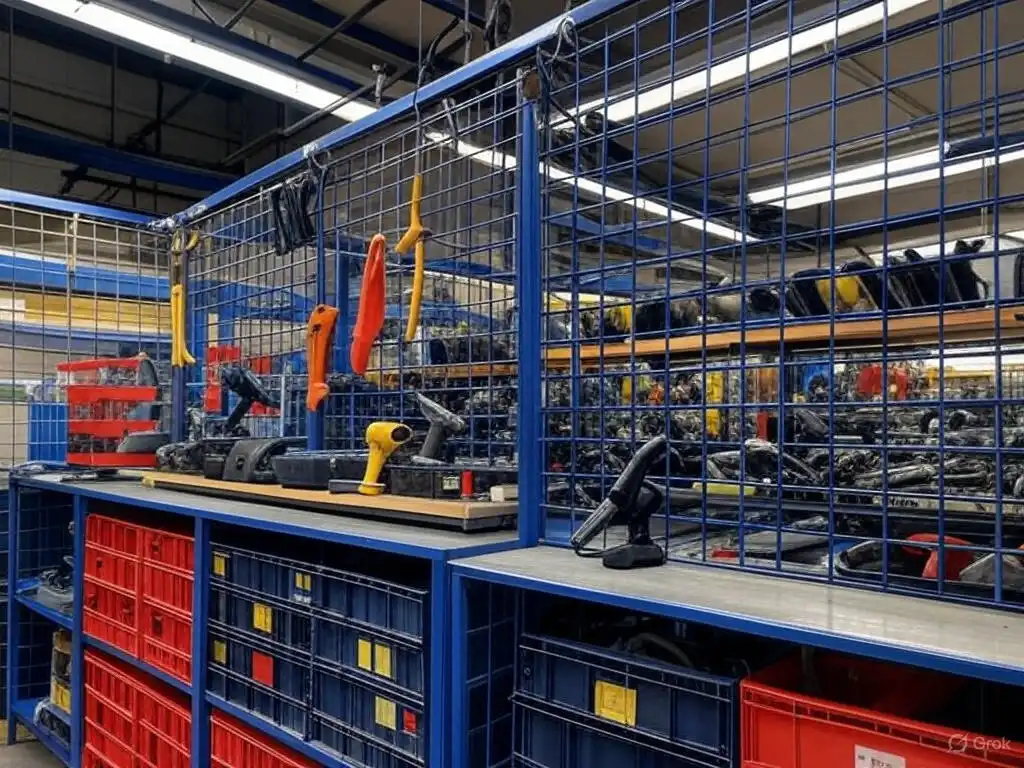
Decide who owns and stocks parts:
- Consignment: Vendor stores your parts on site, but you keep ownership, which helps with availability.
- Vendor-owned van or site stock: Part of the fee; define min/max levels and cycle counts.
- Lead times & critical spares: Identify “insurance spares” (motors, drives) and agree on strategy.
- Parts quality: OEM vs. approved equivalents; require traceable serials and warranties.
- Obsolescence: Process for sunset components (e.g., PLCs); who funds upgrades.
Work control and documentation
A robust process prevents chaos:
- CMMS integration: All work orders, time, materials, and photos flow into your system (or the vendor’s with data access for you).
- Permits and safety plans: Job hazard analysis, hot work, confined space, and LOTO records.
- Change control: Any scope or method changes require approval and updated procedures.
- Acceptance criteria: Define what “complete” means (tests, calibration, run-in).
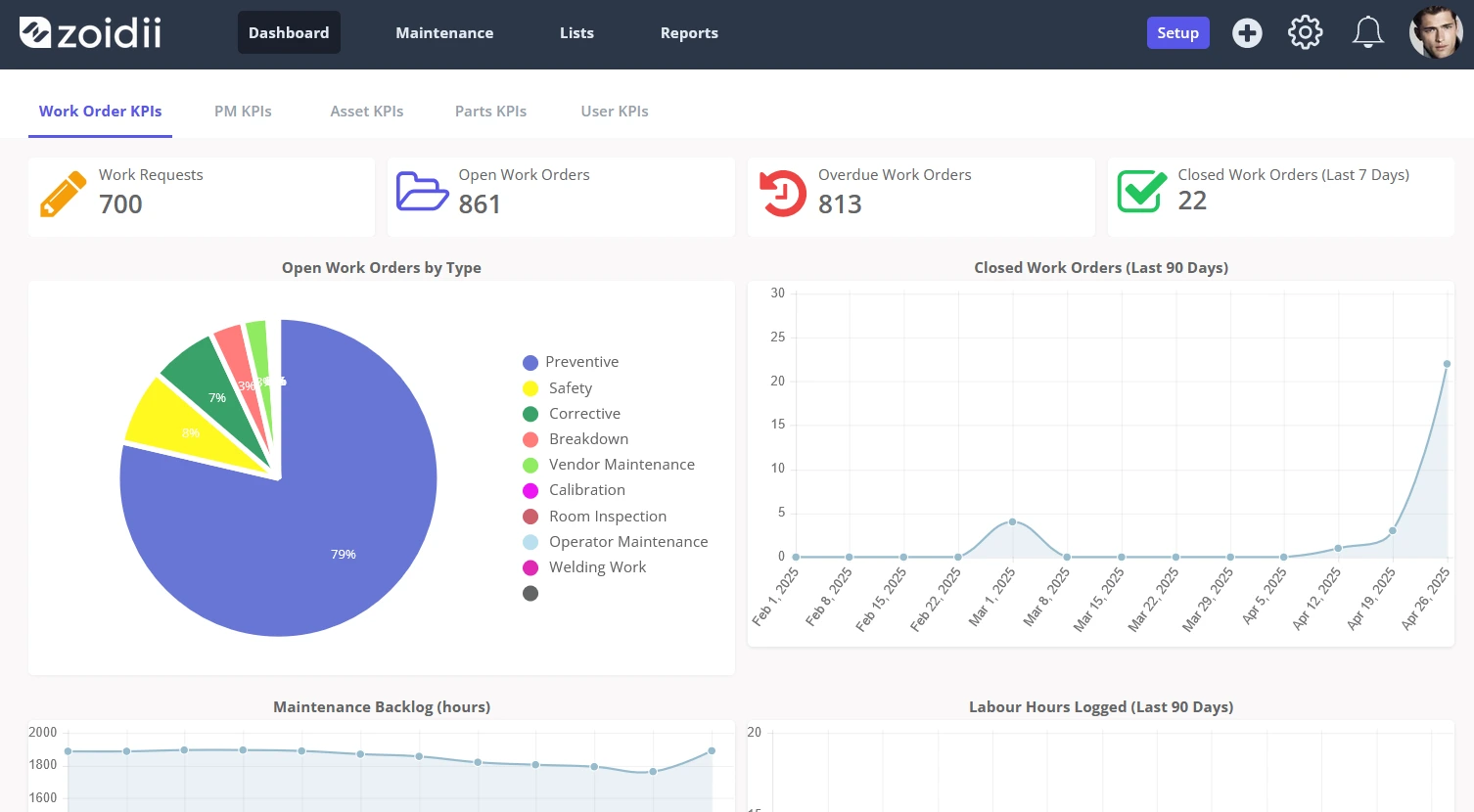
- Reporting: Monthly KPI dashboard, SLA exceptions, RCA for major incidents, and continuous improvement log.
Governance and relationship management
- Mobilization period: Usually 30–90 days to inventory assets, baseline condition, align PMs, and train staff.
- QBRs (Quarterly Business Reviews): Review KPIs, safety, costs, major risks, and improvement roadmap.
- Escalation path: Names and numbers from on-call tech up to executive sponsor.
- Audits: Right to audit safety, certifications, subcontractor use, and invoice backup.
Term, renewal, and exit
- Term: 1–3 years is common; longer terms can exchange price stability for early termination rights.
- Renewal: Automatic with indexation caps unless either party gives notice (e.g., 60–90 days).
- Termination for convenience: Allowed with notice (e.g., 30–60 days); expect a wind-down fee if the provider stocked dedicated spares or staff.
- Termination for cause: Missed SLAs, safety violations, chronic nonperformance; include a cure period.
- Transition/exit plan: Return of keys, badges, and data; handover of maintenance history, spares inventory, and open work orders; non-solicit provisions.
How to compare vendor proposals
- Normalize scope: Use a common asset list and PM frequencies so you aren’t comparing apples to oranges.
- Score SLAs and KPIs: Weight what matters (uptime, response, PM compliance) and verify how they’ll measure each metric.
- Examine exclusions: The cheapest bid may hide broad exclusions on parts, overtime, or travel.
- Check staffing: Who will be on site? Certifications? Backup coverage during vacations?
- Validate references: Ask about startup, communication, and how the vendor handled a major failure.
- Run a scenario: “If the compressor fails Saturday at 3 a.m., what happens—who comes, with what parts, at what rate, and what is the ETA to restore service?”
Negotiation tips
- Tie payment to outcomes: Keep a small portion “at risk” for uptime or PM compliance to align incentives.
- Demand transparency: Rate sheets, parts markups, travel rules, and subcontractor policies up front.
- Establish NTEs: Require NTE thresholds for corrective jobs and a fast approval process for overruns.
- Indexation with caps: Accept fair inflation indexing but cap annual increases.
- Own your data: Ensure you retain all maintenance and performance data in usable formats.
- Pilot, then scale: Begin with a critical area or a few sites, expanding after a performance review.
Red flags
- Vague language: “industry standard PMs” without checklists or frequencies.
- No as-found/as-left documentation or photos in service reports.
- Unlimited exclusions or “wear and tear not covered” in a “comprehensive” plan.
- Refusal to integrate with your CMMS or share data.
- Overreliance on subcontractors with unclear vetting or supervision.
- No safety program evidence (training records, TRIR history, permit procedures).
Example KPIs and SLA targets (starter set)
- PM completion on time: ≥98%
- Corrective response time: Critical ≤2 hours; urgent ≤8 hours; routine ≤3 business days
- Uptime/availability: As agreed per asset (e.g., 99.5% for key lines)
- First-time fix rate: ≥85% for repeatable issues
- Safety: 100% LOTO compliance; zero life-altering injuries
- Quality: Callback rate ≤3% within 30 days; workmanship warranty 90 days
- Cost control: Variance to budget within ±5% (for full service)
Quick RFP checklist
- Asset register with IDs and condition notes
- Required certifications and site rules (PPE, permits, background checks)
- Scope of PM tasks and frequencies (attach OEM references)
- SLA table with response/restore targets and service credit framework
- Reporting cadence and data format requirements (CSV/API)
- Spare parts strategy (ownership, min/max, consignment)
- Pricing template (PM fixed fee, T&M rates, markups, indexation)
- Onboarding plan and mobilization timeline
- Insurance limits and proof requirements
- Term, renewal, termination rights, and exit obligations
When is a maintenance contract not the answer?
- You have low-criticality equipment and a strong internal team with bandwidth.
- Work is seasonal or sporadic—consider ad hoc T&M with pre-negotiated rates instead.
- The equipment is under OEM warranty with included service; avoid double-buying.
- You’re planning a near-term replacement or decommission.
In Conclusion
A maintenance contract should transfer the right risks, clarify expectations, and create shared incentives to keep your assets safe, compliant, and available.
Focus on precise scope, measurable SLAs, transparent pricing, and strong governance. Insist on data clarity, safety discipline, and an exit plan. If both parties can see what “good” looks like—and how it will be measured—you’ll spend less time firefighting and more time producing, serving customers, and sleeping at night.