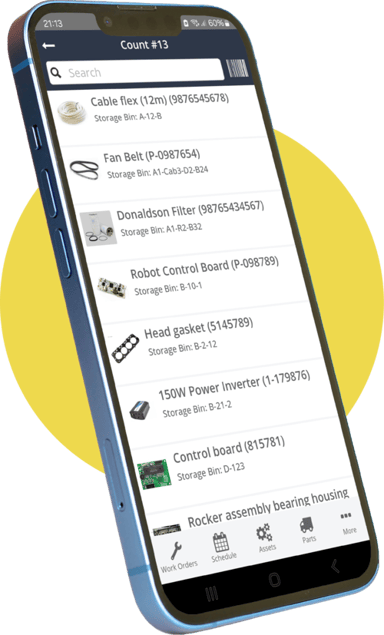

Zoidii’s Mobile CMMS puts your team’s work orders, hours, and asset histories in their hands in real time. From any phone or tablet, they view tasks, update status, and log hours on the spot, so they never run back to the office.
With instant access to manuals, past repairs, and part numbers, the app captures accurate data at the source and lets technicians focus on repairs, not paperwork. New to CMMS? Read our post on What is a CMMS.
The High Cost of Poor Inventory Control
Disorganized spare parts management hits your bottom line from multiple directions. Without a clear system, costs stack up fast:
- Increased equipment downtime - Technicians waste valuable time searching for items, waiting for emergency deliveries, or even trying to find a workaround. Every minute of extended downtime is a minute of lost production.
- Excessive carrying costs - Overstocking parts ties up a significant amount of capital. This inventory takes up valuable space, requires management, and risks becoming obsolete before it is ever used.
- Lost productivity - Manually counting inventory, searching for misplaced parts, and processing emergency purchase orders are time-consuming tasks. This time is stolen from preventive maintenance and other activities that add real value and prevent future breakdowns.
- Wasted spend - Without clear inventory data, you might place duplicate orders for parts you already have. Worse, you may pay premium prices and rush shipping fees for urgent needs that could have been anticipated with proper planning.
8 Tips for Optimizing Your Spare Parts Management System
Shifting from a reactive to a proactive inventory strategy is achievable. Any maintenance manager can implement these practical tips to improve their spare parts management process, reduce waste, and boost team performance.
1. Standardize Your Naming and Coding System
Standardize part names to cut confusion and duplicates. For example, use MOTOR-1.5HP-C12 instead of “Motor, 1.5HP” or “Motor-Conveyor-1.5HP.” This common format speeds up searches, streamlines orders, and keeps everyone on the same page. Use our maintenance glossary to set and share your naming rules.
2. Implement a Centralized Digital Inventory System
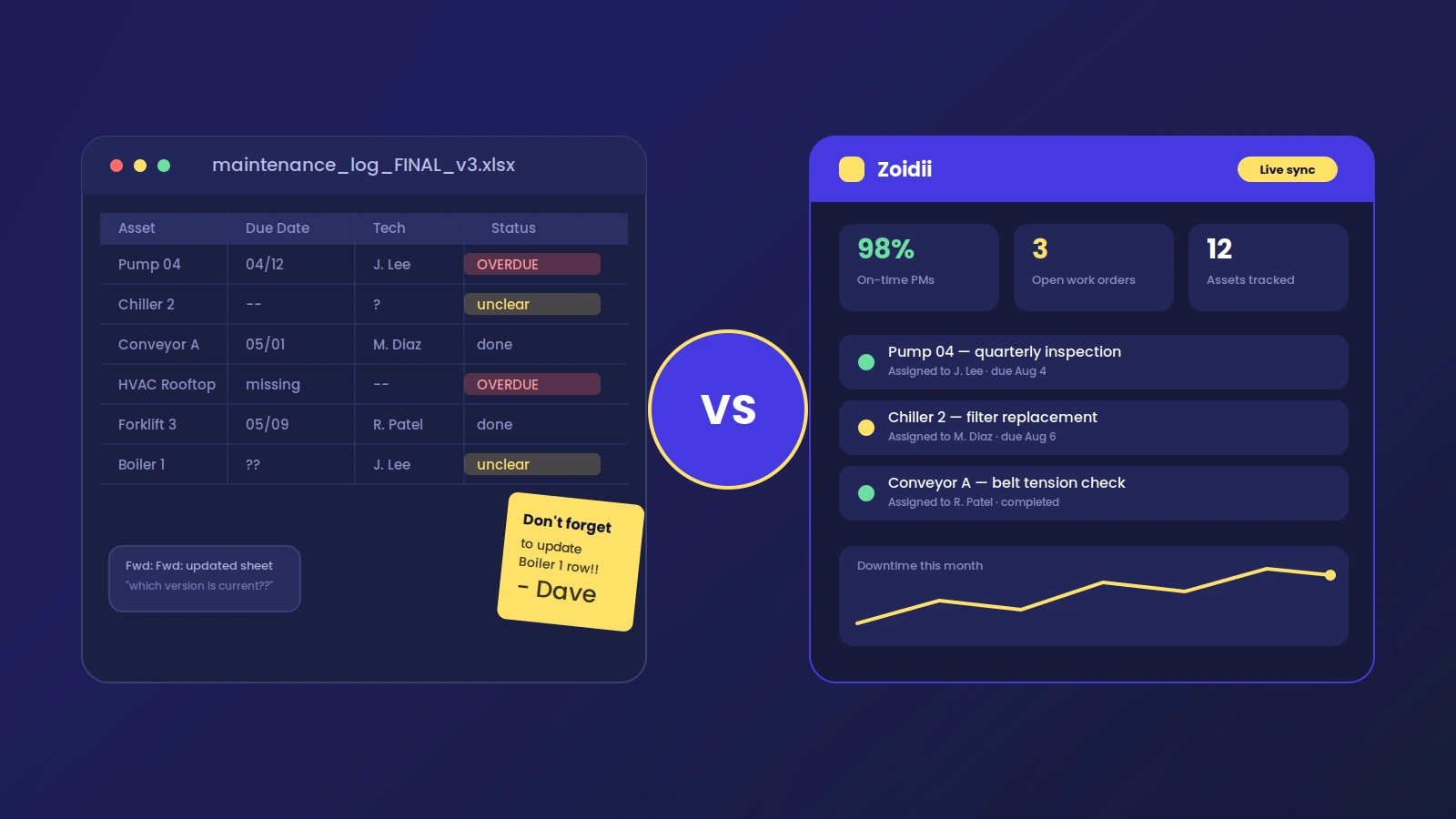
Spreadsheets and paper logs are error-prone, quickly outdated, and hard to share. A CMMS gives you centralized digital inventory management as a single source of truth, with real-time visibility into stock levels, bin locations, and usage history. Technicians check part availability on their phones, and managers view inventory from anywhere. Instant, accurate access replaces spreadsheets and paper for good.
3. Establish and Automate Min/Max Levels
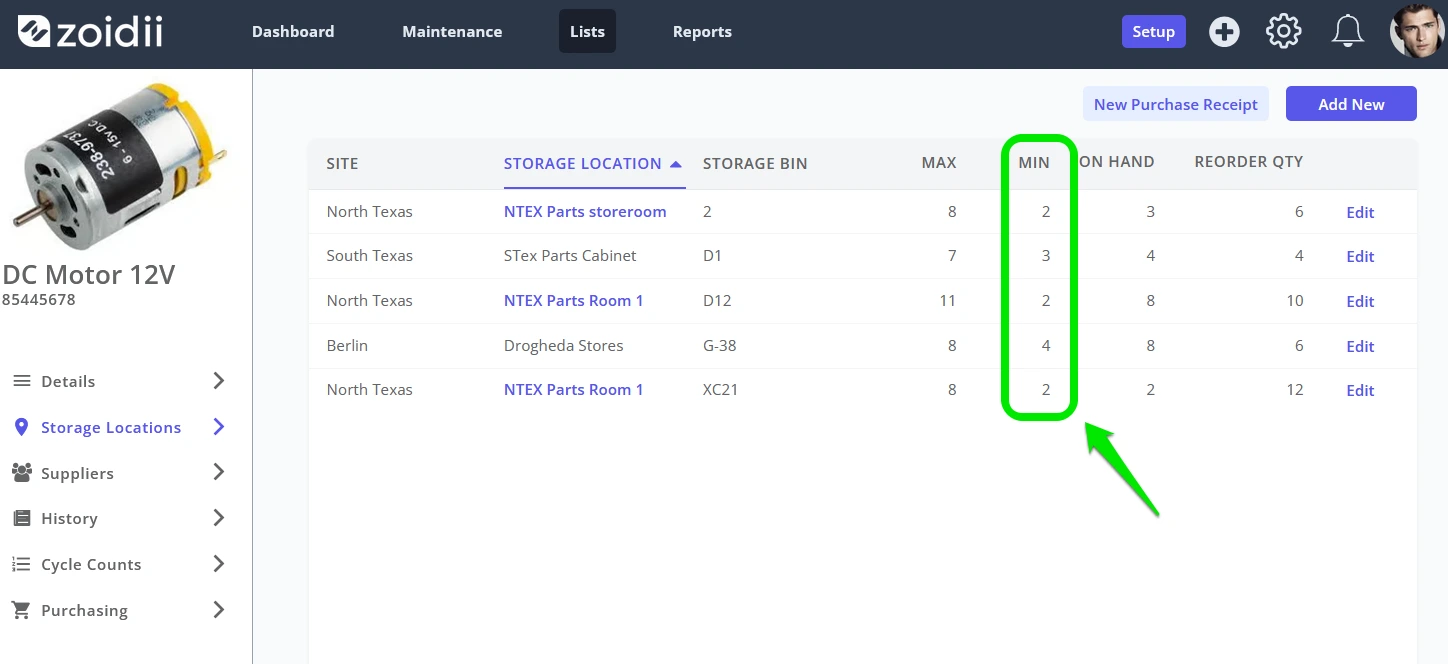
Define minimum (reorder) and maximum levels for each part to keep stock balanced, never scrambling for spares or tying up cash in excess inventory. You set the minimum to trigger a reorder and the maximum to cap your holdings.
Zoidii takes over the heavy lifting. When a part hits its reorder point, the system sends an alert or auto-generates a purchase request. You can tweak thresholds based on usage patterns and supplier lead times. That means no more manual checks, a leaner parts cabinet, and zero last-minute rush orders.
4. Classify Parts Based on Criticality
Not all parts are created equal. Some are vital for keeping your most important assets running, while others are less of a problem. An ABC analysis helps you categorize parts to focus your attention where it matters most.
- A- High impact
- B- Moderate impact
- C- Low cost/high volume (bolts, fuses)
This classification lets you apply stricter controls to your A parts while simplifying the management of C parts, optimizing your team’s effort.
5. Link Spare Parts to Assets and Preventive Maintenance
A CMMS links inventory to assets and work orders. By tying spare parts to preventive maintenance schedules, it auto-reserves bearings and filters when a PM work order is created. Techs arrive prepared and complete tasks without delay.
6. Optimize Your Storeroom Layout
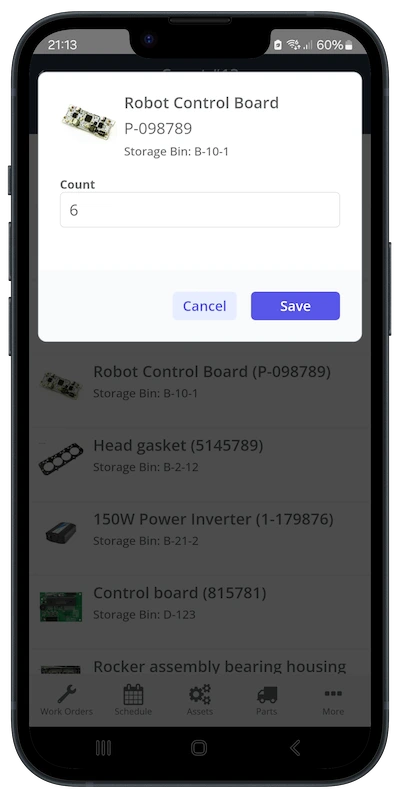
Digital organization needs a matching physical setup; a clean, logical storeroom layout slashes search time. Label bins and aisles clearly, group similar parts, and lock away high-value items. A tidy storeroom signals a well-run maintenance team and keeps repairs moving quickly.
7. Streamline the Purchasing Process
Uncontrolled spending and confusing purchase requests can inflate your maintenance budget.
A CMMS centralizes purchasing: technicians submit requests in the system, and managers approve and convert them into POs with a few clicks, creating a clear digital trail. Zoidii’s purchase order software also manages supplier info, pricing, and lead times, giving you the data to negotiate better deals and strengthen vendor relationships.
8. Track and Analyze Inventory Data
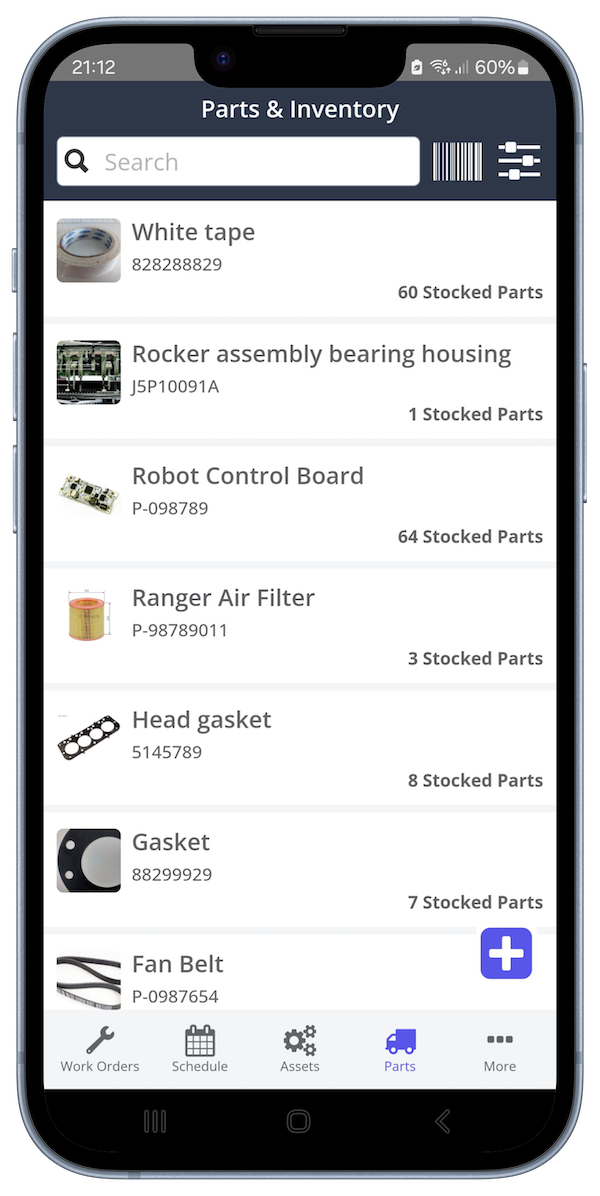
You can't improve what you don't measure. A CMMS makes it easy to analyze inventory data that was once impossible to collect. Metrics like inventory turnover rate, stockout frequency, and carrying costs provide valuable insights. Analyzing this information helps you refine your min/max levels, identify slow-moving or obsolete parts, and make smarter purchasing decisions.
For businesses in sectors like manufacturing, this data is essential for maintaining lean operations and high productivity.
Transform Your Inventory Control with Zoidii
Zoidii brings parts, assets, and work together so that repairs are completed on the first visit.
- Inventory management - See stock, locations, and min/max in one view.
- Mobile CMMS - Techs find parts and log usage on the job, no office trip.
- Purchase orders - Raise POs from a work order or inventory screen.
- Reports & dashboards - Track consumption and cost by asset or site.
Take Control of Your Spare Parts Management
Stop letting poor inventory control cause unnecessary downtime and inflated costs. Book a tour and see firsthand how Zoidii’s easy-to-use CMMS software can help you build a more efficient and productive maintenance operation.