
Preventive maintenance (PM) isn’t glamorous, but it’s one of the highest-ROI levers you can pull in 2025. The right software helps teams schedule work before breakdowns, standardize procedures, track parts, and turn wrench time into clean data for decisions.
This guide distills today’s crowded CMMS/asset-management market into practical picks, grouped by the problems most teams actually face—plus a buyer’s checklist you can use immediately.
Key takeaways:
- Pick for your scenario, not the hype: Zoidii and Limble are the quickest wins for most SMB–midmarket teams; MaintainX excels for mobile-first collaboration; eMaint fits compliance-heavy ops; Maximo is the enterprise path to condition-based/predictive programs.
- Budget smartly: Expect $40–$80 per user/month for a modern CMMS, plus additional costs (QR code labels, devices, SSO, data cleanup, change management).
- Start small, scale fast: Launch with a “golden 50” PMs and tight mobile closeout checklists (photos, parts, meters, failure codes) to build reliable data quickly.
- Make data useful, not decorative: Track PM compliance, reactive ratio, downtime, and MTTR weekly; use monthly reviews to prioritize fixes and parts strategy.
How we chose
We prioritized tools that:
- Make PM scheduling and work orders dead simple (mobile-first UX, quick setup).
- Offer robust asset/parts tracking and reporting without heavyweight IT.
- Scale from a single plant to multi-site portfolios
- Publish transparent pricing or have widely corroborated market pricing.
- Earn consistently strong third-party reviews (G2, Capterra, Software Advice) and active 2025 product updates.
Best overall for small & mid-sized teams: Zoidii
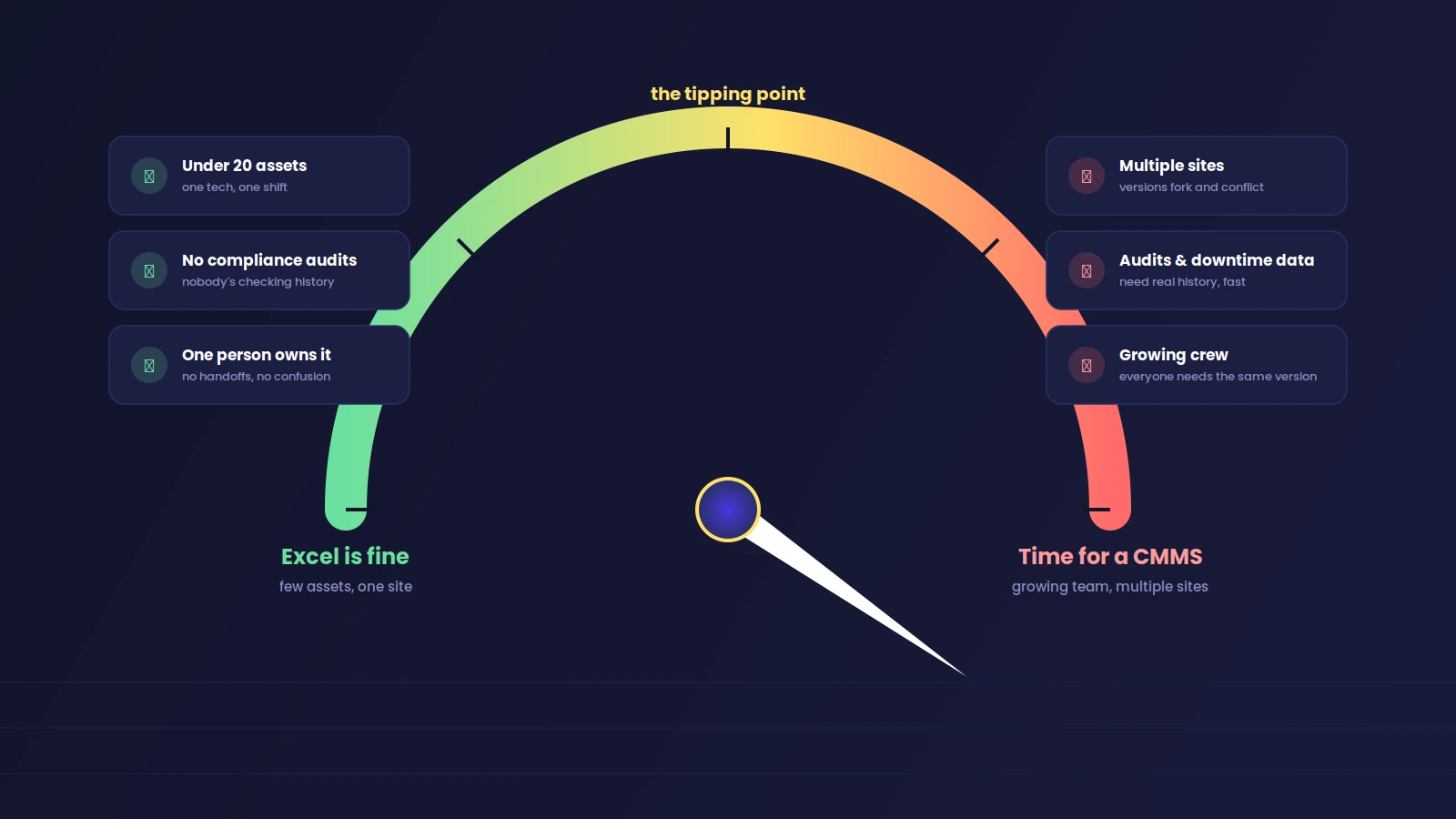
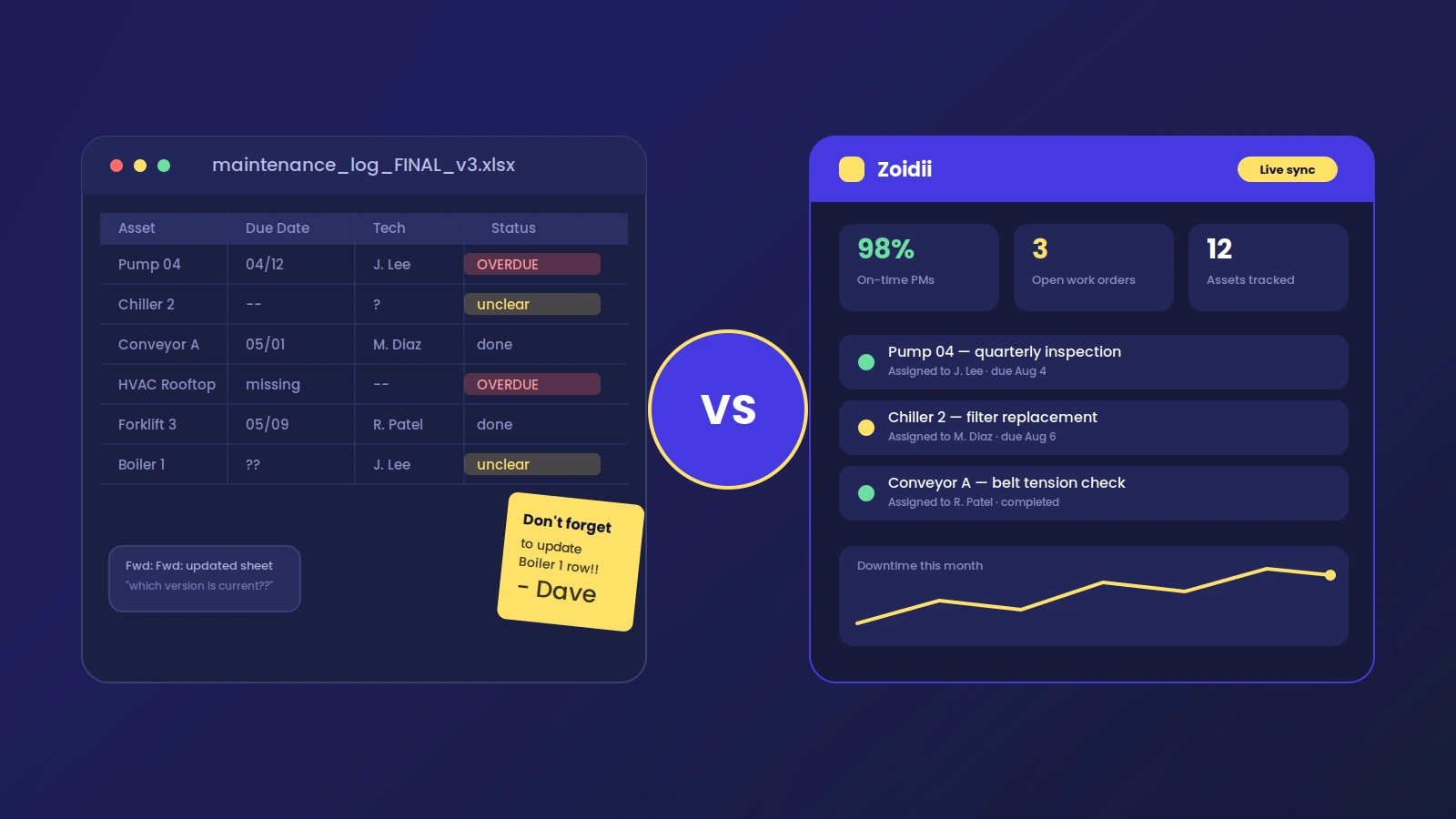
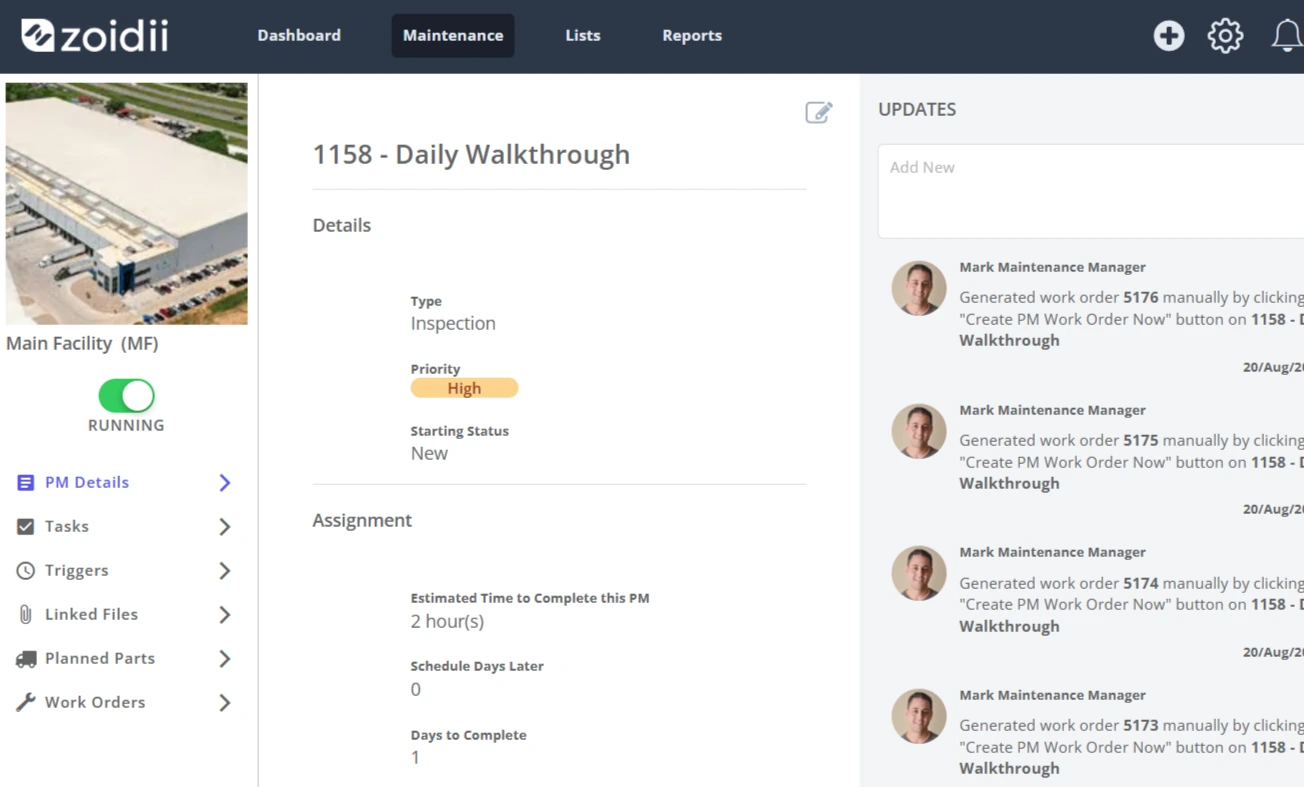
Why it stands out: Zoidii strikes the perfect balance between approachability and breadth—fast to deploy, friendly on mobile, and covering key areas like PM scheduling, inventory control, meters, and reporting. It’s a strong fit for organizations transitioning from spreadsheets or paper to a modern CMMS, particularly those with limited onboarding resources.
Pricing snapshot (2025): Zoidii’s published tiers start at $39/user/month for Basic; $55/user/month brings QR code scanning, request portals, full preventive maintenance, checklists, time & cost tracking, and inventory. Free trials available.
Good for: Manufacturing cells, facilities teams, food & bev, and anyone who wants to standardize PMs and inventory quickly with minimal admin.
Best for mobile-first operations & real-time collaboration: MaintainX
Why it stands out: MaintainX leans into frontline usability—chat-style messaging on work orders, procedure checklists with version control, QR scanning, and request portals. Teams that live on mobile devices tend to adopt it quickly, and it scales well to multi-site ops.
Pricing snapshot (2025): “Essential” is often listed around $25/user/month, with Premium at $75 for meter-based PM, analytics, and purchasing workflows; there’s also a free tier and enterprise options. Check the vendor for current promos.
Good for: Multi-site ops, hospitality, facilities, and teams that need request portals and structured procedures with strong mobile UX.
Best for quick time-to-value & KPI visibility: Limble CMMS
Why it stands out: Limble emphasizes fast setup (QRs, asset hierarchies) and out-of-the-box dashboards that spotlight reliability KPIs such as MTBF/MTTR and downtime. For many SMBs, that blend of ease + reporting shortens the path from “we installed it” to “we’re actually improving uptime.”
Pricing snapshot (2025): Public pages list a Standard tier commonly around $28–33/user/month (monthly/annual), with higher tiers (e.g., Premium+) for automation and deeper analytics.
Good for: Teams upgrading from basic tools who want faster insights, KPI dashboards, and unlimited PMs/work requests at lower tiers.
Best for compliance-heavy environments & deep configurability: eMaint (by Fluke Reliability)
Why it stands out: eMaint is a mature CMMS with strong change control, asset hierarchies, parts, and reporting—popular in regulated industries that need tight documentation and flexible workflows. It has a long track record and broad functionality that scales with complexity.
Pricing snapshot (2025): Market guides frequently cite Team (~$69/user/month), Professional (~$85), and Enterprise (~$120) tiers, though quotes vary by configuration—confirm with the vendor.
Good for: Pharma, food safety, utilities—anywhere audits, SOPs, and traceability matter as much as wrenching.
Best for enterprise asset management & AI/predictive roadmaps: IBM Maximo Application Suite (MAS)
Why it stands out: When your footprint includes fleets, plants, or critical infrastructure—and you’re integrating sensors, condition monitoring, and predictive models—Maximo’s suite approach (Manage, Monitor, Health, Visual Inspection) is hard to beat. It’s heavier than a classic CMMS, but purpose-built for end-to-end asset lifecycles and AI-assisted strategies.
What to know: MAS 9.1 emphasizes Manage for core PM (time/meter-based generation, work orders), with modules you can add as you mature. Deployment and governance need IT partnership, but the long-term ceiling is high.
Good for: Large manufacturers, transit/utilities, oil & gas, and any org plotting a condition-based or predictive maintenance journey.
Also worth a look
- Fiix – Cloud CMMS with an accessible UI, free tier, and a well-known Basic plan frequently cited at around $45/user/month that unlocks unlimited PMs, reporting, and user certification tracking. Backed by Rockwell Automation, it’s a safe mid-market bet.
- Hippo CMMS, MicroMain, Fracttal One, Snapfix – Niche fits depending on industry and interface preferences, each with modern PM scheduling and mobile workflows. (Snapfix leans “photo-first”.)
The features that matter (and how to sanity-check them)
1. PM scheduling that matches YOUR reality Look for time-based, meter-based, and condition-based triggers; schedule dates and due dates; seasonal calendars; and easy template libraries. Zoidii, Limble, eMaint, and Maximo all support robust PM scheduling, but the workflows feel different—pilot with your actual tasks.
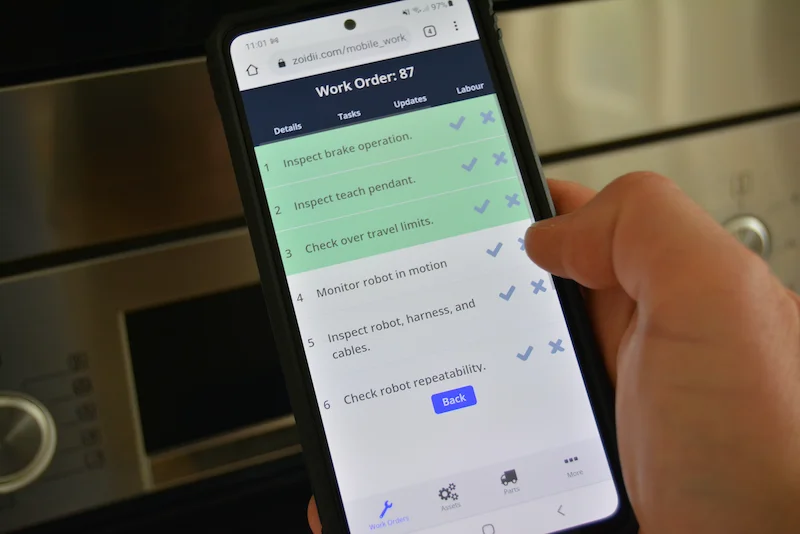
2. Work orders on mobile, not just a web form Techs should create, complete, and comment on WOs at the asset, including photos, QR codes, checklists, and parts used. MaintainX and Zoidii lean especially strong here; Limble and Fiix also score well.
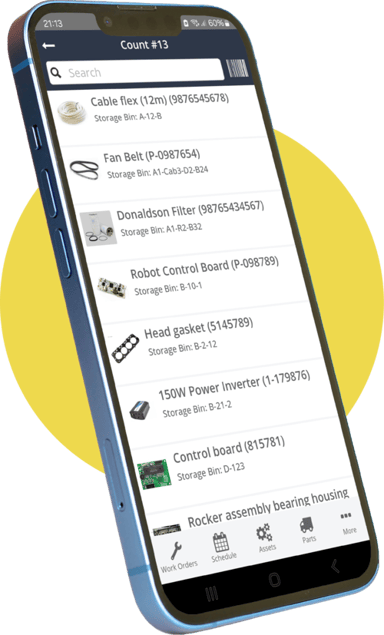
3. Parts & purchasing that prevent “stock-out surprises” Minimums, auto-reorder cues, and multi-site visibility are essential if downtime costs are real. Zoidii and eMaint highlight purchasing and inventory workflows; others integrate with ERPs or provide APIs.
4. Analytics that change decisions (not just dashboards) You want MTTR, downtime, compliance completion, and cost rollups by asset/class/site. Limble and Zoidii markets focus on downtime reporting, while Maximo integrates AI/condition monitoring as you mature.
Quick buyer’s guide (copy/paste this into your RFP)
- Users & sites: Techs, requesters, planners, supervisors, and the number of sites today and within the 24-month horizon.
- PM mix: Calendar vs meter vs condition-based; how many active PMs; target compliance %.
- Onboarding: Data migration (assets, PMs, spare parts).
- Reporting: Must-have KPIs, export cadence, stakeholder dashboards.
- Mobile environment: BYOD vs shared devices; iOS/Android parity.
- Regulatory needs: E-signatures, change control/versioning, audit trails.
- Roadmap: Do you foresee predictive maintenance, RCM, or CBM in 12–24 months?
What to pick by scenario
“We need wins this quarter.” Start with Zoidii or Limble. You’ll standardize PMs and capture parts usage fast without extensive IT lift. Pricing is transparent, and you can pilot in a single area.
“Our technicians live on phones; comms is messy.” Choose MaintainX. The in-app messaging, procedure steps, and requester portals reduce back-and-forth and surface bottlenecks.
“Audits keep us up at night.” Consider eMaint or Zoidii. Mature workflow controls and documentation help with compliance and multi-site governance.
“We’re moving toward predictive/condition-based.” If you’re an enterprise-scale or planning deep integration with sensors and analytics, IBM Maximo Application Suite future-proofs the journey.
Budgeting in 2025: what to expect
For SMB-midmarket CMMS, the plan costs $40–$80 per user/month, depending on the modules and support.
Examples this year include Zoidii starting at $39–$55/user/month, Limble’s Standard at around $28–33, MaintainX Essential at around $25 and Premium at $75, eMaint market guides at $69–$120 for higher tiers, and Fiix Basic commonly cited at $45.
Always confirm current pricing and contract terms; promos and annual billing discounts are common.
Hidden costs to surface early: QR code labels and printers, mobile devices/cases, single sign-on, data migration/cleansing, and change-management time for supervisors.
Implementation tips that separate the 20% from the 80%
- Seed a “golden 50” PMs. Don’t import everything. Start with your top 50 critical PMs (or 20% of assets) and pressure-test fields, naming, and checklists.
- Give techs a 15-minute work order closeout checklist. Photos, parts used, meter readings, and failure codes—every time. Adoption climbs when the closeout is fast on mobile.
- Instrument a handful of assets. If you’re eyeing condition-based or predictive maintenance, start by connecting 5–10 assets now, establish a data habit, and select a platform (like Maximo) that won’t limit your future options.
- Make operations your ally. Use requester portals and SLA targets to reduce drive-bys and phone calls; funnel everything into the CMMS so the data tells a complete story.
- Report weekly, decide monthly. Track PM compliance, reactive ratio, downtime by line, and top failure modes. Limble and others surface MTTR to keep the focus on reliability outcomes.
FAQs
1) What’s the difference between a CMMS and an EAM? A CMMS focuses on maintenance execution—PM scheduling, work orders, parts, and technician workflows. An EAM (like IBM Maximo) covers the full asset lifecycle (planning, procurement, depreciation, risk, reliability engineering) and typically includes deeper governance, analytics, and integrations.
2) How long does implementation usually take? Small teams that start with a limited scope (“golden 50” PMs) often go live in 2–6 weeks. Enterprise rollouts with data cleansing, integrations, and change management can take 3–6 months+. The biggest accelerator is limiting scope early and standardizing your PM templates.
3) How do I estimate ROI? Tie benefits to fewer breakdowns and faster repairs. Track baseline unplanned downtime, reactive vs. preventive ratio, MTTR, and spare parts stock-outs before go-live. After 60–90 days, compare trends; even a few percentage points of uptime improvement typically outweigh subscription costs.
Bottom Line on Preventive Maintenance Software
If you need a modern PM backbone this year, Zoidii and Limble are the fastest paths to measurable uptime gains for most teams. MaintainX shines when frontline collaboration is the bottleneck. In regulated or complex environments, eMaint offers depth and control.
For organizations planning a data-rich, predictive future at scale, IBM Maximo Application Suite is the strategic bet.
Whichever platform you choose, the real win isn’t “installing software”—it’s consistently turning preventive tasks, parts usage, and failure codes into decisions that reduce unplanned downtime.
Pick a tool your technicians will actually use, and the reliability will follow.