
HVAC systems are the single largest energy consumer in most commercial buildings — accounting for 40–50% of total energy use, according to the U.S. Energy Information Administration. Yet despite that footprint, fewer than half of facilities run a consistent preventive maintenance program. The result in 2026 is predictable: roughly $50 billion in unplanned HVAC downtime annually across U.S. commercial and industrial facilities, with 95% of those failures considered preventable through structured maintenance.
This guide explains why HVAC equipment maintenance matters more in 2026 than ever before — and why a Computerized Maintenance Management System (CMMS) has shifted from a "nice-to-have" to the operating system that makes modern HVAC maintenance possible at scale.
What Is HVAC Equipment Maintenance?
HVAC equipment maintenance is the scheduled inspection, cleaning, calibration, and repair of heating, ventilation, and air conditioning assets — including rooftop units (RTUs), air handling units (AHUs), chillers, cooling towers, boilers, VAV boxes, pumps, and fans. The objective is to keep every component operating at design conditions so the system delivers comfort, indoor air quality, and energy efficiency without unexpected failures.
In 2026, HVAC maintenance breaks down into three approaches:
- Reactive maintenance — fix it when it breaks. The most expensive option.
- Preventive maintenance (PM) — scheduled tasks at fixed intervals (monthly, quarterly, seasonally, annually).
- Predictive maintenance (PdM) — condition-based work triggered by IoT sensor data, fault detection algorithms, and AI models.
Why HVAC Maintenance Matters: The 2026 Data
1. Energy Costs Are the Biggest Hidden Expense
Well-maintained HVAC systems use 20–40% less energy than neglected equivalents running the same building. The biggest savings come from:
- Coil cleaning — restores heat transfer efficiency
- Filter replacement — reduces fan motor strain by 15–20%
- Refrigerant charge verification — prevents inefficient cycling
- Controls calibration — eliminates simultaneous heating and cooling waste that can silently consume 12–18% excess energy
For perspective: on a 150,000 sq ft office building spending around $380,000 per year on HVAC energy, a 25% reduction from structured PM equals roughly $95,000 saved annually.
2. Preventive Maintenance ROI Is Massive
Jones Lang LaSalle analysis of commercial facility deployments puts the documented ROI of preventive HVAC maintenance at 545% per dollar invested. Other benchmarks paint the same picture:
- Every $1 spent on preventive maintenance saves $4–$6 in reactive maintenance costs (industry standard).
- Emergency HVAC repairs cost 3–5× more than scheduled preventive service, plus after-hours dispatch fees averaging $250–$600.
- A single failed rooftop unit during a summer heat event routinely exceeds $18,000 once you include tenant disruption, portable cooling rentals, and expedited parts.
3. Equipment Life Doubles With Proper Maintenance
HVAC units maintained reactively typically fail at 9–11 years. The same units maintained preventively last 14–18 years — sometimes 20+. For a portfolio of 80 HVAC assets at $4,500 average replacement cost, that's $180,000–$360,000 in deferred capital expenditure over a 15-year horizon.
4. Downtime Is Avoidable
Facilities that run structured HVAC PM programs see:
- 73% reduction in unplanned downtime (industry benchmark)
- 95% of HVAC failures are classified as preventable
- 45% downtime reduction at 18 months for portfolios deploying AI predictive maintenance on top of CMMS-driven PM
5. Indoor Air Quality and Safety Aren't Optional
A neglected HVAC system circulates dust, allergens, and pathogens through the building. Worse, the National Fire Protection Association reports more than 44,000 U.S. structure fires per year started by faulty heating equipment — and gas-fired systems carry carbon monoxide risk when burners and heat exchangers go uninspected. Regular maintenance isn't only an efficiency play; it's a life-safety and liability issue.
6. Compliance Is Tightening Fast in 2026
Regulatory pressure on HVAC operations has accelerated:
- Refrigerant phase-down: From January 2026, existing commercial HVAC systems using refrigerants with a GWP of 2,500 or above (e.g., R-410A) can no longer use virgin refrigerant for servicing — forcing a transition to lower-GWP alternatives like R-32.
- Building performance standards: Washington State's Clean Buildings Performance Standard requires buildings over 220,000 sq ft to comply by June 2026, with 90,000–220,000 sq ft buildings following in 2027. Similar standards are spreading across Colorado, New York, and several Canadian provinces.
- MEES trajectory in the UK: EPC C by 2028, EPC B by 2030.
Why a CMMS Is the Foundation of Modern HVAC Maintenance
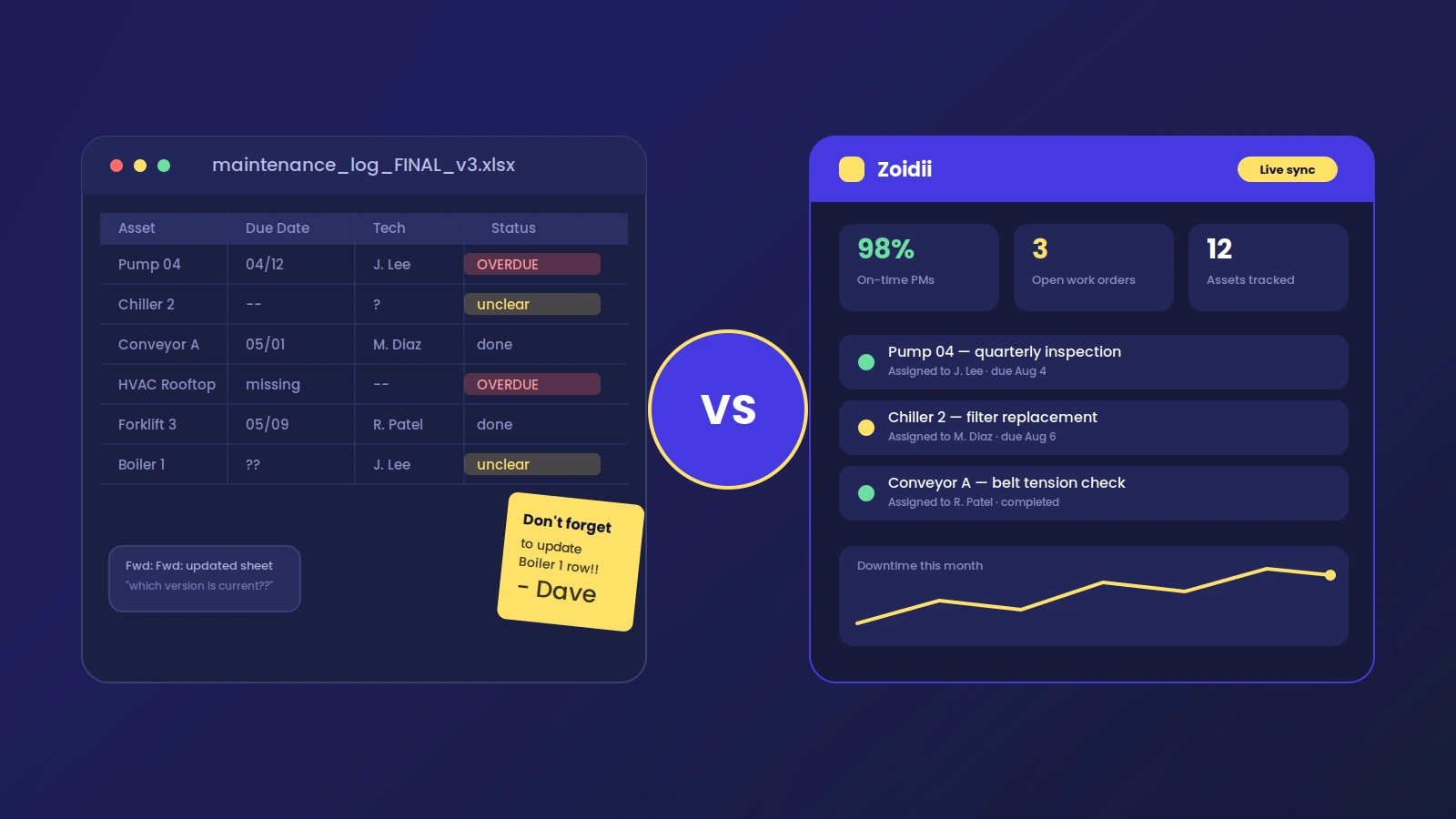
The CMMS market is growing because the maintenance problem has outgrown spreadsheets and paper logs. Roughly 73% of maintenance teams plan to adopt AI-powered CMMS tools by the end of 2026, up from fewer than 33% currently deployed.
Here's what a CMMS actually does for HVAC maintenance:
Automated Preventive Maintenance Scheduling
Every HVAC asset — every RTU, AHU, chiller, pump, and cooling tower — gets its own PM schedule based on manufacturer specs, runtime hours, or seasonal triggers. The CMMS generates work orders automatically. Filter changes, coil cleanings, belt inspections, and refrigerant checks stop falling through the cracks.
Facilities using CMMS to automate HVAC schedules report a 44% reduction in overall downtime and 87% fewer equipment defects compared to manual tracking.
Centralized Asset Records
Every HVAC unit gets a digital record containing:
- Make, model, serial number, install date, warranty status
- Complete maintenance and repair history
- Manuals, wiring diagrams, refrigerant logs
- Parts compatibility and on-hand inventory
- Photos and condition notes
Mobile Work Orders for Technicians
Maintenance technicians in facilities without a CMMS spend roughly 34% of their time on phone calls, manual log entries, and hunting for parts. Mobile-first CMMS apps eliminate that overhead, letting technicians receive work orders, log time, capture photos, and close out tasks in the field.
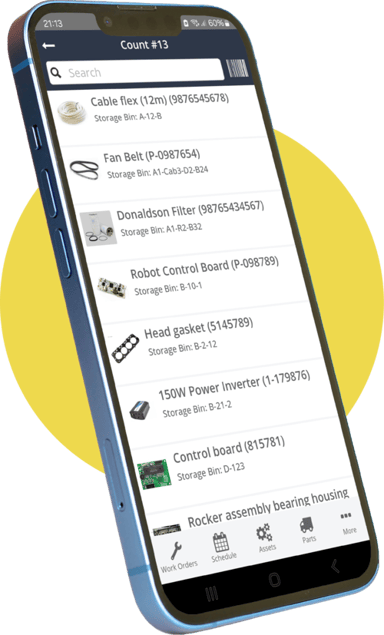
Inventory and Parts Management
Emergency spot procurement runs 2.4–3.2× the planned procurement rate for the same parts. A CMMS tracks consumption, sets minimum stock levels, and eliminates emergency orders for 40–60% of repair events — a major hidden saving on HVAC operations.
Reporting, Compliance, and Audit Trails
Facility teams without a CMMS spend 8–14 hours per week manually compiling KPI reports and compliance documentation. At a loaded technician rate of $55–75/hour, that's $22,000–$55,000 in annual labor-producing reports a CMMS generates automatically.
Integration With IoT and Predictive Maintenance
The leading edge of HVAC maintenance in 2026 is condition-based work — a CMMS ingesting live sensor data (vibration, temperature, pressure, current draw) and triggering work orders when a fault pattern is detected. McKinsey research puts predictive maintenance cost reductions at 10–40%, and IoT-connected CMMS platforms prevent up to 80% of equipment breakdowns when properly deployed.
The Bottom-Line Case: CMMS ROI on HVAC
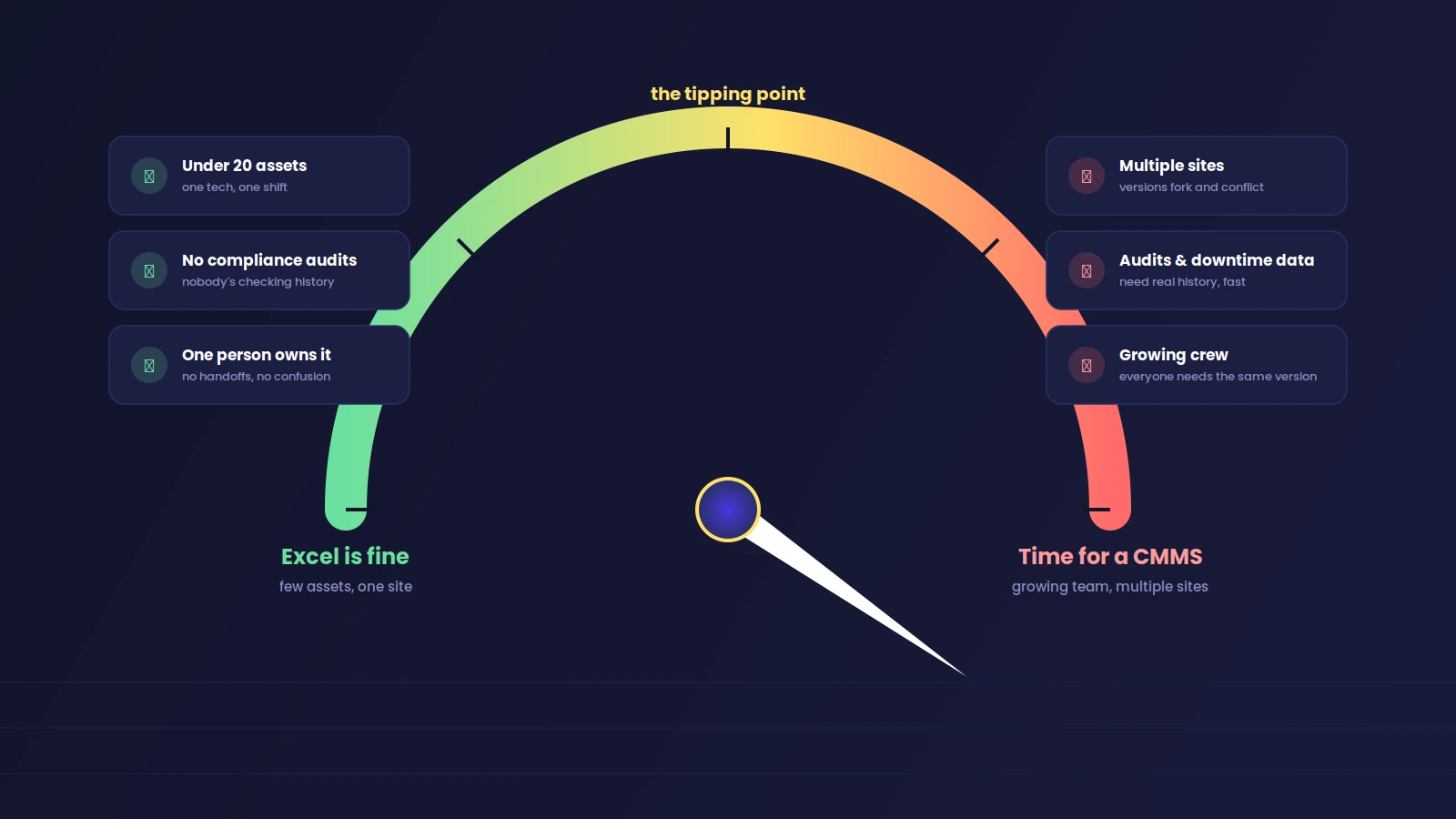
Most organizations see a 15–25% reduction in maintenance costs within the first year of CMMS implementation, with an average 3-year ROI of 400–700%. For HVAC specifically, the savings stack from several lines at once:
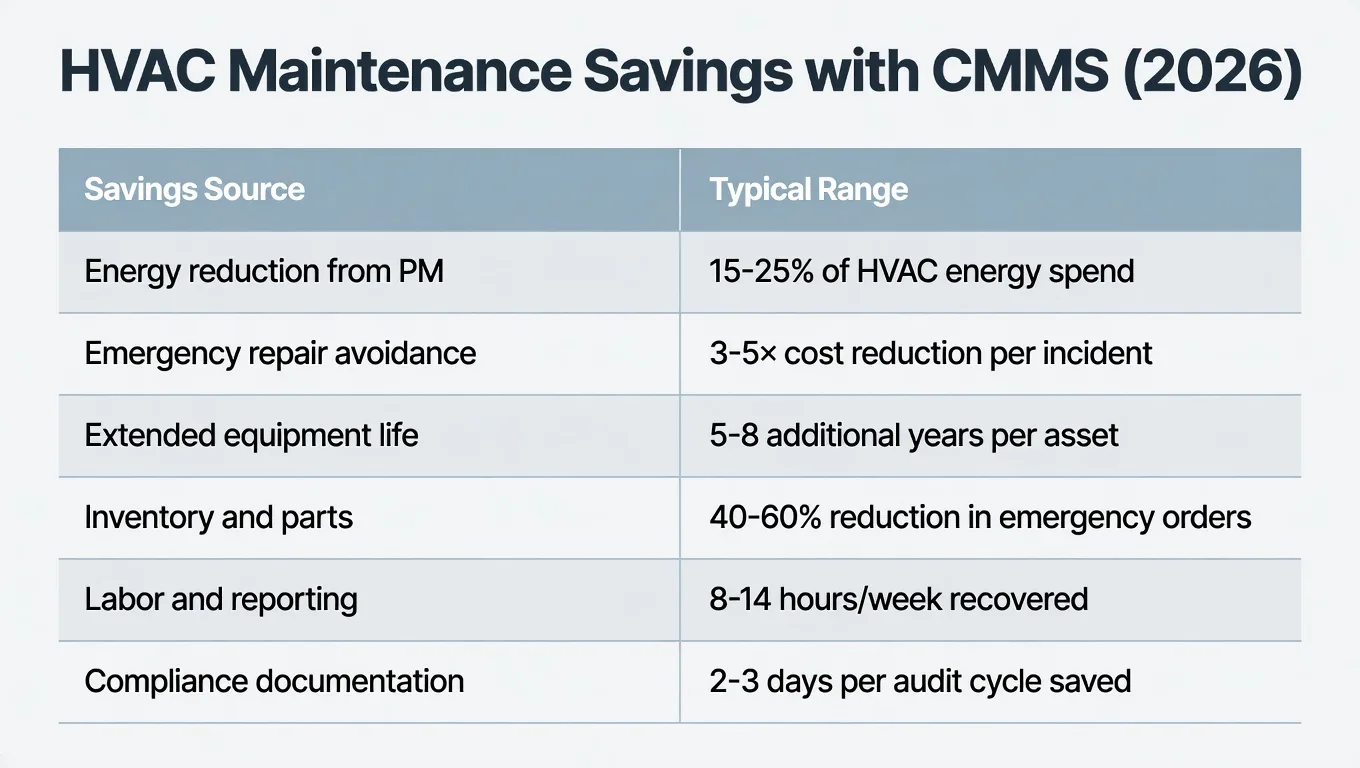
Most facilities see positive ROI within 6–12 months, and often within a single quarter — driven by a single avoided HVAC emergency.
The 2026 HVAC Maintenance Checklist (CMMS-Ready)
The schedule below is what a properly configured CMMS automates. Use it as a starting template:
Monthly
- Inspect and replace air filters (more often in dusty environments)
- Visual inspection of belts, pulleys, and motor bearings
- Check thermostat calibration and BAS setpoints
- Inspect condensate drain lines and pans
Quarterly
- Clean condenser and evaporator coils
- Inspect electrical connections and tighten as needed
- Lubricate motors and bearings per manufacturer's spec
- Test safety controls and limit switches
- Verify refrigerant charge
Seasonal (pre-cooling and pre-heating)
- Full system performance test
- Clean cooling tower fill and basin
- Inspect the heat exchanger for cracks (heating season)
- Test economizers and dampers
- Verify VFD operation
Annual
- Full chiller teardown inspection (where applicable)
- Vibration analysis on critical rotating equipment
- Indoor air quality assessment
- Refrigerant leak check and EPA documentation
- Update asset records and capital plan
Frequently Asked Questions
What is the difference between HVAC preventive maintenance and predictive maintenance?
Preventive maintenance is calendar- or runtime-based — tasks happen at fixed intervals regardless of equipment condition. Predictive maintenance uses IoT sensors and AI models to detect early-warning signals (vibration changes, current draw spikes, temperature drift) and trigger work only when condition data indicates it's needed. Most mature 2026 programs run both: PM for cleaning, inspection, and consumable replacement; PdM for component-level wear monitoring.How often should commercial HVAC equipment be serviced?
At minimum, twice per year — once before the cooling season and once before the heating season. The U.S. Department of Energy recommends this baseline. High-use facilities, critical environments (data centers, healthcare, food production), and dusty industrial settings often require quarterly or monthly service on filters, coils, and belts. A CMMS sets the right cadence per asset class rather than a one-size-fits-all schedule.How does a CMMS reduce HVAC maintenance costs?
A CMMS reduces HVAC costs across five lines simultaneously: (1) energy spend, by ensuring PM tasks that affect efficiency actually happen on schedule; (2) emergency repair costs, by catching failures before they cascade; (3) capital replacement, by extending equipment life from ~10 years to ~16+ years; (4) labor, by eliminating manual scheduling and reporting overhead; and (5) parts inventory, by replacing emergency procurement with planned ordering.What's the ROI of a CMMS for HVAC maintenance?
Industry benchmarks show 15–25% maintenance cost reductions in year one, with 400–700% ROI over three years. For HVAC specifically, Jones Lang LaSalle documented 545% ROI on preventive maintenance programs at scale. Most facilities reach payback within 6–12 months.What HVAC assets should a CMMS track?
Every asset that affects comfort, air quality, or energy use: rooftop units, air handlers, chillers, cooling towers, boilers, heat pumps, VAV/VRF systems, pumps, fans, exhaust systems, humidifiers, and the building automation system (BAS) controlling them. Critical sub-components — compressors, motors, sensors, valves — should also have their own records on higher-value equipment.Is HVAC maintenance worth it for smaller buildings?
Yes. The math is actually more favorable for smaller portfolios because a single emergency repair represents a larger percentage of the annual maintenance budget. Cloud-based CMMS platforms now start at $3–$15 per asset per month, and most small operators recover that cost on the first avoided breakdown.How long does it take to implement a CMMS for HVAC?
A focused HVAC CMMS deployment — asset import, PM template setup, mobile app rollout to technicians — typically runs 14–60 days depending on portfolio size and data quality. Cloud platforms designed for ease of use (rather than enterprise IT projects) compress this further; many teams are running full PM schedules within two weeks.Run HVAC Maintenance the Way 2026 Demands
The economics of HVAC maintenance have moved decisively in favor of structured, software-driven programs. Energy costs are climbing, refrigerant rules are tightening, building performance standards are spreading, and the labor market for skilled technicians is shrinking. Every one of those pressures rewards the teams that have their HVAC maintenance under management — and punishes the ones still running on spreadsheets and memory. A CMMS is what turns "we should be doing preventive maintenance" into "every PM is scheduled, assigned, completed, and documented." Zoidii is built for exactly that — a cloud-based CMMS designed to be quick to deploy and easy enough that maintenance teams coming off pen and paper can be running structured HVAC PM within days.Start a free trial of Zoidii and turn your HVAC maintenance from a cost center into the most measurable ROI line in your operations budget.