Deferred maintenance refers to delaying maintenance activities, repairs, or upgrades on equipment, facilities, or infrastructure. While it might seem like a cost-saving strategy in the short term, deferred maintenance can lead to significant risks and operational inefficiencies in the long run.
This article will explore deferred maintenance, its causes, and the potential risks it presents to organizations.
What Does Deferred Maintenance Mean?
Deferred maintenance occurs when regular maintenance tasks—preventive or corrective—are delayed or not performed as scheduled. These tasks include repairs, equipment servicing, and replacing critical components necessary to keep systems running efficiently.
When maintenance is deferred, the asset's condition continues to deteriorate, often resulting in increased damage, more expensive repairs, and reduced asset life expectancy. Over time, this practice can lead to unplanned equipment failures, safety hazards, and a significant increase in the cost of returning assets to optimal working conditions.
For maintenance managers and facilities managers, deferred maintenance is often a result of budget constraints, resource limitations, or a lack of priority given to upkeep. While delaying maintenance may provide short-term relief by reducing immediate costs, it can quickly escalate into more significant problems, affecting operational efficiency and overall safety.
Why Maintenance Teams Defer Maintenance
Several factors may impact the decision to defer maintenance; some may seem necessary under certain circumstances, while others stem from poor planning or resource constraints. Here are some of the top causes:
- Budget Constraints: One of the most common reasons for deferring maintenance is a lack of available operating budget. When budgets are tight, managers may prioritize other areas of spending, postponing non-urgent repairs or preventive maintenance activities to stay within budget. However, this can result in much higher costs down the road.
- Limited Staffing or Resources: Insufficient personnel or an overburdened maintenance team can lead to the postponement of maintenance tasks. Without enough staff to conduct regular inspections and preventive maintenance, managers may prioritize urgent issues, deferring other tasks.
- Lack of Proper Maintenance Planning: Sometimes, a lack of structured maintenance planning or scheduling can lead to deferred maintenance. Without a clear, well-organized maintenance strategy, preventive maintenance work may fall through the cracks, leading to neglected equipment and deferred maintenance.
- Operational Demands: High production demands can force facilities to keep equipment running beyond recommended maintenance intervals. When operations managers are focused on meeting production goals, maintenance may be delayed to avoid disrupting workflow, even if it negatively affects uptime in the long term.
- Underestimating the Importance of Preventive Maintenance: Sometimes, maintenance is deferred because managers or decision-makers do not fully appreciate its importance. When equipment appears to function normally, regular upkeep might be overlooked, leading to long-term damage.
What are the risks involved in deferred maintenance?
While deferring maintenance may offer temporary cost savings and equipment availability, it can lead to significant risks and negative consequences for organizations in the long term. Some of the risks involved with deferred maintenance include:
- Increased Downtime and Unplanned Failures: Deferred maintenance increases the likelihood of equipment failures and extended downtime. When equipment is not maintained as scheduled, minor problems can quickly escalate into significant issues, leading to unexpected breakdowns that halt operations.
- Higher Repair Costs: A minor, manageable issue can become a major repair if left unattended. Deferred maintenance often leads to severe equipment damage, requiring costly repairs or complete replacements. The cost of reactive maintenance is typically much higher than performing preventive maintenance.
- Reduced Asset Lifespan: Regular maintenance helps extend the life of equipment by keeping it in optimal condition. Deferring maintenance accelerates wear and tear, reducing the remaining useful life of assets and requiring more frequent replacements. This results in a lower return on investment for expensive equipment.
- Safety Hazards: One of the most severe risks of deferred maintenance is the potential for creating unsafe conditions. Failing to maintain critical equipment, such as production equipment, electrical systems, or safety equipment, can pose serious safety risks to workers and facility occupants. Deferred maintenance can lead to unsafe working environments, increasing the likelihood of accidents or regulatory violations.
- Lower Operational Efficiency: When equipment is improperly maintained, it often operates less efficiently. Not maintaining equipment can result in higher energy consumption, lower productivity, and increased operational costs. Deferred maintenance can also lead to extended downtime when repairs finally need to be made, further impacting overall efficiency.
- Regulatory Non-Compliance: In many industries, safety, health, and environmental regulations mandate regular asset maintenance. Deferred maintenance can lead to violations, fines, or legal liabilities, damaging an organization's reputation and bottom line.
11 Strategies to Reduce Deferred Maintenance
Reducing deferred maintenance requires proactive planning, efficient resource allocation, and strategic decision-making. Here are some effective strategies you can use to minimize deferred maintenance:
1. Prioritize Critical Assets
- Asset Criticality Ranking: Rank your assets based on their importance to operations, safety, and revenue generation. Prioritize maintenance for critical equipment to ensure they are less likely to be deferred.
- Focus on High-Risk Areas: Concentrate on high-risk areas where equipment failure could cause the most damage, whether financial, operational, or safety-related.
2. Improve Maintenance Planning and Scheduling
- Preventive Maintenance (PM) Optimization: Review and optimize your preventive maintenance schedules to reduce the need for corrective maintenance and avoid deferrals. Ensure that your PM program closely aligns with the manufacturer's recommendations and the actual condition of your assets.
- Use Predictive Maintenance (PdM): Leverage predictive maintenance strategies using sensors, condition monitoring, and data analytics to predict when equipment is likely to fail. This allows for timely maintenance interventions, reducing the likelihood of deferral.
- Implement Better Scheduling Practices: Use a work order scheduler tool within your CMMS to assign maintenance tasks based on available resources (technicians, parts, budget). This helps prevent delays due to poor planning or lack of resources.
3. Enhance Resource Management
- Ensure Adequate Spare Parts Inventory: Establish a well-managed inventory system to ensure spare parts are available when needed. When parts are unavailable, deferred maintenance often occurs.
- Balance Labor Resources: Analyze your labor force availability and adjust staffing levels or technician training as needed. Ensure you have enough skilled personnel to perform critical maintenance tasks on time.
- Use Contract Services When Necessary: If internal resources are constrained, consider outsourcing maintenance tasks to external contractors to reduce backlog and prevent deferrals.
4. Implement a Risk-Based Approach
- Risk-Based Maintenance: Apply a risk-based maintenance approach to assess the impact of deferring maintenance on operations, safety, and costs. Focus on completing tasks that pose the highest risks to business continuity or safety first.
- Cost-Benefit Analysis: Conduct a cost-benefit analysis for deferral decisions. Weigh the immediate savings from deferring maintenance against the potential cost of equipment failure, increased downtime, or reduced equipment lifespan.
5. Allocate and Secure Funding for Maintenance
- Develop a Long-Term Budget: Work with finance teams to develop a long-term budget that accounts for regular maintenance needs. Highlight the costs associated with deferred maintenance, including potential equipment failure or reduced operational efficiency, to secure funding.
- Propose Deferred Maintenance Mitigation Plans: Present detailed reports to management on the cost implications of deferred maintenance. Use CMMS data to justify additional funding or budget reallocation toward maintenance activities.
- Establish Contingency Funds: Create a contingency fund specifically for unforeseen maintenance needs to prevent deferrals when unexpected issues arise.
6. Monitor and Track KPIs
- Track Deferred Maintenance Metrics: Set up key performance indicators (KPIs) to measure deferred maintenance trends. Examples of KPIs include:
- Percentage of work orders deferred.
- Total value of deferred maintenance backlog
- Impact of deferrals on asset performance and downtime
- Regularly Review Backlog Reports: Generate regular reports from your CMMS to monitor deferred maintenance. Review these reports to identify recurring issues and allocate resources to address the most critical backlog items.
7. Leverage Technology for Maintenance Efficiency
- Utilize Mobile CMMS Solutions: Equip maintenance teams with mobile CMMS access, which allows them to update work orders quickly, report on task status, and complete tasks in real time. This minimizes the chance of task deferral due to administrative delays.
- Implement IoT Sensors and Automation: Integrate IoT sensors to monitor asset health continuously. Automated alerts for performance degradation can prompt timely maintenance before deferrals become necessary.
8. Adopt a Proactive Maintenance Culture
- Train and Empower Technicians: Provide ongoing training for maintenance personnel to develop a proactive mindset. Encourage them to identify and address potential problems early, reducing the chance of deferring tasks.
- Promote Accountability: Ensure clear roles and responsibilities for maintenance teams are in place, emphasizing accountability for completing tasks on time. Use performance reviews and incentives to encourage timely task completion.
9. Reduce Reactive Maintenance
- Shift to Proactive Maintenance Strategies: A high rate of reactive maintenance can overwhelm your resources, leading to more deferred tasks. By focusing on proactive maintenance strategies such as preventive or predictive maintenance, you can reduce the burden of emergency repairs, freeing up resources to handle scheduled maintenance on time.
- Address Root Causes: Identify the root causes of frequent equipment breakdowns and take corrective actions to prevent recurring failures. This reduces the need for reactive maintenance and helps eliminate the backlog.
10. Streamline Workflows and Approvals
- Simplify Work Order Approvals: If slow approval processes cause deferred maintenance, streamline your CMMS's work order approval system to reduce bottlenecks.
- Automate Routine Tasks: Automate routine maintenance tasks, including scheduling, reporting, and approvals, where possible to ensure they are executed on time and not deferred.
11. Collaborate Across Departments
- Involve Operations and Finance Teams: Collaborate with other departments, such as operations and finance, to communicate the importance of timely maintenance. Align maintenance priorities with overall business goals to secure more resources and reduce the need for deferral.
- Engage with Stakeholders: Ensure all stakeholders understand the long-term impact of deferred maintenance on asset availability, quality, safety, and financial outcomes.
Leverage CMMS software to track deferred maintenance
To effectively track deferred maintenance using a Computerized Maintenance Management System (CMMS), you can follow these steps:
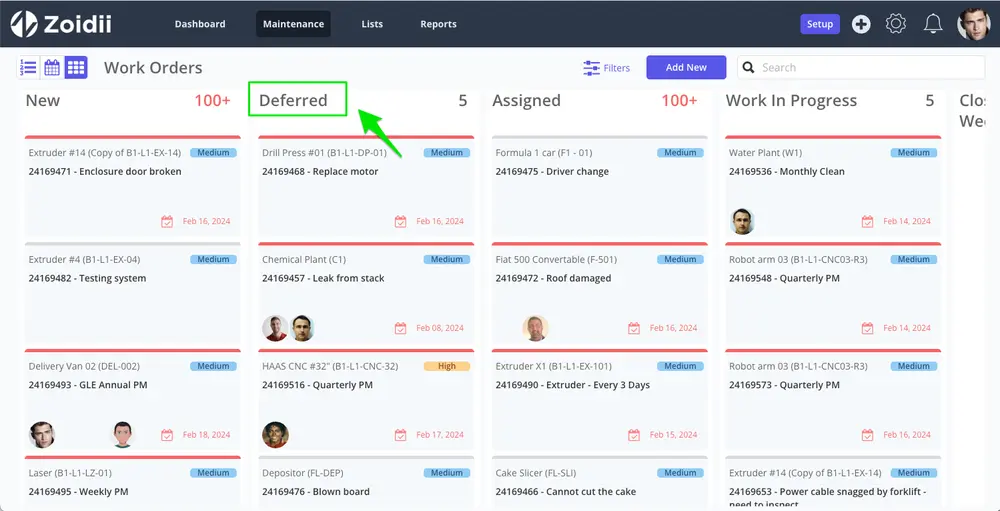
1. Create a Deferred Maintenance Category or Status
- Set Up a Work Order Category: Ensure your CMMS allows for different maintenance statuses. Within your work order tracking system, create a specific category or status for "Deferred Maintenance."
- Tag Work Orders: When maintenance planners delay a maintenance task due to resource constraints (budget, labor, parts), tag the associated work order as deferred. This flags the task for future attention.
2. Prioritize and Categorize Deferred Tasks
- Establish Priority Levels: Assign priority levels to deferred maintenance tasks based on asset criticality and impact on operations. You might classify them as low, medium, or high priority to ensure urgent deferred work gets attention.
- Group by Asset or Equipment Type: Organize deferred tasks by specific equipment or asset type to help track how deferring maintenance impacts the reliability and performance of critical assets.
3. Set Overdue Dates
- Configure the work order Due By Date to specify the latest date technicians should complete the work order. That way, the task is flagged for immediate attention if it goes overdue.
4. Track Maintenance History
- Monitor Deferred Work Over Time: Use the CMMS to generate reports on deferred maintenance tasks. Tracking the duration of deferrals allows you to assess the cumulative impact of delayed maintenance.
- Analyze Equipment Failure History: Correlate deferred maintenance with equipment failure rates to identify which assets are most affected by delays and calculate the long-term cost of deferral.
5. Generate Deferred Maintenance Reports
- Regular Reporting: Set up automated reporting on deferred maintenance tasks. These reports can summarize the number of deferred work orders, the total deferred cost, and the associated risks for management.
- Key Performance Indicators (KPIs): Track KPIs like the total value of deferred maintenance, the number of tasks deferred, and the increase in corrective or emergency maintenance due to deferral.
6. Use CMMS to Manage Resources
- Estimate Future Workload: Track deferred maintenance to predict future labor and material needs. By reviewing deferred tasks, you can estimate the potential backlog and prioritize future scheduling.
- Budgeting for Deferred Work: Use the CMMS to track the cost implications of deferred maintenance. This helps budget planning by highlighting upcoming needs and justifying additional resources to address deferred tasks.
7. Integrate Deferred Maintenance in Decision-Making
- Risk Assessment and Mitigation: Use the data from deferred maintenance tracking to perform risk assessments. When deciding whether to defer a task, leverage the CMMS to weigh the potential cost of failure against the savings from deferral.
- Asset Management Strategies: CMMS data on deferred maintenance can help optimize asset management strategies, focusing on preventive maintenance for high-risk equipment.
8. Optimize Preventive Maintenance (PM) Schedules
- Adjust PM Schedules Based on Deferrals: If deferred maintenance is recurring for specific assets, analyze the preventive maintenance schedules. The CMMS can help determine if schedules need adjustments to reduce the frequency of deferral.
Conclusion
Deferred maintenance may provide short-term cost savings or operational flexibility, but the long-term risks can far outweigh these benefits. Maintenance and facilities managers should be aware of the causes of deferred maintenance and its potential risks, such as increased costs, safety hazards, and reduced equipment lifespan.
Implementing a proactive maintenance strategy, supported by proper planning and resource allocation, is critical to avoiding the pitfalls of deferred maintenance and ensuring organizational assets' ongoing reliability, safety, and efficiency.