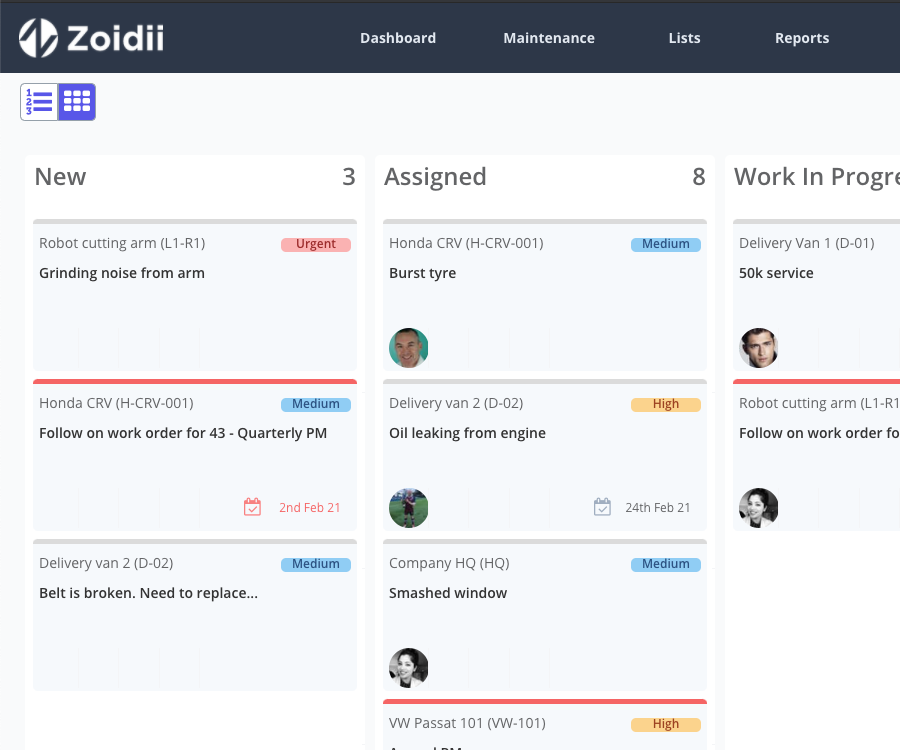

Facilities maintenance teams are under more pressure than ever. Unplanned equipment downtime now costs the average Fortune 500 company $2.8 billion per year — roughly 11% of annual revenue — and the mean time to repair has climbed from 49 minutes to 81 minutes on average, driven by skills gaps and supply chain delays. Meanwhile, the global CMMS market is on pace to hit $1.45 billion in 2026, growing at over 10% annually as more organizations invest in smarter maintenance tools.
One of the most impactful — and surprisingly simple — upgrades a maintenance team can make is combining QR code asset tagging with their CMMS (Computerized Maintenance Management System). A single QR code sticker costing less than $0.10 can save a technician 10 minutes of searching per asset. Across a facility with hundreds of assets, that adds up fast.
Here are five ways QR codes integrated with a CMMS can dramatically improve your facilities maintenance operations in 2026.
Key Takeaways
1. QR codes give technicians instant access to asset data on the job — scanning a code pulls up the full maintenance history, manuals, open work orders, and spare parts inventory without leaving the equipment, cutting wasted search time dramatically.
2. Scan-to-work-request workflows eliminate data entry errors — anyone in your facility can scan an asset's QR code to submit an accurate work request, ensuring the right asset is always logged and work orders reach the maintenance queue in real time.
3. QR codes make preventive maintenance easier to execute and verify — technicians are directed straight to the correct PM checklist upon scanning, and dynamic QR codes create automated scan logs that confirm inspections happened as scheduled.
4. Real-time parts tracking reduces stockouts and improves procurement — scanning parts in and out of inventory through a CMMS keeps stock counts accurate and generates reliable usage data for smarter reordering decisions.
5. Every scan creates a timestamped compliance record automatically — facilities operating under OSHA, FDA, or EPA requirements benefit from a built-in audit trail that documents who did what, on which asset, and when — with no extra paperwork.
1. Instant Asset Information at the Point of Work
One of the biggest time drains in facilities maintenance is identifying the correct asset and then locating its maintenance records. In a large facility, technicians can spend 15–20 minutes just confirming which piece of equipment they're supposed to service — before doing a single minute of actual work.
When every asset is tagged with a QR code linked to your CMMS, that problem disappears. A technician scans the code on an HVAC unit, pump, or generator with their smartphone, and they're immediately presented with:
- Full asset profile and specifications
- Complete maintenance history and past work orders
- Upcoming preventive maintenance (PM) schedules
- Linked manuals, SOPs, and safety procedures (including LOTO)
- Available spare parts and inventory levels
CMMS tip: Look for a CMMS that generates QR codes natively and supports deep-linking directly to asset profiles, open work orders, and PM checklists — not just a generic web URL redirect.
2. Faster, More Accurate Work Order Creation
Creating work orders quickly and accurately is the backbone of effective maintenance management. Traditional approaches — paper forms, phone calls, or navigating desktop software — slow the process down and introduce errors. The wrong asset gets assigned, the wrong location is logged, and your CMMS data gradually degrades.
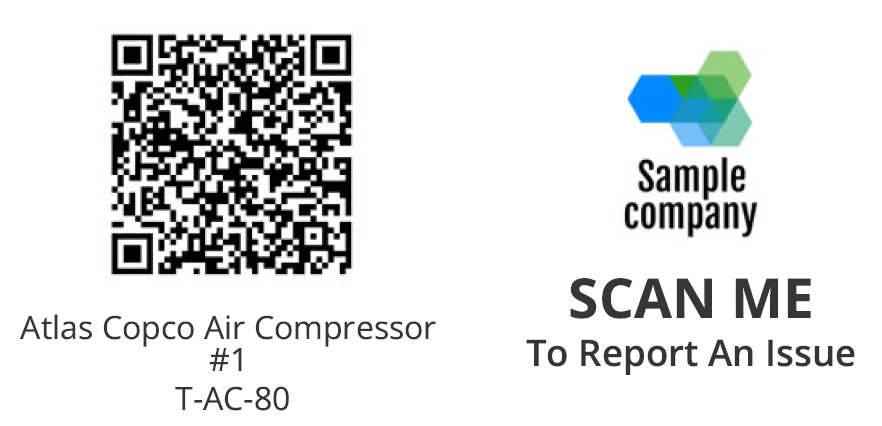
QR codes solve this at the source. When anyone in your facility — not just maintenance staff — scans a QR code on a piece of equipment, your CMMS can pre-populate the correct asset, location, and asset history into a new work request automatically. The person submitting the request answers: "What's wrong?" and optionally attaches a photo.
This frictionless scan-to-work-request workflow offers major advantages:
- Operators on the shop floor can report equipment issues without a CMMS login.
- The correct asset is always assigned — eliminating the "wrong asset" error.
- Work orders reach the maintenance queue in real time.
- Technicians in the field can raise fault tickets, log inspections, and record readings by scanning the asset code directly.
3. Smarter Preventive Maintenance Scheduling and Execution
Preventive maintenance (PM) is widely accepted as the gold standard maintenance strategy — research shows it can reduce maintenance costs by up to 25% and increase uptime by 10–20%. Yet many facilities still struggle to execute PM programs consistently, because accessing the right checklist for the right asset at the right time is harder than it sounds.
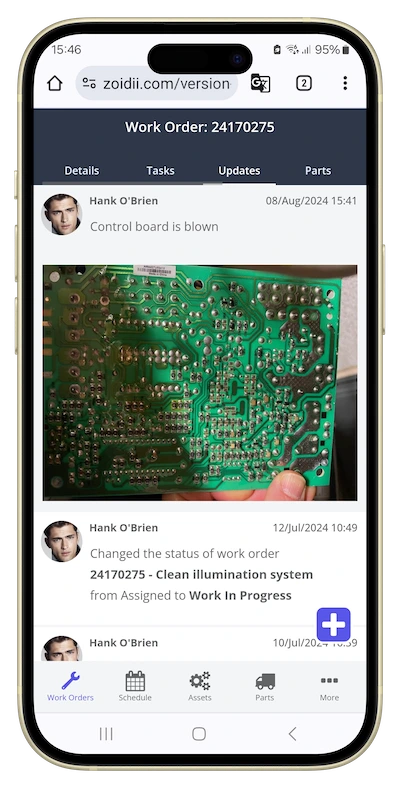
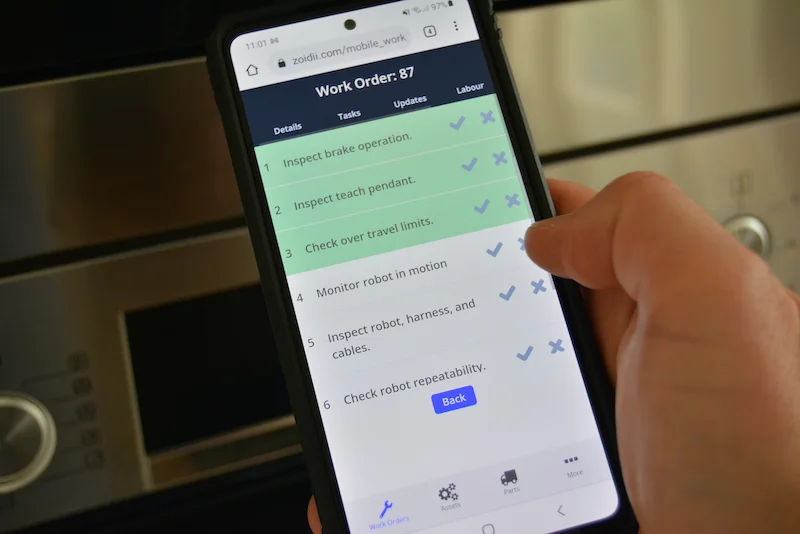
QR codes bridge the gap between the PM schedule in your CMMS and the technician standing in front of the equipment. When a PM task is due, a technician scans the asset's QR code and is immediately directed to the specific PM checklist for that machine. Steps can be completed and logged in real time, directly from a mobile device — no paper forms, no "I'll fill it in later" delays.
Dynamic QR codes take this further. Unlike static codes, dynamic codes can update their destination URL at any time, meaning the same physical sticker on a piece of equipment can always open the most current checklist, procedure, or work order — without reprinting anything. They also record scan analytics like date, device type, and frequency, creating an automated accountability trail that confirms inspections happened as scheduled.
With 55% of maintenance professionals citing automated maintenance workflows as a priority heading into 2026, CMMS-linked QR codes are a practical, low-cost step toward that goal.
4. Real-Time Inventory and Spare Parts Management
Parts availability is one of the most frustrating bottlenecks in facilities maintenance. When a technician needs a spare part to complete a repair, heading to the storeroom, checking stock levels, and updating the inventory count can add significant time to every job. If the CMMS inventory isn't current, teams risk unexpected stockouts — causing expensive delays.
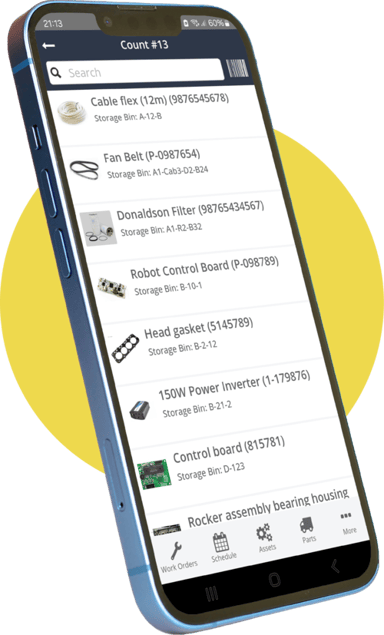
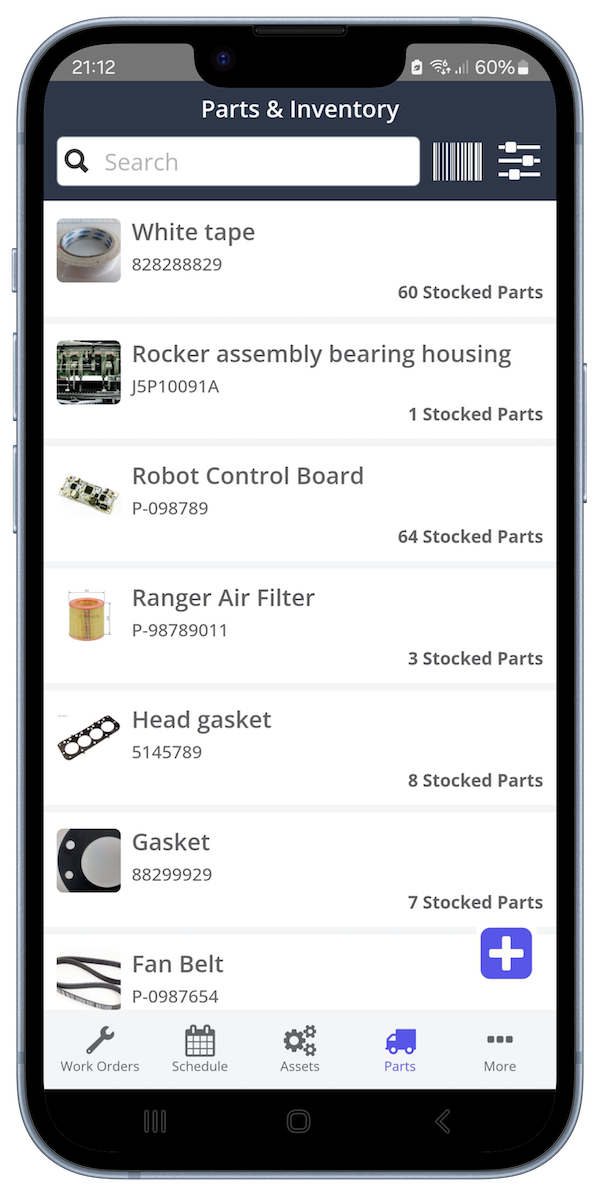
QR codes on parts bins and inventory shelves, integrated with your CMMS, streamline this entire process:
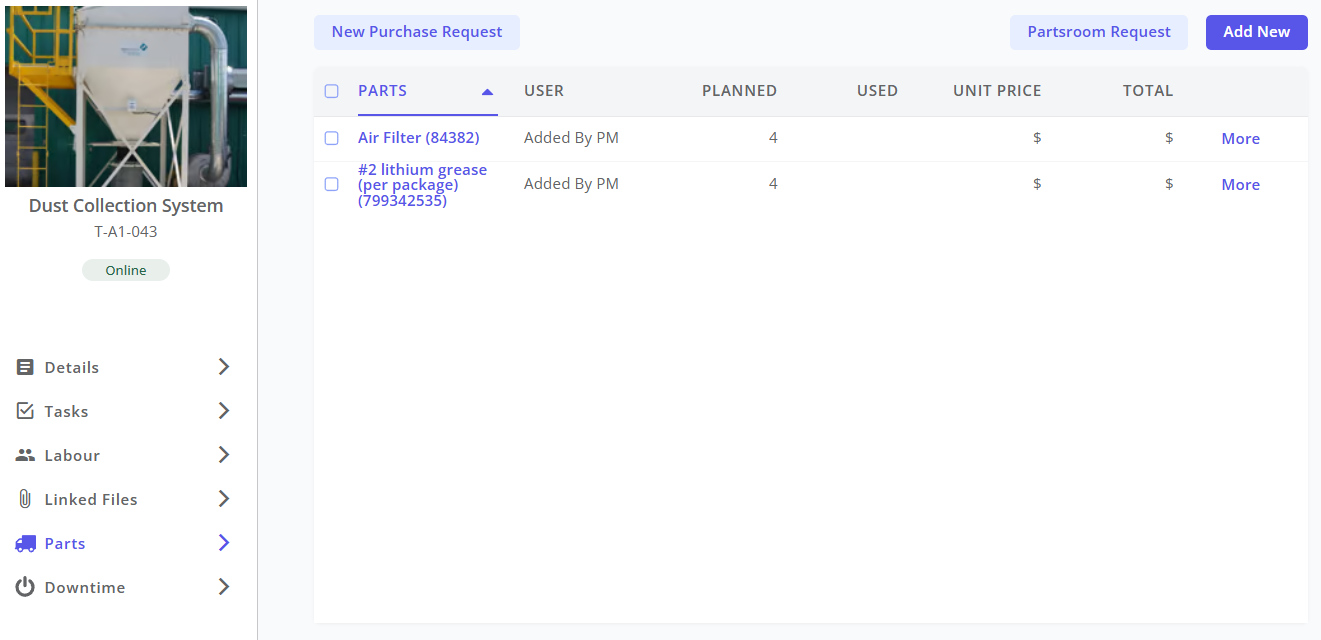
- Technicians scan a part's QR code to add it to a work order, and the CMMS automatically decrements the stock count
- When restocking, warehouse staff scan the part to update quantities and upload purchase receipts in one tap
- Low-stock alerts are triggered automatically based on real usage data rather than periodic manual counts
- Procurement forecasting improves because the CMMS has an accurate, real-time usage history
5. Simplified Compliance, Inspections, and Audit Trails
Regulatory compliance is a significant and growing driver of CMMS adoption. In 2024, approximately 30% of CMMS implementations in the U.S. were directly driven by compliance requirements, from OSHA and FDA in manufacturing and healthcare to EPA standards in energy and utilities. Keeping accurate, timestamped records of every inspection, repair, and PM activity is no longer optional in most regulated industries.
QR codes make compliance documentation seamless by embedding it directly into the daily workflow. When a technician scans an asset's QR code and completes a task in the CMMS, a timestamped, attributed record is created automatically — no separate paperwork required. This produces:
- A complete, auditable maintenance history for every asset
- Proof of inspection completion tied to a specific technician, date, and device
- Easy access to safety procedures and compliance documentation at the point of work
- Maintenance records that satisfy warranty requirements and support insurance claims
Getting Started: QR Codes + CMMS in Facilities Maintenance
Implementing QR code asset tagging with your CMMS doesn't require a large upfront investment. Modern cloud-based CMMS platforms like Zoidii generate QR codes natively for each asset and support scanning directly from a mobile app. The basic workflow is:
- Create assets in your CMMS and generate a unique QR code for each.
- Print and attach durable QR code labels to equipment (for industrial environments, use metal or polyester labels rather than paper).
- Train your team — scanning a code and submitting a work request takes under two minutes to learn.
- Enable mobile workflows so technicians can view asset data, complete PMs, and log work from their smartphones.
- Monitor scan analytics over time to verify inspection compliance and identify undertrained staff.
Why QR Codes + CMMS Is a Must-Have for Facilities Teams in 2026
The pressure on facilities maintenance teams is only increasing. Aging infrastructure, a shortage of skilled technicians, rising parts costs, and tightening compliance requirements all demand smarter tools. QR code asset tagging, fully integrated with a CMMS, is one of the highest-leverage improvements available — combining near-zero hardware cost with immediate, measurable impact on technician productivity, asset uptime, and maintenance data quality.
With the CMMS software market growing at over 10% annually and nearly 58% of organizations shifting toward automated maintenance workflows, teams that haven't yet linked their assets to their CMMS with QR codes are falling behind. Ready to see how Zoidii CMMS makes QR code asset management simple? Book a free demo and discover how facilities teams like yours are eliminating downtime and doing more with less.
Frequently Asked Questions
Q: Do I need special hardware to scan QR codes with a CMMS? No. Most modern CMMS platforms support QR code scanning through the standard camera on any smartphone or tablet. Some teams use rugged tablets or dedicated barcode scanners in harsh environments, but there's no specialized hardware required to get started. If your CMMS has a mobile app, your team is likely ready to scan today.
Q: How durable are QR code labels in an industrial or facilities environment? Standard paper labels won't last long in high-heat, high-moisture, or high-traffic environments. For facilities and industrial settings, it's best to use polyester or metal-backed QR code labels, which are resistant to grease, water, UV exposure, and abrasion. These industrial-grade tags can last for years on equipment without needing to be replaced.
Q: Can QR codes help with regulatory compliance and maintenance audits? Yes — this is one of the strongest use cases. Every time a technician scans an asset's QR code and completes a task in the CMMS, a timestamped, attributed record is created automatically. This produces a verifiable audit trail for every inspection, repair, and PM activity across your facility. For industries subject to OSHA, FDA, EPA, or other regulatory frameworks, this automated documentation removes the risk of missing or incomplete records during audits. Q: How quickly can a facilities team get started with QR code asset tagging? Implementation is faster than most teams expect. A basic rollout — creating assets in the CMMS, generating and printing QR codes, and attaching labels — can be completed for a typical facility in days rather than weeks. Most technicians can learn to scan a code and submit a work request in under two minutes. Cloud-based CMMS platforms like Zoidii make this even faster with native QR code generation and mobile-ready workflows built in from day one.