
A CMMS turns hotel maintenance from a reactive scramble into a structured, data-driven operation. Properties using one in 2026 report 20-30% fewer guest complaints tied to maintenance issues, a 25% reduction in emergency repair costs, and measurable improvements in online review scores. If your hotel still runs on radio calls, sticky notes, and spreadsheets, you're leaving money and guest loyalty on the table. Have you ever stayed at a "nice" hotel only to encounter maintenance issues: a malfunctioning air conditioner, a leaky sink, or an elevator stuck on the third floor? One broken thing can turn a $350-a-night stay into a one-star review.
Why Guest Satisfaction Relies on Hotel Maintenance
What could be an otherwise five-star experience gets blemished fast if maintenance problems aren't handled correctly. Guest experience is the lifeblood of hospitality, and in 2026, travelers share their frustrations instantly across Google Reviews, TripAdvisor, and social media. A Cornell Hospitality Research study found that a one-star increase in online ratings can translate to a 9-11% bump in revenue per available room. That math works in reverse, too.
Keeping up with maintenance tasks is essential for properties that want to protect their reputation and their bottom line. But maintenance management is genuinely difficult when you're dealing with large properties that include pools, restaurants, fitness centers, and spas, sometimes across multiple buildings.
This is where a Computerized Maintenance Management System (CMMS) proves invaluable. It automates hotel maintenance tasks, increases efficiency, and provides the data you need for smarter scheduling and resource allocation.
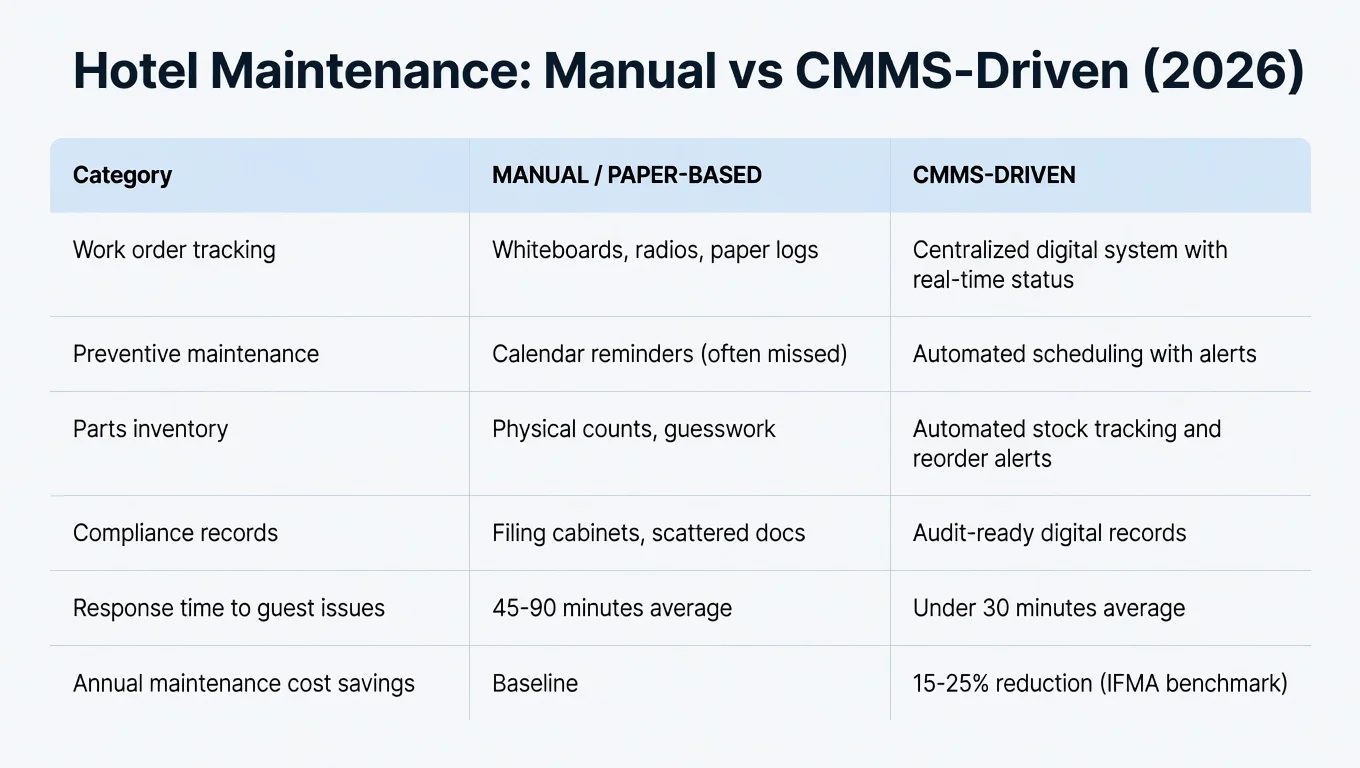
How a CMMS Streamlines Hotel Asset Management
A CMMS can transform how hotel maintenance actually operates day to day. Streamlining tasks, improving asset management, and getting more out of your maintenance crew are just the starting points.
Reducing Equipment Downtime with Proactive Maintenance
With the right system, hotels can efficiently manage maintenance, reduce equipment downtime, and ensure long-term property sustainability. Consider a 400-room resort where the commercial laundry system goes down unexpectedly. That single failure can cascade into delayed room turnovers, guest complaints, and overtime labor costs that easily hit $5,000-$8,000 per incident.
A CMMS enables hotels to shift from reactive firefighting to proactive upkeep through automation and data. According to the U.S. Department of Energy, preventive maintenance programs can reduce equipment failures by up to 45% and cut maintenance costs by 12-18% compared to run-to-failure approaches. Those numbers move the needle for any property.
Boosting Workforce Productivity with Mobile CMMS
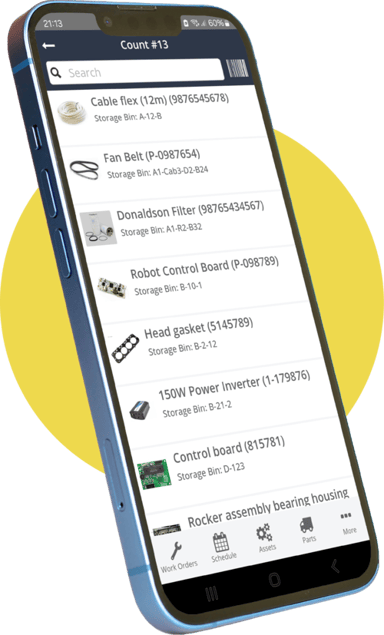
Using CMMS software in hotel maintenance helps you get more from your existing team without burning them out. Maintenance staff can track their work hours, see assigned tasks on their phones, and identify bottlenecks in real time, all without walking back to an office to check a clipboard.
Real-Time Updates and Technician Performance Tracking
Productivity tracking, including monitoring how long each technician spends on specific task types, helps hotels reduce costs by ensuring maintenance teams work efficiently. A mid-size hotel in Austin reported that after implementing a mobile CMMS in early 2025, their average work order completion time dropped from 3.2 hours to 1.8 hours. That's not a small improvement; that's nearly doubling throughput with the same headcount.
Ensuring Safety Compliance and Regulatory Standards
A CMMS helps hotel managers stay on top of safety compliance and regulatory requirements, which have only gotten stricter. Fire suppression inspections, elevator certifications, pool chemical logs, ADA compliance checks: all of these need documented proof.
You can easily demonstrate to inspectors that you maintain a comprehensive maintenance program by tracking inspections and work orders digitally. This helps hotels avoid fines (which can run $1,000-$10,000 per violation in many jurisdictions) and ensures a safe environment for guests and staff alike.
Automating Hotel Maintenance Processes for Better Results
Hotel maintenance is a critical piece of the hospitality puzzle. It directly affects guest satisfaction while protecting the property's long-term value. Managing it well across a large hotel is complex, but a CMMS makes it manageable.
Maintenance Issue Tracking and SOP Adherence
Managing maintenance tasks in large hotels gets complicated quickly, but a CMMS simplifies it by centralizing all requests and tasks in one system. Standard operating procedures can be automatically added to work orders, so a new technician fixing a guest room HVAC unit follows the same checklist as a 10-year veteran.
Work Order Automation for Public Area Upkeep
With a CMMS, your team can manage work orders with just a few clicks. Automation takes care of:
- Creating new work orders from guest requests, sensor alerts, or scheduled triggers
- Assigning tasks to the right technician based on skill set and availability
- Tracking progress in real time with status updates visible to managers
Optimizing HVAC and Guest Room Maintenance
A CMMS helps prioritize maintenance tasks based on urgency and importance. Critical issues like power outages, water leaks, or HVAC failures can be flagged and addressed immediately. In 2026, many properties are integrating IoT sensor data directly into their CMMS, so the system knows a chiller is struggling before a guest ever feels warm air.
High-priority tasks get the attention they need before they become guest complaints. A single HVAC failure in an occupied room during July can generate a refund request, a negative review, and a lost repeat customer: easily $1,500 or more in total cost.
Inventory Management and Asset Lifespan Extension
A CMMS helps you stay on top of inventory by tracking asset performance and maintenance history. Automated alerts for low stock enable you to reorder parts before they run out, so your team isn't scrambling to find a replacement pump seal at 11 PM on a Saturday.
These features save real money by reducing downtime and minimizing emergency repair markups, which typically run 2-3x the cost of planned repairs. Over the life of a major asset like a commercial boiler (replacement cost: $30,000-$75,000 in 2026), proper maintenance tracking can extend useful life by 5-8 years.
Preventive Maintenance to Minimize Equipment Downtime
Preventive maintenance schedules reduce the risk of unexpected failures. The return on investment here is well-documented: IFMA data shows that every $1 spent on preventive maintenance saves roughly $4-$5 in reactive repair costs. Preventive measures extend asset lifespan, lower ongoing maintenance costs, and minimize those budget-busting emergency expenses that keep CFOs up at night.
Facilitating Communication with Mobile CMMS
Using a CMMS with mobile capabilities enhances communication among maintenance team members and facilitates better task collaboration across shifts.
Real-Time Updates for Maintenance Teams
The system provides real-time updates on project status, ensuring everyone stays informed regardless of shift. This increases accountability and drives timely task completion. Post-maintenance checks, built into the workflow, also prevent small issues from snowballing into problems that disrupt a guest's stay.
Maximizing Data Analytics
As data accumulates in the CMMS, maintenance teams can use it for analytics that genuinely improve their operations. Reports and dashboards give managers a real-time view of maintenance activities and equipment performance across the entire property. This enables more accurate forecasting and smarter scheduling. Maintaining detailed maintenance history records with specific details like cost, duration, and failure codes allows hotels to make informed capital expenditure decisions. Should you repair that 12-year-old chiller again, or is it time to replace it? The data tells you.
Frequently Asked Questions
How long does CMMS implementation typically take for a hotel? Most mid-size hotels (150-400 rooms) can be fully operational within 4-8 weeks, including staff training. Larger resorts with complex facilities may need 10-12 weeks.
What's the typical ROI timeline? Most properties see measurable returns within 3-6 months, primarily through reduced emergency repairs and improved labor efficiency. Full ROI, including extended asset life, typically materializes within 12-18 months.
Does a CMMS work for smaller boutique hotels? Absolutely. Cloud-based CMMS platforms in 2026 start at $50-$150/month for smaller properties, making them accessible even for 30-50 room boutique hotels where one maintenance person handles everything. Will my maintenance staff actually use it? This is the most common concern, and it's valid. The key is choosing a system with a genuinely simple mobile interface. If it's harder than sending a text message, adoption will struggle. Most modern platforms are designed for technicians who aren't particularly tech-savvy.