
What is a standard operating procedure for maintenance (SOP)
Standard operating procedures (SOPs) are a set of step-by-step instructions used to complete a process. Build the SOP once and use it many times.
Documenting what you do through standard operating procedures helps institutionalize and systemize your maintenance processes within your organization.
Without guidelines, different people will perform the same tasks differently.
Creating and implementing SOPs for maintenance operations
In maintenance, standard operating procedures are typically supplied by vendors or created in-house based on industry norms.In addition, SOPs may be designed in accordance with industry, safety, or regulatory compliance standards.
For example, standard operating procedures for maintenance of equipment typically detail the steps to complete repetitive preventive maintenance tasks or standard repairs on equipment.
12 reasons standard operating procedures are essential in maintenance
Utilizing maintenance SOPs helps your maintenance organization run like a finely tuned machine. They help ensure the business is repeatable, predictable, and consistent, which is easier to manage than pure chaos. The following are 12 reasons why you should be using standard operating procedures in your maintenance organization:
- Ensures consistency, completeness, and quality output when carrying out a task, which leads to familiarity, efficiency, and reliability of processes.
- Demonstrates the most efficient way to complete the process, minimizing costs.
- Employees are more engaged when they know what to do. Standard operating procedures clarify how to do the job, leading to higher employee engagement.
- Planned downtime and the employee's schedule become more predictable as the expected time to complete the standard operating procedure is known.
- Standard operating procedures document the most efficient route to get the job done, eliminating unnecessary steps and waste.
- Including safety cautions, the PPE required to complete the activity, and highlighting hazards within the standard operating procedure will reduce the chances of safety incidents, improving your overall safety metrics.
- SOPs help shorten new employee onboarding time.
- Documenting your procedures captures the tribal knowledge within the organization.
- Clearly outlining the safest way to do the job will reduce safety issues.
- Offer some protection and credibility against personal liability or negligence.
- Reduces unplanned downtime by ensuring a preventive maintenance SOP is performed on systems every time according to recommendations.
- Help identify hazards that may not be obvious.
Examples of SOPs in Maintenance
Standard operating procedures are used in different ways within the maintenance world, including:
- Preventive maintenance checklists
- System install procedures
- System deinstall procedures
- Operator checks / Operator TPM
- Common repairs/replacements, such as swapping out a blade
- Safety checks such as Lockout/Tagout
- Machine power-up or back-to-production procedures
- Process changeovers such as changing a mold
7 steps to writing effective maintenance standard operating procedures
To ensure your maintenance organization reaps the benefits outlined above, follow these seven steps to create effective standard operating procedures
1. Identify the activity to be completed
Identify the activity to be completed, such as a PM on a machine press.2. Define the maintenance procedure scope
Next, determine the scope of the task, job, PM, process, or activity to be completed. The scope details the extent of the work needed to finish the activity. It could include time, tasks, parts, tools, and resources.3. Understand the end-user requirements
Identify and understand the end user. Understanding the end user will help you tailor the standard operating procedure for their use case, ensuring the target end users understand and execute the SOP.4. Document the standard maintenance procedure
Create a written document. The document should contain a list of steps to complete the activity, including safety cautions, parts replacements, PPE or tools required etc. Be as detailed as possible to minimize ambiguity.5. Test and validate the SOP for maintenance
Before rolling out the standard operating procedure, test your standard operating procedure and tweak it as needed. Ask some end-users and subject matter experts to execute the activity using the standard operating procedure and ensure it achieves the desired result.6. Implement the SOP in your maintenance management system
Once the standard operating procedure has been signed off by all stakeholders as done, implement the standard operating procedure in your CMMS software. That way, the activity is digitally captured when done.7. Regularly review and update SOPs for maintenance
Business changes all the time. Regularly review and refine the standard operating procedure to ensure it is still effective.Tips to Maintain Great Standard Operating Procedures for Maintenance
To keep your maintenance SOPs effective, focus on consistency, end-user involvement, and continuous improvement.
Implementing these best practices for maintenance ensures your maintenance SOPs remain practical, up-to-date, and accessible across your organization.
1. Use a maintenance SOP template for consistency
Use a template - if different people write the procedures, having a template will help ensure consistency in language, format, and style.2. Engage end-users in SOP development
Engage the end-users in the process. When they are involved in developing the standard operating procedures, they are more likely to buy in and use them.3. Balance detail and practicality in maintenance SOPs
Find a balance between too vague and too detailed. The standard operating procedures need to be concise but not overly complicated that they become impractical.4. Include operator maintenance SOPs
Create standardized operating procedures for operator maintenance or operator checks too.5. Test and validate maintenance SOPs before rollout
Thoroughly and tweak it as needed. Validation should come from end-user and subject matter expert testing. Track task completion and make adjustments based on real-world feedback.6. Gather feedback to refine SOPs for maintenance
Poll the end-users to see if the standard operating procedures contain all the information they need to complete the job7. Digitize SOPs using CMMS software
The easiest way to ensure everyone has the latest version is to load your standard operating procedures into your CMMS software. Digitizing your standard operating procedures ensures everyone has access to the latest version of the CMMS mobile app as they complete the work.8. Regularly review and update SOPs for maintenance
Businesses evolve and change, so regularly review your standard operating procedures for maintenance to ensure they remain valid.9. Use checklists to improve SOP compliance
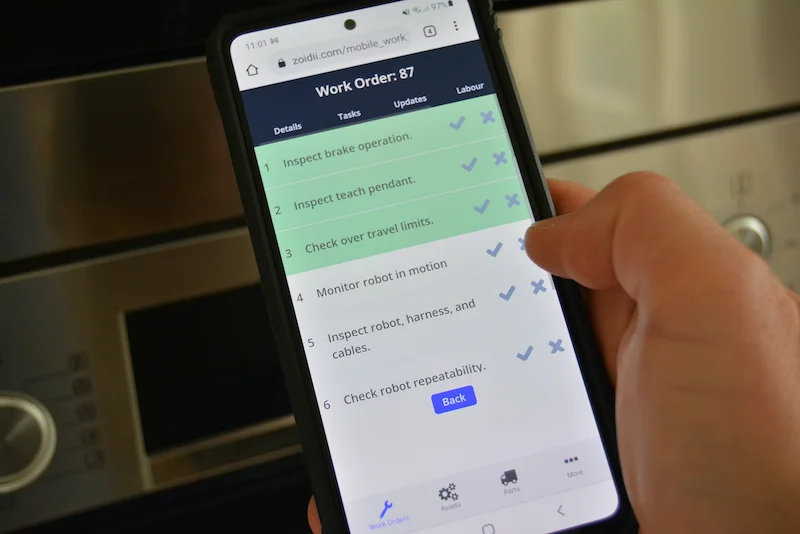
See how to employ standard operating procedures through checklists with tasks and subtasks in Zoidii. End-users can digitally sign off tasks in the checklist as they complete them, ensuring they don't miss any steps. 10. Communicate SOP updates during morning huddles
Lastly, the morning huddle offers a great forum to communicate changes to key SOPsThe value of consistent SOPs in maintenance
Utilizing standard operating procedures helps your maintenance organization become more repeatable, predictable, and consistent.
In effect, you are introducing documented processes that remove some of the unknown. When things are more consistent, fewer mistakes happen.
For tailored maintenance solutions that streamline operations and improve consistency, Zoidii offers tools and expertise to help you implement effective SOPs. If you need expert guidance, get in touch with us today.