
In 2026, data center operators are managing a tougher mix of demands: denser AI workloads, rising power consumption, stricter uptime expectations, and near-zero room for operational error. The U.S. Energy Information Administration says U.S. electricity demand is on pace for its strongest four-year growth period since 2000, driven largely by large computing facilities, including data centers. At the same time, North American vacancy remains extremely tight, with JLL reporting a record-low 1% vacancy rate for the second consecutive year and more than 35 GW of capacity under construction.
That operating environment makes maintenance more strategic than ever. When a critical asset fails in a data center, the consequences can be immediate and expensive. Uptime Institute’s 2025 analysis found that 54% of respondents said their most recent significant, serious, or severe outage cost more than $100,000, and one in five said it cost more than $1 million. Power issues also remain the most common cause of serious and severe outages.
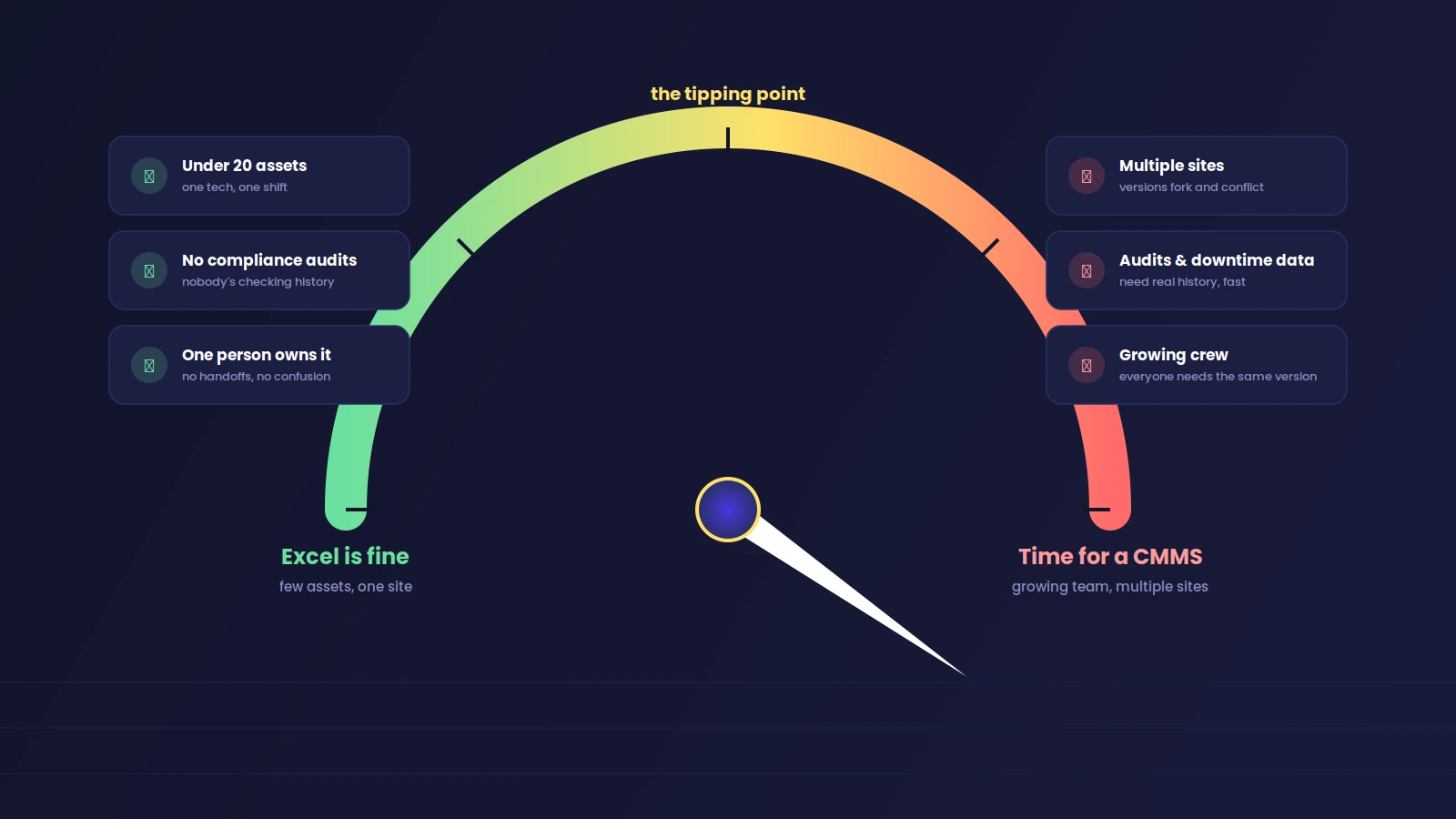
This is why more operators are taking a closer look at CMMS software for data centers. A modern CMMS helps data center teams plan preventive maintenance, manage work orders, track critical assets, document inspections, and maintain a complete service history for the infrastructure that supports uptime.
1. A CMMS helps reduce downtime through preventive maintenance
In a data center, preventive maintenance is not just a best practice. It is one of the clearest ways to reduce the risk of service interruption. UPS systems, backup generators, switchgear, batteries, cooling equipment, and power distribution assets all require scheduled inspections, testing, and service. A CMMS makes that work easier to standardize by assigning recurring tasks, tracking completion, storing procedures, and alerting teams when maintenance is overdue.
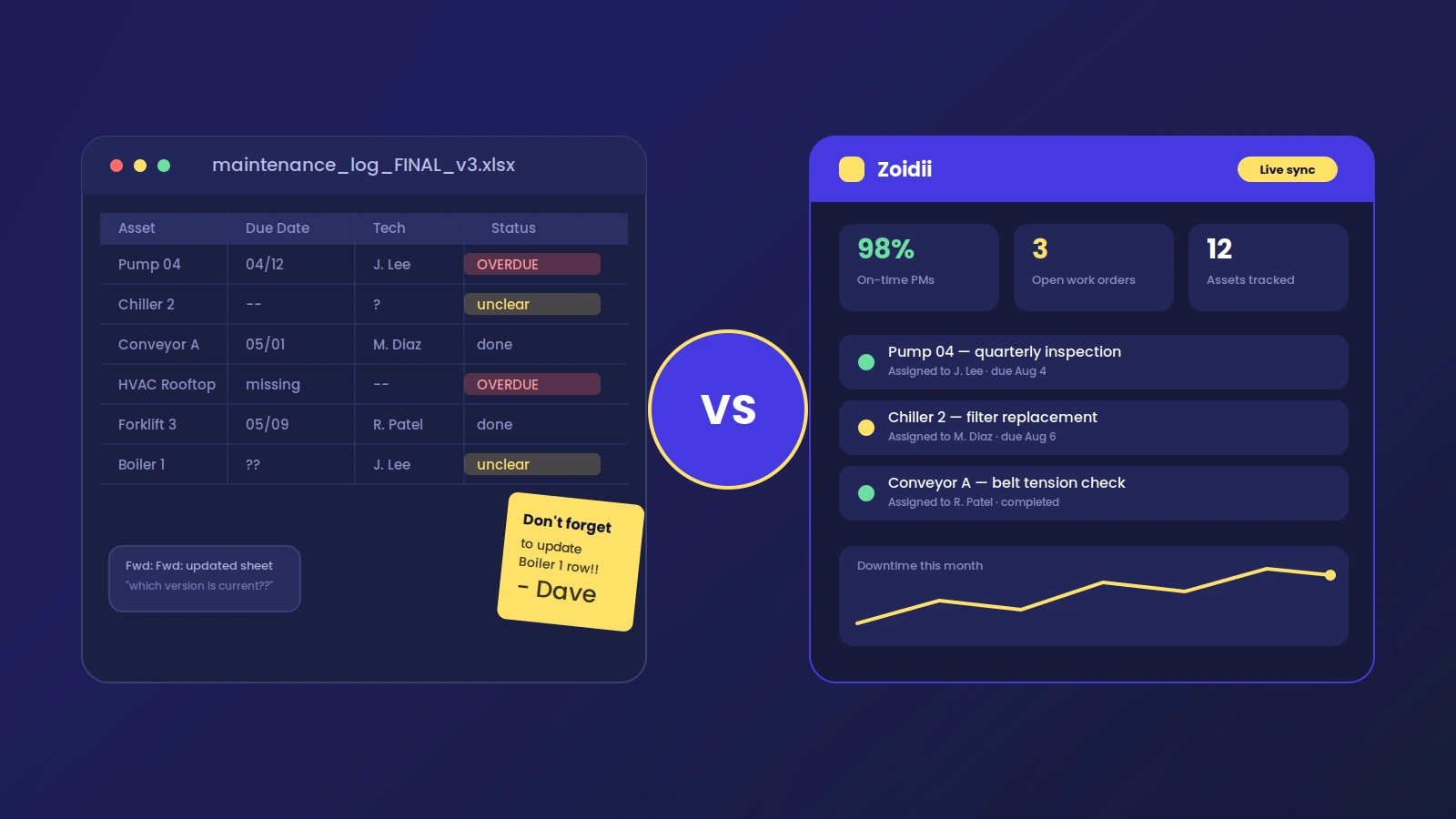
That matters because outage risk is still real, even as overall outage frequency has improved. Uptime Institute says outage frequency has declined for the fourth consecutive year, but a higher proportion of publicly reported outages in 2024 had severe impacts. In other words, outages may be less common, but when they happen, they can still be highly disruptive and costly. For data center operators, a CMMS supports a more proactive maintenance program by helping teams catch issues before they become incidents. Instead of relying on spreadsheets, emails, or tribal knowledge, teams can see what was done, what is due next, and where maintenance risk is building across the facility.
2. A CMMS improves asset management for critical infrastructure
One of the biggest benefits of a data center CMMS is asset visibility. Every critical asset should have a clear record of inspections, repairs, warranty details, failure history, parts used, and maintenance intervals. Without that visibility, it becomes much harder to spot recurring issues, justify replacements, or understand which assets are becoming reliability risks.
That need is growing as data centers become more power-intensive. Berkeley Lab’s 2024 U.S. Data Center Energy Use report, released by DOE, found that data centers used about 4.4% of total U.S. electricity in 2023 and are expected to consume roughly 6.7% to 12% by 2028. The same report says U.S. data center electricity use rose from 58 TWh in 2014 to 176 TWh in 2023. As facilities become denser and more complex, asset-level maintenance data becomes more valuable. A CMMS gives operators a single source of truth for the equipment that keeps white space, mechanical systems, and electrical systems running reliably.
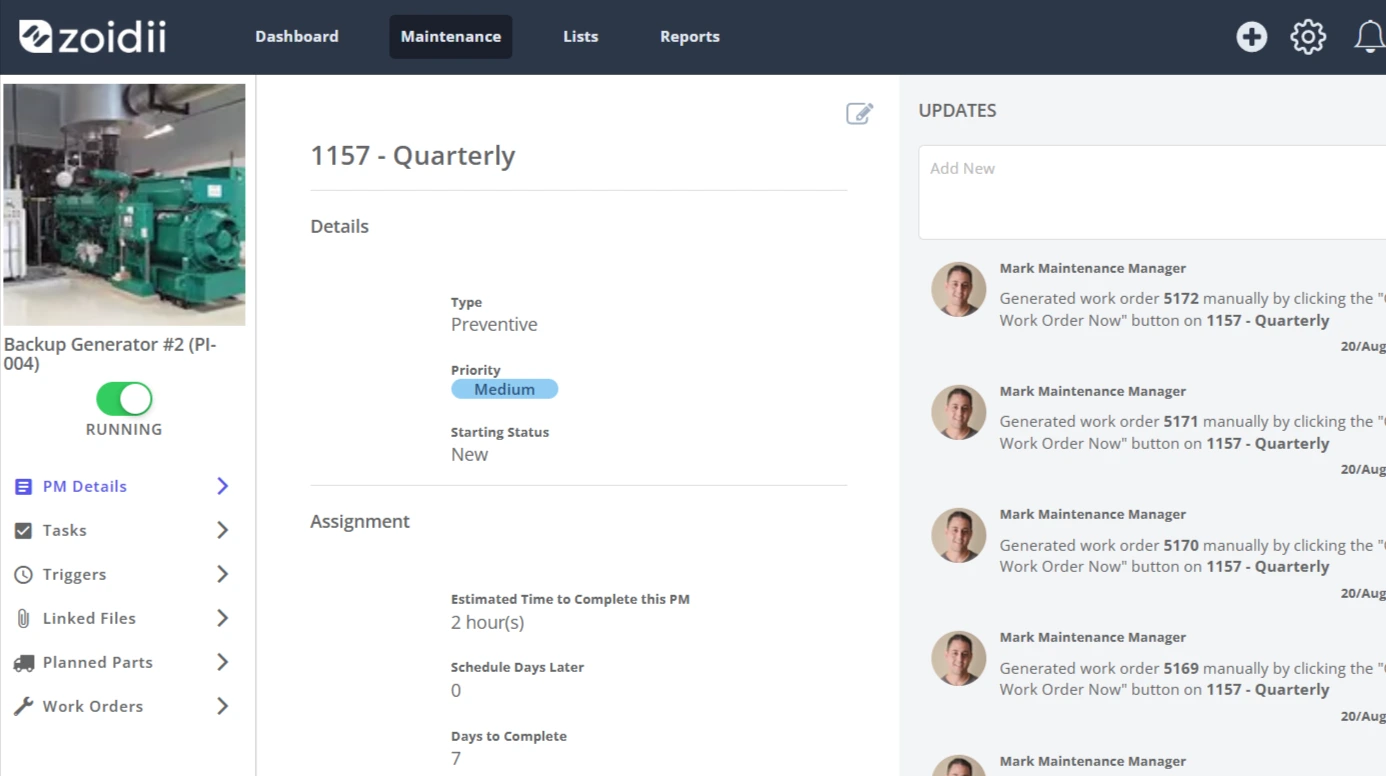
3. A CMMS makes work order management faster and more consistent
Data center maintenance depends on speed, consistency, and documentation. Work orders need to move quickly, but they also need to be complete. A CMMS helps by centralizing requests, assigning priorities, attaching SOPs and checklists, and keeping a timestamped record of every action.
That is especially helpful in facilities where multiple teams or contractors touch the same systems. With a CMMS, technicians can review prior repairs before starting work, supervisors can see open tasks in real time, and managers can verify that critical maintenance was completed properly. For operators trying to improve uptime discipline, this kind of standardization matters. Uptime Institute notes that modern data center architectures are becoming more complex and that external risks such as grid constraints, network provider failures, third-party software issues, and cyber incidents are adding pressure to operations teams.
4. Regulatory Compliance and Audit Readiness
Data centers are subject to stringent regulatory requirements and industry standards, including ISO 27001, Uptime Institute's Tier Standards, and various governmental guidelines on cybersecurity and environmental impact. Failure to comply with these standards can result in legal penalties, reputational damage, and operational disruptions.
A CMMS assists in maintaining compliance by documenting all maintenance activities, inspections, and safety protocols. It provides automated alerts for upcoming inspections, ensures that standard operating procedures are followed, and generates detailed reports for audit purposes, giving you peace of mind and reassurance in your compliance efforts. This article outlines 6 ways CMMS software can help organizations with audits.
5. A CMMS supports energy efficiency and cooling performance
Energy is now central to the data center conversation in 2026. The International Energy Agency estimates that data centers consumed around 415 TWh globally in 2024 and projects that figure to rise to about 945 TWh by 2030 in its base case. In an earlier IEA electricity outlook, global data center electricity consumption was projected to exceed 1,000 TWh in 2026. The IEA also notes that cooling and other infrastructure account for around 20% of the net increase in data center electricity consumption through 2030. That makes maintenance execution a performance issue, not just a facilities issue. A CMMS helps teams stay on top of inspections, filter changes, cooling equipment service, battery testing, and power train maintenance that can affect both uptime and efficiency. When operators can track recurring faults, missed PMs, and asset-level performance in one system, it becomes easier to control maintenance drift before it affects energy use or resiliency.
6. A CMMS improves spare parts and inventory control
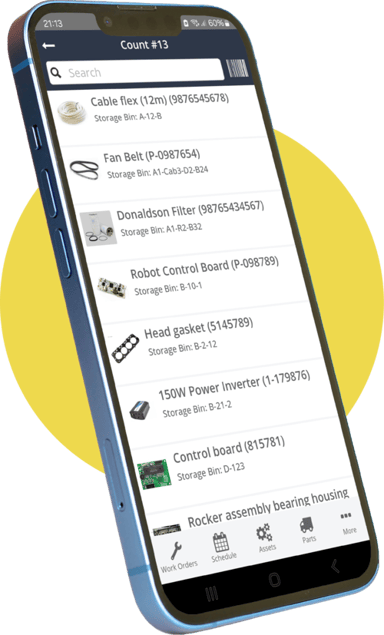
Critical maintenance depends on having the right parts available at the right time. A CMMS helps data centers track spare parts usage, minimum and maximum stock levels, reorder points, and parts linked to specific assets. That reduces the risk of delays during urgent repairs and helps prevent over-ordering slow-moving inventory. Tracking spare parts becomes more important as demand for data center capacity stays elevated. JLL says 92% of capacity under construction is already precommitted, which reflects how little slack exists in the market. In that environment, operators have even less tolerance for avoidable maintenance delays.

7. A CMMS turns maintenance data into better reliability decisions
The best CMMS software for data centers does more than store records. It helps operators understand performance trends. Teams can use CMMS reporting to monitor preventive maintenance completion rates, repeat failures, downtime by asset, labor hours, vendor performance, and maintenance cost by system or site.
That matters because the operating stakes are increasing. The IEA says U.S. data centers consumed around 180 TWh of electricity in 2024, and projects U.S. data center electricity demand to rise by about 240 TWh above 2024 levels by 2030. When infrastructure loads are rising that quickly, maintenance decisions need to be backed by data, not guesswork.
Why CMMS matters for data centers in 2026
In 2026, data centers are growing more power-dense, more operationally complex, and more expensive to interrupt. Electricity demand is climbing, available capacity is tight, and even a single serious outage can be costly.
A CMMS for data centers helps operators respond to that reality with stronger preventive maintenance, better asset visibility, faster work order execution, cleaner compliance records, and more informed reliability planning. For teams focused on uptime, efficiency, and resilience, a CMMS is no longer just maintenance software. It is part of the operating foundation of a modern data center.