
Operating in the oilfield services sector has never been more demanding. Pressure to contain costs, maintain aging equipment, meet tightening environmental regulations, and retain skilled technicians creates a perfect storm of operational complexity. Against that backdrop, a Computerized Maintenance Management System (CMMS) has moved from a nice-to-have tool to a mission-critical platform for companies that want to compete and grow.
This article breaks down exactly how a CMMS can help oilfield services companies reduce downtime, control maintenance spending, and build the operational foundation needed to thrive — backed by the most current industry data available for 2026.
What Is a CMMS — and Why Does It Matter for Oilfield Services?
A CMMS (Computerized Maintenance Management System) is software that centralizes an organization's maintenance information into a single database. It manages the full work order lifecycle — from initial request and technician assignment through to completion and documentation — while also automating preventive maintenance schedules, tracking spare-parts inventory, and generating compliance reports.
For oilfield services companies, the stakes are especially high. Equipment failures on a drilling rig, pump jack, or compressor station don't just create inconvenience — they can trigger missed production targets, supply chain penalties, safety investigations, and revenue losses that run into the hundreds of thousands of dollars per hour of unplanned downtime. The global CMMS software market reflects the urgency: it was valued at USD 1.04 trillion in 2024 and is projected to reach USD 2.25 trillion by 2033, growing at a 9% compound annual growth rate (CAGR). Organizations across asset-intensive industries are investing heavily in proactive, technology-enabled maintenance — and the oil and gas sector is no exception.
The Real Cost of Unplanned Downtime in 2025–2026
Before diving into solutions, it's worth understanding the scale of the problem. Recent industry research paints a clear picture of where maintenance budgets are being drained:
📊 31% of maintenance and operations managers reported that downtime costs increased in 2025, while only 20% saw a decrease. (2025 State of Industrial Maintenance)
📊 Mean time to repair (MTTR) has climbed from 49 minutes to 81 minutes on average — driven by skills gaps and supply chain delays. (True Cost of Downtime 2024)
📊 The average age of industrial fixed assets is now 24 years — the oldest average in nearly 70 years — driving higher failure rates. (2025 State of Industrial Maintenance) 📊 Aging equipment accounts for approximately 44% of all unplanned downtime incidents across industrial operations. For oilfield services companies operating aging fleets of drilling equipment, wireline trucks, pumping units, and compressors, these trends are not abstract statistics — they show up directly on the P&L. A modern CMMS directly attacks each of these cost drivers.
6 Ways a CMMS Helps Oilfield Services Companies Thrive
1. Preventive Maintenance That Actually Gets Done
In theory, preventive maintenance (PM) is the foundation of any solid maintenance strategy. In practice, it often falls through the cracks. Industry data from 2025 shows that 58% of facilities spend less than half their time on scheduled maintenance, and fewer than 35% dedicate a majority of their effort to preventive tasks.
A CMMS solves this by automating PM scheduling based on time intervals, meter readings, or equipment-use triggers. For oilfield equipment — whether that's a mud pump logging hours, a BOP stack due for a pressure test, or a cementing unit's engine nearing its oil change interval — the CMMS generates work orders automatically and assigns them to the right technician. Nothing falls through the cracks.
Research consistently shows that a shift from reactive to preventive maintenance can save companies between 12% and 18% on maintenance costs, with each dollar invested in prevention saving an average of $5 down the line.
2. Reduced Unplanned Downtime Across Your Fleet
Unplanned equipment failures are the enemy of profitability in oilfield services. A stuck pump at a critical well site, or a hydraulic fracturing unit that goes down mid-job, doesn't just cost the repair bill — it costs the entire day's revenue, potential contract penalties, and damage to client relationships.
CMMS software addresses this by creating a centralized asset register with complete service history. Maintenance teams can spot patterns — a compressor that keeps failing every 1,800 hours, a specific valve type prone to seal failure in certain well environments — and adjust PM schedules proactively. CMMS platforms that integrate with IoT sensors and SCADA systems take this a step further, using real-time data on vibration, temperature, and pressure to trigger condition-based maintenance before a failure occurs.
📊 74% of maintenance leads reported the same or less unplanned downtime in 2025 compared to the prior year — consistent with the shift toward proactive maintenance strategies enabled by CMMS tools.
📊 Predictive maintenance enabled by CMMS can reduce maintenance costs by up to 25% and increase equipment uptime by 10–20%.
3. Work Order Management for Distributed Field Teams
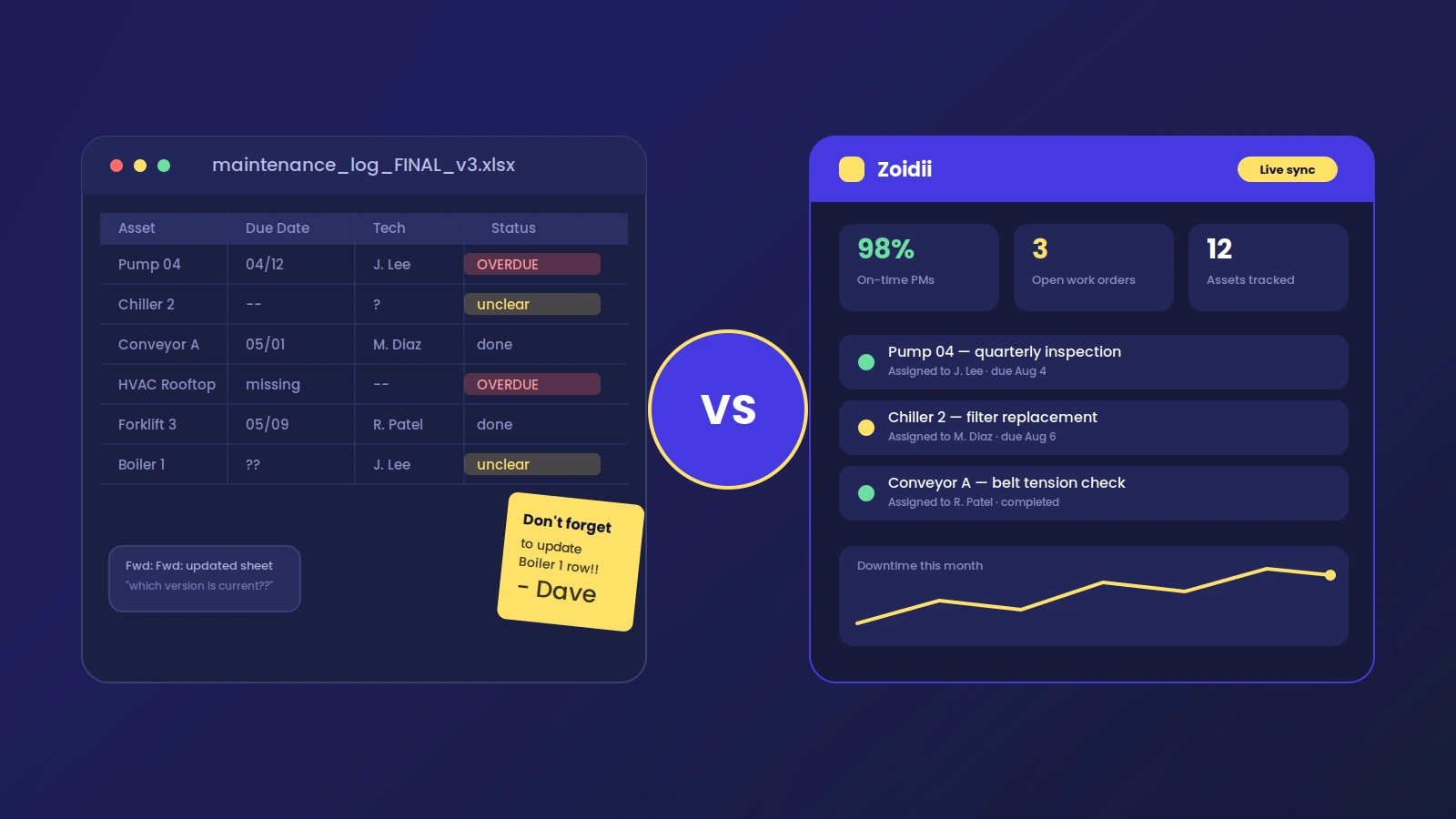
Oilfield services operations are rarely centralized. Your equipment may be spread across dozens of well sites, service yards, and remote locations — with technicians working in the field far from the office. Traditional paper-based or spreadsheet-driven work order systems break down quickly in this environment, creating backlogs, miscommunication, and lost documentation.
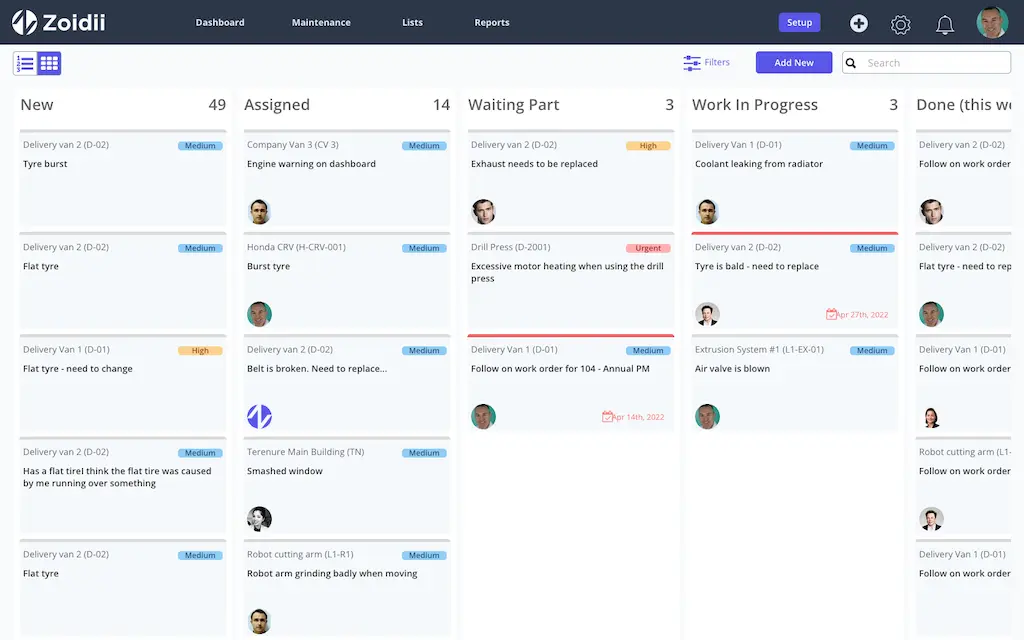
A cloud-based CMMS with mobile capabilities allows field technicians to receive, update, and close work orders directly from their phones or tablets. Supervisors get real-time visibility into what's in progress, what's overdue, and where resource bottlenecks are forming. Every work order creates a time-stamped, documented record that feeds into asset history and compliance reporting.
4. Parts and Inventory Management to Prevent Costly Delays
One of the most overlooked contributors to extended downtime is simply not having the right part on hand. For oilfield services companies managing large, diverse equipment fleets, spare-parts inventory can represent a significant capital commitment — and mismanagement cuts both ways: stockouts delay critical repairs, while overstocking ties up cash and creates waste.
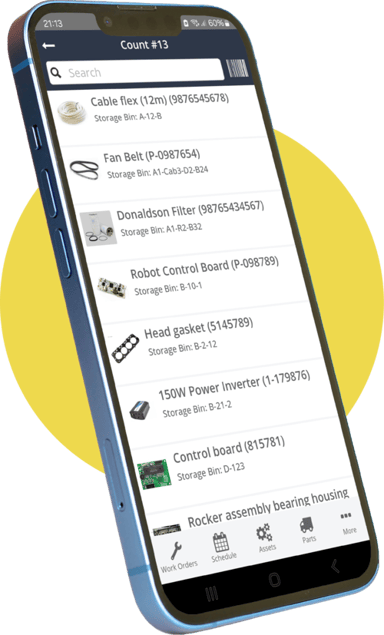
A CMMS tracks real-time inventory levels across multiple storage locations — service trucks, field storage, central warehouses — and links parts usage directly to work orders. Minimum and maximum inventory thresholds trigger automatic reorder alerts before stockouts occur. Over time, the data reveals which parts have the highest demand and where to optimize safety stock levels, freeing up working capital without increasing risk.
📊 55% of maintenance professionals cited paying more for parts as the main driver of higher downtime costs in 2025 — a problem that better inventory forecasting through CMMS can directly address.
5. Regulatory Compliance and HSE Documentation
The oilfield services industry operates under strict regulatory oversight — API standards, OSHA requirements, provincial and state environmental regulations, and client-specific HSE (Health, Safety & Environment) requirements. Demonstrating compliance requires comprehensive, audit-ready documentation of every inspection, maintenance activity, and safety check performed.
A CMMS automatically generates this documentation trail. Every work order includes time stamps, technician signatures, parts used, photos, and procedural checklists. When an auditor or regulator asks for the maintenance history on a piece of pressure equipment or the inspection record for a crane, the data is instantly accessible. Having access to this data reduces audit preparation time from weeks to hours and significantly lowers the risk of compliance violations and associated penalties.
CMMS platforms also allow safety-critical procedures — like Lockout/Tagout (LOTO) protocols and permit-to-work workflows — to be automatically embedded directly into work orders, ensuring technicians follow the correct steps every time before accessing hazardous equipment.
6. Data-Driven Decision Making and KPI Tracking
One of the most powerful long-term benefits of a CMMS is the operational data it accumulates over time. Every work order, every PM, every parts issue, and every equipment failure creates a data point. Over months and years, this data reveals patterns that would be invisible in a paper-based system.
Oilfield services managers can track key performance indicators, including:
• Mean Time Between Failures (MTBF) by asset type and age • Mean Time To Repair (MTTR) by technician, equipment category, or job site • Planned Maintenance Percentage (PMP) — the ratio of planned to reactive work • Maintenance cost per asset, per job, or per operating hour • Inventory turnover and parts cost trends • PM compliance rates across field locations
This visibility enables better budgeting, smarter equipment replacement decisions, and continuous improvement in maintenance efficiency. According to industry data, 65% of organizations surveyed reported that CMMS helps increase plant production efficiency overall — a benefit that translates directly to improved margins and service capacity for oilfield companies.

Key Challenges CMMS Addresses in the Oilfield Services Context
While the benefits of CMMS apply broadly, oilfield services companies face a specific set of challenges that make these tools especially valuable:
Remote and Disconnected Work Environments
Field operations often occur far from reliable connectivity. Mobile-first CMMS platforms with robust offline capabilities allow technicians to access asset histories, follow SOPs, and close out jobs without needing a signal — syncing data automatically when connectivity is restored.High Equipment Replacement and Repair Costs
Drilling rigs, fracturing equipment, and well service units represent enormous capital investments. Extending equipment life through disciplined PM schedules — managed by a CMMS — directly protects these assets and defers costly replacement expenditures.Workforce Turnover and Skills Gaps
A shortage of skilled trades is a persistent challenge in oilfield services. A CMMS preserves institutional knowledge by capturing maintenance procedures, equipment histories, and troubleshooting guides in a searchable database — reducing dependence on individual technicians who may leave the company.Multi-Site Operations and Subcontractor Coordination
Oilfield services companies often manage equipment across dozens of active job sites while coordinating with subcontractors and client-operated facilities. A cloud-based CMMS provides a single source of truth for maintenance status across the entire operation, regardless of how many locations or parties are involved. Oil Price Volatility and Cost Pressure
When oil prices drop, oilfield services companies are the first to face margin compression. A CMMS helps survive downturns by squeezing maximum efficiency out of existing resources — reducing reactive maintenance spend, optimizing parts inventory, and identifying underperforming assets that should be retired or redeployed.
What to Look for in a CMMS for Oilfield Services
Not all CMMS platforms are built for the demands of oilfield operations. When evaluating options, oilfield services companies should prioritize:
• Mobile-first design — essential for remote field work where connectivity is unreliable • Easy work order creation and assignment — technicians need to start using it on day one, not after weeks of training • Flexible preventive maintenance scheduling — by calendar date, operating hours, mileage, or custom triggers • Asset hierarchy and nested PM support — to manage complex equipment with multiple sub-components • Parts and inventory management are integrated directly into work orders • Reporting and KPI dashboards — with data exportable for management reporting • Regulatory compliance features — inspection checklists, digital signatures, and audit trails • Responsive customer support — because problems don't wait for business hours in an oilfield environment
The 2026 Outlook: CMMS as a Strategic Asset
Looking ahead, the role of CMMS in oilfield services is expanding beyond maintenance scheduling. Industry analysts and maintenance leaders are increasingly treating the CMMS as a strategic operational platform. In this place, data from IoT sensors, ERP systems, and field teams converges to drive real-time decisions.
If 2025 was about proving that digital maintenance tools can move the needle, 2026 is about operationalizing them. Oilfield services companies that have made the transition report measurable results: companies using CMMS platforms report an average 32% reduction in unplanned downtime, and predictive maintenance programs enabled by CMMS data deliver cost reductions of up to 25%.
The math is straightforward. Whether your operation runs three trucks or three hundred pieces of equipment, the return on investment from a properly implemented CMMS — in reduced emergency repair costs, extended asset life, lower parts spend, and freed-up technician capacity — far outweighs the software investment. For oilfield services companies navigating cost pressures, workforce challenges, and the operational demands of energy production, a CMMS isn't just a maintenance tool. It's a competitive advantage.
Ready to Modernize Your Oilfield Maintenance Operations?
Zoidii is a cloud-based CMMS built to be simple, fast, and effective — helping oilfield services companies get off pen-and-paper systems and into a modern, data-driven maintenance workflow. Manage work orders, preventive maintenance schedules, assets, and parts inventory from any device, anywhere. Start a free trial today and see how Zoidii can help your team reduce downtime, control maintenance costs, and build the operational discipline your clients expect. Learn more at zoidii.com.