
Great maintenance leaders don't just fix things — they prevent problems, develop people, and drive operational results. In 2026, that challenge has never been more complex or more important. Fortune 500 manufacturers now lose an estimated $1.5 trillion annually to unplanned downtime — roughly 11% of their total revenue. Meanwhile, the global CMMS (Computerized Maintenance Management System) market has reached $1.45 billion this year, growing at over 10% annually as organizations invest in the tools and leadership needed to turn maintenance from a cost center into a competitive advantage.
Whether you're a seasoned maintenance manager or stepping into a leadership role for the first time, these 10 proven strategies — backed by 2026 data — will help you lead your team with greater confidence, clarity, and results.
1. Shift from Reactive to Preventive Maintenance — and Let Your CMMS Do the Heavy Lifting
The single biggest lever a maintenance leader can pull in 2026 is moving away from reactive, "fix-it-when-it-breaks" maintenance toward a structured preventive maintenance program. The numbers are compelling: a preventive maintenance plan can reduce equipment downtime by up to 50%, and 78% of companies with a formal PM schedule report improved equipment longevity.
The catch? Preventive maintenance only works when it actually gets done — consistently, on schedule, and with proper documentation. That's where a CMMS becomes indispensable. A modern CMMS automatically schedules and assigns PM tasks based on time intervals or equipment usage, sends reminders to technicians, tracks completion, and logs every action for future reference. Without it, even the best-intentioned PM program devolves into sticky notes and spreadsheets. Action step: If you haven't already, audit how much of your team's time is spent on reactive versus preventive work. Then use your CMMS to shift that ratio systematically — most world-class maintenance operations target less than 20% reactive work.

2. Make Data-Driven Decisions with Real-Time CMMS Reporting
Strong maintenance leaders don't rely on gut instinct alone — they rely on data. In 2026, nearly 65% of large facilities use CMMS tools to track key performance indicators (KPIs) such as Mean Time Between Failures (MTBF), Mean Time to Repair (MTTR), preventive maintenance compliance, and asset costs.
The value of tracking these metrics goes beyond reporting. When you can show your organization that downtime decreased by 30% after implementing a new PM schedule, or that a specific piece of equipment has become a chronic cost driver, you shift the maintenance function from reactive firefighting to strategic asset management.
Action step: Identify three to five KPIs that directly connect maintenance performance to business outcomes. Configure your CMMS dashboard to track these in real time, and review them in weekly team huddles to drive continuous improvement.
3. Embrace Predictive Maintenance Technology
If preventive maintenance is good, predictive maintenance is better. Rather than servicing equipment on a fixed schedule, predictive maintenance uses real-time sensor data — monitoring vibration, temperature, pressure, and other indicators — to flag potential failures before they occur. Analysis by McKinsey confirms that a well-implemented predictive maintenance strategy can reduce asset downtime by 30–50% and cut overall maintenance costs by 10–40%.
Modern CMMS platforms are increasingly built to support predictive maintenance by integrating with IoT sensors and automatically triggering work orders when readings exceed normal thresholds. In 2026, around 52% of manufacturing plants have already integrated their CMMS with IoT sensors, and that number continues to climb.
You don't need to overhaul everything at once. Start by identifying your five most critical, highest-risk assets, instrument them with condition-monitoring sensors, and connect those sensors to your CMMS. One prevented major failure often pays for an entire year of predictive maintenance investment. Action step: Build a roadmap for predictive maintenance adoption, starting with your most failure-prone, highest-impact equipment. Pilot the program, measure the results, and scale from there.

4. Go Mobile — Your Team Shouldn't Be Chained to a Desk
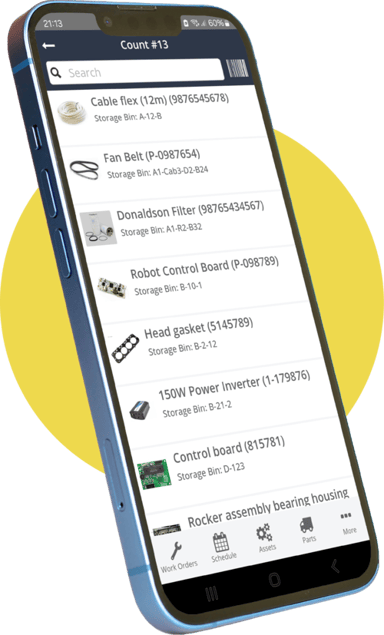
In 2026, mobile-enabled CMMS use has crossed 55% of maintenance organizations, and the results speak for themselves: mobile CMMS usage increases work order completion rates by 33% and technician productivity by up to 40%. Over 68% of large enterprises now give field technicians instant mobile access to work orders, equipment manuals, and maintenance history.
The reason is simple: maintenance work happens in the field, not at a desk. When a technician can scan a QR code on a piece of equipment and instantly see its full service history, access repair procedures, and close out a work order from their phone, the entire operation speeds up. Wrench time increases, administrative lag disappears, and accuracy improves.
As a maintenance leader, championing mobile CMMS adoption is one of the fastest ways to improve team efficiency without adding headcount. Action step: If your CMMS has a mobile app, ensure all technicians have it installed and trained on it. If mobile is limited, factor it into your next CMMS evaluation — it's non-negotiable in 2026.
5. Invest in Your Team's Skills — and Capture Their Knowledge
The maintenance industry is facing a significant skills challenge. With 69% of maintenance professionals aged 50 or older and a projected shortfall of 1.7 million skilled workers, leadership teams are at risk of losing the institutional knowledge that keeps equipment running. In fact, 2026 industry research identifies knowledge capture and sharing as the top reported benefit of AI in maintenance, ranking above even failure reduction.
Great maintenance leaders take this seriously in two ways: by actively investing in training and development for their teams, and by using their CMMS to capture and standardize that institutional knowledge. When standard procedures, troubleshooting guides, and historical repair data are documented inside the CMMS, that knowledge doesn't walk out the door when an experienced technician retires. Action step: Start a systematic effort to document job plans and repair procedures in your CMMS. Pair newer technicians with experienced ones for knowledge transfer, and consider platforms with built-in AI that can surface relevant procedures at the point of work.
6. Optimize Inventory and Parts Management
Few things derail maintenance performance — and leadership credibility — faster than a technician who has diagnosed a problem, only to discover the right part isn't in stock. Unplanned parts delays extend downtime, frustrate teams, and inflate costs. Yet many maintenance teams still manage spare parts through spreadsheets or informal processes.
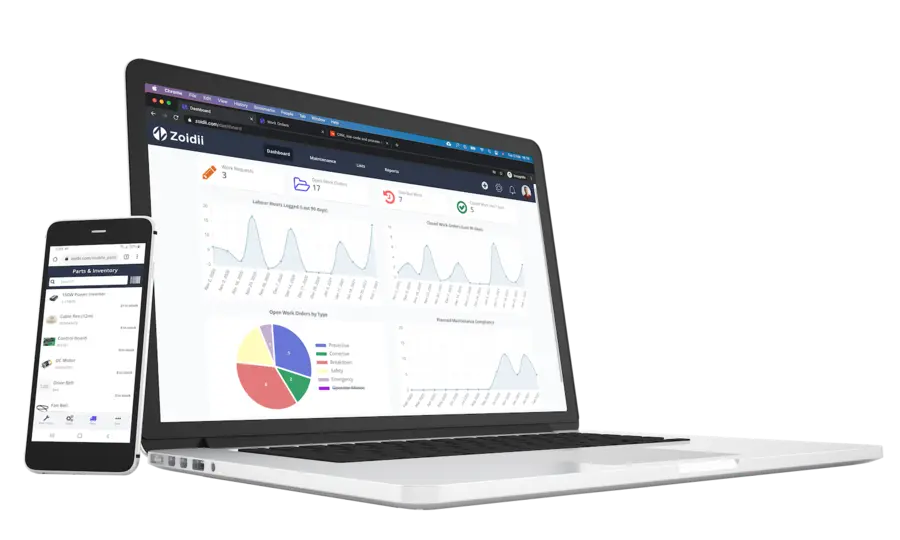
A CMMS with integrated inventory management solves this. It tracks spare parts in real time, links specific parts to the equipment that needs them, sets minimum stock levels with automatic reorder alerts, and updates inventory automatically when technicians close work orders. Organizations using CMMS for MRO (maintenance, repair, and operations) inventory management report up to a 15% reduction in MRO spending compared to those using legacy systems. Action step: Conduct an inventory audit and migrate your parts data into your CMMS. Set minimum stock levels for your most critical parts so reorder alerts fire before you're caught short.
7. Build a Culture of Accountability with Work Order Management
Strong maintenance leaders create cultures where work gets done to standard, every time — and that requires a clear system for tracking what was assigned, what was completed, and how long it took. A CMMS work order management system provides exactly that.
When every task flows through a centralized work order system, leaders gain full visibility into team workload, completion rates, and backlog. Technicians understand what's expected and have clear priorities. Recurring issues get flagged through historical data, enabling root cause analysis rather than endless patching.
Equally important: digital work orders create audit trails. Whether you're meeting ISO, OSHA, or industry-specific compliance requirements, having documented evidence of every maintenance activity — with dates, technician sign-offs, and parts used — protects your organization during audits. Action step: Ensure all maintenance work — even small tasks — flows through your CMMS as a formal work order. Eliminate informal task assignments that leave no record. Review open and overdue work orders with your team on a weekly basis.
8. Communicate Maintenance Value to Senior Leadership
One of the most overlooked skills of a great maintenance leader is the ability to speak the language of the boardroom. Maintenance departments that secure budget and resources are typically led by managers who can clearly articulate the financial impact of their work.
In 2026, CMMS software delivers 200–400% ROI within 18–24 months for organizations that implement it properly — but that ROI only gets recognized if maintenance leaders are measuring and communicating it. Frame your results in terms senior leaders care about: reduction in unplanned downtime costs, increase in asset availability, reduction in emergency repair spend, and extension of equipment lifespan. Action step: Build a monthly one-page maintenance scorecard drawn from your CMMS data, showing trends in key business metrics. Share it with operations and finance leadership to reinforce the strategic value of the maintenance function.
9. Prioritize Safety and Compliance — Systematically
In 2024, Lockout/Tagout (LOTO) violations were the fifth most cited OSHA standard, resulting in thousands of citations for failing to control hazardous energy during equipment maintenance. Safety compliance isn't just a legal requirement — it's a reflection of your leadership.
A modern CMMS strengthens safety and compliance by embedding safety checklists automatically into work orders, requiring technicians to complete digital LOTO procedures before beginning repairs, and automatically scheduling inspections to meet regulatory timelines. It also generates compliance reports on demand, making audits significantly less stressful.
Action step: Review your current safety procedures and identify which ones could be digitized and enforced through your CMMS. Start with high-risk activities such as LOTO, confined space entry, and hot work permits.
10. Lead with Continuous Improvement — Use Your CMMS as the Engine
The best maintenance leaders are never satisfied with the status quo. They treat every failure as a learning opportunity, every KPI as a baseline to improve upon, and every new technology as a potential advantage for their team.
In 2026, the maintenance leaders pulling ahead are those who have operationalized the digital tools available to them — using their CMMS not just as a record-keeping system, but as the central engine of a continuous improvement culture. Around 58% of companies have already shifted toward automated maintenance workflows, and organizations that lead this shift are seeing compounding returns as their data matures and their predictive capabilities deepen.
The CMMS market is projected to grow from $1.45 billion today to $3.56 billion by 2035. The technology is evolving rapidly — AI-assisted diagnostics, digital twins and advanced analytics. The maintenance leaders who build a strong CMMS foundation now will be best positioned to take advantage of what comes next. Action step: Schedule a quarterly CMMS review with your team to assess what's working, what data you're missing, and what new features could drive improvement. Treat your CMMS as a living system, not a set-and-forget tool.
Final Thoughts: CMMS Is the Infrastructure of Great Maintenance Leadership
Becoming a better maintenance leader in 2026 isn't about working harder — it's about working smarter, with better tools and a sharper strategic focus. The 10 strategies above share a common thread: each one is significantly more achievable, measurable, and sustainable when powered by a strong CMMS.
From automating preventive maintenance schedules to capturing institutional knowledge, from real-time inventory management to compliance documentation, a modern CMMS gives maintenance leaders the visibility and control they need to deliver exceptional results. If you're looking to strengthen your maintenance operation and lead your team to new levels of performance, Zoidii's CMMS is built for exactly that. Learn more about how Zoidii can help you become a better maintenance leader.