
Maintenance managers have always carried a heavy workload. But in 2026, the role is more demanding than ever. You are expected to keep equipment running, reduce downtime, control maintenance costs, manage technicians, track spare parts, support compliance, and prove the value of maintenance to senior leadership.
At the same time, maintenance is becoming more digital. CMMS software is no longer just a place to log work orders. It is becoming the central system for preventive maintenance, asset history, technician productivity, spare parts planning, maintenance KPIs, and data-driven decision-making.
The reason is simple: downtime is expensive. Siemens’ 2024 downtime report estimated that the world’s 500 largest companies lose almost $1.4 trillion each year to unplanned downtime, equal to about 11% of revenue. The same report found that the average large plant loses 27 hours per month to unplanned downtime.
Below are five of the biggest maintenance manager challenges in 2026, plus practical ways a CMMS can help.
Key Takeaways:
- Maintenance managers are under more pressure in 2026 as they are expected to improve uptime, control costs, manage technicians, and support compliance with limited resources.
- Unplanned downtime remains one of the biggest business risks, with large organizations losing significant revenue when equipment failures disrupt operations.
- CMMS software helps maintenance teams move from reactive to proactive maintenance by centralizing work orders, asset history, preventive maintenance schedules, parts usage, and technician activity.
- Data is becoming essential for maintenance leadership, especially when tracking KPIs such as MTTR, MTBF, preventive maintenance compliance, work order backlog, and cost per asset.
- Knowledge capture is critical as skilled labor shortages grow, and a CMMS helps preserve technician expertise through digital procedures, checklists, notes, photos, and asset histories.
1. You are expected to know everything
A maintenance manager is expected to understand every asset, every technician, every urgent repair, every safety requirement, every spare part, and every production priority.
That is not realistic when information is scattered across notebooks, spreadsheets, emails, filing cabinets, and individual technician memory. The modern maintenance manager needs a single source of truth. In 2026, maintenance leadership job expectations are increasingly digital: an analysis of 100 maintenance leadership job posts found that 71% of roles require CMMS mastery, 76% measure leaders on equipment reliability, and 85% prioritize team leadership and development.
How a CMMS helps
A CMMS gives maintenance managers one place to store and access:
- Asset history
- Work orders
- Preventive maintenance schedules
- Inspection records
- Technician notes
- Manuals and procedures
- Parts usage
- Maintenance costs
- Compliance documentation
2. Expectations are rising, but resources are limited
Maintenance managers are often asked to deliver maximum uptime with limited staff, limited budget, and limited downtime windows.
That pressure is only increasing. Zoidii’s 2026 maintenance trends report found that lack of resources is the top challenge cited by maintenance leaders, with 45% naming it as their primary obstacle. Aging infrastructure and skilled labor shortages were also major challenges, cited by 33% and 30% respectively.
This creates a difficult balancing act. Production wants equipment available. Finance wants lower costs. Safety wants full compliance. Technicians want realistic schedules. Leadership wants proof that maintenance is improving reliability.
How a CMMS helps
A CMMS helps maintenance teams prioritize the right work at the right time. Instead of treating every request as equally urgent, managers can rank jobs by asset criticality, safety risk, downtime impact, and production priority.
Useful CMMS metrics include:
- Mean time to repair
- Mean time between failures
- Planned maintenance percentage
- Preventive maintenance compliance
- Work order backlog
- Labor hours by asset
- Cost per asset
- Emergency work percentage
3. Downtime costs are harder to ignore
Unplanned downtime is no longer just a maintenance problem. It is a business risk.
Siemens found that large plants now experience an average of 25 downtime incidents per month, totaling 326 hours of downtime per year. The report also estimated that an average large plant loses $253 million per year from unplanned downtime.
Even when downtime events decrease, costs can still rise. Zoidii reported that 74% of maintenance leads saw less or the same amount of unscheduled downtime in 2025, yet 31% said downtime costs increased. The biggest driver was parts inflation, with 55% of maintenance professionals blaming higher parts costs.
How a CMMS helps
A CMMS helps reduce downtime by making maintenance more proactive. Instead of waiting for equipment to fail, managers can schedule inspections, preventive maintenance, and condition-based work before small issues become major failures. A CMMS also helps identify repeat offenders. If one asset keeps generating emergency work orders, the maintenance manager can review its repair history, parts usage, failure codes, and downtime impact. That creates a stronger case for repair, replacement, redesign, or a change in preventive maintenance strategy.
4. Paperwork and spreadsheets create blind spots
Many maintenance teams still rely on spreadsheets, printed PM sheets, whiteboards, and handwritten notes. These tools can work for small teams, but they quickly become a problem as equipment, technicians, locations, and compliance requirements grow.
The result is missed PMs, duplicated work, delayed approvals, incomplete closeout notes, and poor visibility into what is actually happening on the floor.
Plant Engineering’s maintenance software survey found that 59% of respondents identified their maintenance system as a CMMS, while 48% still had on-premise systems and 30% had cloud-based solutions. The same survey reported estimated average unplanned downtime costs of about $108,000.
How a CMMS helps
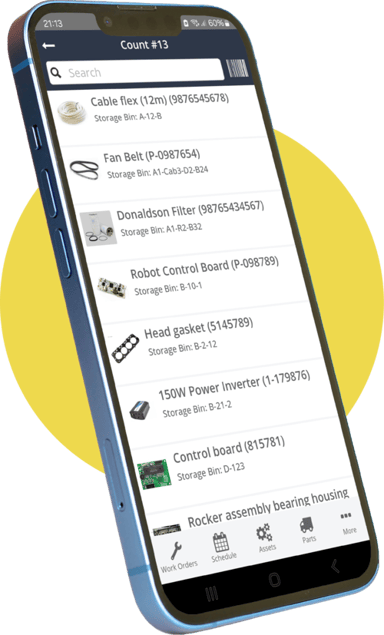
A cloud-based CMMS replaces disconnected paperwork with digital workflows. Technicians can receive work orders, update statuses, add photos, scan QR codes, record parts used, and close jobs from a mobile device.
For maintenance managers, that means better visibility into:
- Which work is open
- Which jobs are overdue
- Which technician is assigned
- Which assets need attention
- Which parts are required
- Which PMs are coming up
- Which tasks are driving the most cost
5. Skilled labor shortages make knowledge capture critical
Maintenance teams are facing a growing knowledge gap. Experienced technicians are retiring, younger workers need training, and many facilities are struggling to hire skilled labor.
Zoidii’s 2026 report found that 40% of the manufacturing workforce is expected to retire by 2030, while 69% of maintenance professionals are 50 or older. The same report found that 39% of maintenance leaders see knowledge capture and sharing as the most valuable use case for AI in maintenance.
When critical knowledge lives only in someone’s head, every resignation or retirement creates risk.
How a CMMS helps
A CMMS helps capture tribal knowledge before it disappears. Maintenance teams can document job plans, standard operating procedures, inspection checklists, safety steps, troubleshooting notes, photos, and failure history.
This knowledge capture helps newer technicians complete work more consistently and reduces dependence on a few senior employees. A CMMS also improves spare parts planning. By tracking parts usage against assets and work orders, maintenance managers can build a critical spares list, set reorder points, and reduce delays caused by missing parts.
Why 2026 is the year to move from reactive to proactive maintenance
The most effective maintenance teams are shifting from reactive firefighting to proactive control.
Preventive maintenance remains the most common maintenance strategy, with 71% of maintenance professionals saying they use it. But there is still a gap between intention and execution: 58% of facilities spend less than half of their time on scheduled maintenance, and fewer than 35% spend most of their time on preventive maintenance tasks.
Predictive maintenance is also growing in importance. Deloitte reports that predictive maintenance can increase productivity by 25%, reduce breakdowns by 70%, and lower maintenance costs by 25%. Another Deloitte analysis found that predictive maintenance can increase equipment uptime by 10% to 20% while reducing maintenance planning time by 20% to 50%.
For most teams, the first step is not jumping straight into advanced AI or predictive analytics. The first step is building a strong maintenance data foundation inside a CMMS.
That means:
- Clean asset records
- Accurate work order history
- Consistent failure codes
- Reliable PM schedules
- Parts and inventory data
- Technician closeout notes
- Maintenance cost tracking
- KPI reporting
Final thoughts
Being a maintenance manager in 2026 is challenging, but it is also an opportunity.
Maintenance is no longer just a cost center. It is a critical part of operational performance, safety, reliability, and profitability. The teams that succeed will be the ones that move away from reactive maintenance and toward structured, data-driven maintenance management.
A CMMS helps maintenance managers do exactly that. It centralizes work orders, assets, preventive maintenance, spare parts, technician activity, and reporting in one system. If your team is still relying on spreadsheets, paper records, or disconnected tools, now is the time to modernize. With the right CMMS, you can reduce downtime, improve planning, protect technician knowledge, and give leadership the data they need to see maintenance as a driver of business performance.