
What Is a Maintenance Planner?
Behind every well-run facility is a maintenance planner who orchestrates operations with precision. A maintenance planner is in charge of organizing all maintenance tasks in a company. They ensure the equipment operates without issues. They keep downtime low and give maintenance teams what they need to be efficient.
The maintenance planner is not the same as a maintenance manager or a maintenance scheduler. The manager leads the team and sets the strategy. The scheduler places jobs on the calendar. In contrast, the planner designs every maintenance task. They collect details from work requests. Then, they create job plans and list needed parts and tools. They also estimate labor hours. Finally, they package everything into organized work orders before any work begins.
The stakes are high. A 2026 study says unplanned downtime costs industrial manufacturers $50 billion each year. In high-end manufacturing, it costs around $22,000 per minute. A skilled maintenance planner is one of the best investments a facility can make. The right CMMS software supports their work and boosts effectiveness.
Why Maintenance Planners Matter More Than Ever in 2026
The maintenance industry is at an inflection point. Fortune 500 manufacturing companies lose $1.5 trillion each year due to unplanned downtime. This is 11% of their total revenue. That’s a big jump from $864 billion five years ago. At the same time:
- 58% of facilities still rely on spreadsheets for at least some maintenance tracking
- The average company loses 800 hours of downtime each year. That’s more than two hours of lost production every day.
- Emergency repairs carry 150–200% cost premiums compared to planned maintenance
- Poor maintenance strategies can cut a plant’s productivity by 5% to 20%.
Core Roles and Responsibilities of a Maintenance Planner
1. Work Order Management with CMMS
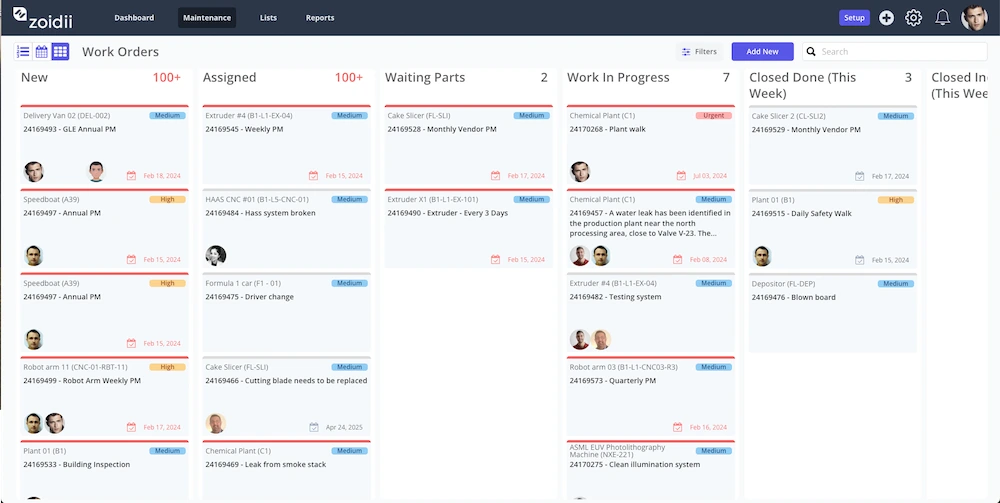
The main tool for a maintenance planner is a Computerized Maintenance Management System (CMMS). It’s essential for effective maintenance. Planners create, prioritize, track, and close work orders in the CMMS. This makes sure every task is clear, well-resourced, and executed.
The CMMS market shows its growing importance. In 2025, it was worth $1.31 billion. By 2026, it rose to $1.45 billion. It’s expected to hit $5.9 billion by 2036, growing at a rate of 9.3% each year. Eighty percent of maintenance managers think CMMS software enhances asset life. Also, using mobile CMMS boosts work order completion rates by 33%. Planners using these tools give their organizations a clear advantage over competitors.
Key work order responsibilities include:
- Creating detailed job plans with step-by-step procedures, required parts, tools, and labor estimates
- Prioritizing corrective and preventive maintenance tasks based on equipment criticality
- Tracking work order completion and updating asset histories in the CMMS
- Generating reports and KPIs to support continuous improvement
2. Preventive Maintenance (PM) Planning
One of the maintenance planner’s most important tasks is designing preventive maintenance programs. They also manage these programs to ensure everything operates efficiently. Planners don’t wait for equipment to break. They set up regular inspections. They also schedule lubrication, calibration, and component replacements. This keeps everything running well and reliably.
Preventive maintenance clearly pays off. It saves companies $12 to $18 for each horsepower each year. Predictive maintenance, which builds on preventive methods, can cut annual maintenance costs by 10% to 40%. Planners who build solid PM schedules and use a CMMS reduce their organization’s biggest cost risks.
In 2026, 62% of CMMS buyers rank preventive maintenance features as their top priority when choosing a platform. This highlights where the value in maintenance planning is focused.
3. Maintenance Scheduling
In larger organizations, scheduling is a separate job. In small and mid-sized facilities, many maintenance planners do both planning and scheduling. This involves:
- Developing daily, weekly, and long-term maintenance schedules aligned with production timelines
- Balancing reactive maintenance demands against fixed PM windows
- Adjusting schedules in response to unexpected equipment failures as they occur.
- Coordinating with operations to minimize production impact during planned downtime
4. Resource Coordination and Allocation
Maintenance planners determine and organize all resources required for maintenance tasks:
- Labor: Assigning the right technicians based on skill set and availability
- Parts and Materials: Make sure all components are ready before starting work. This way, you can avoid delays from missing parts
- Tools and equipment: Confirming that specialized tools are available and in working condition
- External vendors: Coordinating with contractors and OEM suppliers for specialized work
5. Inventory and Spare Parts Management
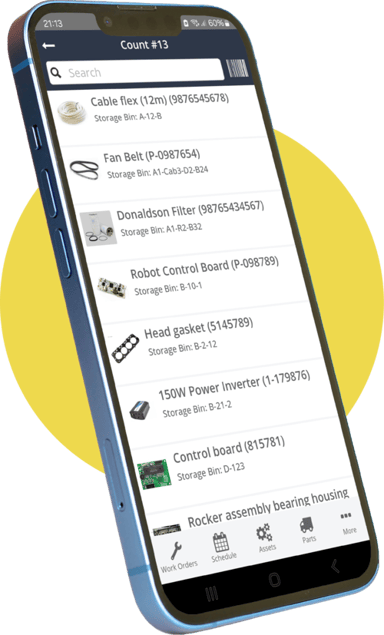
Maintenance planners keep a close eye on spare parts inventory. They work with the storeroom to ensure critical components are stocked. This helps avoid over-investing in items that are rarely used. Inside the CMMS, this means:
- Linking parts to specific assets and work order types
- Setting reorder points and tracking consumption rates
- Coordinating with procurement for long-lead items
- Reducing emergency “run to the store” purchases that spike costs
6. Documentation and Procedural Manuals
A great maintenance plan is only as valuable as its documentation. Maintenance planners create and maintain:
- Step-by-step maintenance procedures for common tasks
- Equipment-specific job plans that capture institutional knowledge
- Safety protocols and compliance documentation
- Asset histories that inform future planning decisions
7. Cross-Departmental Communication and Liaison
The maintenance planner links the maintenance department to the entire organization. They work closely with:
- Maintenance technicians: Providing clear job packages so work can begin without delay
- Operations and production supervisors: Coordinating maintenance windows to minimize production impact
- Maintenance managers: Supporting broader strategy with data, reporting, and execution visibility
- Procurement and finance: Managing parts costs and maintenance budgets
Maintenance Planner vs. Maintenance Scheduler: Key Differences
These roles are often confused - and sometimes combined - but they are distinct:
In large plants, it’s key to separate these roles. A planner who focuses too much on scheduling makes weaker job packages. Meanwhile, a scheduler who does planning ends up with bad prioritization. For smaller facilities, it makes sense to combine the Maintenance Planner and Scheduler roles. Be sure to define expectations clearly.

Essential Skills for a Maintenance Planner
Technical Skills
- Strong working knowledge of mechanical and electrical systems
- Familiarity with equipment failure patterns and root cause analysis
- CMMS proficiency - including work order management, asset tracking, and reporting
- Understanding of preventive and predictive maintenance methodologies
- Knowledge of safety regulations and compliance requirements
- Ability to manage multiple work orders, schedules, and priorities at the same time.
- Data-driven decision-making using CMMS reports and maintenance KPIs
- Parts inventory management and procurement coordination
- Clear communication with technicians, supervisors, and operations leadership
- Conflict resolution when balancing competing maintenance and production priorities
- Ability to train and document processes for technician teams
- A degree in mechanical engineering, industrial engineering, or operations management is common
- Years of hands-on experience as a maintenance technician or supervisor give key context. This experience matters a lot.
- Certifications in reliability engineering, Six Sigma, and TPM (Total Productive Maintenance) are great assets. They add value to skills and knowledge.
- The average salary for a maintenance planner is about $78,000 a year. This amount can change based on the industry, location, and experience level.
How CMMS Software Transforms the Maintenance Planner Role
The relationship between maintenance planners and CMMS software has never been more important. Modern CMMS platforms give planners the tools to:
- Automate PM scheduling based on time intervals, meter readings, or condition thresholds
- Track asset histories to identify failure patterns and improve future job plans
- Manage work orders from request through completion with full audit trails
- Track KPIs such as:
- Schedule compliance
- Mean time between failures (MTBF)
- Maintenance cost per asset
- Support compliance with inspection records, safety documentation, and regulatory reporting
- 52% of manufacturing plants now use CMMS with IoT sensors. This has reduced unplanned downtime by more than 38%.
- Cloud-based CMMS makes up about 58% of all deployments. It allows mobile access and helps manage multiple sites.
- Mobile-enabled CMMS use has crossed 55%, improving technician productivity by up to 40%
- 83% of organizations planned to increase CMMS spending in 2024, up from 63% in 2023
The Business Impact of Effective Maintenance Planning
When the team plans maintenance well, the entire organization benefits.
Increased Equipment Reliability: Consistent PM scheduling and proactive job planning reduce unexpected breakdowns. Predictive maintenance, powered by CMMS and IoT, can cut machine downtime by 30% to 50%. It can also boost machine life by 20% to 40%.
Lower Maintenance Costs: Smart planning cuts down on emergency repairs. It also lowers overtime and makes parts use more efficient. One major failure can prevent covering a whole year of CMMS software and preventive programs.
Improved Productivity: Reduced downtime directly increases operational throughput. Organizations that use CMMS for preventive maintenance report 41% less downtime. They also see a 47% increase in productivity.
Stronger Safety Culture: Good maintenance helps keep things safe. When it’s planned and written down, it cuts down risks from quick fixes. This protects both people and assets. Data-Driven Continuous Improvement: Maintenance planners bring structure to reporting. The CMMS keeps a maintenance history. This helps you make better choices about asset replacement. It also supports long-term capital planning and maintenance strategies.
Common Challenges Maintenance Planners Face
Even the most skilled maintenance planners navigate significant obstacles:
- Reactive maintenance culture: Urgent breakdowns constantly pull planners away from proactive planning work
- Incomplete asset information can hurt job plan quality. Missing equipment data, unclear failure histories, and poorly set up CMMS all contribute to this issue.
- Resource constraints: Limited technician availability, parts shortages, and budget pressure complicate scheduling
- Aging workforce and knowledge gaps: Many skilled technicians are nearing retirement. It’s urgent to capture their knowledge in the CMMS.
- Technology adoption: CMMS implementation can fail 40% of the time because users don’t adopt it. So, change management is just as crucial as picking the right software.
Career Path and Growth Opportunities
The maintenance planner role is an excellent launchpad for broader career development. It builds important skills. These are project management, data analysis, communication across teams, and systems thinking. All of these skills are easy to transfer.
Many experienced planners progress into:
- Maintenance Manager - overseeing the full maintenance team and strategy
- Reliability Engineer - focusing on failure analysis and asset optimization
- Operations Manager - broadening scope to the full production system
- CMMS Administrator or Implementation Lead - leveraging deep platform knowledge
How Zoidii CMMS Supports Maintenance Planners
Zoidii is made for structured maintenance planning. It helps with the proactive steps described in this guide. With Zoidii, maintenance planners can:
- Manage detailed work orders in one spot; include parts, procedures, and labor estimates
- Create and automate preventive maintenance schedules that ensure equipment operates reliably
- Keep track of spare parts inventory. Link components, assets, and job plans directly.
- Monitor KPIs and maintenance metrics to support continuous improvement
- Access everything from the field via mobile, so nothing falls through the cracks
- Capture asset histories and documentation that preserve institutional knowledge as teams evolve
In Summary
The maintenance planner role is crucial in any asset-heavy organization. In 2026, downtime costs will be at record levels. Skilled labor will be harder to find. Meanwhile, CMMS adoption will speed up in all industries. Organizations that focus on strong maintenance planning and use the right software will have a clear advantage.
If you’re starting or updating a maintenance planning function, the basics don’t change. You need clear job plans. You also need proactive PM schedules. Smart resource use is essential. Finally, a CMMS should tie it all together.