
What Is a Maintenance Supervisor?
A maintenance supervisor is the operational backbone of any facility's upkeep. They direct, coordinate, and oversee a team of maintenance technicians responsible for the repair, installation, and day-to-day upkeep of equipment, machinery, buildings, and infrastructure. More than just a team lead, this role sits at the intersection of technical expertise and people management—bridging the gap between frontline workers and senior leadership. In 2026, the job has evolved significantly. Digital transformation has reshaped what it means to run a maintenance operation. The global CMMS (Computerized Maintenance Management System) market is projected to reach $1.45 billion in 2026, growing at a 10.51% compound annual rate toward $3.56 billion by 2035. More than 58% of companies have now shifted toward automated maintenance workflows, and over 68% of large enterprises use mobile-enabled CMMS platforms to manage their operations in real time. For today's maintenance supervisor, proficiency in CMMS software isn't optional—it's a core job requirement.

Core Responsibilities of a Maintenance Supervisor
While day-to-day tasks vary by industry and facility size, most maintenance supervisors are responsible for the following:
1. Planning and Scheduling Preventive Maintenance
One of the most critical functions of the role is building and maintaining a preventive maintenance (PM) schedule. Rather than waiting for equipment to fail, a good supervisor plans routine inspections and servicing to catch problems before they escalate. In 2026, 62% of CMMS buyers rank preventive maintenance scheduling as their top priority when selecting software—a direct reflection of how central this activity is to the supervisor's role.
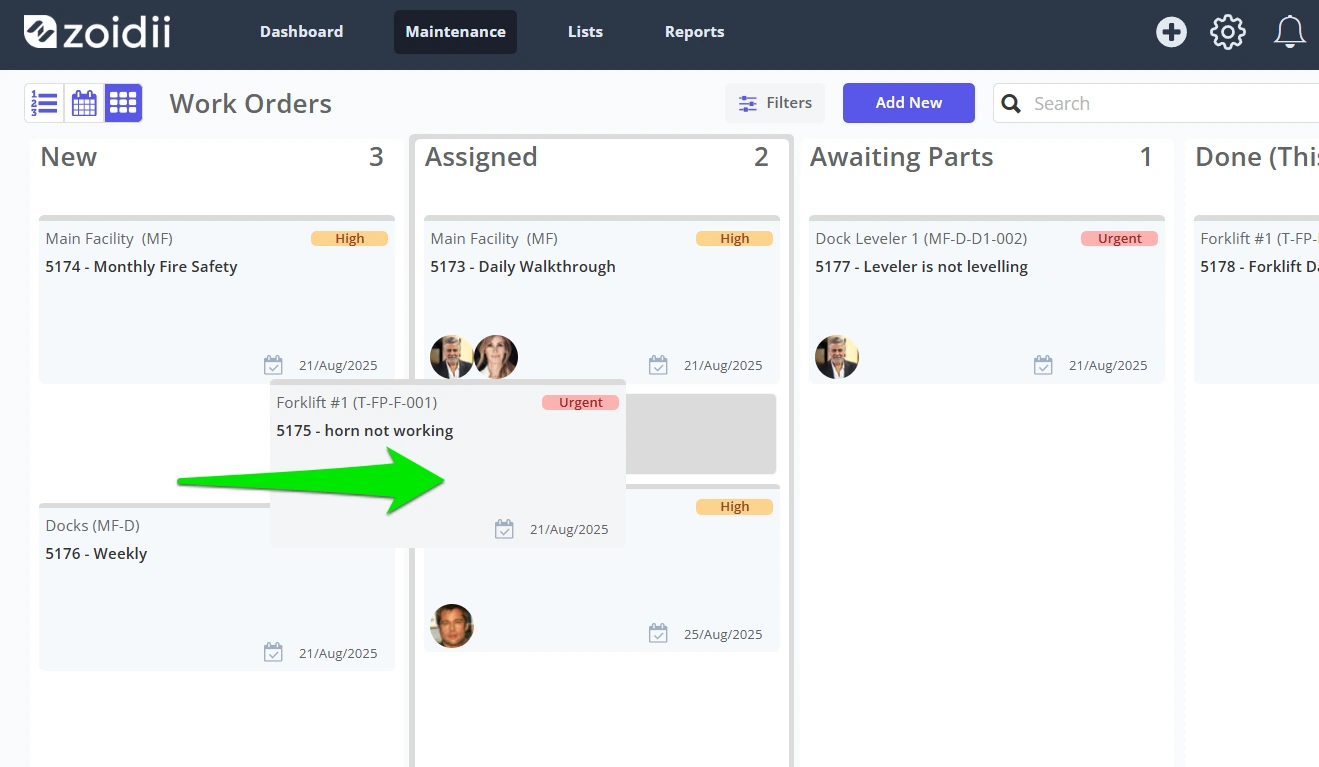
Using a CMMS like Zoidii, supervisors can automate PM schedules, assign recurring work orders to technicians, and receive alerts when tasks are overdue—all from a single dashboard.
2. Managing and Directing Maintenance Technicians
Maintenance supervisors lead the people, not just the processes. Daily responsibilities include assigning work orders based on technician skill sets, monitoring task completion, providing on-the-job guidance, and evaluating performance. Effective supervisors also take part in recruiting new technicians and onboarding them to both company procedures and any CMMS tools the team uses.
3. Work Order Management
Every repair, inspection, or scheduled task typically flows through a work order. Supervisors are responsible for generating work orders, prioritizing them based on urgency, assigning them to the right team members, and reviewing completed work for quality and accuracy. A CMMS centralizes this entire process—eliminating the paper trails and spreadsheets that slow teams down. Research shows that CMMS software improves productivity for 74% of maintenance professionals, with work order management being one of the primary reasons why.
4. Inventory and Parts Management
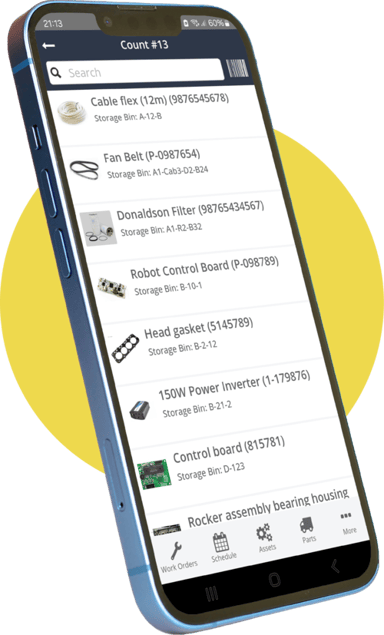
Keeping the right spare parts on hand—without over-stocking—is a constant balancing act. Maintenance supervisors track inventory levels, coordinate parts procurement, and ensure technicians have what they need when they need it. CMMS platforms with built-in inventory management make this far easier by sending low-stock alerts and linking parts directly to asset records.
5. Budget Oversight
Supervisors are typically responsible for tracking labor costs, parts expenditures, and contractor spend against a maintenance budget. Budget oversight requires not only financial literacy but also accurate data—another area where a CMMS pays dividends by providing real-time cost tracking per asset, work order, or technician.
6. Safety and Regulatory Compliance
Ensuring that all maintenance activities are performed safely and in accordance with OSHA regulations and local codes is a non-negotiable part of the job. Supervisors enforce safety protocols, conduct or coordinate inspections, and maintain documentation required for audits. A CMMS supports compliance by storing maintenance histories, safety checklists, and regulatory records in a searchable, auditable format.
7. Reporting and KPI Tracking
Modern maintenance supervisors are expected to report on key performance indicators (KPIs) such as Mean Time Between Failures (MTBF), Mean Time To Repair (MTTR), PM compliance rates, and overall equipment effectiveness (OEE). These metrics help justify maintenance budgets and demonstrate the team's impact on upper management. CMMS reporting tools make this data easy to generate without manual data collection.
Types of Maintenance Supervisors
The title of "maintenance supervisor" spans several distinct work environments:
Building Maintenance Supervisor: Oversees the upkeep of commercial or residential properties—managing HVAC, plumbing, electrical, and general repairs. They often interface directly with building tenants or occupants.
Plant/Industrial Maintenance Supervisor: Manages maintenance teams in manufacturing or production environments, focusing heavily on machinery uptime and minimizing production disruptions. Unplanned downtime is a major cost driver in these settings—research indicates that over two-thirds of industrial companies experience at least one unplanned outage per month.
Facilities Maintenance Supervisor: Works within larger organizations such as hospitals, universities, or government buildings, coordinating complex maintenance operations across multiple systems and departments.
Essential Skills for a Maintenance Supervisor in 2026
Technical Skills
A strong foundation in building systems is a baseline requirement. Most supervisors possess hands-on knowledge of HVAC, plumbing, electrical systems, and mechanical equipment. Increasingly, CMMS proficiency is listed as a required or preferred skill in job postings—alongside mobile technology fluency, since over 55% of maintenance teams now use mobile-enabled CMMS platforms in the field.
Leadership and People Management
Supervisors manage diverse teams, often across multiple shifts. Strong delegation, performance coaching, and conflict resolution skills are essential. The ability to train technicians on new equipment or software—including CMMS tools—is also part of the job.
Organizational and Planning Skills
Between managing schedules, tracking inventory, overseeing work orders, and monitoring budgets, strong organizational skills are non-negotiable. A CMMS significantly reduces administrative load, but the supervisor still needs to interpret data and make sound operational decisions.
Communication
Maintenance supervisors serve as the communication hub between technicians, upper management, contractors, and sometimes tenants or production teams. Clear written and verbal communication—including the ability to produce maintenance reports—is critical.
Problem-Solving Under Pressure
When equipment goes down unexpectedly, supervisors need to diagnose the issue quickly, deploy the right technician, and minimize downtime. Problem-solving under pressure is where experience, technical knowledge, and access to real-time asset data through a CMMS combine to create faster, smarter responses.
CMMS: The Maintenance Supervisor's Most Important Tool in 2026
If there's one technology that has transformed the maintenance supervisor role in the past decade, it's the CMMS. A Computerized Maintenance Management System centralizes every aspect of maintenance operations—work orders, asset records, PM schedules, inventory, labor tracking, and reporting—into a single platform accessible from desktop or mobile.
Here's what a CMMS does for maintenance supervisors specifically:
- Eliminates paper-based processes — Digital work orders replace clipboards and spreadsheets, reducing errors and saving time.
- Automates preventive maintenance — Schedules trigger automatically based on calendar intervals or asset meter readings.
- Provides real-time visibility — Supervisors can see every open work order, technician assignment, and asset status at a glance.
- Generates performance reports — KPIs like MTTR, MTBF, and PM compliance are calculated automatically.
- Supports compliance — Audit trails and maintenance histories are stored and searchable.
- Reduces unplanned downtime — Organizations using CMMS report up to 41% reductions in downtime, and 28% of maintenance professionals say this is the single greatest benefit of CMMS adoption.
Platforms like Zoidii are purpose-built for maintenance teams, making the move from pen and paper, offering an intuitive interface that doesn't require a lengthy training period or IT support to get started. Features like mobile work order management, automated PM scheduling, and asset tracking give supervisors the visibility they need to lead their teams effectively.
Qualifications and Education
Minimum Requirements: Most maintenance supervisor roles require a high school diploma combined with several years of hands-on maintenance experience. Practical knowledge built through years in technician roles is often valued as much as formal education.
Preferred Education: Many employers now prefer candidates with an associate degree from a vocational or technical school, or a bachelor's degree in engineering, facility management, or a related discipline. According to industry data, approximately 20% of maintenance supervisors hold a bachelor's degree.
Experience: The path most commonly begins with 3–5 years as a maintenance technician before moving into a supervisory role. Many organizations promote from within, recognizing that technical credibility among the team is an asset. CMMS Proficiency: Increasingly, job postings list familiarity with CMMS software as a required skill. Supervisors who can onboard their teams to digital maintenance tools are in high demand.
Certifications That Advance Your Career
Professional certifications validate a supervisor's expertise and can meaningfully improve employment prospects and earning potential:
Certified Maintenance and Reliability Professional (CMRP): Offered by the Society for Maintenance & Reliability Professionals (SMRP), this is one of the most recognized credentials in the field and covers maintenance strategy, reliability, and leadership.
Certified Maintenance & Reliability Technician (CMRT): Also from SMRP, this is geared toward technicians and supervisors with strong hands-on backgrounds.
Building Systems Maintenance Certificate (SMC): Offered by BOMI International, this program focuses on managing critical building systems, including HVAC, energy, and water systems.
OSHA Certifications: Demonstrating a commitment to workplace safety through OSHA 10 or OSHA 30 certification strengthens a supervisor's standing for both compliance oversight and leadership roles.
Maintenance Supervisor Salary in 2026
Compensation varies considerably based on industry, location, experience, and organization size. Here's a snapshot of current 2026 salary data from major sources: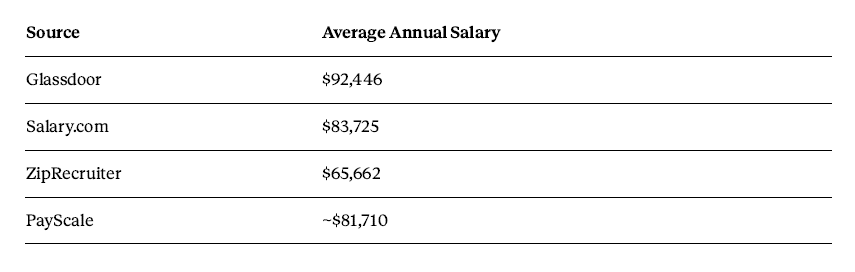
Top earners—particularly those in energy, utilities, pharmaceutical, or industrial settings—can earn well above $100,000 annually. Supervisors with demonstrated CMMS expertise and a track record of reducing downtime and maintenance costs tend to command the highest compensation.
Career Path and Growth Opportunities
The maintenance supervisor role is typically a stepping stone to broader leadership positions:
From Technician → Maintenance Supervisor: Most supervisors spend at least 3–5 years as technicians before being promoted, either from within an organization or through external hiring.
From Supervisor → Maintenance Manager: The next step up typically involves overseeing all maintenance operations across a facility or multiple sites, with broader budget authority and strategic planning responsibilities.
From Manager → Director of Facilities / VP of Operations: Senior leaders with a strong maintenance background move into executive roles overseeing all operational functions across an organization. Supervisors who become proficient in CMMS platforms and can demonstrate data-driven improvements to uptime, cost, and reliability are consistently better positioned for advancement. Employers increasingly see digital maintenance literacy as a leadership differentiator.
How Zoidii CMMS Supports Maintenance Supervisors
Zoidii is built for maintenance supervisors and managers who want the power of a CMMS without the complexity of enterprise-grade software. Designed for teams coming off pen and paper, Zoidii offers:
- Simple, intuitive work order management — Create, assign, and close work orders from any device.
- Automated preventive maintenance scheduling — Set it once and let Zoidii handle the reminders.
- Asset tracking and maintenance history — Know the full service history of every piece of equipment.
- Parts and inventory management — Track stock levels and link parts to specific assets or work orders.
- Mobile access — Technicians can access and update work orders in the field from their phones.
- Reporting dashboards — See your team's productivity, PM compliance, and cost data in one view.
Frequently Asked Questions
What is the primary role of a maintenance supervisor? A maintenance supervisor plans, directs, and oversees all maintenance activities for a facility or organization—managing technicians, scheduling preventive maintenance, tracking work orders, controlling budgets, and ensuring safety compliance.
Do maintenance supervisors need to know how to use CMMS software? Yes. In 2026, CMMS proficiency is increasingly listed as a required or preferred skill for maintenance supervisor roles. Systems like Zoidii allow supervisors to manage work orders, automate PM schedules, track assets, and generate performance reports all in one place.
What certifications are most valuable for a maintenance supervisor? The CMRP (Certified Maintenance and Reliability Professional) from SMRP is one of the most respected credentials in the field. BOMI's Building Systems Maintenance Certificate and OSHA certifications are also highly valued.
How much does a maintenance supervisor earn in 2026? Salaries vary by industry, location, and experience. In the United States, average base salaries range from approximately $65,000 to $93,000 per year, with top earners in energy and industrial sectors exceeding $100,000. What is the difference between a maintenance supervisor and a maintenance manager? A maintenance supervisor typically oversees a team of technicians and day-to-day maintenance operations. A maintenance manager has broader authority—often overseeing all maintenance functions across a facility or multiple locations, with greater budget and strategic planning responsibilities.