
Key Takeaways
- Hospital maintenance is a patient safety discipline, not a back-office function. Approximately 75% of hospitals report unplanned equipment downtime annually, and equipment failures cost US hospitals $4.1 billion annually - most of it preventable through structured preventive maintenance programs.
- The financial stakes of reactive maintenance in healthcare are uniquely severe. Emergency repairs in clinical settings cost 4.8x more than planned maintenance. An MRI offline for a single day costs $10,000–$15,000 in direct revenue. A robotic surgical system failure that cancels a full day of procedures represents $150,000–$300,000 in immediate lost revenue. And those figures don't include regulatory consequences.
- 43% of Joint Commission citations involve maintenance documentation failures - not equipment that actually failed, but records that don't exist. A single documentation-related Requirement for Improvement costs $60,000–$180,000 in corrective documentation and remediation. In 2026, the Joint Commission introduced the mandatory Maintenance Management Program (MMP), raising the documentation bar further.
- A CMMS is the difference between survey-ready and scrambling. Facilities using digital maintenance tracking achieve survey readiness up to 3x faster than those using paper systems, while those using manual tracking face compliance gaps in 72% of formal inspections. Every work order, calibration record, and inspection certificate needs to be retrievable in under 60 seconds when a surveyor asks.
- Hospitals that transition from reactive to preventive maintenance reduce unplanned equipment failures by up to 70% within 12 months and recover full CMMS implementation investment within an average of 14 months through reduced emergency repair costs and improved equipment uptime.
A hospital never stops. Its HVAC systems condition air in operating rooms around the clock. Its emergency generators must be ready to power critical care in seconds. Its medical equipment - ventilators, infusion pumps, imaging systems, sterilizers - must perform to specification every time, with no tolerance for failure at the point of patient care.
Hospital maintenance is the operational infrastructure that makes all of this possible. And in 2026, the complexity, compliance burden, and financial stakes of getting it right have never been higher.
US hospitals lose an estimated $7.5 million annually due to inadequate medical equipment maintenance. Unplanned equipment downtime costs hospitals an average of $7,900 per hour, with critical failures in ICU and surgical settings reaching $15,000 per hour when lost revenue and care disruption are fully accounted for. The World Health Organization has documented that 80% of healthcare instrument failures occur due to preventable factors - meaning the vast majority of this cost is avoidable. Yet many healthcare facilities are still managing maintenance on spreadsheets, tracking inspections in paper binders, and discovering compliance gaps during Joint Commission surveys rather than before them. This guide covers everything facility managers, clinical engineering directors, and healthcare operations leaders need to know about hospital maintenance in 2026: the systems that require it, the compliance framework governing it, what a structured program looks like, and how a CMMS makes every element manageable.
Why Hospital Maintenance Is Different From Every Other Industry
Hospital maintenance operates under a set of constraints that no other industry faces simultaneously:
Patient safety is directly at stake. A failed HVAC system in a standard office building is an inconvenience. A failed HVAC system in a neonatal ICU, a sterile compounding pharmacy, or an operating room is a patient safety emergency. A malfunctioning ventilator, infusion pump, or defibrillator is a sentinel event. The consequences of maintenance failures in clinical environments are frequently immediate, life-threatening, and irreversible.
The compliance framework is uniquely complex. Hospital maintenance must simultaneously satisfy the Joint Commission (Environment of Care and the new Physical Environment framework), CMS Conditions of Participation, NFPA 99 (Health Care Facilities Code), NFPA 101 (Life Safety Code), OSHA, ASHRAE 170, FDA regulations, and applicable state health department requirements. Each regulatory body has its own inspector, its own documentation obligation, and its own financial exposure when records are missing or incomplete.
The asset mix is uniquely diverse. A hospital maintains thousands of assets simultaneously - from MRI machines and surgical robots to boilers and cooling towers, from fire suppression systems to patient beds. Biomedical equipment and building infrastructure have entirely different regulatory frameworks, different service requirements, and in most hospitals, different teams - whose coordination gaps create compliance exposure.
60–70% of hospital maintenance teams are spending the majority of their time responding to failures rather than preventing them. The reactive maintenance cycle in healthcare is more expensive, more dangerous, and harder to break than in almost any other operational environment.
The Four Maintenance Domains Every Hospital Must Manage
Effective hospital maintenance is organized around four domains that regulatory bodies inspect simultaneously - and that a CMMS like Zoidii manages in one platform.
Domain 1: Biomedical and Clinical Equipment
Medical devices - ventilators, infusion pumps, defibrillators, imaging systems, surgical robots, patient monitors, dialysis machines, sterilization autoclaves - require scheduled preventive maintenance, calibration to manufacturer specifications, and documented inspection records that satisfy Joint Commission EC.02.04.01, FDA 21 CFR regulations, and CMS Conditions of Participation. Life-critical devices carry a zero-tolerance standard: PM intervals are non-negotiable, calibration records must be complete, and post-repair verification is required before any device is returned to clinical use. Every maintenance action generates a documentation obligation.
Domain 2: Building and Infrastructure Systems
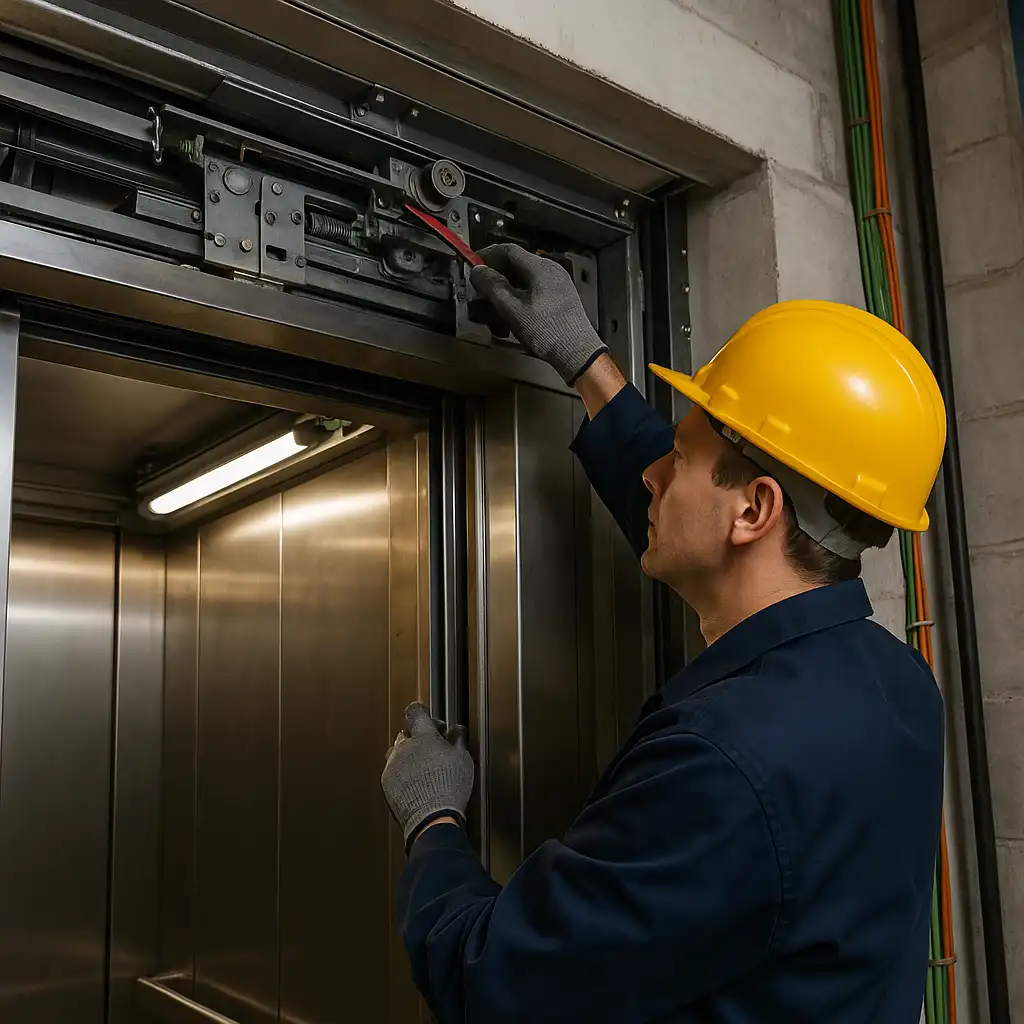
HVAC, electrical distribution, plumbing, elevators, and building envelope systems underpin the physical environment in which care is delivered. Their maintenance requirements are governed by NFPA 99, NFPA 101, ASHRAE 170, and the Joint Commission's utility management standards - each with specific inspection intervals, test procedures, and documentation requirements.
Domain 3: Life Safety Systems
Fire alarm, sprinkler, emergency power, egress lighting, smoke compartmentalization, and nurse call systems all carry mandatory inspection and test schedules under NFPA 101 and Joint Commission Life Safety chapter requirements. Missing a quarterly fire door inspection or failing to document an annual generator load bank test is a direct compliance finding during a survey - regardless of whether the equipment actually functioned correctly.
Domain 4: Environment of Care Documentation
In 2026, the Joint Commission consolidated the Environment of Care (EC) and Life Safety (LS) chapters into a unified Physical Environment (PE) framework. The Maintenance Management Program (MMP) is now a mandatory, documented framework - meaning every hospital must have a formal written plan for how it manages maintenance, not just a set of informal practices. The compliance gap that triggers most citations is documentation completeness, not actual maintenance failures. Equipment may be properly maintained but lack the written procedures, maintenance frequency justifications, or technician qualification records that surveyors require. A CMMS that automatically generates audit-ready records as a byproduct of normal maintenance operations - not as a separate documentation burden - is the most direct solution to this problem.
Critical Hospital Systems: What Needs Maintenance and Why
HVAC and Ventilation Systems
Hospital ventilation is governed by ASHRAE 170-2021, which specifies pressure relationships, air change rates, humidity ranges, and filtration requirements for every room category - from operating rooms requiring 20+ air changes per hour and positive pressure, to airborne infection isolation rooms requiring negative pressure and HEPA filtration.
HVAC failures directly threaten infection control. Hospital-acquired infections (HAIs) cost $28,000–$120,000 each and affect approximately 1 in 31 hospital patients on any given day. CMMS platforms maintain automated PM schedules for air handling unit filter changes, cooling tower treatment, condensate drain cleaning, and HEPA filter integrity testing - all directly linked to infection prevention outcomes.
Key maintenance tasks: Monthly filter inspections and replacements per zone classification, quarterly pressure relationship verification in critical spaces, annual balancing and air change rate confirmation, cooling tower biocide treatment per water management program, and documented HEPA filter integrity testing for all isolation rooms and operating theaters.
Electrical Systems and Emergency Power
Hospital electrical infrastructure is categorized under NFPA 99 into the Essential Electrical System (EES), which includes the Emergency System, Equipment System, and normal power. Each category has defined testing intervals, load transfer requirements, and documentation standards.
A failure to document an annual load bank test or a missed monthly generator exercise is a direct compliance finding during survey - regardless of generator condition. Emergency power is simultaneously the most inspected and the most consequential system in any hospital: a generator that fails to transfer in a power outage affects every critical care patient simultaneously.
Key maintenance tasks: Monthly generator no-load exercise and transfer switch testing, quarterly automatic transfer switch verification, annual full-load bank test with documentation filed per NFPA 99 requirements, UPS battery testing for critical systems, and routine inspection of the entire distribution system for panel condition, breaker function, and ground fault protection.
Medical Gas Systems
Medical gas systems - oxygen, medical air, nitrous oxide, vacuum, and specialty gases - are life-safety systems classified under NFPA 99 with the highest criticality designation. Failures are directly life-threatening: a medical vacuum failure in an ICU or a contaminated oxygen supply in an operating room constitutes an immediate patient safety emergency.
Medical gas maintenance requires certified medical gas technicians. It generates a documentation trail that must be maintained throughout the life of the system - including annual pipeline integrity testing, alarm verification, zone valve testing, and outlet flow testing.
Plumbing and Water Management
Water management in hospitals is governed by the Centers for Medicare & Medicaid Services (CMS) Water Management Program requirements, which mandate documented Legionella risk assessments, water temperature monitoring, disinfection protocols, and corrective action records across all water system risk zones.
Legionella outbreaks in healthcare settings generate serious patient harm - immunocompromised patients face mortality rates from Legionnaires' disease that are many times higher than in the general population - and significant regulatory consequences. Water management program compliance typically requires temperature monitoring at 50 or more points in large facilities, documented flushing protocols, and quarterly review of water safety plan implementation.
Fire and Life Safety Systems
Fire alarm, suppression, emergency egress, and smoke compartmentalization systems require annual inspection and testing under NFPA 101, with quarterly fire door inspections and monthly visual checks of fire extinguishers and egress lighting. The Joint Commission requires complete documentation of every test and inspection, with deficiencies tracked to verified closure.
Fire safety findings are among the most common Joint Commission citations - and among the most preventable. Every missed quarterly fire door inspection, every undocumented sprinkler head replacement, and every fire door gap measurement that was never recorded is a potential citation that has nothing to do with whether the system would actually work in an emergency.
The Hospital Maintenance Compliance Framework in 2026
Joint Commission: 2026 Physical Environment Framework
The Joint Commission's 2026 consolidation of EC and Life Safety chapters into the Physical Environment (PE) framework has two significant implications. First, the unified framework means surveyors are evaluating HVAC, electrical, medical gas, fire safety, and medical equipment maintenance against an integrated standard — documentation gaps in any one area affect the overall PE compliance picture. Second, the new Maintenance Management Program (MMP) requirement means every hospital must have a formal, written, actively maintained plan governing how maintenance is managed — not just a set of habits.
Key standards that remain central to compliance:
- EC.02.04.01 — Medical equipment management: complete inventory, risk-based inspection schedules, documented maintenance history for every device
- EC.02.05.01 — Utility systems management: HVAC, electrical, medical gas, and all critical utilities managed with documented inspection schedules and corrective action records
CMS Conditions of Participation
42 CFR 482.41 requires facilities and equipment be maintained to ensure acceptable safety and quality levels. CMS inspectors enforce specific equipment maintenance protocols as a condition of Medicare and Medicaid reimbursement — making CMS compliance inseparable from a hospital's financial viability. Losing CMS certification is an existential event for most hospitals.
NFPA 99 and NFPA 101
NFPA 99 (Health Care Facilities Code) governs maintenance requirements for medical gas systems, electrical systems, and HVAC across all healthcare occupancy types. NFPA 101 (Life Safety Code) requires documented inspection and testing of fire alarm, sprinkler, egress, and smoke compartmentalization systems on prescribed schedules with retained records.
OSHA Healthcare Requirements
OSHA 29 CFR 1910 Subpart S covers electrical safety including grounding, testing, and inspection of patient-connected equipment. Annual electrical safety testing is required for all equipment with direct patient contact. Lockout/tagout procedures are mandatory during maintenance on any energized system.
FDA Regulations and the 2026 QMSR
Effective February 2, 2026, the FDA Quality Management System Regulation (QMSR) replaced 21 CFR Part 820 with ISO 13485-aligned requirements. This primarily impacts device manufacturers but affects hospitals performing extensive equipment servicing. Additionally, 21 CFR Part 803 (Medical Device Reporting) requires hospitals to report device-related deaths to FDA within 10 working days and serious injuries to the manufacturer within 10 working days. CMMS platforms used for compliance documentation must provide timestamped audit trails, role-based access permissions, and electronic signature capabilities meeting FDA validation standards.
Hospital Maintenance Checklist: Daily, Monthly, and Annual Tasks
The scope of hospital maintenance is substantial. A 300-bed hospital must track thousands of individual maintenance tasks annually across mechanical, electrical, plumbing, fire safety, and medical systems to maintain full regulatory compliance. The tasks below represent core requirements across the most critical systems.
Daily Checks
- Emergency power: Verify generator status indicators and fuel levels; confirm transfer switch is in automatic position
- Medical gas alarms: Check master alarm panels for fault indicators across all gas types
- HVAC critical spaces: Spot-check pressure relationship indicators for operating rooms, isolation rooms, and cleanroom pharmacy
- Life-critical equipment: Function checks on ventilators, defibrillators, and cardiac monitors per unit protocols
- Fire suppression: Visual inspection of sprinkler heads and panels for fault indicators
- Water temperature logs: Record and review temperature at sentinel monitoring points per water management program
- Generator exercise: No-load or loaded run with automatic transfer switch test; documented per NFPA 99
- Emergency lighting: Test the function of all emergency and egress lighting fixtures
- Medical gas alarms: Full panel alarm test; document results per NFPA 99
- Fire extinguisher: Visual inspection of all units; document monthly inspection tags
- HVAC filters: Inspect and replace per zone classification and pressure differential readings
- Patient-connected equipment: Electrical safety testing for all devices with direct patient contact
- Elevators: Licensed mechanic service visit per ASME A17.1 requirements
- Eyewash stations and safety showers: Weekly activation flush; monthly documented inspection
- Fire doors: Inspection of all fire and smoke doors for gap compliance, self-closing function, and hardware condition; document per NFPA 101
- Automatic transfer switches: Full operational test under load conditions
- Medical gas zone valves: Function test and leak verification at each zone
- HVAC pressure relationships: Verified measurement in all critical spaces; balance corrected if out of specification
- Medical equipment PM cycles: Complete all devices on the quarterly PM schedule with calibration verification
- Water system: Legionella risk assessment point monitoring; corrective action where temperature deviations are found
- Emergency generator load bank test: Full-load test per NFPA 99 with documentation filed with AHJ
- Fire alarm and suppression systems: Complete annual inspection and test per NFPA 72 and NFPA 25 with certified inspector; documentation filed
- HVAC air balance: Full air change rate and pressure relationship verification for all clinical zones
- Electrical distribution: Thermographic scan of all electrical panels, switchgear, and transformers for hot spots
- Medical gas system: Complete pipeline integrity testing, alarm verification, and outlet flow testing by a certified medical gas technician
- Category 1 elevator test: Annual safety test by licensed mechanic; filed with AHJ
- Water management program review: Annual Legionella risk assessment update; corrective action records verified closed
- Sterilization equipment: Annual validation and qualification testing per AAMI standards
The Real Cost of Reactive Hospital Maintenance in 2026
Understanding the financial stakes makes the case for proactive maintenance in terms that any CFO can evaluate.
Direct repair cost premium: Emergency repairs in clinical settings cost 4.8x more than the same work performed as planned maintenance. A repair budgeted at $5,000 as a scheduled PM becomes a $24,000 emergency service call. Across hundreds of assets and thousands of maintenance events annually, this premium compounds into millions.
Equipment downtime revenue loss: Hospitals typically lose $10,000–$15,000 per day in direct revenue when an MRI is offline. OR downtime costs $25,000–$80,000 per room per day. A single robotic surgical system failure, canceling a full day of procedures, represents $150,000–$300,000 in immediate lost revenue. Annual MRI downtime costs range from $60,000 to $120,000 or more for high-volume facilities.
Regulatory and accreditation exposure: The average cost of accreditation loss and remediation for a mid-size hospital is approximately $1.8 million. A single Joint Commission Requirement for Improvement triggered by a documentation gap - a missed fire door inspection record, an undocumented generator test, a medical equipment PM overdue by 14 days - costs $60,000–$180,000 in corrective documentation and remediation. The equipment did not fail. The record did not exist.
Cumulative annual waste: US healthcare facilities lose an estimated $93 billion annually through reactive, unplanned maintenance across the industry. The average US hospital loses $7.5 million annually from inadequate medical equipment maintenance alone. The ROI case for structured preventive maintenance and a CMMS is not subtle. Hospitals that transition from reactive to planned operations with a CMMS platform recover full implementation investment within an average of 14 months through reduced emergency repair costs and improved equipment uptime.
Preventive vs. Predictive Hospital Maintenance in 2026
Preventive Maintenance: The Compliance Foundation
Preventive maintenance is the regulatory and operational baseline for hospital maintenance. It is what the Joint Commission MMP requires, what CMS inspectors look for, and what forms the documented foundation of every compliance program.
Hospitals transitioning to structured PM programs reduce unplanned equipment failures by up to 70% within the first 12 months. PM completion rates above 90% are the threshold above which facilities consistently demonstrate strong compliance and low emergency repair spend. Below 90%, reactive work accelerates, and survey findings multiply.
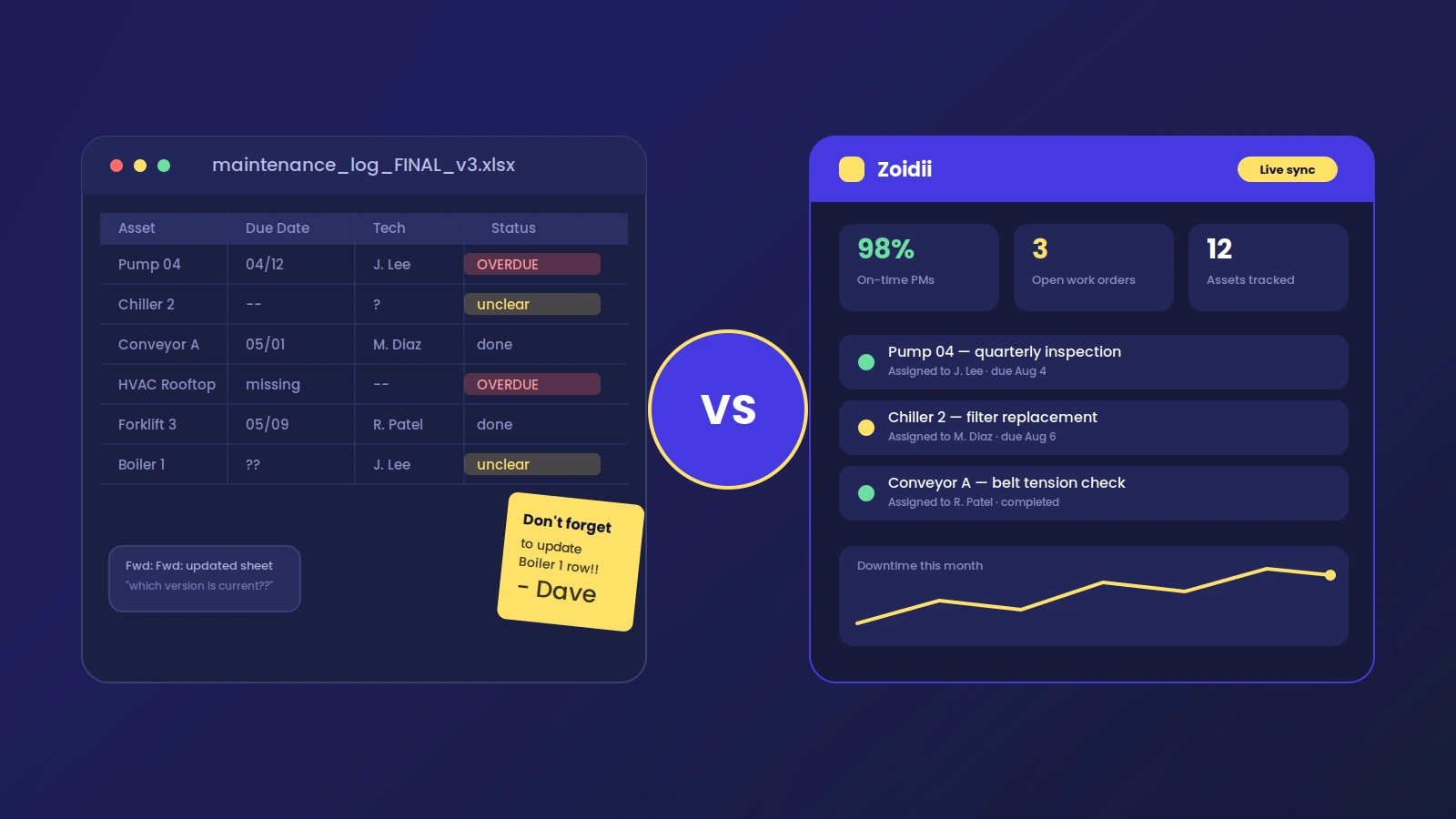
The critical differentiator between PM programs that deliver results and those that don't is the schedule itself - it's the system that executes and documents it. Manual PM tracking via spreadsheet produces an average PM compliance rate of 61% in hospital environments. CMMS-driven automated scheduling routinely achieves 90%+ compliance within 90 days of implementation.
Predictive Maintenance: The Emerging Standard
Predictive maintenance - using IoT sensor data and AI analytics to detect equipment degradation before failure occurs - is moving from early adoption to operational standard in healthcare in 2026. AI-powered maintenance platforms can reduce unplanned downtime by up to 45% by generating alerts and work orders based on actual equipment condition rather than fixed calendar intervals. For high-value clinical assets, the financial case is compelling. AI monitoring can detect an MRI system failure 3–6 weeks before it occurs - allowing the repair to be scheduled as a planned maintenance event ($14,000) rather than an emergency callout ($186,000). The same technology applied to ventilators and infusion pumps in the ICU reduces adverse events from equipment failure - the patient safety dimension that no cost model fully captures.
How a CMMS Transforms Hospital Maintenance Management
For hospital maintenance teams managing thousands of assets, hundreds of regulatory deadlines, and multiple inspecting bodies simultaneously, a CMMS like Zoidii is not a productivity tool - it is the operational infrastructure that makes compliance possible at scale.
Automated Compliance Scheduling
Zoidii automates the scheduling of every required inspection and PM interval - from daily equipment function checks to annual generator load bank tests - with configurable alerts before deadlines. For the Joint Commission's MMP requirement, every maintenance activity is scheduled, assigned, completed, and documented within the same workflow. Nothing falls through the cracks. Nothing is discovered to be overdue the week before a survey.
Audit-Ready Documentation at the Point of Work
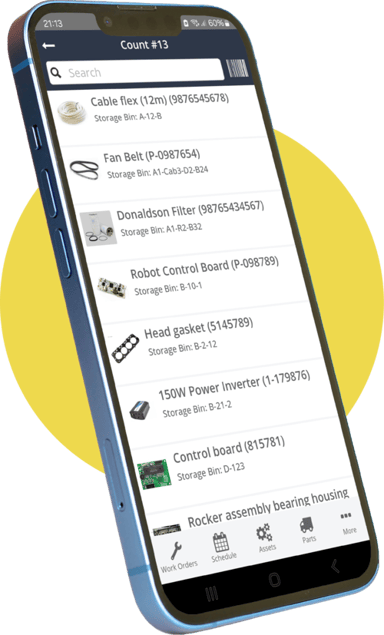
Every work order closed in Zoidii generates a timestamped, signed maintenance record - technician name, tasks performed, findings documented, photos attached and corrective actions initiated. Surveyors expect any work order to be produced within 60 seconds. With Zoidii, any record is retrievable in moments, not hours - and a complete compliance documentation package for any 12 months is exportable in under 90 minutes, compared to the weeks of manual record gathering that paper-based systems require. Here is how you bring up any information for audits within 60 seconds. Facilities using digital maintenance tracking achieve survey readiness up to 3x faster than those relying on paper systems. Facilities using manual tracking face compliance gaps in 72% of formal inspections.
Medical Equipment and Asset Registry
Zoidii maintains a complete, up-to-date inventory of every maintainable asset - medical devices, HVAC units, generators, fire suppression zones, elevators, water system components - with manufacturer specifications, warranty status, maintenance history, associated work orders, inspection certificates, and parts lists all centralized in one record. When a surveyor asks for the complete service history of a specific piece of equipment, the answer takes seconds.
Work Order Management Across All Maintenance Domains
All four hospital maintenance domains - biomedical equipment, building infrastructure, life safety systems, and environment of care documentation - are managed within a single work order system in Zoidii. Biomedical and facilities teams work from separate asset views with separate PM schedules, but the EC coordinator and compliance director see all compliance statuses in one dashboard. The coordination gaps between clinical engineering and facilities that create compliance exposure in siloed systems are eliminated.
Reactive Work Request Integration
Clinical staff, nursing units, and department managers can submit work requests directly through Zoidii - creating a documented, trackable maintenance record from the first moment a problem is reported. Every work request generates a work order; every work order is assigned, prioritized, and closed with documentation. No verbal request goes unrecorded. No reported equipment problem disappears into an inbox.
CapEx Planning and Asset Lifecycle Management
Zoidii's asset history data - complete failure records, repair cost accumulation, parts usage trends, PM compliance by asset - provides the data foundation for defensible capital replacement recommendations. Finance teams receive condition-score-based replacement forecasts instead of end-of-year guesswork, enabling CapEx planning cycles that align with actual asset condition rather than arbitrary age thresholds.
Hospital Maintenance Best Practices for 2026
Treat the MMP as a living operational document, not a compliance artifact. The Joint Commission's 2026 MMP requirement means every hospital must have a formal written maintenance management plan - not just a CMMS. Review and update it quarterly. Ensure it accurately reflects actual PM intervals, assigned responsibilities, and asset classifications for your current facility configuration.
Prioritize assets by clinical risk classification. Not all maintenance tasks carry equal patient safety weight. A PM overdue on a non-critical supply storage room is different from a PM overdue on an ICU ventilator. Classify every asset by risk level - life-critical, high-risk, low-risk - and configure your CMMS to escalate overdue status on life-critical assets within hours, not days.
Never allow documentation to lag maintenance execution. The single most common cause of Joint Commission citations is records that don't exist, not equipment that failed. Build documentation into the work order workflow itself: tasks cannot be closed without completion notes, calibration results, and technician sign-off. If it isn't in the CMMS, it didn't happen as far as a surveyor is concerned.
Integrate biomedical and facilities maintenance into one CMMS. Managing clinical equipment and building systems in separate platforms creates coordination gaps, duplicate documentation burdens, and blind spots in compliance status. A unified CMMS gives every stakeholder - biomed, facilities, infection control, compliance - a single source of truth.
Run quarterly compliance gap analyses. Don't wait for a survey to find out what's overdue. Pull a CMMS report monthly on PM compliance rates by system, open deficiencies by category, and upcoming inspection deadlines. Address gaps before they become findings.
Build Legionella documentation into your standard workflow. CMS Water Management Program requirements are actively enforced, and Legionella outbreaks in hospital settings generate patient harm, regulatory consequences, and reputational damage that far exceed the cost of a compliant water safety program. Every water temperature reading, every corrective action, and every risk assessment update should be a CMMS work order - not a separate manual process.
Frequently Asked Questions
What is the Joint Commission's Maintenance Management Program (MMP) requirement in 2026? As of 2026, the Joint Commission requires every accredited hospital to have a formal, written Maintenance Management Program (MMP) - a documented framework that defines how the facility manages maintenance activities, including PM schedules, inspection intervals, assigned responsibilities, documentation standards, and deficiency tracking. This requirement emerged from the Joint Commission's 2026 consolidation of the Environment of Care and Life Safety chapters into a unified Physical Environment framework. The MMP is now inspected directly during surveys; a facility that cannot produce it faces an immediate citation.
What are the most common Joint Commission maintenance citations? 43% of Joint Commission citations involve maintenance documentation failures - records that are missing, incomplete, or insufficiently detailed - rather than equipment that actually failed. The most frequently cited areas include fire door inspection records, emergency generator test documentation, medical equipment PM records, and utility systems maintenance logs. A CMMS that generates audit-ready documentation automatically as part of normal workflow - rather than as a manual post-work documentation task - eliminates this category of entirely preventable risk.
How does NFPA 99 affect hospital maintenance requirements? NFPA 99 (Health Care Facilities Code) governs maintenance requirements for medical gas systems, electrical systems, including the Essential Electrical System and emergency power, and HVAC systems across all healthcare occupancy types. It defines specific inspection frequencies, test procedures, performance criteria, and documentation standards for each category. For hospital facility managers, NFPA 99 compliance is operationally managed through a CMMS that automates inspection scheduling, captures test results against required criteria, and maintains the documentation records that surveyors and state AHJs require.
How does a CMMS help with hospital maintenance compliance? A CMMS improves hospital maintenance compliance by automating the scheduling of every required inspection and PM interval, generating work orders with embedded SOPs and checklists that enforce procedure compliance at the point of work, capturing timestamped completion records that build the MMP documentation automatically, enabling instant retrieval of any maintenance record during a survey, and providing compliance dashboards that surface overdue tasks before they become violations. Facilities using digital maintenance tracking achieve survey readiness up to 3x faster than paper-based systems, and facilities with CMMS-driven PM programs report PM completion rates 30+ percentage points higher than manual tracking.
What is the financial ROI of preventive maintenance in a hospital? Four value streams drive the ROI of hospital preventive maintenance: emergency repair cost avoidance (planned maintenance costs 4.8x less than emergency repairs for the same work), equipment downtime revenue protection (MRI downtime alone costs $10,000–$15,000 per day), regulatory cost avoidance (preventing a single Joint Commission Requirement for Improvement saves $60,000–$180,000), and asset life extension (consistent PM extends equipment life by 25–35%, deferring $2M–$8M in capital over five years for a 300-bed facility). Hospitals implementing structured CMMS-driven maintenance programs recover full implementation investment within an average of 14 months.