
Computerized maintenance management systems have always promised better visibility, stronger maintenance discipline, and more reliable operations. But for many organizations, the challenge has never been the value of a CMMS. The challenge has been the effort required to get started and the time needed to keep the system updated.
That is where artificial intelligence (AI) changes the picture.
Zoidii has integrated AI into its CMMS software to remove common bottlenecks, reduce manual administration, and help maintenance teams get more value from the platform faster. Instead of asking users to spend hours entering data, building templates, and reviewing long job histories, Zoidii uses AI to simplify the work and accelerate implementation.
The result is a CMMS that is faster to set up, easier to use, and more efficient in day-to-day maintenance operations.
Why AI Matters in a Modern CMMS
Many CMMS projects slow down because teams are overwhelmed by the amount of setup involved. Asset records need to be created. Spare parts need to be entered. Checklists need to be written. All of this takes time, and when teams are already stretched, implementation can drag on or stall completely. AI helps by reducing the amount of manual work required at each stage.
In Zoidii, AI is not just a novelty feature added on top of the software. It is built into key workflows that every maintenance teams use during CMMS setup. The goal is simple: help users capture information faster, standardize data more easily, and make better decisions with less effort.
Four standout AI features show how this works in practice: Zoidii's AI Checklist Generator, Photo to Asset, Photo to Part, and the Work Order AI Summary.
AI Checklist Generator: Faster Standardization, Less Setup Time
Creating checklists is one of the most important parts of building a strong maintenance program. Checklists support preventive maintenance, inspections, shutdown tasks, and safety procedures. They help standardize work, reduce human error, and make sure critical steps are not missed.
But building checklists manually can be time-consuming. Teams often need to start from scratch, scour through OEM manuals, rely on tribal knowledge, or spend time rewriting the same types of inspection steps again and again.
Zoidii's AI Checklist Generator speeds up that process.
Instead of manually typing every inspection point, users simply describe the asset and the type of maintenance being performed, and the AI generates a comprehensive, industry-appropriate checklist in seconds.
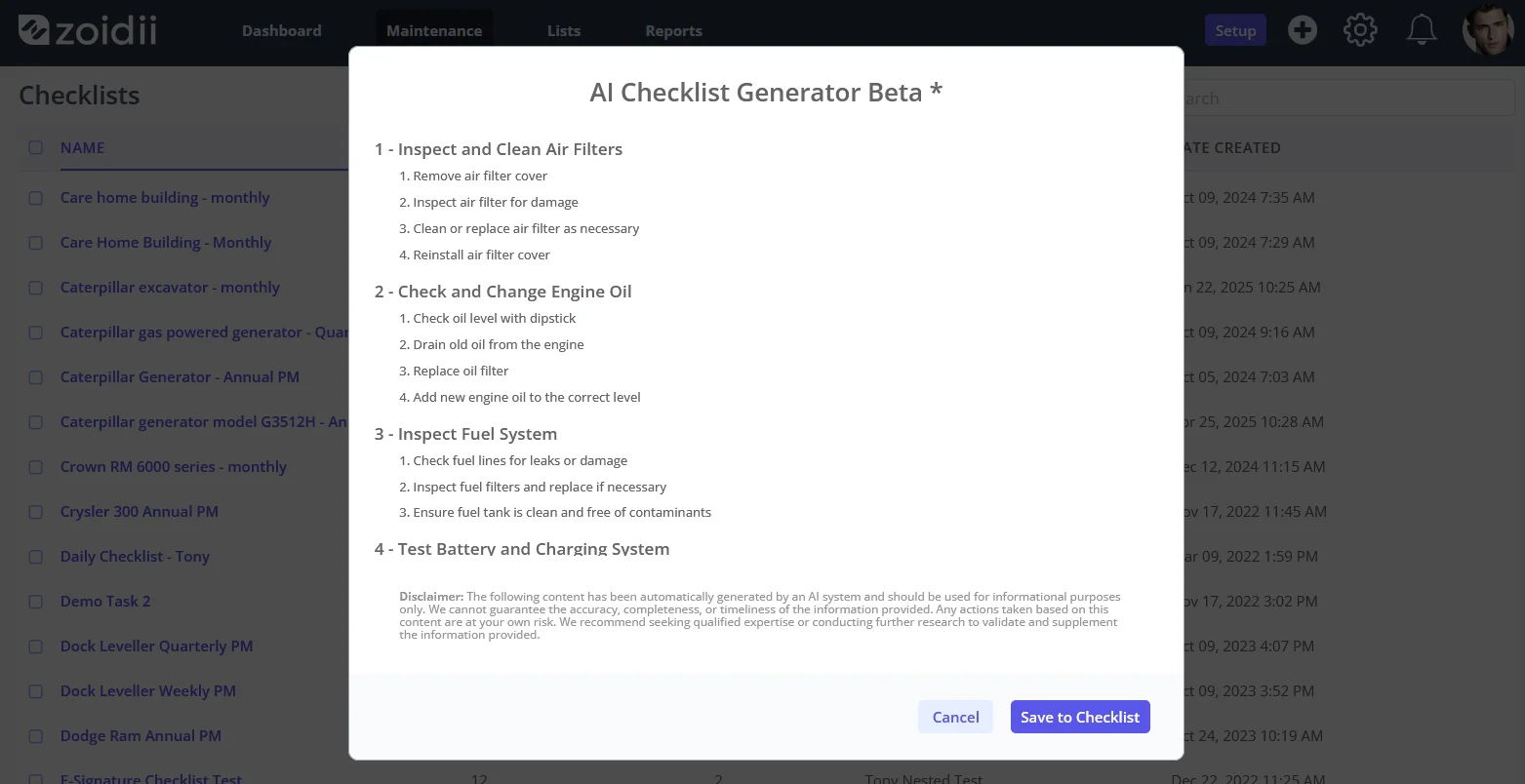
The generated steps are fully editable so that teams can tailor them to their specific equipment, compliance requirements, or site conditions — but the heavy lifting is done instantly. This gives teams a fast starting point that can then be adjusted to suit site-specific requirements.
The impact on implementation timelines is significant. A site that might have spent two weeks building out PM procedures for 50 asset types can now complete the same task in a fraction of the time. More importantly, the quality of those checklists is consistently high from day one, which means better compliance tracking and more reliable maintenance records in the future.
This offers several benefits.
- First, it reduces implementation time. New sites or departments can set up maintenance templates much faster because they do not need to build every checklist manually.
- Second, it improves consistency. AI-generated drafts help teams use a more structured format and reduce variation between technicians or departments.
- Third, it supports continuous improvement. Teams can quickly create or refine checklists as they learn more about equipment performance and maintenance needs.
Photo to Asset: Turning Equipment Into Digital Records in Seconds
One of the biggest challenges in CMMS implementation is asset data capture. Before a system can provide value, equipment needs to be identified and entered correctly. That often means walking the site, recording nameplate details, typing serial numbers, and manually creating records for every major asset.
This process is slow, repetitive, and prone to error.
Zoidii's Photo to Asset feature changes that by allowing users to digitize equipment in seconds using a mobile phone. A user simply takes a photo of an asset's nameplate, tag, or VIN plate, and the AI extracts key details such as the asset name, make, model, serial number, and manufacturing date. The asset record is created in the system in seconds, ready to have work orders, PM schedules, and documents attached to it.
This has a major impact on implementation speed.
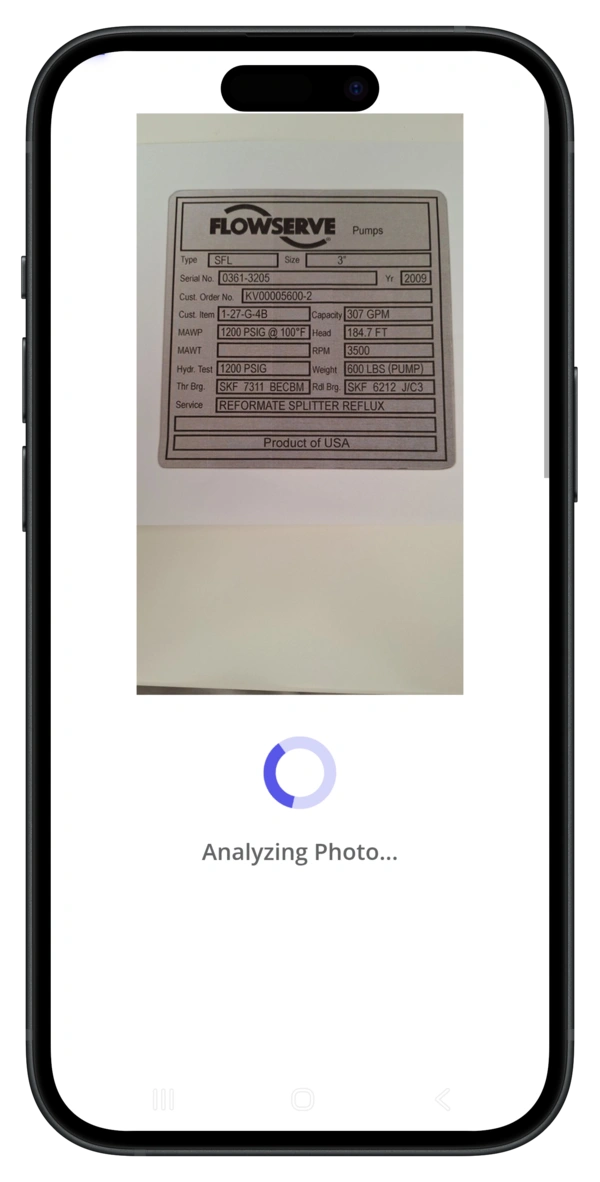
Instead of standing in front of a machine with a clipboard or typing details into a spreadsheet to enter later, a user can capture the information on the spot with just a photo. This reduces data entry time, minimizes transcription mistakes, and makes it much easier to build out an accurate asset register.
Photographs capture the physical reality of the equipment, reducing the chance of transcription errors and ensuring the CMMS reflects what is actually on the floor — not what should be there according to an Excel document from five years ago.
Photo to Asset also improves efficiency after implementation. When new equipment is installed, replacement assets arrive, or previously untracked items need to be added to the CMMS, teams can create records quickly and consistently from the field.
In other words, the process of building a digital asset register becomes far less labor-intensive. That means faster onboarding, better data quality, and less resistance from busy teams.
Photo to Part: Smarter Inventory Capture for Spare Parts Management
Spare parts management is another area where many CMMS projects struggle. Partsrooms often contain hundreds or thousands of items, but inventory records may be incomplete, inconsistent, or missing entirely.
Without accurate part data, technicians waste time searching for components, storeroom staff rely on memory, and organizations risk stockouts or unnecessary purchasing.
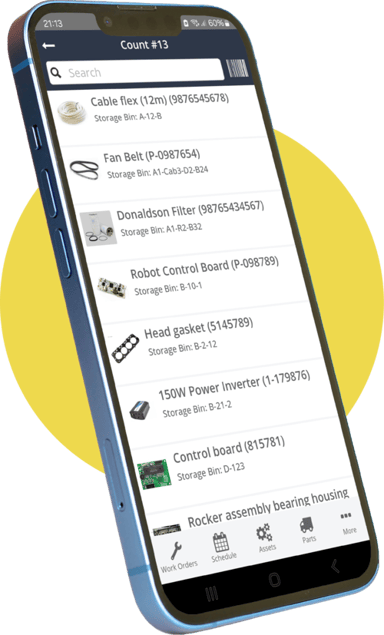
Zoidii's Photo to Part feature makes it easier to digitize spare parts using a mobile phone.
A user can snap a photo of a part or its identifying label and use AI to help capture relevant details for the CMMS. This makes it easier to create clean digital records with images for inventory items without relying on long manual entry processes.
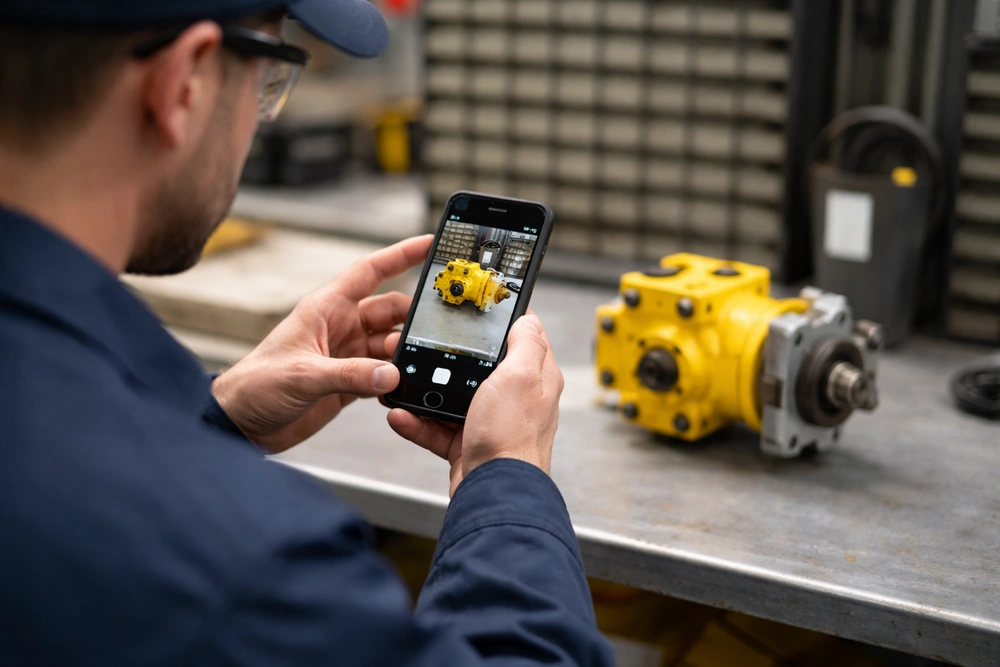
The value of this is significant.
It speeds up parts catalog creation during implementation, which is often one of the hardest and most delayed parts of a CMMS rollout. It also improves data accuracy by helping users capture information directly from the source. And it makes it more practical to keep the inventory database current over time.
The efficiency gains extend into daily operations as well. When parts are easier to identify and record, they are easier to find, reorder, reserve for work orders, and link to the right assets. That improves maintenance responsiveness and reduces wasted time across the team.
For organizations looking to strengthen storeroom control and reduce downtime caused by missing parts, Photo to Part helps turn a traditionally manual process into a much more efficient one.
Work Order AI Summary: Faster Insights From Maintenance History
Maintenance teams generate a huge amount of information through work orders. Over time, this history becomes incredibly valuable. It can reveal recurring failures, chronic asset issues, and patterns in labor or parts usage.
The problem is that the repair notes for the most important and relevant work orders are often long, inconsistent, and difficult to review at scale. Important information may be buried in technician comments, especially when multiple people have worked on the same issue across several shifts.
Zoidii's Work Order AI Summary helps solve that problem by transforming raw technician notes into structured, professional summaries.
Instead of asking a supervisor, planner, or technician to read through every note line by line, AI can highlight the key points: what was reported, what work was performed, what findings were recorded, the corrective action taken, and any follow-up recommendations. The summary is attached to the work order record and becomes part of the asset's maintenance history. The work order summary notes are also presented in several closed work order reports and CSV exports.
This improves efficiency in several ways.
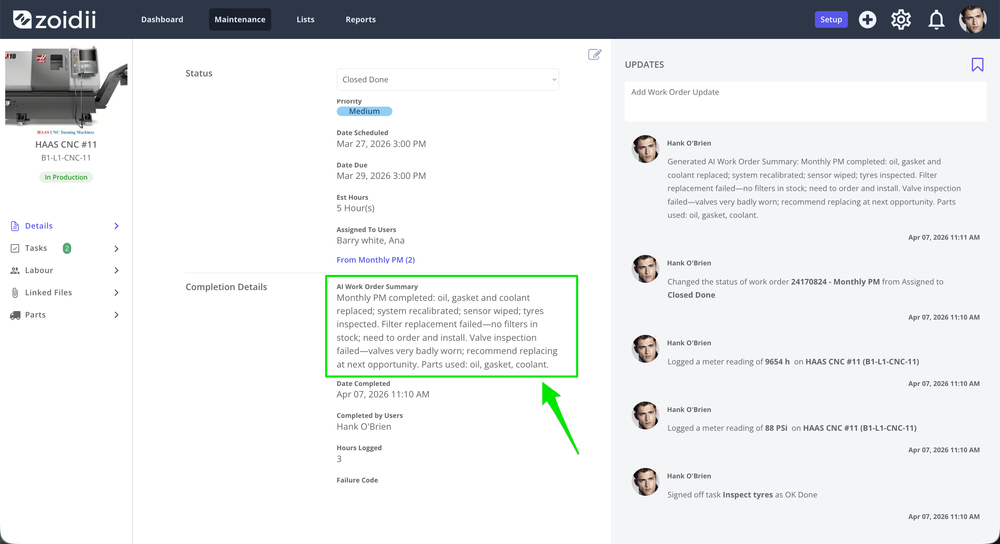
Maintenance teams can review completed work faster during shift handover. Planners can understand asset history more quickly when preparing future jobs. Technicians can get context before starting work without digging through long notes. Managers can identify trends and recurring issues with less manual review. This supports better diagnostic work, faster repairs, and more informed decisions about asset lifecycle management.
Maintenance data is only useful if people can understand it quickly. By making work order history easier to digest, Zoidii helps teams turn information into action.
AI That Reduces Friction Across the Entire Maintenance Workflow
What makes these AI features powerful is not just what they do individually, but how they work together. Together, they address the core challenge that has always held CMMS adoption back: the gap between buying the software and actually getting value from it.
The AI Checklist Generator helps teams create structured maintenance tasks faster. Photo to Asset speeds up asset register creation. Photo to Part accelerates parts digitization and inventory accuracy.
They help organizations implement faster because they remove manual setup barriers. They increase efficiency because they reduce repetitive administrative work. And they improve adoption because users can see value sooner and interact with the system more naturally.
That matters because a CMMS only delivers results when people actually use it. If the system feels slow, heavy, or difficult to maintain, adoption suffers. But when AI helps simplify key tasks, the software becomes easier to embrace across maintenance, operations, and storeroom teams.
A More Practical Path to CMMS Success
Implementing a Computerized Maintenance Management System (CMMS) has traditionally been a slow and resource-intensive process. Building out asset registers, creating part libraries, and writing preventive maintenance checklists all take time — often weeks or months before a team sees meaningful value from the platform. In many cases, they abandon the CMMS before they create their first work order.
Zoidii is changing that. By embedding artificial intelligence directly into its CMMS platform, Zoidii has dramatically reduced the time it takes to get a site up and running, while giving maintenance teams smarter tools for managing their day-to-day operations.
Zoidii's AI features are designed to support real maintenance workflows, not distract from them. They help users get data into the system faster, generate useful content more easily, and extract value from maintenance records with less effort.
That means quicker implementation, less manual administration, better data quality, and more efficient maintenance operations.
As maintenance teams face growing pressure to do more with less, AI can play an important role in making CMMS software more usable and more effective.
By integrating features like AI Checklist Generator, Photo to Asset, Photo to Part, and Work Order AI Summary, Zoidii is helping organizations modernize how they manage assets, parts, and work.
The result is a smarter CMMS experience: one that reduces setup time, supports better decisions, and helps maintenance teams work faster and more efficiently from day one.