
Most maintenance teams treat inspection work orders as an afterthought - a box to check before moving on to "real" work. That's a mistake. A poorly structured inspection process is how a $200 bearing replacement turns into a $40,000 emergency shutdown. I've seen it happen more than once.
This guide covers everything you need to know about inspection work orders: what they contain, why they matter, how to build an effective process from scratch, and the specific practices that separate teams running smooth operations from those constantly fighting fires.
Quick Verdict
Inspection work orders are structured documents that tell technicians exactly what to check, when to check it, and how to report findings. Done right, they reduce unplanned downtime by 25-35%, keep you compliant with OSHA, ISO 55000, and industry-specific regulations, and create a data trail that makes smarter maintenance decisions possible. The biggest wins come from moving off paper, standardizing your formats, and actually analyzing the data you collect. If you're still running inspections from clipboards and memory, you're leaving money and safety on the table.
What Exactly Is an Inspection Work Order?
An inspection work order is a formal document - digital or paper - that authorizes and outlines a specific inspection task. Think of it as a recipe card for your maintenance team. It tells the technician what equipment to inspect, which checks to perform, what tools they'll need, and how to document their findings.
A well-built inspection work order typically includes:
- Asset identification: Equipment name, ID number, and physical location
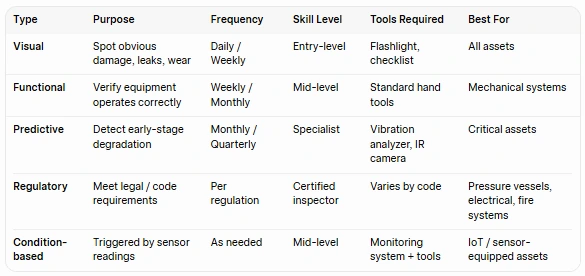
- Inspection type: Visual, functional, predictive (vibration, thermography), or regulatory
- Task checklist: Specific items to examine, measure, or test
- Frequency: Daily, weekly, monthly, quarterly, or based on run-hours
- Acceptance criteria: What "pass" and "fail" look like for each check
- Assigned technician: Who's responsible for completing the work
- Estimated duration: How long the inspection should take
- Follow-up instructions: What to do when something fails
Where Inspection Work Orders Fit in Your Maintenance Strategy
Inspection work orders sit at the foundation of preventive maintenance (PM). Without them, your PM program is essentially guesswork. They feed directly into your corrective maintenance pipeline: a technician inspects a conveyor belt, notices fraying, creates a follow-up work order to replace it, and you avoid an unplanned line stoppage next Tuesday. Organizations tracking Overall Equipment Effectiveness (OEE) rely on inspection data to identify which assets are degrading and at what rate. That data also feeds Mean Time Between Failures (MTBF) calculations, which help you predict when equipment will need major service.
Why Inspection Work Orders Matter More Than You Think
Safety and Compliance
OSHA citations averaged $16,131 per serious violation in 2024. For willful violations, that number jumps to $161,323. Regulatory bodies like OSHA, the EPA, and the FDA (specifically 21 CFR Part 11 for pharmaceutical and medical device manufacturers) don't just want you to perform inspections - they want documented proof that you did.
One medical device manufacturer I worked with nearly failed an FDA audit because their paper-based inspection records had inconsistent dates, missing signatures, and no clear chain of custody. Their inspections were actually happening on schedule, but the documentation couldn't prove it. A digital system with timestamped entries and mandatory fields would have eliminated that risk.
Read more about how your CMMS can help with 21 CFR Part 11 compliance.
Financial Impact
The numbers tell a clear story. Unplanned downtime costs industrial manufacturers an estimated $50 billion annually, according to Deloitte research. Plants that implement structured inspection programs typically see a 25-35% reduction in unplanned failures within the first 18 months. When you consider that the average cost of unplanned downtime runs $260,000 per hour in automotive manufacturing, even modest improvements pay for themselves fast.
Data-Driven Decision Making
Every completed inspection work order generates data. Over months and years, that data reveals patterns: which assets fail most often, which components degrade fastest and whether certain shifts or environmental conditions correlate with problems. Without standardized inspection work orders, you're collecting anecdotes instead of data.
Inspection Work Order Types: A Comparison
Building an Effective Inspection Process from Scratch
Step 1: Inventory Your Assets (Days 1-15)
You can't inspect what you haven't cataloged. Start by building a complete asset register with standardized naming conventions. This is where many teams stumble early.
Bad naming: "Pump 1," "Old pump by dock," "Steve's pump" Good naming: "P-101-CW-B2" (Pump-Asset Number-Chilled Water-Building 2)
Consistent naming matters because it's how you'll sort, filter, and analyze inspection data later. If three different technicians log the same pump under three different names, your data is useless.
Step 2: Determine Inspection Requirements (Days 16-30)
For each asset, identify what inspections are required and how often. Pull from three sources:
- Manufacturer recommendations - Check OEM manuals for suggested inspection intervals
- Regulatory requirements - OSHA, local fire codes, industry-specific standards
- Historical failure data - If you have it, use past breakdowns to guide where inspections matter most
Step 3: Build Your Work Order Templates (Days 31-45)
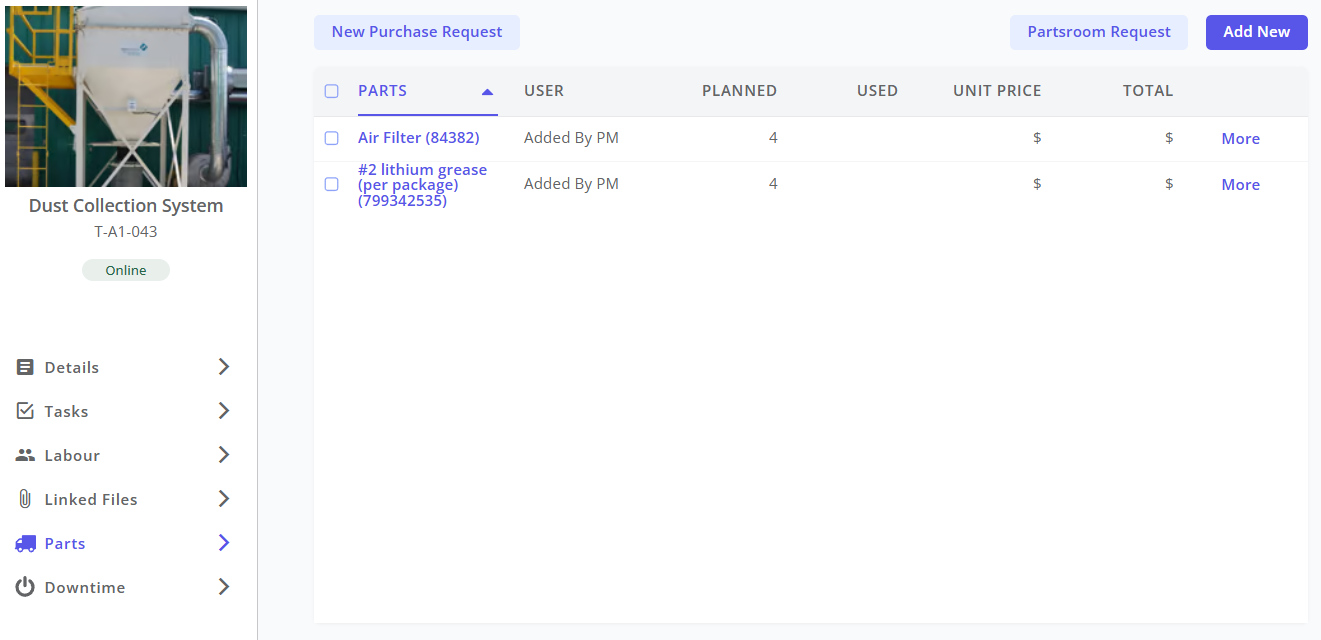
Create standardized templates for each inspection type. Every template should include mandatory fields that technicians can't skip. A platform like Zoidii CMMS lets you build these templates with required fields, dropdown menus for standardized responses, and photo upload capabilities - which eliminates the "illegible handwriting" problem that plagues paper systems.
Your templates should force specificity. Instead of "Check belt condition," write "Measure belt tension using tension gauge. Acceptable range: 3.5-4.2 lbs. Record reading. Inspect for cracks, fraying, or glazing. Photograph any defects."
Step 4: Set Up Scheduling (Days 46-60)
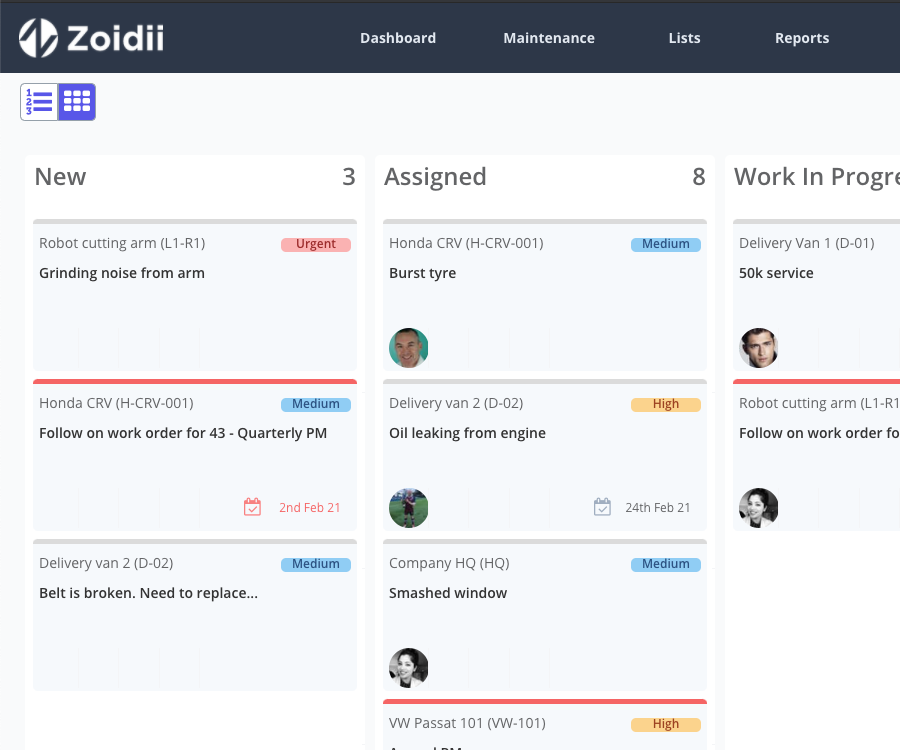
Map out inspection frequencies on a calendar. Stagger your inspections so technicians aren't overwhelmed on certain days and idle on others. A Kanban-style scheduling board helps visualize the workload distribution across your team and catch scheduling conflicts before they happen.
Step 5: Train Your Team (Days 61-75)
Training isn't a one-time event. Cover the "why" behind each inspection task, not just the "what." Technicians who understand that checking oil color can reveal contamination before it destroys a gearbox will take the task more seriously than those who think they're just ticking boxes.
Step 6: Measure and Refine (Ongoing)
Track these KPIs from day one:
- Inspection completion rate: Target 95%+. Below 90% means you have a scheduling or staffing problem.
- Wrench time percentage: How much of a technician's shift is spent on actual inspection tasks versus travel, waiting, or paperwork. Best-in-class teams hit 55-65%.
- Finding-to-work-order conversion rate: What percentage of inspection findings generate follow-up corrective work orders? Too low might mean inspections aren't thorough enough. Too high might mean your PM program has gaps.
- Maintenance cost as a percentage of replacement asset value (RAV): Target 2-5%. Above 8%, and you should evaluate whether repair or replacement makes more financial sense.
Best Practices That Separate Good Teams from Great Ones
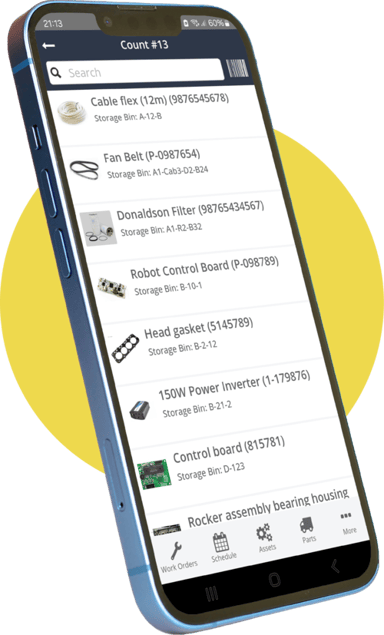
Kill the clipboard. Paper inspection forms get lost, damaged, and filed in boxes nobody opens again. Digital forms on a mobile app give technicians access to asset history, reference photos, and previous inspection notes right at the point of work. Zoidii's mobile app, for example, lets technicians complete inspection checklists, attach photos and video, and flag issues for follow-up without returning to a desk.
Build escalation paths into every work order. If a technician finds a critical safety issue during a routine inspection, they need to know exactly who to call and what immediate actions to take. Don't make them figure it out in the moment.
Use pass/fail with nuance. Binary pass/fail checkboxes miss the story. A bearing that passes today but has shown increasing vibration readings over three consecutive inspections is telling you something. Build your inspection forms to capture measurements, not just yes/no answers.
Review inspection data monthly. Assign someone - a reliability engineer, maintenance supervisor, or planner - to review completed inspections and look for trends. Reviewing data is where the real value lives. Patterns in inspection data often reveal systemic issues that individual inspections miss.
Don't inspect everything equally. Use criticality rankings to focus your inspection resources. An air compressor feeding your entire production line deserves more frequent and detailed inspections than a break room refrigerator. This seems obvious, but I've seen facilities where every asset gets the same monthly visual check regardless of consequence of failure.
Common Mistakes to Avoid
The biggest failure mode isn't skipping inspections entirely - it's performing them poorly. Technicians rushing through checklists without actually looking at the equipment, marking everything "pass" to save time, or skipping photo documentation because it's inconvenient. These habits erode the entire program's value. Another common mistake is creating inspection work orders that are too vague. "Inspect motor" tells a technician almost nothing. "Check motor mounting bolts for looseness (torque spec: 45 ft-lbs), inspect cooling fan for damage, measure winding insulation resistance (minimum acceptable: 1 MΩ), record ambient and motor surface temperature" gives them something actually to work with.
Frequently Asked Questions
How often should inspection work orders be scheduled?
It depends on the asset's criticality, manufacturer recommendations, and regulatory requirements. Critical production equipment might need daily visual checks and monthly functional inspections. Low-criticality assets only need quarterly reviews. Start with OEM guidelines and adjust based on your failure data.What's the difference between an inspection work order and a preventive maintenance work order?
An inspection work order is about observation and documentation - you're looking for problems. A PM work order typically includes hands-on tasks like lubrication, filter changes, or calibration. Inspections often generate PM or corrective work orders as follow-ups, as shown here.Can inspection work orders be automated?
The scheduling and assignment absolutely can. CMMS platforms auto-generate inspection work orders based on calendar intervals or equipment run-hours. The actual inspection still requires a human, though condition-monitoring sensors can trigger inspections automatically when readings exceed thresholds.How long should a typical inspection take?
Visual inspections usually take 10-30 minutes per asset. Functional inspections run 30-60 minutes. Predictive inspections using specialized equipment can take 1-2 hours. If your inspections consistently take longer than estimated, either the scope is too broad or the technician needs additional training.What happens when an inspection reveals a problem?
The technician documents the finding with photos and measurements, then either creates a follow-up corrective work order or escalates to a supervisor if the issue is urgent. The original inspection work order should reference the new corrective work order for traceability.How do we transition from paper inspection forms to digital?
Start with one department or asset group. Build your digital templates to mirror your existing paper forms so technicians see familiar content in a new format. Run both systems in parallel for 2-4 weeks, then cut over. Most teams using a platform like Zoidii complete the transition within 60-90 days.What ROI can we expect from formalizing our inspection process?
Facilities that move from informal to structured inspection programs typically see a 10-20% reduction in maintenance costs within the first year, primarily from catching problems earlier and reducing emergency repairs. The documentation improvements alone often justify the investment for regulated industries.Making It Stick
The hardest part of inspection work orders isn't creating them - it's sustaining them. Programs that thrive have three things in common: leadership that treats inspections as non-negotiable, technicians who understand the purpose behind each task, and a feedback loop that turns inspection data into better maintenance decisions. Start small, measure everything, and build from there.