
What Is a Maintenance Coordinator?
A maintenance coordinator is the operational backbone of any facility, plant, or property maintenance team. While technicians get their hands dirty on the tools, the maintenance coordinator ensures that the right work gets done at the right time, by the right people, with the right parts, and in full compliance with safety standards.
In 2026, this role will never be more strategic. As the global CMMS (Computerized Maintenance Management System) market reaches $2.4 billion and grows at a 9.3% CAGR through 2036, maintenance coordinators are increasingly expected to be power users of digital maintenance platforms rather than just administrators managing clipboards and spreadsheets. Whether you're looking to hire a maintenance coordinator, step into the role yourself, or understand how CMMS software can amplify their impact, this guide covers everything you need to know.

Why the Maintenance Coordinator Role Matters in 2026
Maintenance is no longer viewed as a necessary cost center. It's a driver of operational efficiency and competitive advantage. According to a Tech-Clarity survey, 79% of companies report that maintenance has a moderate to high impact on overall business success.
Yet maintenance operations without proper coordination are chaotic. Work orders go missing. Technicians arrive without the right parts. Equipment failures blindside production teams. That's where the maintenance coordinator comes in.
They sit at the intersection of planning, communication, and execution, translating maintenance needs into structured, trackable action using tools like a CMMS.
Key 2026 industry stats that underscore the importance of this role:
- 58% of companies are now shifting to automated maintenance workflows.
- 52% of manufacturing plants have integrated CMMS with IoT sensors.
- 45% of industrial facilities report improved equipment uptime after CMMS adoption.
- Businesses implementing systematic preventive maintenance via CMMS report a 20–30% reduction in major equipment breakdowns.
- Over 68% of large enterprises now use mobile-enabled CMMS to give field technicians instant access to work orders and asset history.
Core Duties and Responsibilities of a Maintenance Coordinator
The maintenance coordinator role spans planning, scheduling, communication, and reporting. Here's a breakdown of their primary responsibilities:
1. Work Order Management
The work order is the heartbeat of any maintenance operation, and the coordinator is its primary owner. They create, assign, track, and close work orders inside a CMMS, ensuring every task is documented from start to finish.
Work order management includes:
- Reviewing incoming maintenance requests for validity, urgency, and clarity
- Creating detailed work orders with steps, required parts, safety notes, and asset information
- Attaching relevant documents such as permits, schematics, and photographs
- Monitoring open work orders through to completion and ensuring proper sign-off
2. Preventive Maintenance (PM) Planning
One of the highest-value activities a maintenance coordinator performs is building and managing a preventive maintenance program through the CMMS. They review OEM recommendations, analyze breakdown history, and set up recurring PM schedules to keep equipment running before failures occur.
A well-managed PM program is directly tied to bottom-line savings. The data backs this up. Organizations using CMMS for preventive maintenance scheduling report significantly fewer unplanned shutdowns and longer asset lifespans.
3. Planning and Scheduling
Effective scheduling requires balancing maintenance needs against production schedules, technician availability, and parts inventory. The coordinator works closely with operations managers to plan both preventive and corrective maintenance windows that minimize disruption.
Planning and scheduling involves:
- Prioritizing the backlog of approved but unscheduled work
- Estimating job duration and skill requirements
- Coordinating with external contractors when in-house resources are insufficient
4. Parts and Inventory Coordination
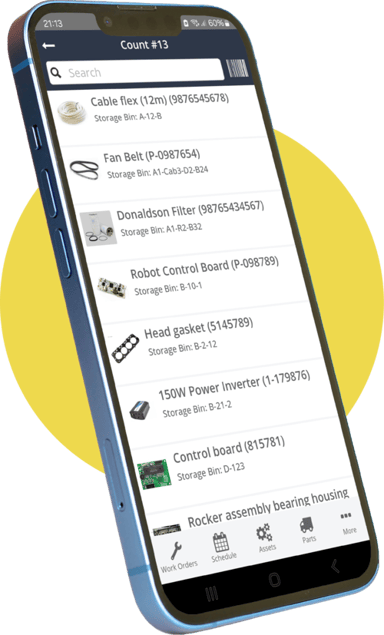
Many maintenance coordinators also take an active role in spare parts inventory management. Using the CMMS, they track parts consumption, set reorder thresholds, and ensure technicians have the materials they need when a job is scheduled, reducing costly delays caused by missing components.
5. Reporting and KPI Tracking
Maintenance coordinators use their CMMS to generate reports on critical performance indicators that inform management decisions. Common KPIs they track include:
- Schedule Compliance Rate: the percentage of planned work completed on time
- Preventive Maintenance Completion Rate: how consistently are PM tasks being executed
- Mean Time Between Failures (MTBF): a measure of equipment reliability
- Mean Time to Repair (MTTR): how quickly the team can resolve breakdowns
- Maintenance Backlog: the volume and age of pending work orders
6. Contractor and Vendor Management
When specialized skills are needed that don't exist in-house, the coordinator sources and manages external contractors. They handle scoping, scheduling, access coordination, and quality review, ensuring third-party work meets the same standards as internal tasks.
7. Safety and Compliance
Regulatory pressure from bodies such as OSHA and the EPA continues to intensify in 2026, driving organizations to use their CMMS as an audit-readiness tool. The coordinator ensures that work orders include required safety documentation, that compliance-related PMs are executed on schedule, and that maintenance records are audit-ready at any time.
Key Skills Every Maintenance Coordinator Needs
Technical Understanding
A maintenance coordinator doesn't need to swing a wrench, but they do need enough technical literacy to plan jobs accurately. Understanding mechanical, electrical, and hydraulic systems and being able to read technical manuals and schematics are significant advantages.
CMMS Proficiency
In 2026, deep expertise in a CMMS is non-negotiable. The coordinator is typically the system's "power user," responsible for data integrity, report generation, and driving adoption across the team. 72% of maintenance professionals say they use CMMS primarily to organize all maintenance activities and data in one place, and the coordinator is the one who makes that happen.
Tools like Zoidii CMMS are designed to make this as intuitive as possible, even for teams transitioning off pen and paper for the first time.
Organizational and Planning Skills
With dozens (sometimes hundreds) of open work orders at any given time, the coordinator must be exceptionally organized. They prioritize across competing demands, maintain the backlog without losing track of high-priority items, and keep the planning horizon clear weeks in advance.
Communication and Interpersonal Skills
A large part of this job is communicating across departments: production supervisors, maintenance technicians, purchasing teams, senior management, and external vendors. The coordinator must be able to negotiate scheduling conflicts diplomatically, deliver difficult news, and advocate for maintenance priorities with data.
Analytical and Problem-Solving Abilities
When a technician can't fully diagnose a problem, the coordinator is often a sounding board. Being able to interpret equipment data, review maintenance history in the CMMS, and suggest diagnostic steps adds real value to the team.
Proactive Mindset
The best maintenance coordinators don't wait for things to break. They scan their PM schedules, monitor the backlog, track KPI trends, and flag issues before they become emergencies. This proactive mindset is what separates a coordinator who manages chaos from one who prevents it.
The CMMS: The Maintenance Coordinator's Most Powerful Tool
A Computerized Maintenance Management System (CMMS) is the software platform that makes modern maintenance coordination possible. For a maintenance coordinator, it's not just a helpful tool. It's the central hub of everything they do.
Here's how a CMMS directly supports each area of the coordinator's responsibilities:
Why this matters in 2026: Mobile-enabled CMMS adoption has now crossed 55%, improving technician productivity by up to 40%. Cloud-based CMMS accounts for nearly 58% of all deployments, meaning maintenance coordinators can access real-time data from anywhere. And with 52% of plants integrating CMMS with IoT sensors, coordinators increasingly have live asset health data flowing directly into their scheduling decisions.
If your maintenance coordinator is still managing work orders in spreadsheets, you're leaving significant operational efficiency on the table.
Maintenance Coordinator Salary in 2026
Compensation for maintenance coordinators varies based on industry, location, and level of experience.
According to data compiled in early 2026:
- Average salary (Glassdoor): $78,817/year in the United States
- Typical range: $63,801 (25th percentile) to $98,779 (75th percentile)
- Top earners (90th percentile): up to $120,246/year
- Entry level (1–3 years experience): approximately $48,212/year
- Senior level (8+ years experience): approximately $79,667/year
Career Path: Where Does a Maintenance Coordinator Go Next?
The maintenance coordinator role is a strong stepping stone into broader maintenance leadership. Common progression paths include:
- Maintenance Planner/Scheduler: a specialized role focused entirely on planning and scheduling, common in large industrial facilities.
- Maintenance Supervisor: moves from coordination into direct leadership of the maintenance team.
- Maintenance Manager: oversees the full maintenance function, including budgeting and strategy. Average salary for this role in the U.S. is $137,522/year (Glassdoor, 2026).
- Reliability Engineer: focused on analyzing failure data and designing systems to improve asset reliability.
- CMMS Administrator: a technical role managing the maintenance software platform itself.
Common Challenges Maintenance Coordinators Face (and How CMMS Helps)
Challenge: Reactive, fire-fighting culture. CMMS solution: Automate PM schedules to ensure preventive work isn't pushed aside by breakdown emergencies. Track the ratio of reactive to planned work as a KPI.
Challenge: Poor data quality. CMMS solution: Enforce structured work order completion, requiring technicians to log labor time, parts used, and failure codes before closing a job. This builds the historical data foundation for better decisions.
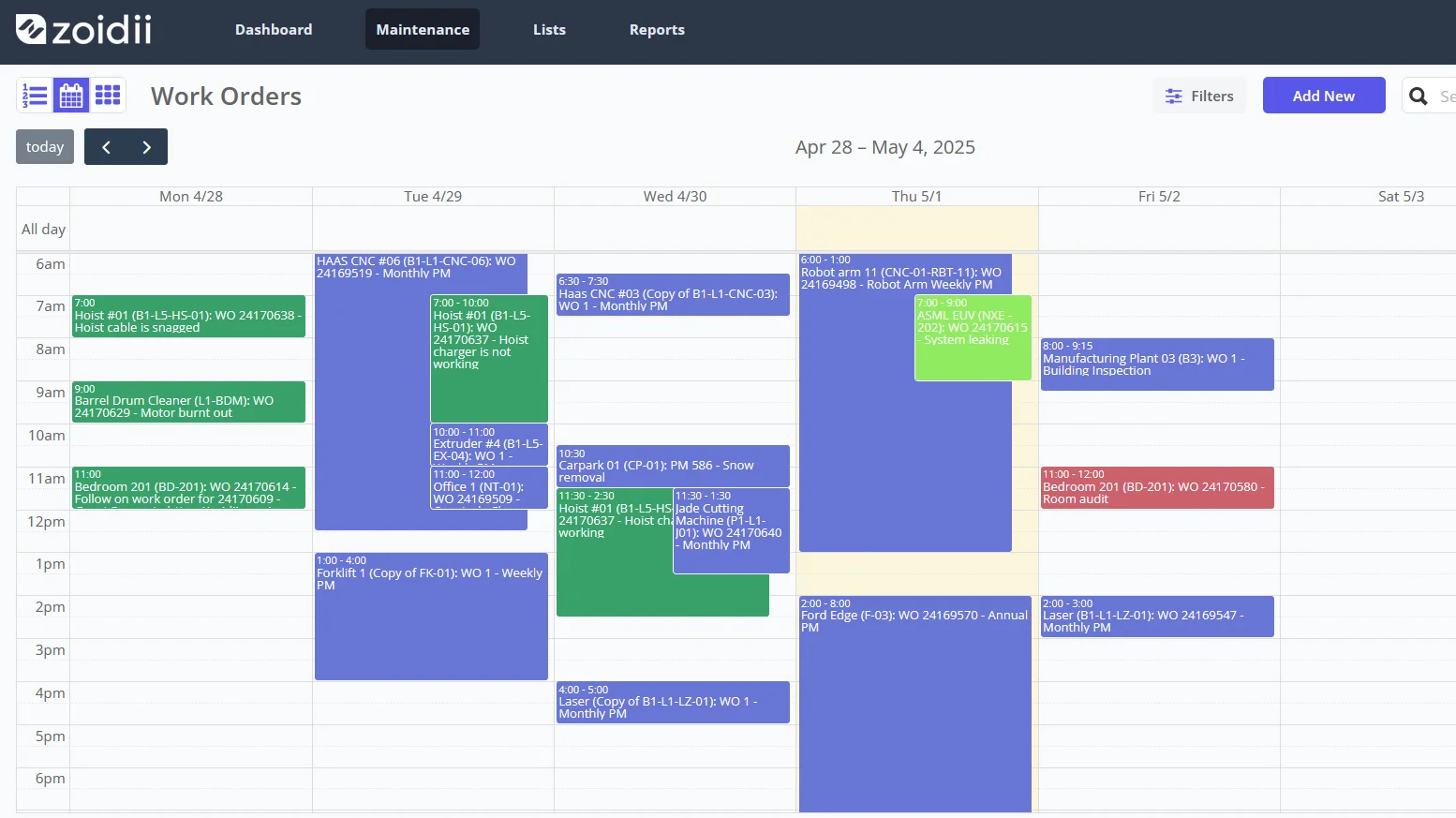
Challenge: Scheduling conflicts with operations. CMMS solution: Use the CMMS's scheduling view to show maintenance windows visually, making it easier to negotiate with production managers around planned downtime.
Challenge: Parts availability delays. CMMS solution: Link parts to work orders during the planning stage. The CMMS flags any shortages before the job is scheduled, giving the coordinator time to source components. Challenge: Proving maintenance value to leadership. CMMS solution: Pull scheduled vs. completed reports, cost-per-asset trends, and downtime reduction data directly from the CMMS to make the case for maintenance investment.
Frequently Asked Questions
What's the difference between a maintenance coordinator and a maintenance manager? A maintenance coordinator typically focuses on the operational day-to-day: planning, scheduling, and managing work orders. A maintenance manager takes a broader leadership role, including staffing, budgeting, and strategic planning. In smaller organizations, one person may do both.
Do maintenance coordinators need CMMS experience? In 2026, CMMS proficiency is effectively a baseline expectation for most maintenance coordinator roles, particularly in manufacturing, facilities, and property management. Job postings increasingly list CMMS experience as a required (not just preferred) qualification.
What industries hire maintenance coordinators? This role exists across virtually every asset-intensive industry: manufacturing, healthcare, facilities management, property management, utilities, oil and gas, transportation, and education. What certifications help a maintenance coordinator advance? Relevant certifications include the Certified Maintenance & Reliability Professional (CMRP), Certified Plant Maintenance Manager (CPMM), and facility-management credentials through IFMA. Strong CMMS platform knowledge (especially with systems like Zoidii) is increasingly valued on its own.
How Zoidii CMMS Supports Maintenance Coordinators
Zoidii is a cloud-based CMMS built specifically for maintenance teams making the transition from manual processes to digital management. It's designed to be fast to deploy and easy to use, without the complexity that makes many enterprise CMMS platforms frustrating to adopt.
For maintenance coordinators, Zoidii provides:
- Work order management: create, assign, and track all maintenance tasks in one place.
- Preventive maintenance scheduling: automate recurring PMs so nothing falls through the cracks.
- Asset management: maintain a complete history for every piece of equipment.
- Parts and inventory tracking: know what's on the shelf before you schedule a job.
- Mobile access: technicians can receive, update, and close work orders from the field.
- Reporting and KPIs: give management the visibility they need without hours of manual data extraction.