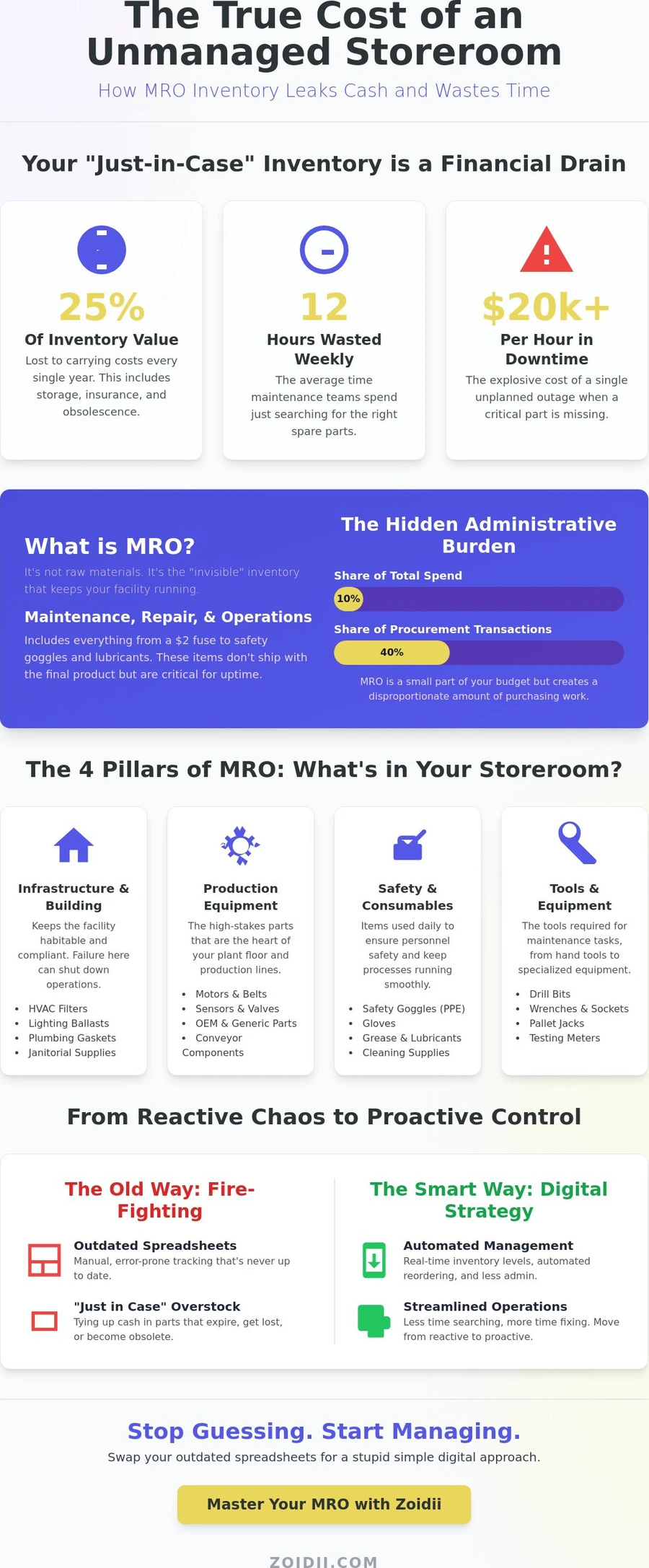
Your "just in case" inventory isn't a safety net. It's a cash leak that costs the average facility 25% of its total value every year in carrying costs alone. Most maintenance managers feel like they're drowning in a sea of unorganized bolts and filters, yet they still face critical stockouts when a machine goes down. It's a frustrating cycle of overspending while still losing 12 hours a week just searching for parts.
If you're tired of the chaos, you need to master the mro meaning and treat your spare parts like the strategic assets they are. Maintenance, Repair, and Operations isn't just about what is sitting on the shelf. It is the lifeblood of your uptime.
We're here to help you stop the financial bleed once and for all. This guide shows you exactly why MRO is the backbone of your facility and how to stop losing money on unmanaged inventory.
You'll learn the different types of MRO, a clear strategy to organize your spare parts, and how to realize lower operational costs. We're keeping it stupid simple so you can stop guessing and start managing.
Let's get your storeroom under control so you can focus on keeping your assets running at peak efficiency.
Key Takeaways
- Grasp the direct mro meaning and see how separating maintenance supplies from raw materials protects your bottom line.
- Identify the four pillars of MRO to organize your storeroom and eliminate the hours wasted searching for specific filters or bearings.
- Calculate the real cost of stockouts and learn how to stop overspending on "just in case" parts that only gather dust.
- Swap your outdated spreadsheets for a stupid-simple digital approach that standardizes naming and automates your parts management.
- Move from reactive fire-fighting to a streamlined operation where your team spends more time fixing and less time ordering.
What Does MRO Meaning Stand For? (And Why It’s Not a Medical Exam)
If you search for the mro meaning online, you might get confused. In the world of HR and drug testing, an MRO is a Medical Review Officer. That person checks the lab results. But in the world of maintenance and manufacturing, MRO stands for Maintenance, Repair, and Operations.
We aren't looking at lab reports here. We are looking at the thousands of items required to keep your facility from grinding to a halt. It includes everything from the grease on a bearing to the safety goggles on a technician's face.
Maintenance, Repair, and Operations (MRO) refers to the processes, resources, and activities involved in maintaining, repairing, and optimizing equipment, machinery, and infrastructure. Oftentimes referred to as Maintenance, Repair, and Overhaul, MRO is a crucial aspect of manufacturing, transportation, and energy operations.
The biggest distinction you need to understand is between MRO and raw materials. Raw materials are part of your Cost of Goods Sold (COGS). If you build chairs, the wood and fabric are raw materials.
They leave the building inside the final product. MRO supplies are the "invisible" inventory. They stay in the building. They are the drill bits that cut the wood and the lightbulbs in the warehouse. Because these items don't end up in the product, they are often treated as an afterthought. That is a mistake.
Industry data shows that while MRO might only account for 10% of your total spend, it often makes up 40% of your total procurement transactions. It is a massive administrative burden that hides in plain sight.
MRO vs. OEM: Knowing the Difference
Inside your MRO inventory, you will find Original Equipment Manufacturer (OEM) parts. These are spare parts made by the company that built your machine. If you have a Caterpillar engine, the Caterpillar-branded oil filter is an OEM part.You pay a premium for that name. Generic MRO supplies are the alternatives. They meet the same specs but lack the logo. Most facilities use a mix of both to balance reliability with cost control. MRO consists of the supplies that keep the business running but don’t end up in the final product.
The Role of MRO in Facility Management
MRO is the fuel that powers fixed asset management. You can have the most expensive assets in the world, but they are useless without a $10 belt or a specific fuse. When a critical part is missing, your downtime costs don't just tick up; they explode.Some facilities lose over $20,000 per hour during unplanned outages. Many managers respond to this fear by over-ordering. They fill every corner of the shop with "just in case" parts.
This leads to a cluttered, expensive storeroom where items expire or get lost. A lean MRO strategy ensures you have exactly what you need without turning your facility into an expensive graveyard for spare parts.
Examples of Maintenance, Repair, and Operations (MRO) Activities
Maintenance, Repair, and Operations (MRO) encompasses various activities and processes to ensure the proper functioning and longevity of equipment, machinery, and infrastructure. It involves routine inspections, preventive maintenance, repairs, component replacement, and optimization efforts.
MRO is essential for improving reliability, reducing unplanned downtime, enhancing productivity, minimizing repair costs, and extending the lifespan of critical assets.
Let's dive deeper into the various aspects of MRO:
1. Routine Inspections
Regular preventive inspections play a crucial role in MRO. These inspections involve thorough assessments of equipment and machinery to identify early signs of wear and tear, potential malfunctions, or areas that require attention. Maintenance teams can detect issues early on by conducting routine inspections and taking necessary actions to prevent major breakdowns.2. Preventive Maintenance
Preventive maintenance is a proactive MRO approach involving scheduled servicing, cleaning, and equipment calibration. Regular planned preventive maintenance help identify minor issues before they escalate and become significant issues. Organizations can improve equipment availability by following a preventive maintenance plan, reducing the risk of unexpected breakdowns, and ensuring optimal asset performance.3. Corrective Maintenance
Corrective maintenance is an integral part of MRO. When equipment or machinery malfunctions or suffers damage, prompt repairs are necessary to restore them to their operational state. Repair activities can range from simple fixes, such as replacing a faulty component, to complex overhauls that require extensive expertise and resources. Effective repair management ensures that assets are back in service quickly and efficiently.4. Continuous Improvement Efforts
MRO also focuses on optimizing asset performance and efficiency. Continuous improvement can involve implementing new technologies, fine-tuning processes, or adjusting to improve productivity. By continuously seeking opportunities for optimization, organizations can maximize the value and lifespan of their critical assets.Implementing a comprehensive MRO strategy can help organizations ensure the smooth operation of their equipment, machinery, and infrastructure. This helps minimize downtime, improve reliability, reduce maintenance costs, and enhance the business's productivity and profitability.

The High Cost of Unmanaged MRO: Why Your Bottom Line is Leaking
Unmanaged MRO is a silent killer for maintenance budgets. While you might understand the mro meaning on paper, failing to manage it in the real world causes your bottom line to leak cash every single day. The most obvious leak is the stockout. Imagine a production line stops because of a broken $5 bolt.
If that bolt isn't in your storeroom, you aren't just out five bucks. You're out $5,000 in lost production while your team waits for a courier to arrive with a rush delivery. These shipping premiums and overnight fees can easily double the cost of a part before it even reaches your door.
The Problem with Ghost Inventory
Ghost inventory is the ultimate productivity killer. These are parts that show up in your records but aren't actually on the shelf. When a technician sees a part is "available" in a spreadsheet, they plan their entire day around that repair. When they walk to the bin and find it empty, the frustration is immediate.This leads to a vicious cycle of double-ordering as a defense mechanism. Technicians start hoarding parts in their personal lockers because they don't trust the official system. This lack of trust destroys your data accuracy and makes it impossible to realize your efficiency goals.
Carrying Costs: The Price of Hoarding
Hoarding might feel safe, but it is expensive. Industry reports from the 2024 MRO Supply Chain Association indicate that carrying costs typically range from 12% to 20% of the inventory's value annually.You are paying for climate-controlled floor space, insurance, and the constant risk of obsolescence. If you have $100,000 in spare parts sitting on shelves, you are spending roughly $15,000 every year just to keep them there.
The goal isn't to have zero inventory or a warehouse full of junk. You need to find the "Goldilocks Zone" where your inventory levels are high enough to prevent downtime but low enough to keep your cash flow healthy.
Benefits of proactively managing MRO
Proactively managing MRO can deliver a multitude of benefits to organizations. By investing in preventive maintenance and optimization efforts, companies can:
- Minimize downtime: Regular maintenance and inspections help identify minor issues before they escalate and become significant problems, reducing unplanned downtime and the associated financial losses.
- Extend asset lifespan: Proper maintenance and optimization efforts can extend the useful life of equipment and infrastructure, postponing the need for costly replacements.
- Enhance productivity: Well-maintained equipment operates more efficiently, enabling higher productivity levels and reducing operational inefficiencies.
- Improve safety: Regular inspections and repairs ensure that equipment meets safety standards, minimizing the risk of accidents and injuries.
- Optimize cost management: Proactive MRO management allows organizations to plan better and budget for maintenance activities, optimizing cost management and reducing unexpected expenses.
How to get your Company to take Maintenance, Repair, and Operations Seriously
While the importance of MRO cannot be overstated, getting an organization to prioritize and invest in MRO can be challenging because maintenance is commonly viewed as a cost center. Here are some steps you can take to encourage your company to take MRO seriously:
- Highlight the financial impact: Illustrate the potential cost savings through effective preventive maintenance and reduced downtime. Emphasize how proactive MRO can improve operational efficiency and boost the bottom line.
- Focus on risk management: Demonstrate the risks of neglecting MRO, such as safety hazards, equipment failure, regulatory non-compliance, and reputational damage. Stress the importance of proactive maintenance to mitigate these risks.
- Establish clear processes: Develop standardized MRO processes and procedures that clearly outline roles, responsibilities, and accountability. Ensure sufficient training and support for employees involved in MRO activities.
- Invest in technology: Explore and implement software and tools that streamline processes, enable predictive maintenance, and provide real-time visibility into asset performance. Demonstrate the long-term benefits of MRO software and the return on investment that such technologies can offer.
- Collaborate with stakeholders: Engage with stakeholders from various departments, such as maintenance, operations, finance, and procurement, to gain their support and understanding of the importance of MRO. Foster a collaborative environment to drive MRO initiatives forward.
The 4 Pillars of MRO: What’s Actually in Your Storeroom?
Most storerooms look like a digital black hole. You might know the MRO meaning in a general sense, but do you know exactly what is sitting on your shelf right now? Without clear categories, your inventory management becomes a guessing game that leads to overstocking and waste.
To make tracking stupid simple, you need to break your supplies into four distinct pillars. This isn't just about organizing shelves; it's about identifying which items are critical to keeping the lights on versus those that keep the production line moving.
A major mistake managers make is classifying parts only by their price tag. This is a trap. A $2 fuse that takes three days to ship is far more critical than a $1,000 motor you can pick up down the street in an hour.
You must prioritize your MRO types based on the impact of their absence. When you categorize correctly, you realize that your storeroom isn't just a collection of "stuff." It is a strategic reserve that protects your uptime.
Infrastructure and Building MRO
This category covers everything required to keep your facility habitable and compliant. Think about HVAC filters, lighting ballasts, plumbing gaskets, and janitorial supplies.While these parts don't directly produce your product, their failure can shut you down just as fast as a broken machine. If the AC fails in a server room on a 95-degree day, your building isn't just uncomfortable; it's an operational hazard. Tracking these items ensures you aren't scrambling for a specific air filter when the unit starts freezing up.
Production and Material Handling Equipment
These are the high-stakes parts: motors, belts, valves, and sensors. These items are the heart of your plant floor. If you aren't linking these parts to your equipment maintenance management software, you are flying blind.You need to know which conveyor belt fits which line before the snap happens. This pillar also includes material handling gear like forklift tires and pallet jack wheels. Keeping these organized is the only way to avoid the $5,000-per-hour cost of an idle production line.
Tools, Consumables, and PPE
This is the most overlooked and "leaky" category in most facilities. It includes hand tools, drill bits, welding supplies, and lubricants. It also covers safety gear. Understanding what does osha stand for is a start, but having the right gloves and safety glasses on hand is what keeps you compliant.Consumables like duct tape and grease often account for 15% of total MRO spend because they "disappear" without being tracked.
If you want to stop the bleed, you can see how Zoidii organizes parts to keep these small items from causing big budget holes.
How can you improve MRO?
Improving Maintenance, Repair, and Operations (MRO) involves strategic planning, the right tools, and continuous improvement. Here are some key ways to enhance MRO efficiency:
1. Implement MRO Software Use MRO software to automate scheduling, track maintenance history, manage work orders, and generate reports. This helps streamline maintenance tasks and ensures you stay on top of all MRO activities.
2. Predictive Maintenance Leverage data from IoT sensors, equipment diagnostics, and predictive analytics to monitor real-time equipment health. Predictive maintenance allows for identifying potential failures before they happen, reducing downtime and unnecessary repairs.
3. Standardize Processes Develop standardized maintenance procedures and workflows. This will minimize errors, ensure consistency, and speed up task completion, as workers will have clear guidelines to follow.
4. Optimize Spare Parts Inventory Use inventory management best practices to ensure you have the right spare parts available when needed without overstocking. An optimized inventory reduces costs and ensures faster repair times.
5. Train and Upskill Your Workforce Regular training for your maintenance team helps them stay up-to-date with the latest trends, technologies, and best practices, leading to more efficient work and fewer mistakes.
6. Data-Driven Decisions Utilize data from your CMMS, IoT devices, and other tools to make informed decisions. Analyzing this data helps you identify patterns, allocate resources effectively, and make improvements where necessary.
7. Improve Communication Enhance communication between maintenance, operations, and other departments. Collaboration tools and regular meetings can help ensure everyone is aligned, reducing miscommunication and improving response times.
8. Establish a Preventive Maintenance Program Rather than reacting to issues as they arise, set up a proactive preventive maintenance schedule that ensures equipment is regularly maintained, preventing breakdowns and extending asset life.
9. Outsource When Necessary For tasks outside your team's expertise or during periods of high demand, consider outsourcing to third-party service providers. This can ensure maintenance tasks are completed efficiently without overburdening your in-house team.
By adopting these strategies, businesses can significantly improve the efficiency of their MRO operations, reducing costs, increasing uptime, and enhancing overall productivity.
What software can you use to manage MRO?
Several software options are available to effectively manage MRO (Maintenance, Repair, and Operations). These software solutions typically include features for tracking maintenance schedules, managing assets, ordering spare parts, and ensuring compliance with industry standards. Here are some popular software types used to manage MRO:
1. CMMS (Computerized Maintenance Management System) Software
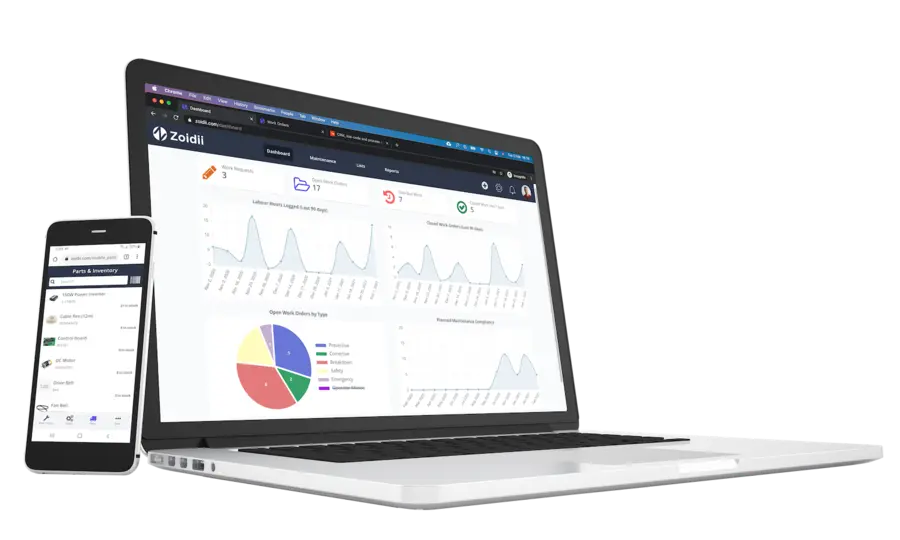
CMMS software helps businesses manage their maintenance processes, including MRO activities. These systems track work orders, schedule preventive maintenance, manage spare parts inventory, and collect data to improve overall maintenance efficiency.Popular CMMS Software Options:
- Zoidii: A user-friendly CMMS platform offering features like automated maintenance schedules, real-time reporting, and asset management.
- UpKeep: A mobile-first CMMS that allows maintenance teams to create work orders, track inventory, and manage equipment.
- Fiix: A CMMS that simplifies maintenance workflows and offers AI-powered predictive maintenance features.
- MPulse: A scalable CMMS solution suitable for businesses of various sizes, offering preventive maintenance scheduling, asset tracking, and reporting.
2. Enterprise Resource Planning (ERP) Software
ERP software often includes maintenance management modules that allow businesses to integrate MRO tasks with broader business operations, including inventory management, procurement, and reporting.Popular ERP Software with MRO Modules:
- SAP: Offers an integrated MRO solution within its ERP suite, allowing for asset management, procurement, and maintenance scheduling.
- Oracle E-Business Suite: Provides a comprehensive maintenance management system that integrates with inventory, procurement, and financial modules.
- Microsoft Dynamics 365: Includes MRO features that allow businesses to manage assets, schedule maintenance, and optimize inventory.
3. Enterprise Asset Management Software
These tools focus on tracking and maintaining equipment, machinery, and other assets over their entire lifecycle. Enterprise Asset Management software can help businesses reduce downtime, improve equipment reliability, and optimize MRO processes.Popular Asset Management Software:
- Asset Panda: An asset tracking software that helps manage maintenance schedules, track parts, and keep an eye on asset lifecycle.
- Infor EAM (Enterprise Asset Management): A cloud-based asset management software that helps organizations manage asset performance, preventive maintenance, and reliability.
- Sierra Advantage: A robust asset management software that helps track assets and manage maintenance activities.
4. Inventory Management Software
Inventory management software helps track spare parts, tools, and other materials needed for maintenance tasks. Efficient spare parts inventory management is a key component of MRO management, ensuring that the right parts are available when needed.Popular Inventory Management Software:
- TradeGecko (QuickBooks Commerce): An inventory management solution that can integrate with CMMS systems to track spare parts and materials.
- Fishbowl: Known for its ability to manage inventory, orders, and manufacturing processes in sync with maintenance operations.
- NetSuite: A cloud-based inventory and warehouse management solution that integrates well with asset and maintenance management systems.
5. Work Order Management Software
These systems focus on generating and managing work orders for maintenance tasks. They allow maintenance teams to track the status of requests, manage priority levels, and ensure timely completion.Popular Work Order Management Software:
- Trello: A versatile project management tool to manage work orders, track progress, and assign tasks within a maintenance team.
- Wrike: A work management platform to create, track, and prioritize maintenance tasks.
- ServiceTitan: A field service management software for managing work orders, dispatching technicians, and improving service delivery.
6. Predictive Maintenance Software
These tools use sensors, AI, and IoT technology to predict the likelihood of equipment failure, enabling businesses to perform maintenance proactively before a breakdown occurs.Popular Predictive Maintenance Software:
- Uptake: A predictive maintenance platform that leverages AI and machine learning to provide actionable insights about equipment health and performance.
- Senseye: Specializes in predictive maintenance for industrial equipment, using data-driven insights to predict potential failures and optimize maintenance schedules.
- Augury: Uses machine learning and sensor data to provide predictive insights that help optimize maintenance schedules and prevent downtime.
Implementing the right combination of these solutions can help reduce downtime, increase operational efficiency, and ultimately extend the life of your assets.
Scaling Your MRO Strategy with Zoidii CMMS
Understanding the MRO meaning is the foundation, but execution is where you win. Zoidii is built for maintenance teams that are tired of fighting with over-engineered software. We keep it stupid simple so you can move from reactive chaos to a state of organized maintenance.
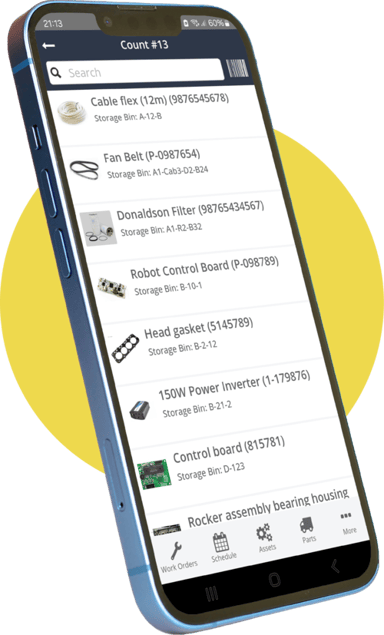
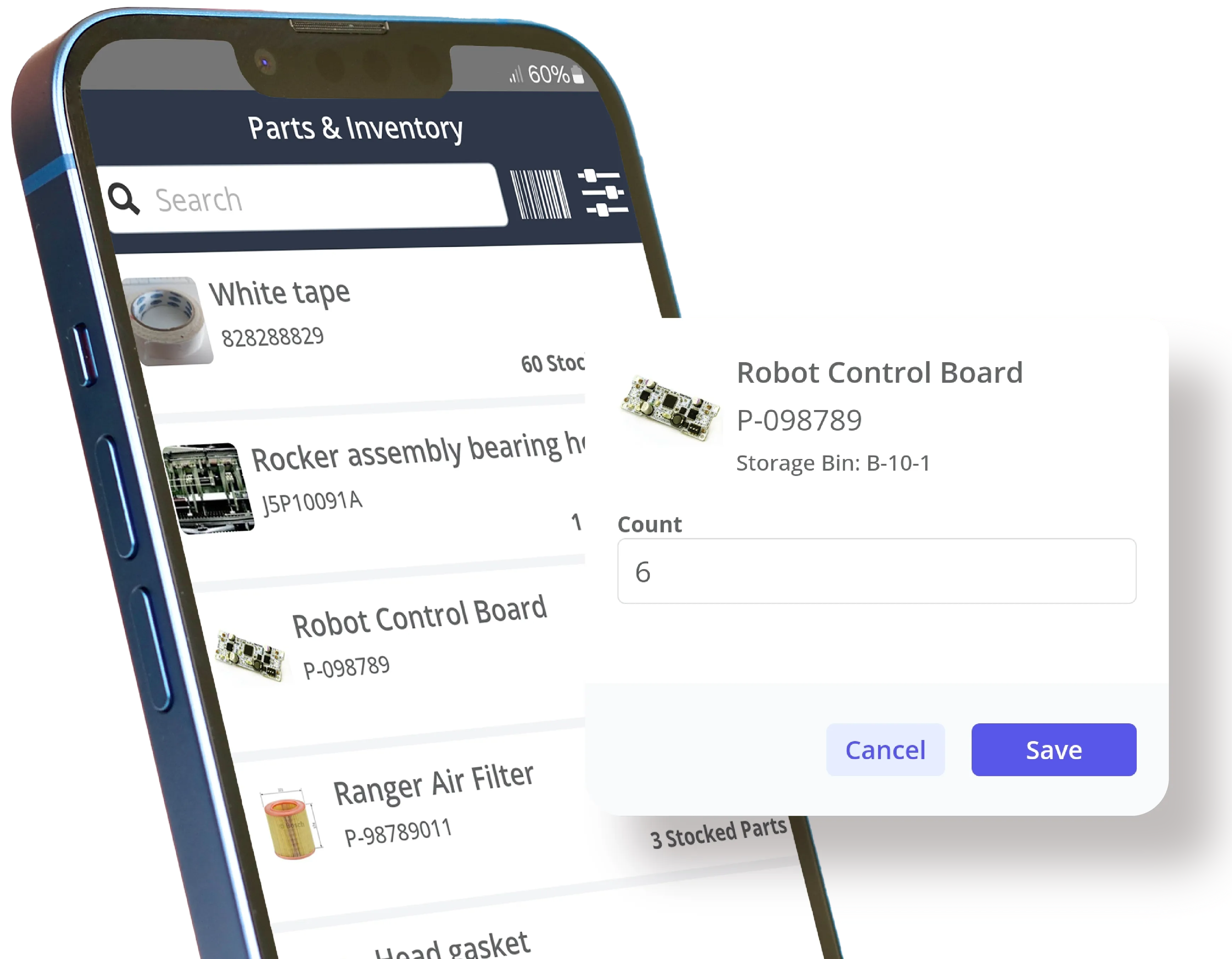
Our cloud-based platform puts your assets, parts, and work orders in your pocket. You don't need to be at a desk to know if you have the right bearing in stock. You can check your phone, scan a bin, and get back to work. This visibility is how you stop losing 12 hours a week to disorganized searches.
Visual management is the secret to a lean storeroom. Mastering the MRO meaning in a modern facility requires seeing your data at a glance. Zoidii uses Kanban maintenance boards to make your MRO replenishment visual. Instead of staring at a spreadsheet with 5,000 rows, you see a clear board.
You know exactly which parts are currently being ordered and which ones are hitting their critical minimums. This approach helps facilities realize a 30% reduction in "just in case" inventory within the first six months of use. It turns your storeroom into a high-speed tool for uptime rather than a graveyard for expensive spares.
No-Nonsense Inventory Tracking
Managing MRO across multiple sites used to require a massive IT project. Zoidii changes that. Our system handles multi-site inventory with ease, giving you a bird's-eye view of every location. You can set automated low-stock alerts that trigger the moment a part is checked out of a work order.This ensures your storeroom stays lean but always ready for the next PM. If you're ready to see how this works for your specific facility, you can chat with a product expert to see the system in action today.
The Zoidii Difference: Implementation in Days, Not Months
Traditional EAM systems are famous for taking 18 months to implement. Most teams give up before they even go live. Zoidii is designed for speed. We focus on implementation in days, not months, by removing the enterprise bloat that slows you down.We give you the high-impact features your technicians will actually use every day. You get a tool that simply works, allowing you to focus on your assets instead of your software. See how Zoidii makes MRO management stupid simple—Book a Demo.
The Future of MRO
The MRO landscape continually evolves, driven by technological advancements and industry demands. Some key trends shaping the future of MRO include:
- Internet of Things (IoT): Integrating IoT devices and sensors into equipment allows for real-time data collection, enabling predictive maintenance and remote monitoring.
- Artificial Intelligence (AI): AI-powered analytics and machine learning algorithms can analyze vast amounts of machine sensor data to identify patterns, predict failures, and recommend optimized maintenance strategies.
- Augmented Reality (AR): AR technology can assist technicians by providing real-time instructions, access to maintenance manuals, and remote expert collaboration.
- Collaborative robotics: Robots, or cobots, used in MRO activities can enhance efficiency and safety and enable remote inspections and repairs.