
If you've spent any real time in a maintenance leadership role, you know the drill. Equipment breaks down at the worst possible moment. Work orders pile up faster than your team can close them. Someone asks you for a report on asset downtime, and you're digging through spreadsheets that haven't been updated since last quarter. It's a lot to manage - and doing it without the right tools makes everything harder than it needs to be.
Asset management software has come a long way in recent years. The platforms available today can do things that would have seemed like science fiction to a maintenance manager working fifteen years ago. But with so many options on the market, and vendors competing loudly for your attention, it can be genuinely difficult to figure out what actually matters. Every sales deck claims its platform does everything. Not all of them deliver.
This article cuts through the noise. Whether you're evaluating a new CMMS (Computerized Maintenance Management System), replacing an aging EAM (Enterprise Asset Management) platform, or making the case to leadership that an upgrade is overdue, these are the nine features that will make the biggest difference in your day-to-day operations. These aren't just nice-to-haves. For any maintenance leader trying to reduce downtime, extend asset life, and keep a team running efficiently, they're essential.
Key Takeaways
The shift from reactive to proactive maintenance starts with the right software foundation. Preventive maintenance scheduling, condition monitoring integration, and asset lifecycle tracking work together to move your team out of constant firefighting mode. The technology to support this shift exists - the question is whether your platform is enabling it or getting in the way.
Features only deliver value when they're connected. A work order module that doesn't talk to inventory, or a compliance tracker that lives separately from your maintenance records, creates the same data silos you were trying to escape. When evaluating platforms, prioritize how features work together over how each one looks in isolation.
Mobile access and usability are as important as functionality. The most capable platform in the world won't improve your operation if your technicians find it too cumbersome to use in the field. Clean mobile interfaces and minimal friction between doing work and recording work are what drive real adoption - and adoption is what drives data quality.
Scalability should factor into your decision from day one. Multi-site capability and flexible asset hierarchies may not be your most pressing needs today, but growing into a new platform is far less disruptive than growing out of one. Choose software that matches where your organization is heading, not just where it is right now.
The evaluation process matters as much as the feature list. Ask vendors to walk you through real-world workflows, not just highlight reels. Speak to existing customers in your industry. Understand what implementation actually involves. The right platform will align with how your team already thinks about maintenance - and make everything your team does a little sharper, a little faster, and a little more informed.
1. Asset Hierarchy and Lifecycle Tracking
A lot of maintenance teams know what their assets do. Fewer of them know what their assets cost - in total, over their full lifespan. That gap is where decisions get made with incomplete information.
A strong asset hierarchy feature lets you organize your equipment in a way that mirrors how it actually operates. That means tracking parent-child relationships (a piece of equipment within a system within a facility), recording acquisition costs and depreciation, logging every repair and inspection, and building a complete history for each asset from the day it enters service to the day it's retired.
Asset tracking matters for several reasons. From a financial perspective, knowing the total cost of ownership for each asset class helps you make better replacement decisions. When you can show leadership that a particular piece of equipment has cost more to maintain over the last three years than it would cost to replace, you're having a different kind of conversation than when you're just requesting budget based on gut feel.
From a maintenance standpoint, the asset history tells you patterns. Equipment that gets repaired for the same failure mode three times in two years is telling you something. The software should make that pattern visible rather than burying it in a stack of closed work orders.
Look for systems that let you attach documents to asset records - things like OEM manuals, warranty certificates, calibration records, and as-built drawings. All of that context should live in one place, accessible to anyone who needs it.
2. Work Order Management
Work orders are the heartbeat of any maintenance operation. How well your software manages them will largely determine how smoothly your team functions on a day-to-day basis.
At a minimum, a work order module should allow you to create, assign, prioritize, and track tasks from request to completion. But the best platforms go much further than that. They let you attach photos, checklists, parts lists, and safety procedures directly to the work order. They allow technicians to update status from a mobile device in the field. They capture labor time and material costs automatically. They route approvals for high-cost jobs. And they keep a full audit trail so you always know what happened, when, and by whom.
One underrated feature is the ability to link work orders to assets, locations, and work requests in a structured way. When a request comes in from an operator reporting an issue, that should translate into a work order that already has the asset ID, location, and relevant history attached - not a blank form someone has to fill out from scratch. Prioritization logic is also worth paying close attention to. A good system will let you set priority levels based on factors like safety criticality, production impact, and asset condition. That way, when your team comes in on Monday morning with a backlog of forty open work orders, the system is helping them decide what to do first rather than leaving it to whoever shouts loudest.
3. Preventive Maintenance Scheduling
Let's start with the foundation. If your asset management software can't support a robust preventive maintenance program, everything else is built on sand. Preventive maintenance (PM) scheduling allows you to set up recurring work orders based on time intervals, meter readings, usage triggers, or a combination of all three. A solid PM module should let you customize schedules at the individual asset level - because a compressor running 24/7 in a manufacturing plant has very different maintenance needs than one used a few hours a day in a warehouse.
What separates good PM scheduling from great PM scheduling is flexibility and automation. You want a system that can automatically generate work orders ahead of the due date, assign them to the right technician based on skill or availability, and escalate overdue tasks without someone having to chase things manually. Bonus points if the system can adjust PM intervals based on actual usage data pulled from sensors or meters - that's where you start to prevent failures rather than just responding to them.
The ROI on preventive maintenance is well-established. Organizations that shift from reactive to preventive maintenance routinely see reductions in emergency repair costs, and extending asset life by even a small percentage adds up to significant capital savings over time. The scheduling engine in your software is the mechanism that makes all of that possible.
4. Mobile Accessibility
This one has become non-negotiable in the last several years, and any platform still tethering your technicians to a desktop computer is already behind the times.
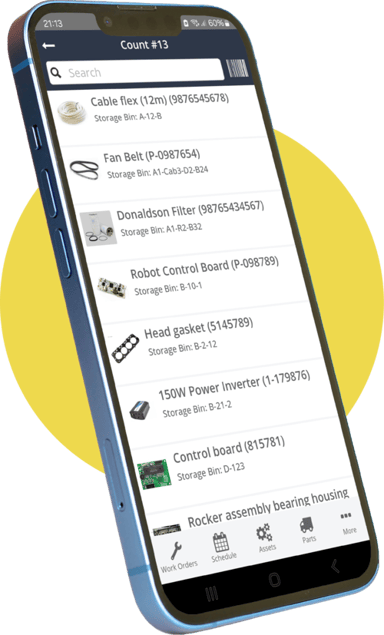
Mobile accessibility means your team can access work orders, pull up asset information, record labor time, close tasks, and request parts from wherever they're standing - whether that's on the shop floor, in a remote facility, or up on a roof.
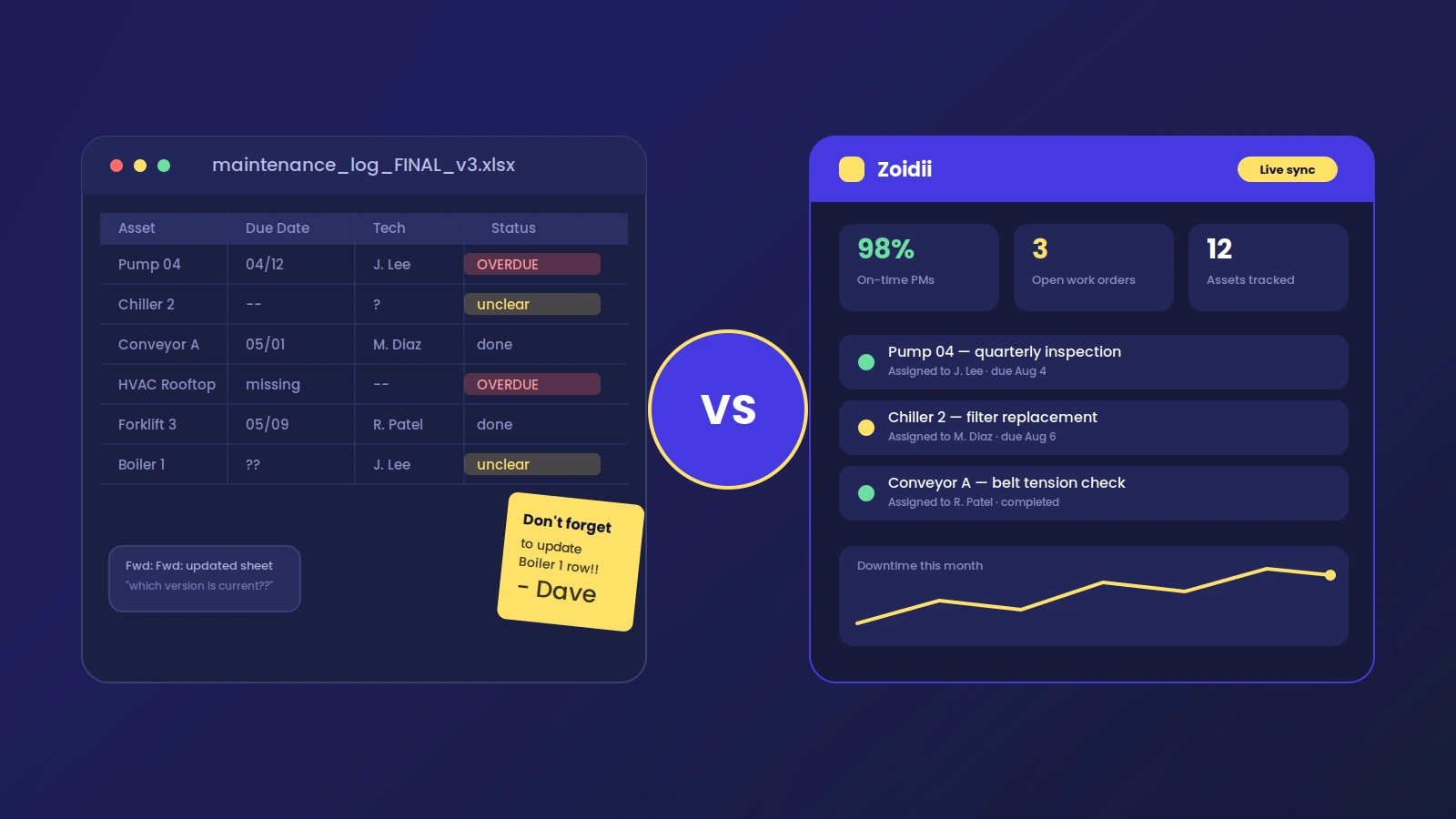
For maintenance leaders, mobile access means real-time visibility into what your team is working on right now. You're not waiting until someone gets back to the office to update a spreadsheet. Work orders get closed in the field. Parts get requested on the spot. Inspection results get entered immediately rather than transcribed from paper forms hours later.
There's a workforce angle here, too. Technicians who aren't burdened with paper forms or trips back to a computer to log their work tend to be more efficient and more accurate with their documentation. The less friction between doing the work and recording the work, the better your data quality will be - and better data is what drives better decisions over time. When evaluating mobile functionality, don't just look at screenshots. Get your hands on the actual app and test it in the kind of environment your technicians work in. A platform that looks great on a demo laptop can be completely unusable on a gloved hand with a dirty screen.
5. Inventory and Spare Parts Management
Maintenance and inventory are inseparable. The best PM program in the world falls apart if your technician shows up to perform scheduled maintenance and the parts aren't there. And keeping too much inventory ties up capital you could use elsewhere.
A solid inventory module gives you visibility into what you have, where it is, and when to reorder. It should support multiple storerooms, track parts by bin location, and integrate directly with work orders so that when a part is pulled for a job, inventory levels update automatically. Minimum stock thresholds with automatic reorder alerts are a baseline expectation at this point.
More sophisticated platforms go further. They can suggest optimal reorder points and quantities based on historical usage and lead times. They can flag slow-moving inventory that might be costing you in storage and carrying costs. They can track parts from specific vendors and help you compare supplier performance over time.
The integration between inventory and work orders is particularly valuable. When a work order is created, the system should be able to show the technician whether the required parts are available before they even head to the job. That kind of upstream visibility prevents the frustrating scenario of discovering mid-job that you're missing a critical component. For maintenance leaders managing multiple sites, consolidated inventory visibility - knowing what's in stock across all locations - can also reveal opportunities to redistribute parts rather than ordering duplicates.
6. Reporting and Analytics
Data only has value if you can turn it into insight. This is where a lot of asset management systems fall short. They collect data but make it genuinely difficult to extract anything useful from it.
The reporting and analytics capabilities of your platform will directly affect your ability to manage your team, justify your budget, and make strategic decisions about your asset portfolio. At a minimum, you need standard reports on work order completion rates, PM compliance, mean time between failures (MTBF), mean time to repair (MTTR), maintenance cost by asset, and technician productivity.
But the more capable platforms let you build custom dashboards that surface the metrics most relevant to your operation. If you manage a fleet of vehicles, your dashboard looks different from that of someone who manages a manufacturing facility. The system should be configurable enough to reflect what actually matters to you.
Trending is particularly important. A single data point tells you where things are right now. A trend tells you where things are going. The ability to track metrics over time - to see whether your PM compliance rate is improving, or whether a particular asset class is generating more corrective maintenance than it used to - is what separates reactive management from strategic leadership. For maintenance leaders who regularly report to senior management, the ability to generate clean, professional reports without spending hours in Excel is also just a practical quality-of-life benefit that's easy to underestimate until you have it.
7. Predictive Maintenance and Condition Monitoring Integration
This is where the industry is heading, and the gap between organizations that are embracing it and those that aren't is growing quickly. Predictive maintenance (PdM) uses real-time data from sensors - vibration, temperature, pressure, current draw, oil analysis, and more - to detect early signs of equipment degradation before they turn into failures. Rather than changing parts on a fixed schedule, regardless of whether they need it, you're acting on actual condition data. The result is maintenance that's both more cost-effective and more reliable.
Not every asset management platform has built-in IoT integration. Still, the best modern systems do - or at least have well-documented APIs that make it possible to pull in data from external condition monitoring tools. What you're looking for is the ability to trigger work orders automatically when a sensor reading crosses a defined threshold, and the ability to see condition data alongside maintenance history in the asset record.
For maintenance leaders, the business case for predictive maintenance is compelling but sometimes takes time to build. Implementing it fully across an entire asset portfolio at once is rarely practical. The better approach is to identify the assets where unplanned downtime is most costly or most disruptive, start there, and build a track record of results. A platform that supports this kind of phased implementation - starting with your highest-criticality assets and expanding over time - is more valuable than one that requires a complete overhaul before you see any benefit. If you're evaluating platforms and predictive maintenance is on your roadmap, look carefully at the IoT integration capabilities and ask vendors specifically about customer examples in your industry. The technology is real, but implementation experiences vary widely.
8. Compliance and Regulatory Tracking
Depending on your industry, regulatory compliance may be one of the most consequential things your maintenance department is responsible for. In food and beverage, pharmaceutical, aerospace, utilities, and dozens of other sectors, demonstrating that maintenance was performed on schedule and documented correctly isn't optional - it's a legal and operational requirement.
Your asset management software should make compliance straightforward rather than stressful. That means maintaining a complete, tamper-evident record of every inspection, calibration, and regulatory maintenance task. It means sending automatic reminders when compliance deadlines are approaching. It means generating audit-ready reports without requiring weeks of preparation.
Beyond scheduled compliance tasks, look for features that support corrective action tracking when issues are identified during inspections. A system that can document a finding, create a corrective work order, and track that work order to closure - all with a linked audit trail - gives you a much stronger position during external audits than one that relies on manual cross-referencing of records.
Permit to work functionality is also worth looking for if your operation involves high-risk maintenance activities. Lockout/tagout procedures, confined space entry, and hot work permits - these need to be documented and tracked in a way that protects your workers and demonstrates due diligence to regulators. Some platforms handle this natively; others integrate with dedicated safety management systems. Either way, the connection between your maintenance records and your safety documentation should be seamless.
9. Multi-Site and Multi-Asset Type Capability
For maintenance leaders responsible for more than one facility, or for organizations managing a diverse mix of asset types - buildings, production equipment, fleet vehicles, IT infrastructure - the ability of the platform to handle that complexity without becoming unwieldy is critical.
Multi-site capability goes beyond just being able to add multiple locations. You want a system where different sites can operate with their own configurations - their own work order numbering, their own inventory storerooms, their own technician pools - while still feeding into a consolidated view for reporting and oversight at the enterprise level. Permissions and user access controls should be granular enough that a technician at one site only sees what's relevant to them. In contrast, a regional manager can see everything across their portfolio.
Multi-asset type handling matters because the maintenance requirements for a forklift are fundamentally different from those for an HVAC system, which are different again from those for a production line conveyor. The system should accommodate different PM templates, different attribute fields, different compliance requirements, and different cost structures for each asset category without requiring workarounds.
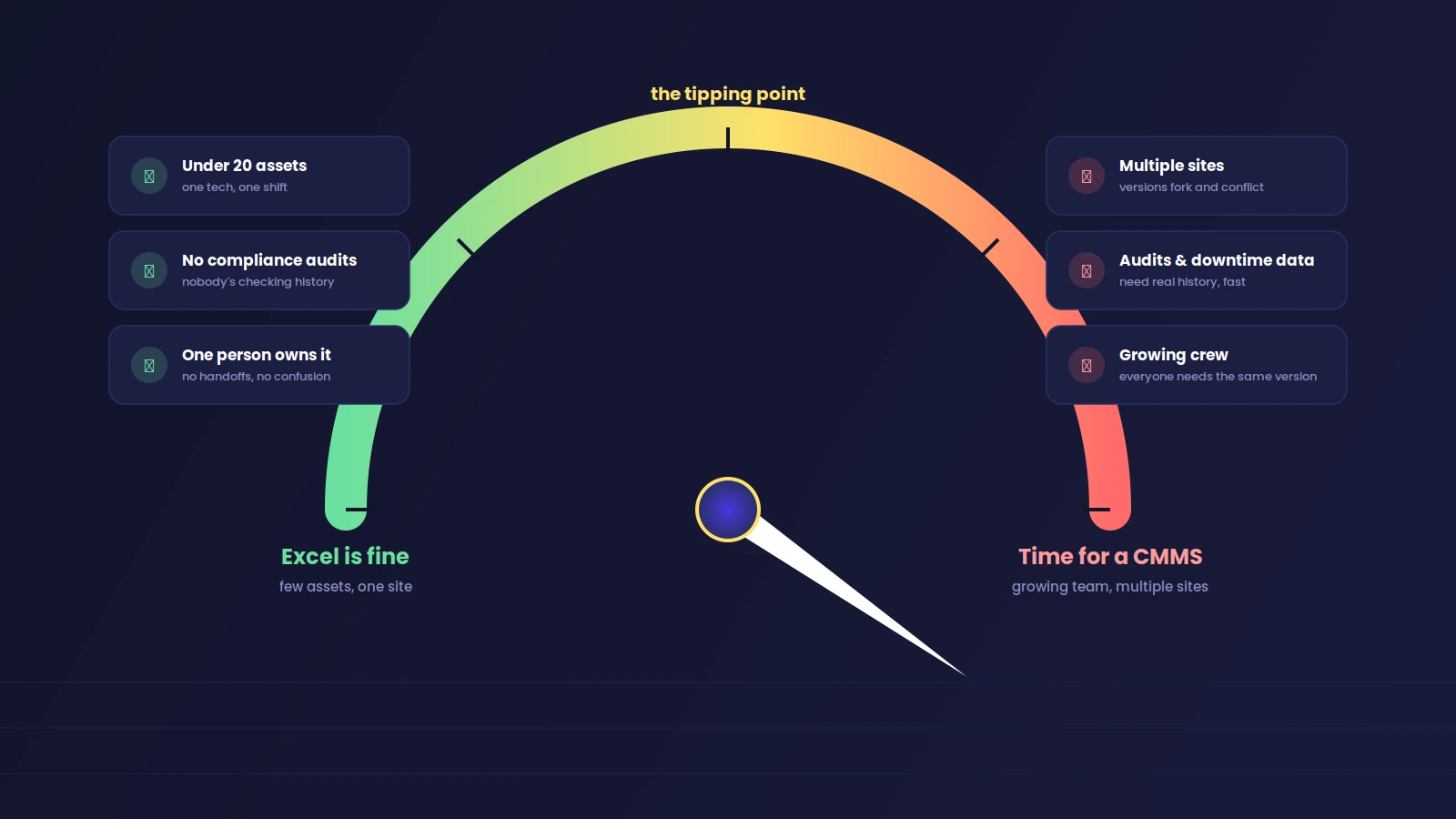
This is one of the areas where enterprise-grade platforms tend to pull ahead of simpler CMMS tools. If your organization is small and managing a homogeneous asset base at a single location, a more streamlined system might serv you well. But if complexity is part of your reality - or if you're expecting growth - investing in a platform that can grow with you is almost always worth it. Bonus: Read more about 10 Key Advantages of Multi-Site CMMS Software here.
Putting It All Together: What to Look For in Your Evaluation
Reading through these nine features, you might notice a common thread: the best asset management software isn't just about managing individual tasks. It's about connecting data, processes, and people in a way that makes the whole operation more intelligent.
A PM schedule that generates work orders automatically is more valuable when those work orders are connected to real-time inventory data. Condition monitoring data is more actionable when it triggers work orders and updates asset history. Compliance documentation is easier to manage when it's built into the same workflow as routine maintenance rather than existing as a separate system. The integration of these features - the way they work together - is often what separates the platforms that genuinely transform maintenance operations from the ones that digitize the old way of doing things.
When you're evaluating options, don't just look at feature checklists. Ask vendors to show you how real scenarios flow through their system end-to-end. Find out what implementation actually looks like - how long it takes, what support is available, what the typical stumbling blocks are. Talk to customers in similar industries and ask honest questions about what the platform does well and where its limitations are.
The right platform will be built for the way your team actually works, not just for the way a software vendor imagines maintenance should work. That fit matters as much as any individual feature. Your assets represent some of the largest capital investments your organization has made. The team that keeps those assets running deserves tools that are genuinely up to the job. These nine features are a solid starting point for defining what that looks like.
Frequently Asked Questions
What is the difference between a CMMS and an EAM, and which one does my team need? A CMMS (Computerized Maintenance Management System) is primarily focused on day-to-day maintenance operations - work orders, PM scheduling, inventory, and technician management. An EAM (Enterprise Asset Management) platform covers all of that but extends into broader asset lifecycle management, financial planning, capital budgeting, and regulatory compliance. For smaller operations or teams primarily concerned with keeping equipment running, a CMMS is often the right fit. For larger organizations managing significant capital assets across multiple sites - and needing to connect maintenance data with financial and procurement systems - an EAM tends to deliver more value. The honest answer is that the line between the two has blurred considerably as CMMS platforms have added enterprise features. Hence, it's worth evaluating specific capabilities rather than getting too hung up on the label.
How long does it typically take to implement asset management software? Implementation timelines vary widely depending on the size of your organization, the complexity of your asset base, and how much historical data you're migrating. A small to mid-sized operation implementing a cloud-based CMMS with a clean data set can often be up and running in a matter of weeks. Larger enterprise rollouts involving ERP integration, multi-site configuration, and extensive data migration can take anywhere from six months to over a year. The most common source of delays isn't the software itself - it's data quality. Spending time cleaning and standardizing your asset data before implementation begins almost always pays off in a faster, smoother go-live.
What should I do if my team is resistant to adopting new software? Resistance to new technology is normal, and it usually comes from one of two places: skepticism that the new system will actually be better than the current one, or anxiety about learning something unfamiliar. The most effective approach is to involve your technicians and supervisors early - ideally during the evaluation process, not just during training. When the people who will use the software daily have had input into the selection, they're more likely to feel ownership over the outcome. Beyond that, good training, accessible support resources, and a clear explanation of how the new system makes their specific jobs easier (rather than just making management's reporting easier) go a long way toward building genuine buy-in.
How do I build a business case for investing in asset management software? Start with the costs your current approach is generating - emergency repair expenses, unplanned downtime, overtime hours, excess inventory, and time spent on manual reporting. These are often larger than people initially estimate. Then identify the specific improvements the software is expected to deliver - reduced downtime, lower parts costs, better PM compliance - and attach conservative estimates to each. Most organizations find that even modest improvements in a few areas more than justify the investment. Including a comparison of your current maintenance cost as a percentage of asset replacement value against industry benchmarks can also be a compelling addition, particularly for audiences who respond well to peer comparisons. Can asset management software work for small maintenance teams? Absolutely. In fact, smaller teams often see some of the most immediate benefits because the efficiency gains are felt more directly. There's no large organization to absorb the impact of a missed PM or a lost work order. The key for small teams is choosing a platform that's appropriately scaled. An enterprise EAM built for a 500-person maintenance department will be overkill and will likely frustrate a team of five. Many vendors offer tiered pricing and simplified interfaces designed specifically for smaller operations. Focus on the core features - work order management, PM scheduling, basic inventory, and mobile access - and look for a platform that can grow with you if your needs expand over time.