
Keeping injection molding cells humming at 95%+ uptime, coordinating toolroom work on molds worth six figures, tracking resin-drying issues before they snowball - maintenance in plastics manufacturing isn’t ordinary. It’s high-speed, high-precision, and unforgiving to downtime.
A good CMMS (computerized maintenance management system) is one of the most leverage-rich investments a plastics plant can make: it organizes work, standardizes PMs, captures tribal knowledge, tightens inventory, and proves compliance.
Below is a practical, shop-floor-first guide to choosing the best CMMS for plastics - plus a vetted shortlist of systems that have real traction in the industry.
Key Takeaways:
- Model maintenance around molds and cycles. The right CMMS treats molds (and inserts/hot runners) as first-class assets and supports shot/runtime-based PMs, not just calendar schedules.
- Mobile-first wins on the floor. Adoption hinges on techs and operators easily scanning QRs, attaching photos, following SOPs, and closing jobs at the press.
- Compliance needs baked-in evidence. ISO/IATF audits, LOTO logs, calibrations, and cleanroom documentation should be native - not a spreadsheet sidecar.
- Match the CMMS to your scenario. Zoidii (speed/usability), Fiix (integrations/analytics), eMaint (audit depth), Limble (straightforward rollout), FTMaintenance (training), ManWinWin (multi-plant), and Brightly (packaging) are strong starting points—pilot on two presses and one mold, then scale.
What plastics plants need from a CMMS (beyond the basics)
Nearly every CMMS can do work orders, PMs, assets, and parts. Plastics introduce wrinkles you’ll want to check for during demos:
- Mold lifecycle & toolroom workflows. Track mold IDs, cavities/inserts, PM counters by shots or cycles, and repair history tied to specific tooling, not just the press.
- Cycle- or shot-based PM triggers. Preventive tasks should be tied to runtime/cycle counts from the press or MES, not only calendar time.
- Fast changeovers & setup standards. Standard operating procedures for hot-runner checks, barrel purges, chiller/thermo control verification, and LOTO.
- Auxiliary equipment coverage. Dryers, chillers, blenders, loaders, robots, conveyors—each with specs, PMs, and spares.
- Compliance & audit trail. ISO 9001 (and often IATF 16949 for automotive), OSHA Lockout Tagout (LOTO) evidence, calibration logs, cleanroom or food-contact documentation, etc.
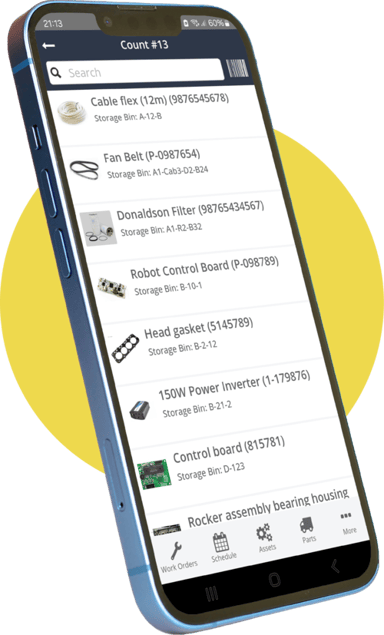
- Mobile-first usability. Techs need to scan a QR at a noisy press, pull up an SOP, and complete the job with photos.
- Multi-site standardization. Corporate wants one playbook, one KPI set, and cross-plant benchmarking.
The shortlist: CMMS platforms proven in plastics
These vendors show relevance to plastics through dedicated pages, case studies, or manufacturing depth. Use the “Best for” notes to match your scenario.
Zoidii — Best for mobile-first execution and rapid standardization
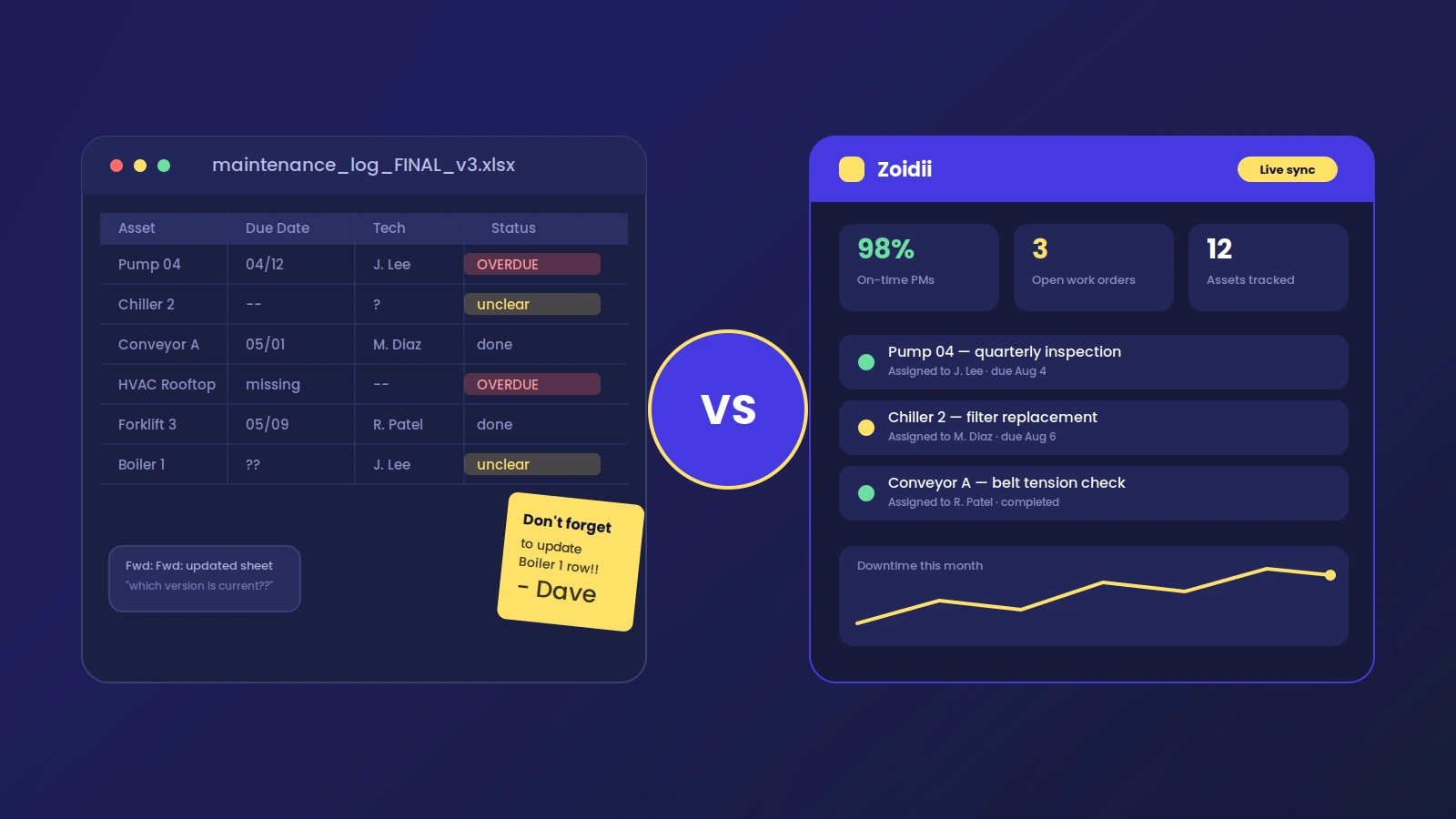
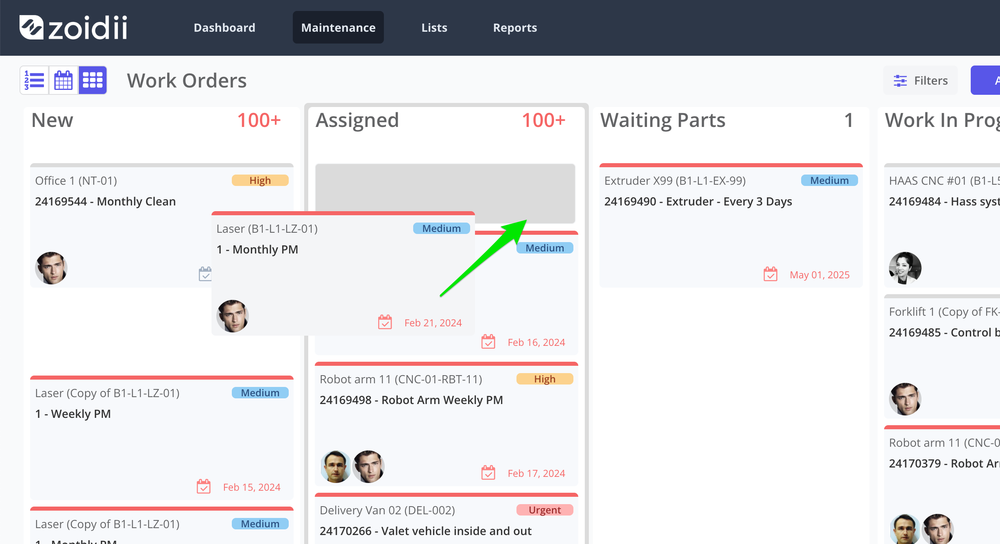
Zoidii is widely cited for technician-friendly mobile UX, quick adoption, and scaling across multiple facilities (their multi-site advantages are highlighted in this article) - ideal if you need to get dozens of operators and techs productive fast.
Their plastics manufacturing page and case studies highlight reductions in unplanned downtime and a switch from reactive to proactive maintenance.
Why plastics teams pick it
- Very low friction on the plant floor; easy for operators to raise work requests with photos.
- Strong templating for PMs and safety procedures (LOTO), good reporting, and multi-site coordination.
- If you’re a heavy “tooling-first” organization with deep mold BOMs, ensure the asset model fits your toolroom conventions during the trial.
Fiix (by Rockwell Automation) — Best for integrations and data-driven programs
Fiix pairs standard CMMS capabilities with an ecosystem that emphasizes integrations (Rockwell heritage, but also broader connectors), communities, and analytics. You’ll find plastics-relevant resources and case stories - like Cloeren, a plastics processor - focused on moving from reactive to proactive maintenance and digitizing work orders.
Why plastics teams pick it
- Integration-friendly and analytics-forward approach for companies linking CMMS with MES/SCADA or reliability dashboards.
- Documented wins in asset reliability and PM completion at scale.
- If you’re a smaller plant with limited IT appetite, budget time to map integrations carefully so you actually use the data.
eMaint (by Fluke) — Best for regulated, audit-heavy environments
eMaint has a long track record in manufacturing and features case studies directly in plastics. Customers emphasize building historical knowledge bases, tracking uptime, and meeting ISO/OSHA expectations - useful for automotive plastics and sites with strict customer audits.
Why plastics teams pick it
- Mature configuration for compliance evidence, calibration, and documentation.
- Sandbox/test accounts enable you to prototype your flows before go-live.
- Map your mold/tooling data model upfront; older implementations can become complex without governance.
Limble CMMS — Best for straightforward setup and core functionality
Limble is frequently shortlisted for being intuitive with strong PM, parts, and analytics. While not plastics-specific, its ease-of-use and depth cover most discrete manufacturing needs, making it a solid contender for single-site or growth-phase plastics companies.
Why plastics teams pick it
- Quick to configure, friendly mobile app, good training/onboarding.
- Balanced feature set for teams moving off spreadsheets/paper.
- Validate support for cycle-based PM triggers and mold-centric asset hierarchies in your pilot.
FTMaintenance - Best for hands-on training and adoption support
FTMaintenance publishes plastics-focused guidance and case studies (e.g., Crown Poly), with an emphasis on onsite, instructor-led training - useful if your workforce benefits from structured, in-person upskilling as you transition from paper.
Why plastics teams pick it
- Clear plastics domain content; practical training that accelerates change management at the press level.
- Compare analytics/BI depth and integration pathways against more platform-centric options if you plan to centralize data.
Brightly (formerly Dude Solutions) - Best for packaging-focused environments
Brightly positions solutions for plastics and packaging with an emphasis on proactive scheduling and uptime. If you’re a packaging converter or operate mixed materials (plastics/paper/rubber), its footprint in packaging may fit your process.
Why plastics teams pick it
- Packaging-aware language and workflows; credible approach to PM-driven uptime improvements.
- Validate the specifics of mold/tool lifecycle tracking during discovery.
ManWinWin — Best for global multi-plant harmonization
ManWinWin showcases a plastics case (Simoldes Plásticos) focused on standardizing maintenance, integrating with runtime monitoring/stock control, and aligning KPIs - strong signals for groups seeking process harmonization across plants.
Why plastics teams pick it
- Clear multi-plant governance story and KPI unification; emphasis on integration and training.
- Ensure local language/mobile UX and support match your regions and shift patterns.
How to choose: a quick decision playbook
1. Start with the asset model (molds first). Decide whether molds, inserts, and hot-runner components are assets, subassets, or parts—and where you’ll track cavity-level work. Ask vendors to model one high-value mold on the call. (If they can’t show it cleanly, keep shopping.)
2. Insist on cycle-based PMs. Calendar PMs miss reality on presses. The system should accept shot counters or runtime.
3. Prove mobile usability on the floor. Do a “noise test”: can a tech scan a QR, open a SOP, attach a photo, and close a job one-handed while standing next to a loud press with spotty Wi-Fi? Zoidii and Limble are repeatedly praised for usability; Fiix for depth plus integrations.
4. Validate compliance artifacts. You need clean audit trails for ISO/IATF, OSHA LOTO, and calibrations. eMaint is especially strong here; others can meet the bar with proper configuration.
5. Pilot with one cell and one toolroom value stream. Pick two presses (one high-volume, one changeover-heavy) and one family mold. Define success metrics: PM compliance %, mean time to repair, unplanned downtime, and work-order closure rate. A plastics injection molder that implemented a CMMS reported OEE improvement from 85.6% to 92%; while results vary, it shows what’s possible.
Implementation tips specific to plastics
- Build SOPs into every work order. Include torque specs for tie-bar checks, heater band amperage thresholds, dryer dew point limits, and nozzle/purge guidance—photos encouraged.
- Standardize spares for time-critical failures. Heater bands, thermocouples, proximity sensors, vacuum lines, dryer desiccant, hot-runner tips/nozzles, and chiller seals should have min/max levels governed by usage.
- Use root cause codes aligned with quality. Tie scrap reasons (short shot, splay, flash, burn marks) to maintenance causes (heater failure, venting, barrel wear, mold temp).
- Protect tribal knowledge. For each recurring fault, attach a “quick fix” card with photos. Plants using CMMS to centralize tribal knowledge report dramatic cuts to mean time to repair.
- Train, then retrain. Teams that invest in hands-on training (even onsite classes) see smoother adoption and better data.
Quick match-by-scenario
- We need an easy, mobile-first rollout across three plants in 90 days. Start with Zoidii; run a two-press pilot and scale.
- We’re integrating CMMS with MES/SCADA and corporate BI. Evaluate Fiix first; assess connectors and data model.
- Customer audits are intense (automotive/medical). Put eMaint on your shortlist for documentation/audit trails.
- Single site, moving off spreadsheets, want fast wins. Limble is a strong, intuitive baseline.
- We want structured, instructor-led change management. FTMaintenance offers practical, hands-on training paths.
- We’re a global group harmonizing KPIs and procedures. ManWinWin shows relevant plastics experience in multi-plant standardization.
- We’re packaging-heavy with plastics. Brightly is worth a look for packaging-centric uptime messaging.
Bottom line
The “best” CMMS for plastics manufacturing is the one that mirrors your real production world: molds as first-class citizens, cycle-based PMs, auxiliary equipment covered, quality data in the loop, and audits handled without drama.
Zoidii, Fiix, eMaint, Limble, FTMaintenance, Brightly, and ManWinWin all have credible angles for plastics - your task is to pilot with your assets, prove the KPIs, and standardize the playbook plant-wide.
If you approach selection with a mold-centric asset model, insist on mobile usability, and wire maintenance to production data, you’ll see the two numbers that matter trend the right way: OEE up, unplanned downtime down.
FAQs
1) What’s the difference between a generic CMMS and one “good for plastics”? A plastics-ready CMMS supports mold-centric asset structures (molds, inserts, hot runners), cycle/shot-based PM triggers, and easy handling of auxiliary equipment (dryers, chillers, robots).
2) What KPIs matter most for plastics maintenance? Start with PM compliance %, Mean Time To Repair (MTTR), Mean Time Between Failures (MTBF), unplanned downtime hours, and parts stockouts. Layer in production-aware metrics like OEE loss due to maintenance and defect rates tied to maintenance causes (e.g., flash/splay linked to heater or mold-temp issues).
3) How should we model molds and tooling in the CMMS? Treat the mold as a parent asset with subassets (cavities/inserts, hot-runner manifolds, gates, valve pins). Store serials, torque specs, cleaning procedures, and last-PM details at the right level. Keep wear items (tips, heater bands) as parts with min/max and usage history. 4) What’s a practical pilot plan before rolling out plant-wide? Pick two presses (one stable, one changeover-heavy) and one high-value mold family. Build SOP-backed PMs, set cycle-based triggers, stock critical spares, and define success (e.g., +15–25% PM compliance, ↓ MTTR, ↓ unplanned downtime). Run for 6–8 weeks, review results, then scale.