
If you manage maintenance operations in a manufacturing facility, you already know the cost of getting it wrong. Unplanned equipment failures, reactive fire-fighting, and paper-based work orders drain your team's time and your company's budget. The good news: a modern Computerized Maintenance Management System (CMMS) directly addresses all of this—and the numbers in 2026 prove it.
The global CMMS market is projected to reach USD 2.4 billion in 2026 and expand to USD 5.9 billion by 2036, growing at a 9.3% CAGR. Manufacturing remains the single largest adopter, accounting for over 35% of total CMMS demand—and for good reason. The average cost of unplanned downtime across manufacturing sectors is now approximately $260,000 per hour, and Fortune Global 500 manufacturers lose an estimated $1.5 trillion annually to unexpected machine failures.
Choosing the right CMMS for your plant is one of the highest-ROI decisions a maintenance leader can make in 2026. This guide walks you through exactly what to look for—and how Zoidii is purpose-built to deliver it.
Why Manufacturing Needs a Dedicated CMMS in 2026
Manufacturing maintenance is fundamentally different from general facility maintenance. Production assets are complex, capital-intensive, and directly tied to output and revenue. A conveyor line that stops for two hours isn't just a repair cost—it's a cascade of missed shipments, idle labor, and damaged customer relationships.
The defining maintenance challenge of 2026 is the transition from reactive to proactive operations. Consider these recent industry benchmarks:
• 90% of maintenance time in average facilities is spent attending to breakdowns rather than preventing them. • Equipment failure causes 42% of all unplanned downtime in manufacturing. • Implementing a CMMS reduces downtime by an average of 20.1%. • Large industrial facilities lose an average of 27 hours per month to machine failures. • 81% of respondents in the automotive industry report that a production stoppage can cost up to $50,000 per minute. • Only 20% of manufacturers have fully automated their downtime tracking processes—meaning there is enormous room for improvement.
A CMMS purpose-built for manufacturing doesn't just digitize your clipboard. It transforms maintenance into a strategic function—one that protects uptime, extends asset life, and feeds measurable data back into production planning.
Key Features to Look For in a Manufacturing CMMS
Not all CMMS platforms are created equal. When evaluating software for a manufacturing environment, these are the capabilities that separate tools that genuinely reduce downtime from those that merely create digital paperwork.
1. Work Order Management
The work order is the heartbeat of any CMMS. In a manufacturing plant, work orders need to be fast to create, easy to assign, and simple to track across shifts. Look for:
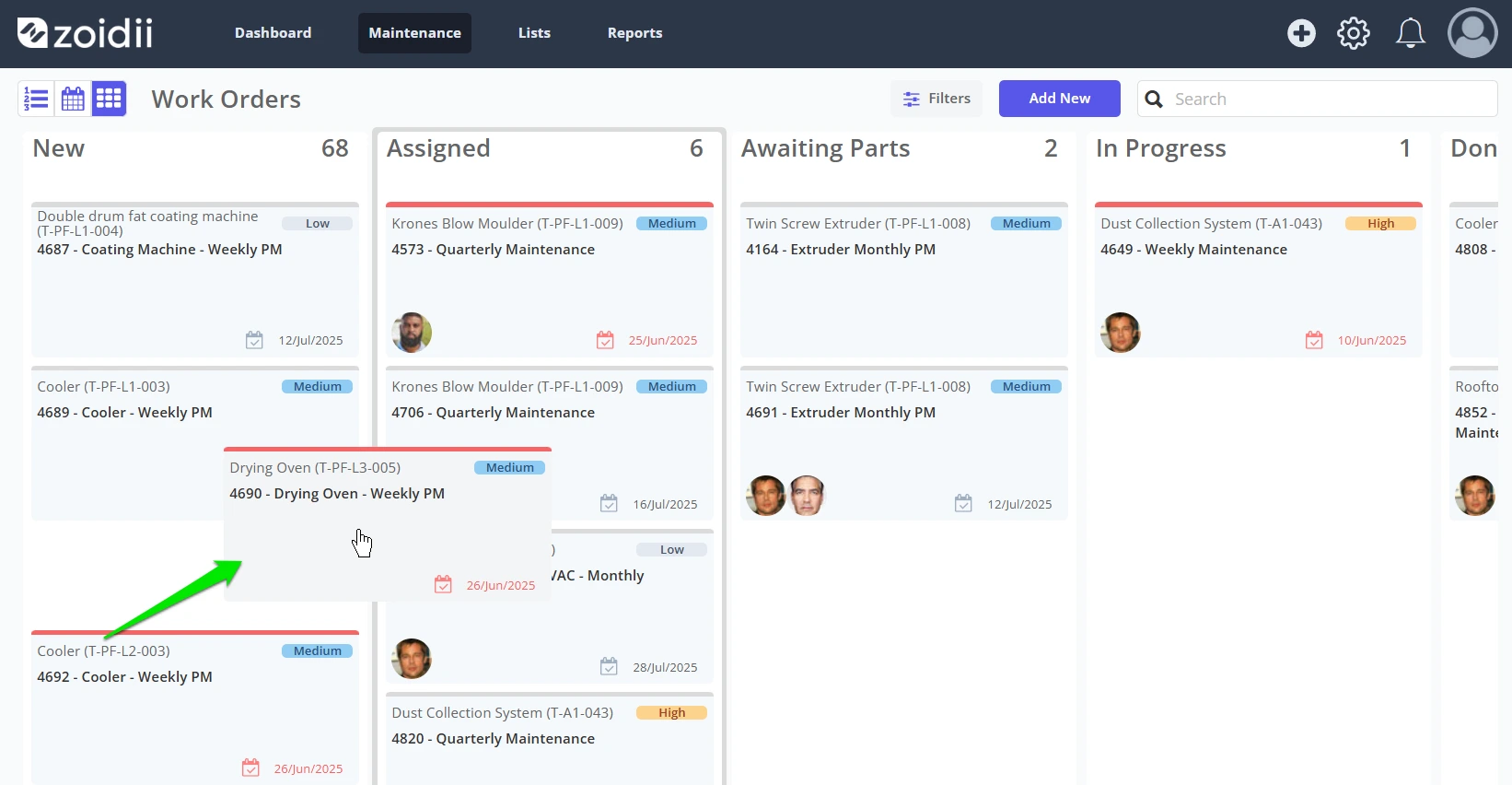
• Drag-and-drop Kanban boards to visualize work-in-progress across statuses (New, Assigned, In Progress, On Hold, Completed). • Priority-based scheduling so critical assets—production lines, safety equipment—are never buried behind lower-urgency tasks. • Work request portals that let operators or supervisors submit issues without needing a full CMMS login. • QR code tagging to link a work order directly to the physical asset on the floor.
Zoidii's built-in Kanban board allows supervisors to prioritize and track work orders with a drag-and-drop interface. At the same time, QR code tagging—available on Professional and Enterprise plans—connects technicians to the right asset instantly.
2. Preventive Maintenance Scheduling
In 2026, preventive maintenance features rank as the top priority for 62% of CMMS buyers. And it's not hard to see why—digitizing the maintenance workflow alone can improve wrench time by 35% and reduce downtime duration significantly.
A strong manufacturing CMMS should offer:
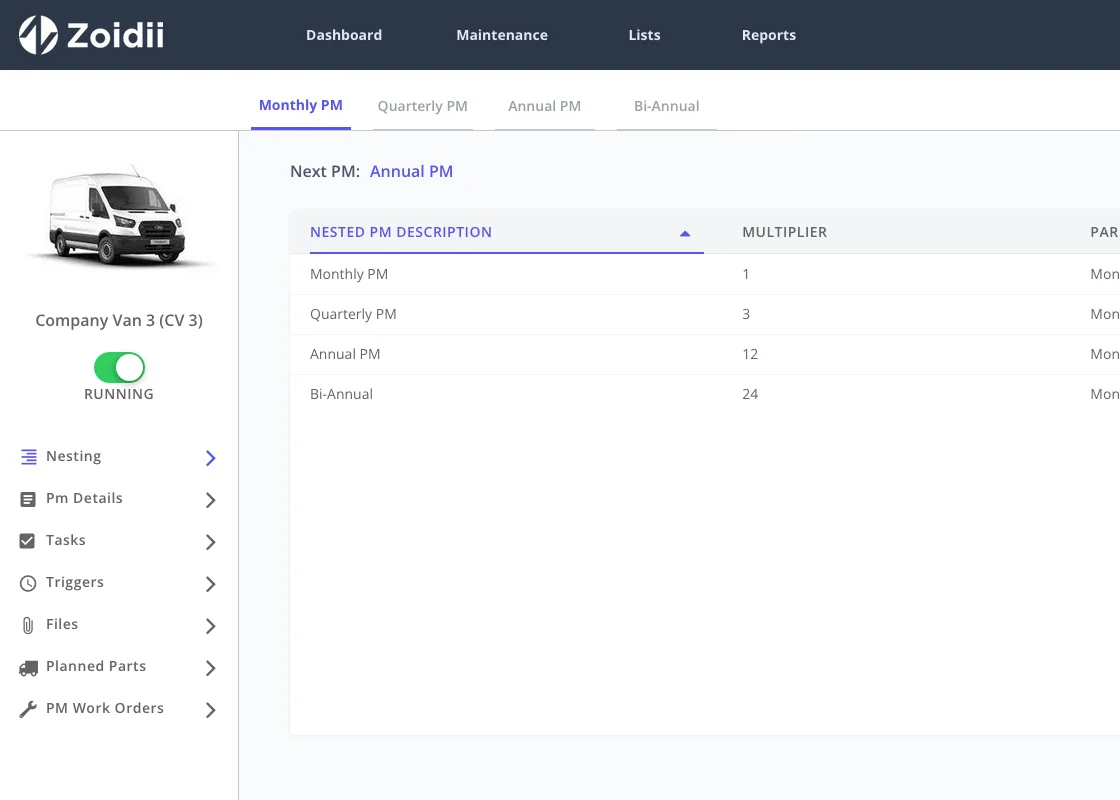
• Time-based and meter-based PM triggers (e.g., every 30 days or every 500 machine hours). • Nested PMs with parent-child task hierarchies for complex equipment with multiple subsystems. • Auto-generated checklists so technicians know exactly what to inspect or lubricate at each visit. • Calendar views and PM schedules that coordinate with production windows to minimize interference.
Preventive maintenance helps extend machine life by 20% to 40% and can reduce energy consumption—an increasingly important metric as energy costs rise across manufacturing operations globally.
3. Asset Management and Lifecycle Tracking
Asset lifecycle management is the second-highest priority for CMMS buyers in 2026, cited by 47% of purchasing teams. Manufacturing facilities are asset-intensive by nature—CNC machines, injection molders, conveyor systems, compressors, and HVAC units all require individual attention.
Your CMMS should provide a complete asset logbook: every work order, PM record, parts used, labor hours, and failure code—attached to the individual piece of equipment. This logbook gives maintenance managers a single source of truth for repair history, informs capital replacement decisions, and is essential for compliance audits.
4. Mobile Access for Technicians on the Floor
Mobile-enabled CMMS use has crossed 55% of total deployments in 2026, improving technician productivity by up to 40%. On a manufacturing floor, technicians can't be running back to a desktop computer to close a work order or look up a repair procedure. Mobile access is now a baseline expectation, not a premium feature.
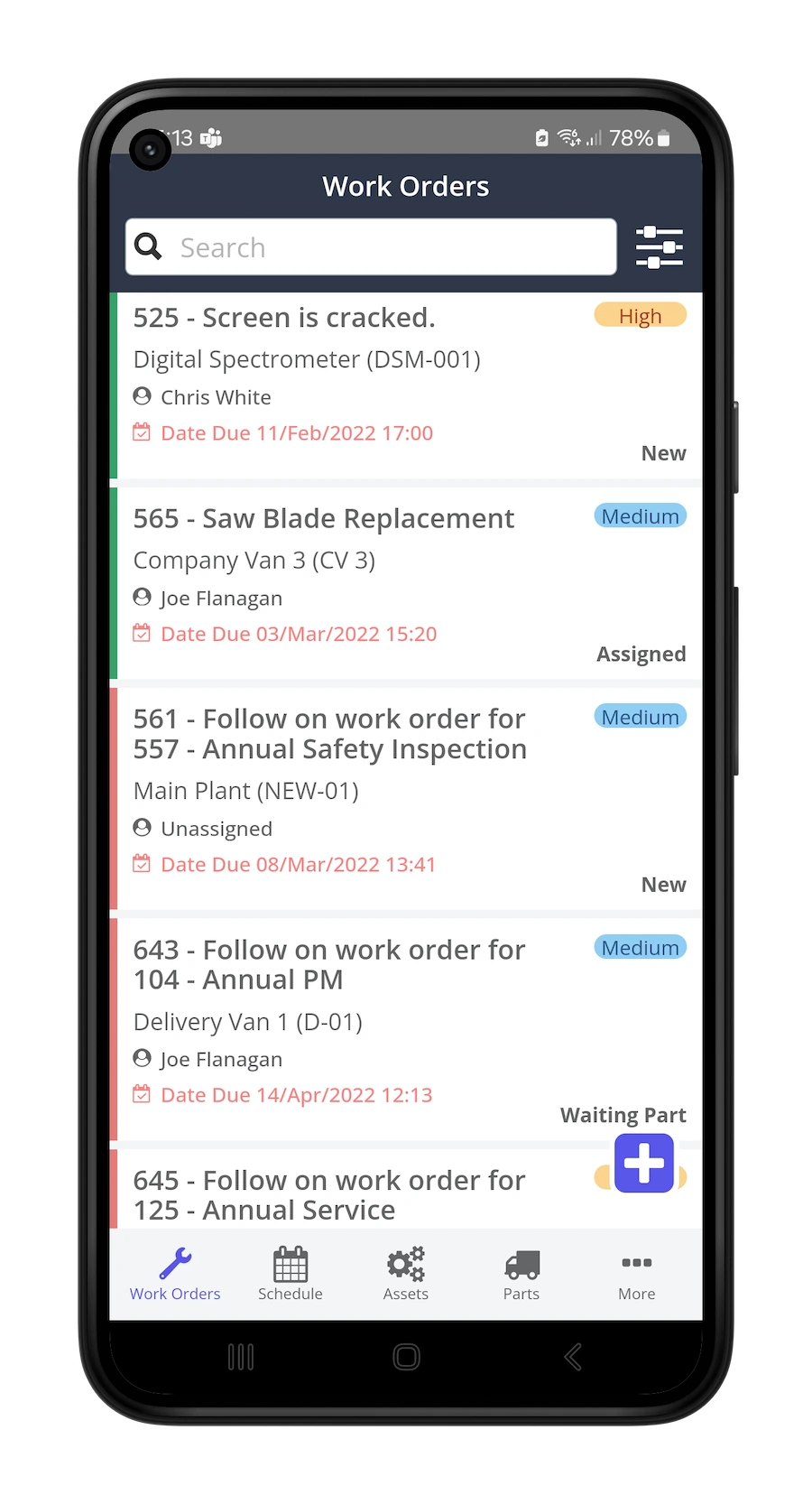
Look for a CMMS with a native mobile app (iOS and Android) that supports:
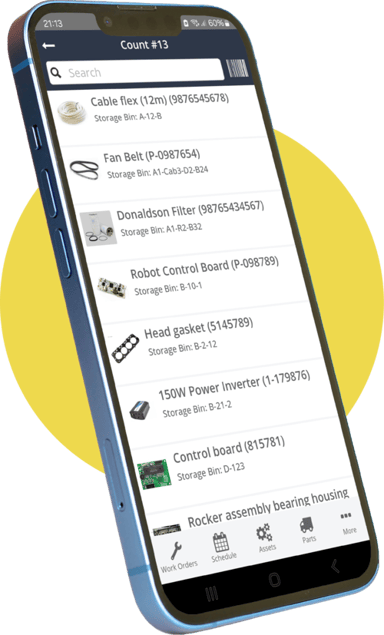
• Creating and updating work orders from the shop floor. • Scanning QR codes to pull up asset history and active PMs. • Photo attachments to document failure modes or completed work. • Offline functionality for facilities with spotty connectivity.
5. Inventory and Spare Parts Management
One of the hidden costs of poor maintenance management is parts inefficiency—either stockouts that extend repair time, or bloated inventory that ties up capital. A manufacturing CMMS should let you:
• Set minimum and maximum stock thresholds for critical spare parts across multiple storage locations. • Link parts directly to assets and PMs, so reorder triggers fire automatically when a PM is scheduled. • Track parts usage per work order for accurate maintenance cost accounting. • Manage multiple storerooms or warehouses from a single platform.
Zoidii enables teams to set min/max inventory requirements across multiple storage locations, with automated alerts to prevent stockouts before they delay critical repairs.
6. Real-Time Dashboards and KPI Reporting
What gets measured gets managed. A manufacturing CMMS should surface actionable KPIs without requiring your team to export CSV files and build their own reports in Excel.
The most important maintenance metrics to track in 2026 include:
• Mean Time Between Failures (MTBF) — Are your assets becoming more or less reliable? • Mean Time to Repair (MTTR) — How quickly is your team resolving breakdowns? • Planned Maintenance Percentage (PMP) — What share of work is proactive vs. reactive? • Overall Equipment Effectiveness (OEE) — World-class manufacturers target 85% OEE. • Work order completion rates, overdue tasks, and technician utilization.
Zoidii's built-in dashboard gives maintenance leaders and plant managers a real-time view of work orders, employee performance, planned maintenance status, overdue tasks, and other key performance indicators—all from a single screen.
7. Compliance and Audit-Ready Documentation
Regulatory compliance is a growing driver of CMMS adoption. In the US alone, approximately 30% of CMMS implementations in 2024 were driven by compliance requirements—and that figure continues to rise as food safety, environmental, and workplace safety regulations tighten.
A CMMS should maintain a complete, tamper-evident audit trail: who performed which maintenance task, when, with what parts, and against which procedure. This documentation is essential for ISO certifications, FDA audits, OSHA inspections, and customer quality programs.
This related article explains how a CMMS can help with audit compliance.
8. Ease of Use and Speed to Value
The most feature-rich CMMS in the world is worthless if your technicians won't use it. Manufacturing teams are busy and often include workers with varying levels of technical comfort. CMMS adoption fails when the software is too complex.
When evaluating usability, ask:
• Can a new technician create and complete a work order without training? • How long does the initial setup and asset import take? • Is there a free trial so your team can test real workflows before committing? • What does customer support look like post-implementation?
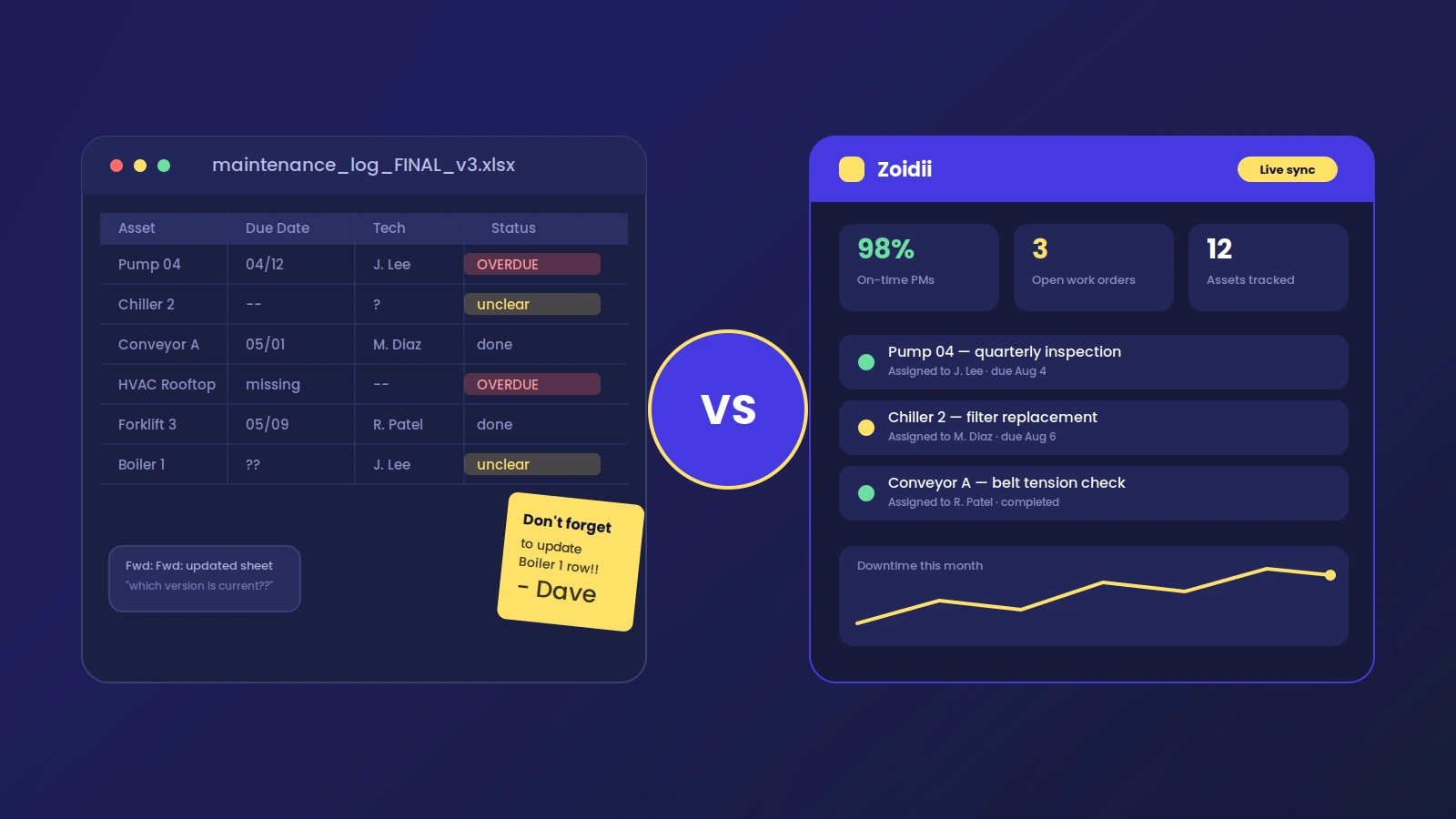
Zoidii is specifically designed for manufacturing companies moving off pen, paper, and Excel for the first time. Its step-by-step PM configuration, intuitive work order workflow, and responsive support team ensure that facilities go live quickly—without a lengthy implementation project.
Cloud-Based vs. On-Premise CMMS: What's Right for Manufacturing in 2026?
Cloud-based CMMS now accounts for nearly 58% of all deployments globally, and the trend is accelerating. For manufacturing SMEs in particular, a cloud CMMS offers significant advantages:
• No server infrastructure to purchase or maintain. • Automatic software updates with zero IT effort. • Access from any device—including mobile on the production floor. • Lower upfront cost with predictable monthly per-user pricing. • Scalability across multiple facilities as your operation grows.
Small and medium enterprises account for 69% of the CMMS market share in 2026—precisely because subscription-based cloud platforms have lowered the barrier to entry for facilities that previously couldn't justify an enterprise EAM system.
What ROI Should You Expect from a Manufacturing CMMS?
The business case for a CMMS in manufacturing is well established by 2026. Based on industry research, manufacturers implementing a modern CMMS can typically expect:
• 20.1% average reduction in unplanned downtime. • 20–40% extension of equipment service life through consistent preventive maintenance. • 35% improvement in technician wrench time by eliminating paper-based workflows. • 44% improvement in asset tracking and utilization. • 28% improvement in regulatory compliance documentation. • 25–50% reduction in total maintenance costs over 3 years in best-in-class implementations. According to a Tech-Clarity survey, 79% of firms report that maintenance has a moderate to high impact on overall business success. A CMMS is not an operational cost—it's an investment in the reliability and profitability of your entire manufacturing operation.
Questions to Ask Before Choosing a CMMS for Your Plant
Before committing to a platform, pressure-test every vendor with these questions: • Is there a free trial so my team can test it with real data before we buy? • How long does implementation typically take for a plant of our size? • Does the mobile app support QR code scanning and offline mode? • Can I configure PMs by both time and usage/meter readings? • How does the system handle multi-site operations if we scale? • What integrations are available with our ERP or production scheduling software? • What level of customer support is included in each pricing tier? • How are compliance documents and audit trails stored and accessed?
Why Zoidii Is Built for Manufacturing Teams in 2026
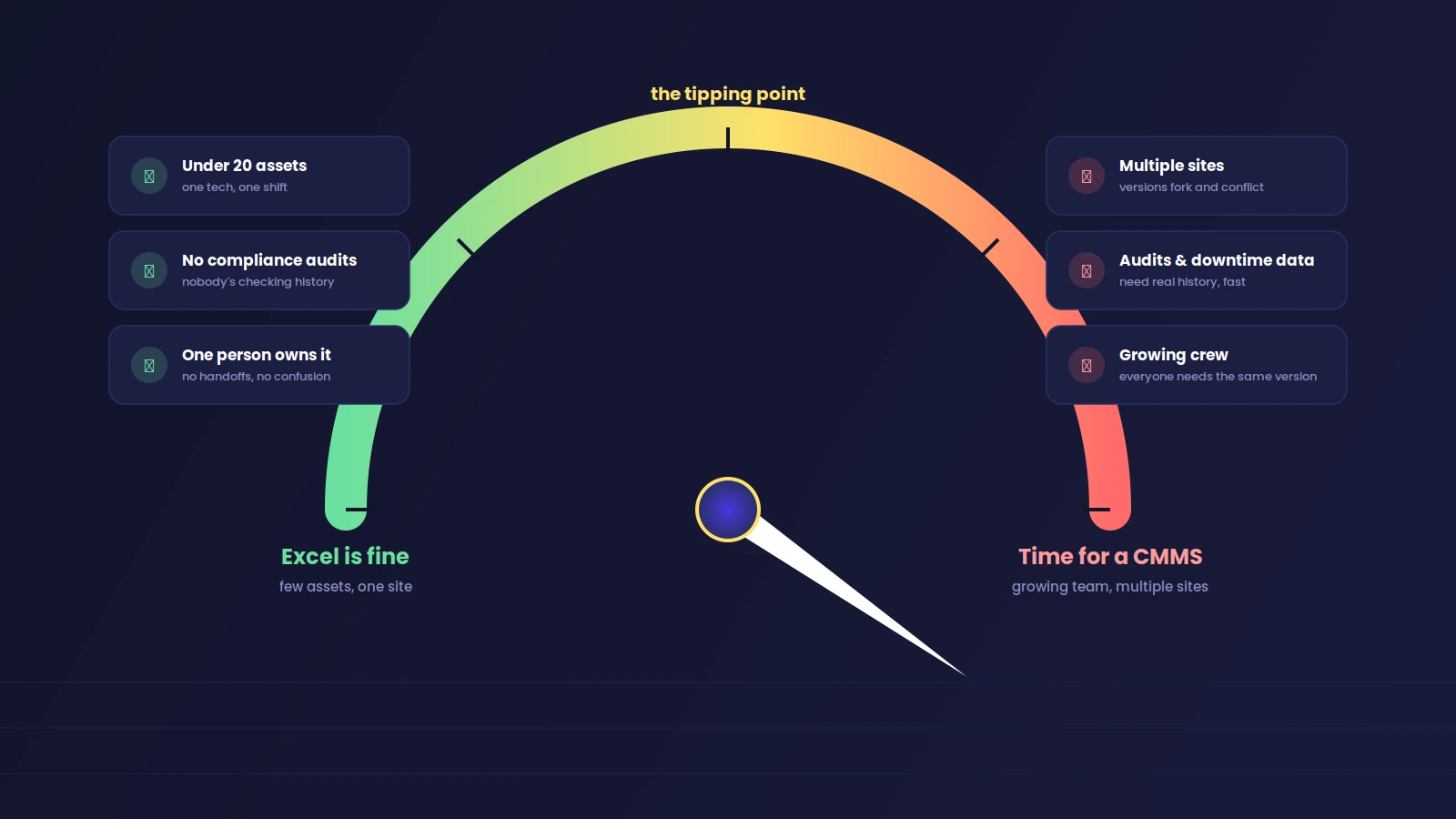
Zoidii is purpose-built for manufacturing companies making their first move from spreadsheets and paper-based maintenance to a dedicated CMMS. It's designed with the production floor in mind—not an enterprise IT department.
• Work order management with Kanban board, priority assignment, and QR code tagging. • Preventive maintenance scheduling with nested PMs, auto-checklists, and time/meter-based triggers. • Asset logbook providing a full history of every repair, PM, and parts consumption per asset. • Inventory management with min/max thresholds and multi-location parts tracking. • Real-time dashboards showing work order status, technician performance, and KPIs in one view. • Mobile app (iOS and Android) for technicians to create, update, and close work orders from the floor. • Request portal allowing operators to submit issues without a full CMMS account. • Simple, transparent pricing at $39, $55, and $75 per user per month—with a free trial on all tiers.
Zoidii customers consistently highlight ease of use, responsive customer support, and the ability to get a plant fully operational on the platform without a drawn-out implementation. If your team can use social media, they can use Zoidii.
Conclusion: The Best CMMS for Manufacturing Is the One Your Team Will Actually Use
The manufacturing industry's shift toward proactive, data-driven maintenance is accelerating in 2026. With unplanned downtime costing an average of $260,000 per hour and the CMMS market growing at nearly 10% annually, the question is no longer whether to invest in a CMMS—it's which one to choose.
The best CMMS for manufacturing combines powerful preventive maintenance scheduling, asset lifecycle tracking, real-time reporting, and a mobile-first design that keeps your technicians productive on the floor. It should be easy to implement, transparent in its pricing, and backed by a support team that responds when you need help.
Zoidii delivers all of that—and offers a free trial so your team can see the difference before spending a dollar. Start your free trial here and experience what modern maintenance management looks like for manufacturing.