
Your "advanced" enterprise software is likely the very thing killing your plant's throughput. You've seen it happen. A critical motor fails at 2:00 AM, and instead of a quick fix, your team is hunting for a paper manual or wrestling with a clunky CMMS for manufacturing that hasn't been updated in a decade.
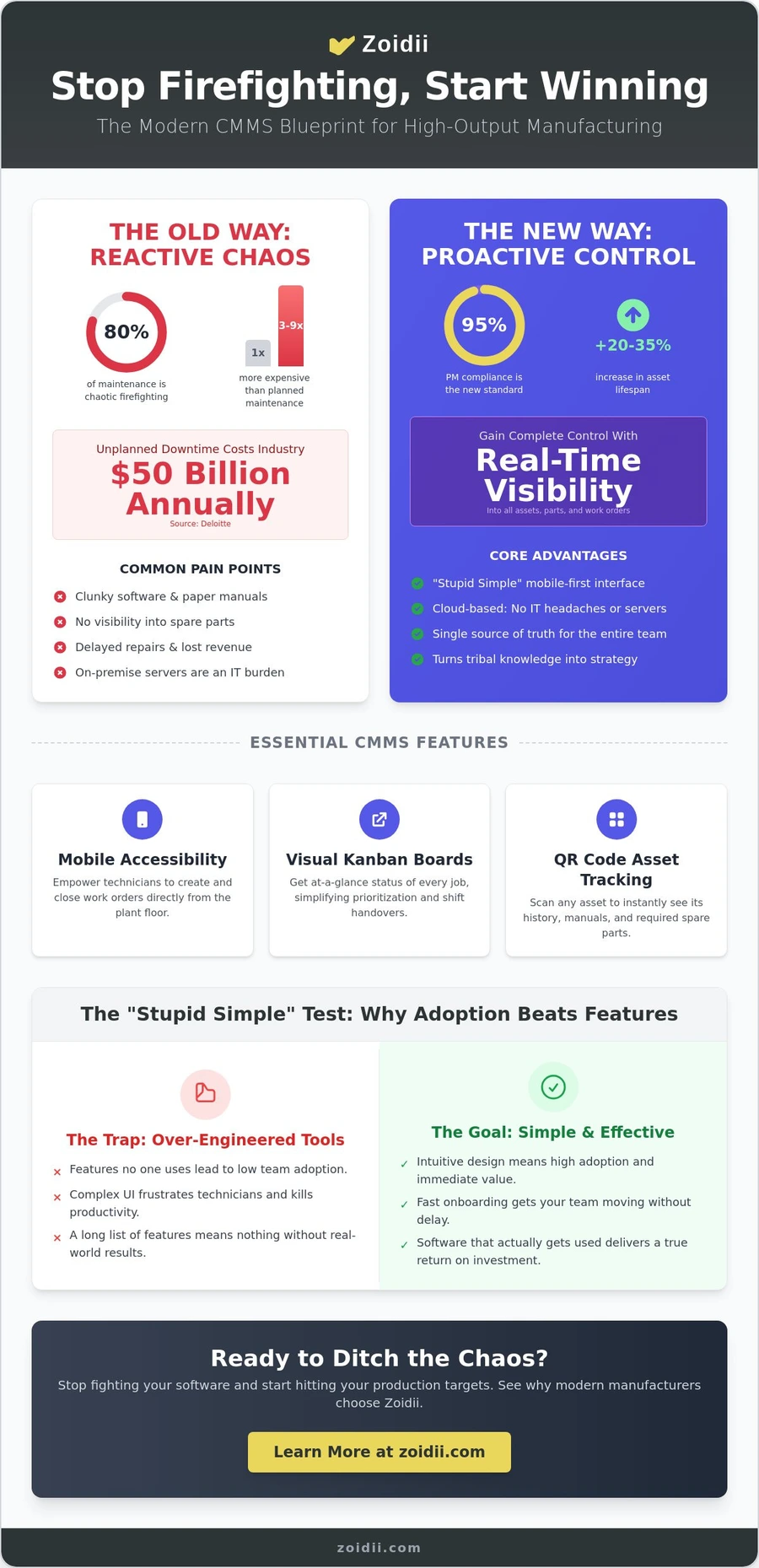
It's a common story in facilities where 80% of maintenance tasks are still reactive. You already know that disorganized data and a total lack of spare parts visibility lead to delayed repairs and lost revenue.
You deserve a tool that actually works for the people on the floor. In this guide, you'll discover how a manufacturing-specific CMMS eliminates downtime and why "stupid simple" software beats over-engineered enterprise tools every time.
We are going to explore how to achieve 95% PM compliance and get real-time visibility into your asset health without the corporate headache. It's time to stop fighting your software and start hitting your production targets.
Key Takeaways
- Stop the firefighting. Learn how to turn your maintenance team into a proactive force that keeps the plant floor moving at peak capacity.
- Cut through the noise. Find out which specific features in a cmms for manufacturing actually move the needle for technicians on the floor.
- Pass the "Stupid Simple" test. Discover why high software adoption rates beat a long list of over-engineered features every single day.
- Get the blueprint. See exactly how to scale your operations from multi-site chaos to streamlined, expert-level asset control.
- Ditch the IT headaches. Learn why modern cloud tools are the logical choice for manufacturers who value results over server maintenance.
What is CMMS for Manufacturing and Why Does the Plant Floor Need It?
Think of CMMS for manufacturing as the digital nervous system for your production assets. It is the central hub that connects every machine, motor, and conveyor belt to the people responsible for keeping them running.
At its core, what is a CMMS? It is a platform that tracks maintenance activities, manages work orders, and stores asset history to ensure your plant floor doesn't grind to a halt. Implementing CMMS for manufacturing moves your team away from chaotic firefighting and toward a state of controlled, proactive asset management.
The shift is vital for protecting your Overall Equipment Effectiveness (OEE). Unplanned downtime is a silent killer of throughput, costing industrial manufacturers an estimated $50 billion annually, according to Deloitte. When a critical machine fails, the ripple effect destroys your production schedule.
Legacy on-premise systems are anchors; they require expensive servers and specialized IT teams to maintain. Modern cloud-based tools are different. They offer instant access from any mobile device on the floor, providing a "stupid simple" way to log issues the moment they arise.
The High Cost of Staying Reactive
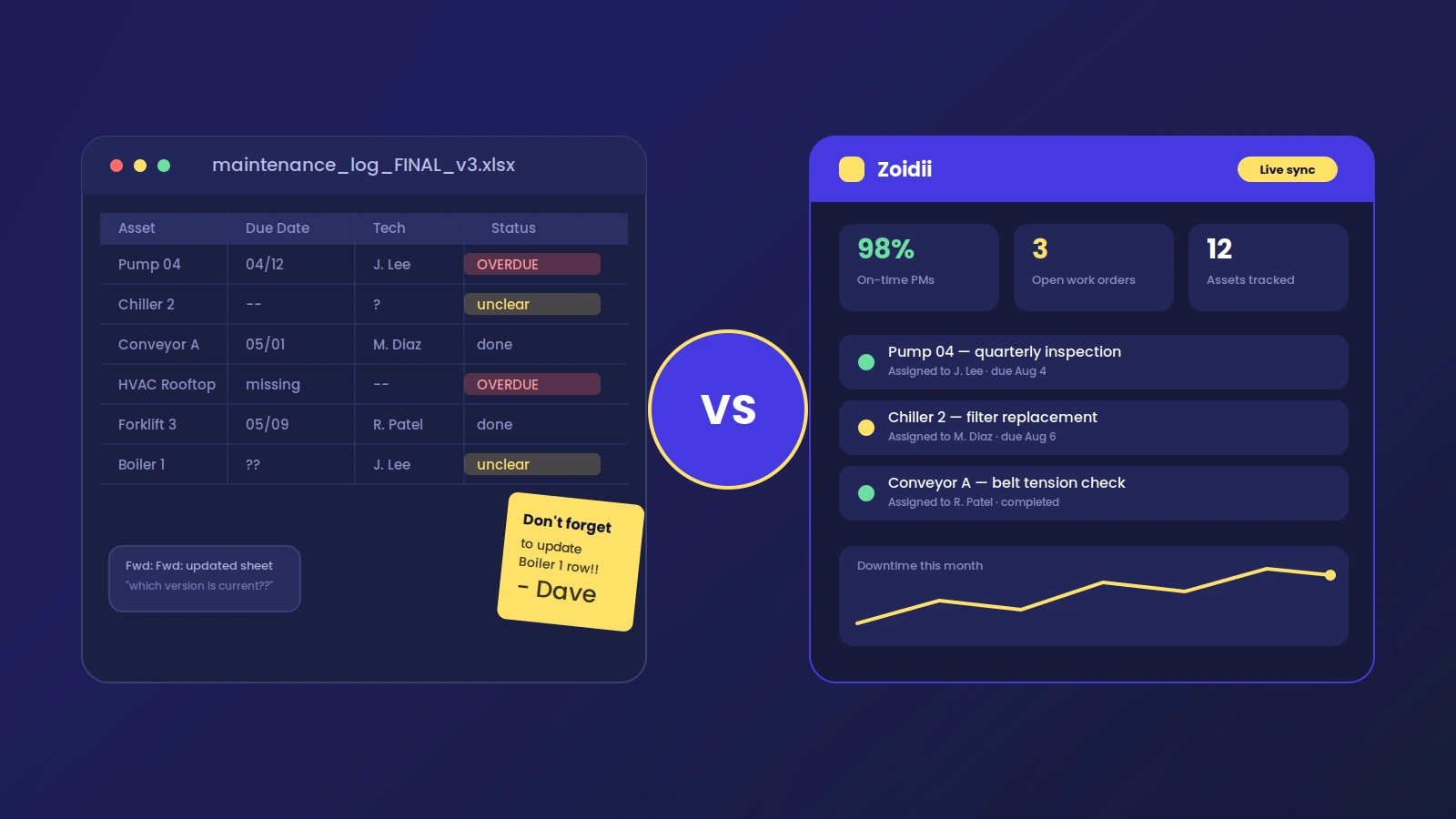
Fixing it when it breaks is the most expensive way to run a factory. Industry data shows that reactive maintenance costs between 3 to 9 times more than planned maintenance. You aren't just paying for the repair; you're paying for overtime labor, rush shipping on parts, and the massive opportunity cost of lost orders.Excel and paper are the biggest enemies of manufacturing scalability because they hide these costs in disorganized filing cabinets. A what is cmms solution serves as a single source of truth for every technician and manager in the building. It turns tribal knowledge into a documented strategy that keeps the line moving.
Moving Beyond the Spreadsheet
Manual tracking is a liability that fails during audits and safety inspections. When an auditor asks for the service history of a pressure vessel, flipping through a coffee-stained logbook won't cut it. Plant managers need real-time data to make fast decisions about equipment replacement and resource allocation. You can't manage what you don't measure.Moving to a digital system ensures that every PM is logged and every safety check is timestamped. Check out our guide on CMMS software for deeper technical context on how these tools are evolving to handle the demands of modern production environments.
Essential CMMS Features for High-Output Manufacturing
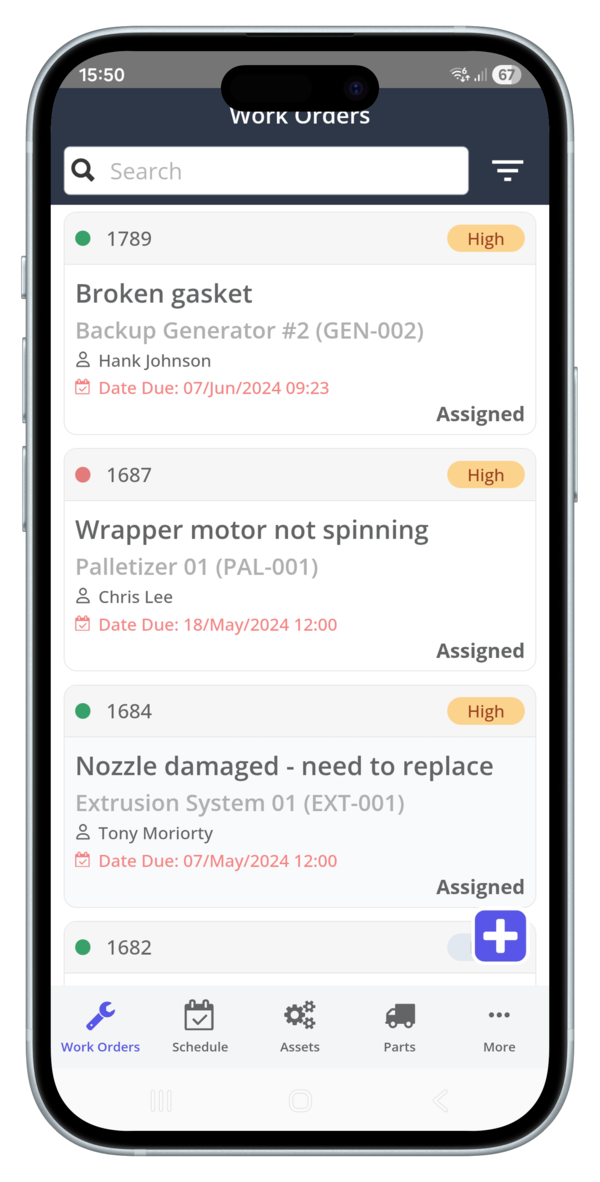
High-output manufacturing doesn't happen by accident. It's the result of technicians spending more time on the floor and less time at a desk. Implementing a CMMS for manufacturing keeps things moving by prioritizing mobile accessibility.
If your team has to walk 500 feet back to an office just to close a work order, you're bleeding productivity. Automated PM scheduling is just as vital. Studies on the impact of CMMS on manufacturing performance show that plants using digital scheduling see a 20% to 35% increase in asset life. It's about doing the work before the machine forces you to stop.
Visualizing Workflow with Kanban Boards
Maintenance is messy, but Kanban boards make it clean. A CMMS for manufacturing should offer more than just a list of jobs; it needs to offer clarity. These boards simplify task prioritization so multi-shift operations don't lose information during handovers.You see the status of every job at a single glance. Production staff can use guest work orders to flag issues the moment they hear a weird noise. This creates a direct line of communication that skips the game of telephone and gets the right eyes on the problem fast.
Asset Tracking and Spare Parts Strategy
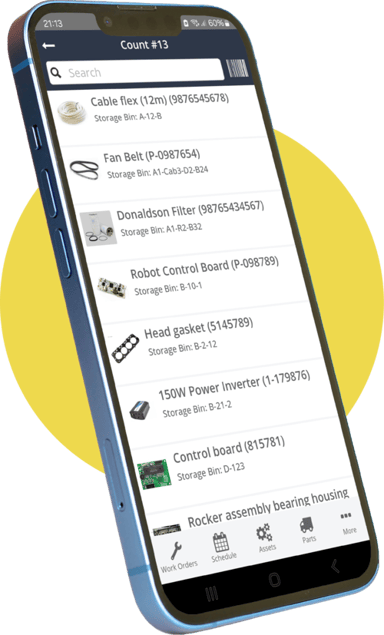
You can't fix what you can't find. Linking spare parts to specific assets is the only way to ensure fast repairs. When a tech scans a QR code on a motor, they should see exactly which belt or seal is needed.This level of fixed asset management prevents you from buying parts you already have buried in a bin. Effective MRO inventory management keeps your uptime high and your capital expenditure waste low. If you don't have the part on the shelf, your throughput is zero.
Audit Readiness and Safety Compliance
Digital logs mean you're always ready for an audit. Whether it's ISO 9001 or a surprise safety inspection, you can pull up a history of every task in seconds. Integrating LOTO (Lockout/Tagout) protocols directly into work orders ensures your team stays safe while they stay busy.Beyond just knowing what does osha stand for, a CMMS provides the hard evidence of your compliance. It turns safety from a paperwork nightmare into a routine part of the workflow. This keeps your plant running and your legal team happy.
To see how a modern tool can simplify your shop floor, chat with a product expert and start realizing your production goals today.
The "Stupid Simple" Test: Why Adoption Beats Features
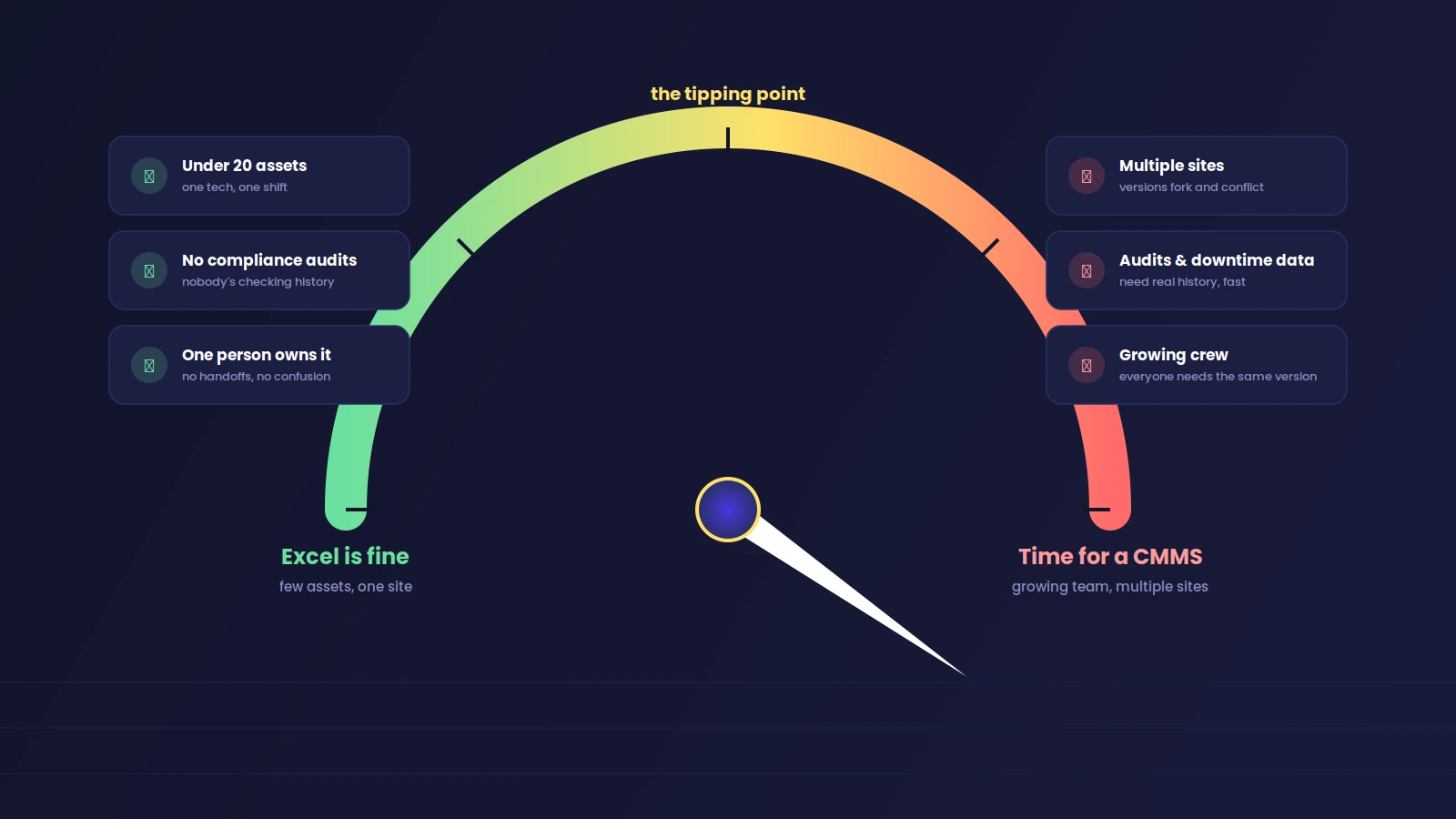
Most CMMS implementations fail for one specific reason: technicians refuse to use them. Research from industry analysts suggests that nearly 80% of maintenance software rollouts fail to meet their original goals because of poor user adoption.
If your team finds the software frustrating, they'll revert to paper or stop logging data entirely. A feature-heavy CMMS for manufacturing that sits idle is a $0 ROI investment. You aren't buying software to satisfy a corporate checklist; you're buying it to get work done on the shop floor.
The "Stupid Simple" (KISS) principle is the only metric that matters during a rollout. If a tool requires a manual to understand, it's already failed. You need a system that passes the "greasy hands" test.
This means buttons are large, the interface is intuitive, and the software stays out of the way. When a tool is easy to use, it stops being a chore and starts being a utility. High adoption rates lead to better data, and better data leads to the throughput gains you actually care about.
Technician-First Design vs. Manager-First Reporting
Managers often get distracted by complex desktop dashboards, but the real work happens in the mobile app. If a technician has to navigate through six different screens to close a work order, they won't do it accurately. You must prioritize a "clicks to close" mindset.A tech should be able to scan a QR code, view the task, and tap "Complete" in seconds. This technician-first focus can improve data entry accuracy by over 45%. When the software feels like a help rather than a digital leash, the culture of the maintenance department shifts from reactive to proactive.
Implementation Speed: From Sign-up to First PM
Legacy enterprise systems often require six-month consulting engagements just to get the lights on. Modern software should move from sign-up to your first PM in 48 hours. Speed is the enemy of overthinking. Start by bulk importing your asset list and existing schedules via CSV to bypass manual data entry. Instead of a plant-wide launch that overwhelms everyone, start with one critical production line.Run it for five days, prove the value, and then scale. Choosing a CMMS for manufacturing that allows for this rapid "pilot" approach ensures you realize your goals before the initial momentum dies out.
- Focus on the mobile experience over the desktop view.
- Reduce total clicks for every common shop floor action.
- Avoid "feature bloat" that confuses the end user.
- Prioritize bulk data tools to get up and running in days.
Case Study Blueprint: Scaling a Manufacturing Plant with Zoidii
Consider a multi-site food processor operating three plants across the US East Coast. Before Zoidii, they were stuck in a constant cycle of "firefighting." Their maintenance was 75% reactive, and downtime averaged 18 hours per week per facility. This isn't just a headache. It's a massive drain on the bottom line.
They needed a CMMS for manufacturing that actually worked for the guys on the floor, not just the IT department. By following a structured 5-step blueprint, they moved from total chaos to a controlled 80/20 maintenance split in under six months.
Phase 1: Asset Hierarchy and Criticality
The first step was mapping the plant floor. They built a digital twin of every production line, from the industrial ovens down to the individual conveyor motors. They didn't just list equipment; they assigned criticality scores to every piece of hardware. This identified the 15 "bottleneck assets" that, if broken, stopped the entire plant.By focusing on these high-risk machines first, they stopped wasting time on low-priority repairs that didn't affect throughput. It's about knowing exactly which machine is going to cost you $10,000 an hour if it sits idle.
Phase 2: Automating the Preventive Schedule
They ditched the messy spreadsheets and whiteboards. Zoidii automates recurring work orders so nothing falls through the cracks. If a bearing needs lubrication every Tuesday at 6:00 AM, the work order appears on the tech's tablet automatically.This shift helped them hit an 80/20 preventive maintenance ratio within five months. PM compliance became their North Star metric.
This stupidly simple change led to a 28% reduction in total downtime across all sites because the team caught small issues before they became catastrophic failures. They stopped wondering if the work was done and started seeing the proof in their CMMS for manufacturing dashboards.
Phase 3: Real-Time Reporting for the C-Suite
Data is the best weapon for a maintenance manager. They used Zoidii to track the cost of every repair, including labor hours and spare parts. When it came time for the annual budget meeting, they didn't have to guess or beg.They produced clear reports showing that three specific legacy machines were responsible for 60% of their emergency shipping costs and 40% of their overtime. This data justified a $250,000 CapEx spend for new equipment that paid for itself in less than a year. They also generated audit-ready reports for health inspectors in seconds, turning a stressful three-day ordeal into a quick digital hand-off.
Ready to stop the chaos? Chat with a Zoidii product expert today.
Why Zoidii is the Logical Choice for Modern Manufacturers
Zoidii is the straight-shooting expert your plant needs. Most legacy software feels like it was built by people who have never stepped foot on a factory floor. We took a different path. Our cloud-based platform eliminates the IT headache entirely.
There are no on-premise servers to patch and no expensive hardware to buy. This "stupid simple" philosophy is our biggest competitive advantage.
While other plants struggle with 60% of their software features going unused, Zoidii users actually use the tool to drive results. It's time to stop the constant firefighting and start realizing your production goals.
Built for the Shop Floor, Not the Boardroom
We built this for the person holding the wrench. The mobile app and Kanban boards provide a visual, real-time look at your facility. You won't find bloated menus or hidden settings here.
We included SSO to make logging in instant and guest work order features so operators can report issues without needing a full license. This ensures every team member stays connected to the workflow.
When you need support, you talk to a product expert. These are professionals with years of experience in maintenance management, not just entry-level sales reps reading from a script. This level of expertise ensures your CMMS for manufacturing is configured for maximum plant integration from the start. We focus on the features that actually move the needle, such as:
- Visual Kanban Boards: Drag and drop work orders to update status in seconds.
- Mobile-First Design: Access asset history and manuals directly at the machine.
- Guest Requests: Allow anyone on the floor to flag a problem without a complex login process.
- Seamless SSO: Secure, one-click access that keeps your IT department happy.
Next Steps: Get Organized in Minutes
You don't need a complex sales cycle to get started. In fact, most teams are up and running in less than 24 hours. The risk of trying a modern, cloud-based CMMS for manufacturing is minimal compared to the cost of another year of disorganized spreadsheets and missed PMs. Industry data shows that organized maintenance can reduce equipment downtime by 20% within the first six months of implementation.Don't wait for the next major breakdown to make a change. The path to a more efficient plant is right in front of you. You can move from reactive chaos to proactive order without the typical enterprise software stress.
Book a demo or chat with a product expert today to see how Zoidii helps you realize your goals and keep your production lines moving.
Stop Fighting Your Software and Start Scaling Your Plant
Boosting throughput isn't about adding layers of complexity to your floor. It's about removing the friction that slows your team down. You've seen how adoption beats features every single time.
Research shows that nearly 80% of software implementations fail because they're too complex for the end user. If your technicians can't log a task in under 30 seconds, they'll go back to paper and your data will rot. A modern cmms for manufacturing must be powerful enough to handle PMs while remaining stupid simple for the person holding the wrench.
Maintenance teams worldwide trust Zoidii because it cuts through the corporate fluff. As the #1 cloud-based CMMS for simplicity, we focus on what moves the needle: getting work orders done and keeping machines running. Our stupid simple mobile app is built for the reality of the plant floor, not a quiet office. It's time to stop guessing about your uptime and start realizing your production goals with a tool that actually works.
Book a demo with a Zoidii product expert today and see how easy facility management can be.
Frequently Asked Questions
How long does it take to implement a CMMS in a manufacturing plant?
Implementation typically takes 2 to 4 weeks, though you can get your first assets live in a few hours. Most legacy systems drag on for 6 months, but we focus on quick wins. You'll start by loading your equipment list and setting up basic PMs.Zoidii's new Photo to Asset feature lets you snap an image of your equipment, and the system extracts key details such as the asset name, make, model, serial number, and manufacturing date. This fast rollout ensures your team actually uses the tool instead of getting bogged down in a 90-day configuration nightmare.
Can a CMMS help with ISO 9001 or OSHA compliance?
Yes, a CMMS automates the documentation needed for ISO 9001 and OSHA 29 CFR 1910 standards. It replaces unreliable paper stacks with digital, timestamped logs that prove maintenance was performed. During an audit, you can pull up a machine's entire history in 30 seconds. It turns a week of audit prep into a few clicks, keeping your facility compliant and your records bulletproof.What is the difference between a CMMS and an EAM for manufacturing?
The main difference is scope; a CMMS manages maintenance while an EAM tracks the entire asset lifecycle from design to disposal. For 95% of manufacturers, an EAM is an expensive overkill that adds unnecessary complexity. Zoidii sticks to the "Keep it stupid simple" principle. We focus on work orders and uptime, providing exactly what the shop floor needs without the corporate bloat.Do my maintenance technicians need specialized training to use Zoidii?
No, your team won't need specialized training because Zoidii is designed to be mastered in minutes. We built the interface for technicians who work with their hands, not IT professionals. It's intuitive and direct. If your crew can use a smartphone, they can manage work orders here. Chat with a product expert to see how easily your team can realize their goals.How does a CMMS reduce unplanned downtime on a production line?
A CMMS for manufacturing reduces unplanned downtime by an average of 28% by automating your preventive maintenance schedule. Instead of waiting for a belt to snap, the system triggers a work order based on runtime or calendar dates.This proactive approach catches small issues before they trigger a 10,000 dollar repair. You'll stop firefighting and start controlling your production line's availability.
Is a cloud-based CMMS secure for sensitive manufacturing data?
Cloud-based systems are highly secure, utilizing SOC 2 Type II data centers and 256-bit encryption to protect your operational data. Your information is backed up every 24 hours, which is more frequent than most internal IT departments manage.It's a professional-grade defense that prevents data loss from hardware failure or local cyberattacks. You get better protection without the cost of on-site servers.