
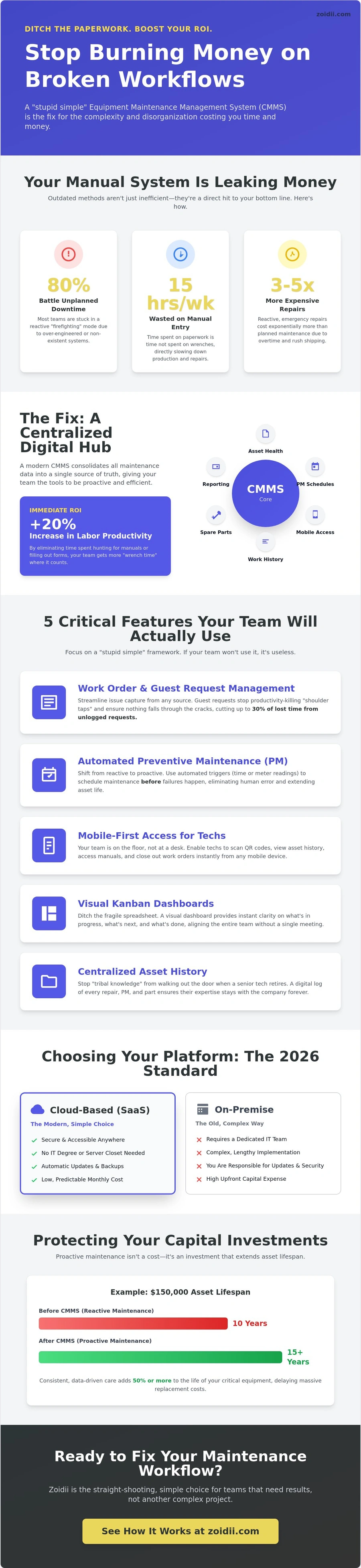
The most expensive tool in your facility is the one your team refuses to use because it's too complicated. Recent industry surveys found that 80% of maintenance professionals still battle unplanned downtime because their current systems are over-engineered. You don't need another complex project; you need equipment maintenance management software that's stupid simple and actually works. If you're spending 15 hours a week on manual data entry while production delays stack up, you've already felt the cost of software fluff.
We understand that you're tired of being unable to prove your team's value to upper management. You need a way to turn "we're working on it" into hard ROI data. This guide offers a pragmatic framework to help you cut through the sales pitches and pick a system that delivers results.
We will cover how to establish a centralized source of truth for all assets, automate your preventive maintenance schedules, and give your techs mobile access to finish jobs faster. Let's get your facility organized and your goals realized.
Key Takeaways
- Stop burning ROI on paper logs and fragile spreadsheets by moving to a centralized digital hub for asset health.
- Identify the five critical features your equipment maintenance management software needs to eliminate disorganization and slash equipment downtime.
- Learn why cloud-based SaaS models have become the 2026 standard for maintenance teams who want security without needing an IT degree.
- Follow a step-by-step blueprint to ensure your data stays clean and your implementation timeline remains realistic.
- Shift your focus from bloated feature lists to a "stupid simple" framework designed to help you actually realize your operational goals.
What is Equipment Maintenance Management Software (and Why Paper is Killing Your ROI)?
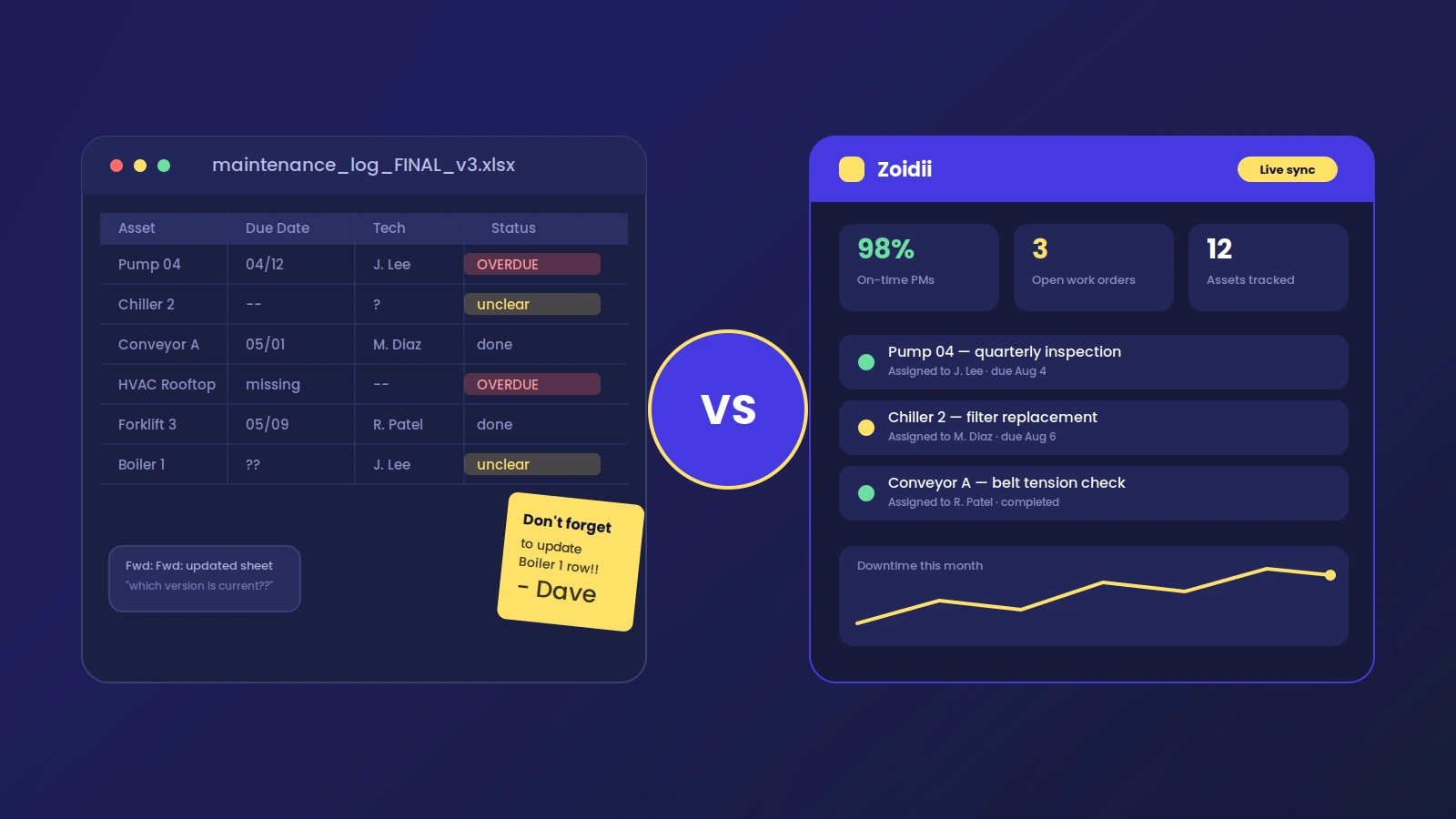
Equipment maintenance management software is the digital hub for your entire operation. It acts as a single source of truth for tracking asset health, work history, and spare parts. Many facilities still rely on grease-stained paper logs or fragile Excel sheets that crash when you add a new row. These old-school methods are liabilities.
A modern Computerized Maintenance Management System centralizes data so you can stop guessing and start managing. This digital transition is critical for 2026, as it solves the "tribal knowledge" trap. When a senior technician retires after 25 years on the floor, his expertise shouldn't leave with him. Digital tracking ensures his insights stay in the system for the next generation.
Switching to equipment maintenance management software provides an immediate boost to your bottom line. Companies that ditch paper for digital workflows often see a 20 percent increase in labor productivity. You eliminate the time spent hunting for manuals or searching for the last guy who serviced a pump. In a high-pressure production environment, every minute of "wrench time" counts. Centralized data means your team spends more time fixing machines—whether they are industrial assets or specialized custom assets - and less time filling out forms.
The High Cost of Reactive Maintenance
Waiting for a machine to fail before fixing it is a financial disaster. Industry data shows that reactive repairs are 3 to 5 times more expensive than planned maintenance. You aren't just paying for the repair; you're paying for lost production time and emergency shipping. A $50 part can quickly turn into a $2,000 overnight freight bill when a critical line is down. Digital tracking enables asset lifecycle extension.By performing small, scheduled tasks, you can make a $150,000 asset last 15 years instead of 10. It's about protecting your capital investments through consistent, data-driven care.
CMMS vs. EAM: Which One Do You Actually Need?
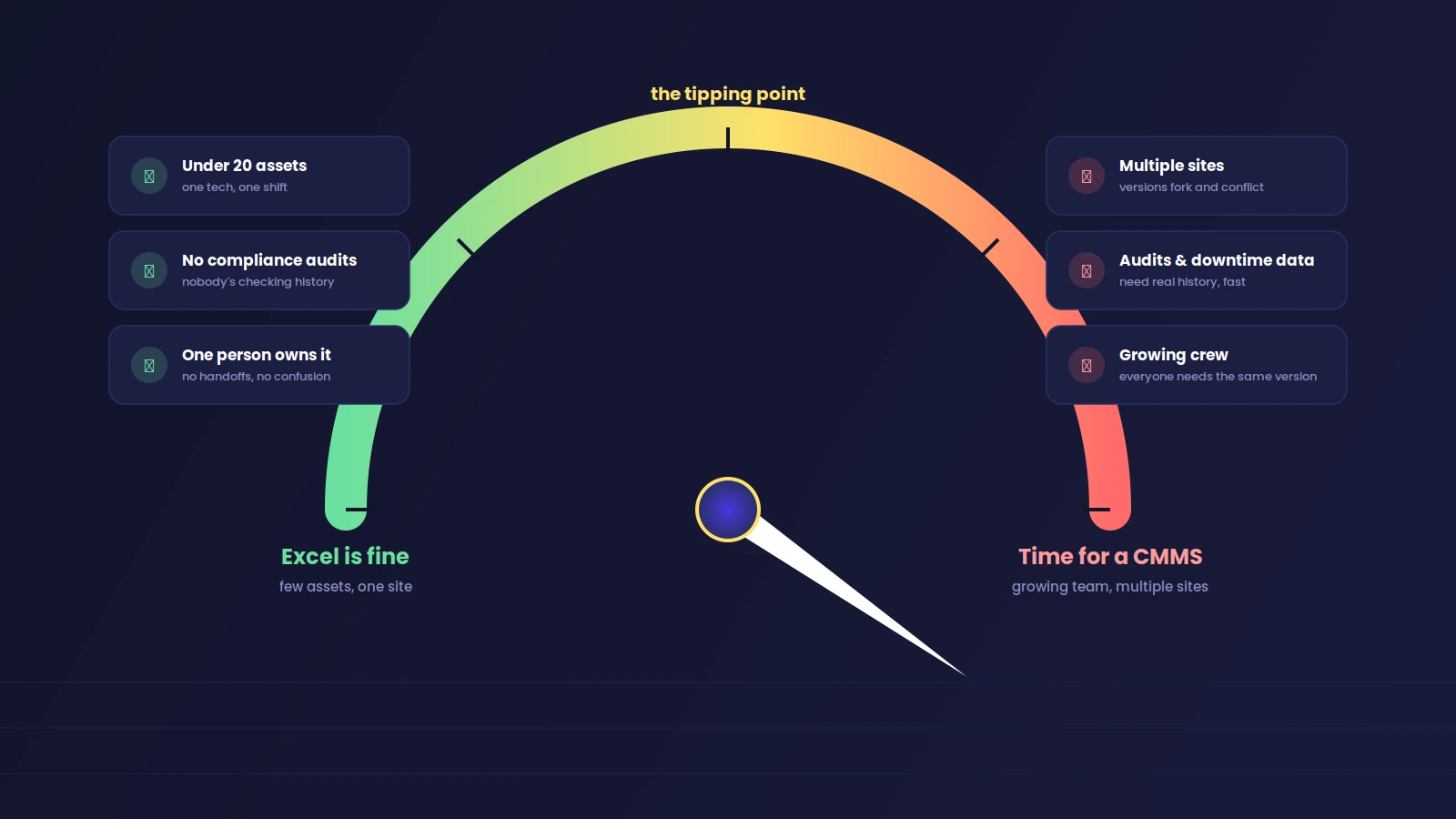
Don't get lost in the alphabet soup of software acronyms. A CMMS focuses on maintenance operations, work orders, and PMs. Enterprise Asset Management (EAM) adds layers for finance, HR, and complex procurement. Most maintenance managers don't need the massive feature bloat that comes with EAM. It's expensive and usually so complex that the team refuses to use it.Our advice is to stay straight-shooting. Choose a tool that solves your immediate problems without the unnecessary bells and whistles. If the software isn't stupid simple, your techs won't log their work, and your data will stay messy. Focus on results, not complex acronyms.
5 Critical Features Your Maintenance Management System Must Have
Don't buy software that requires a PhD to operate. Your equipment maintenance management software should solve two specific headaches: disorganization and downtime. If it adds complexity instead of removing it, it's failing you. In 2026, "simple" is the ultimate power move. It means your team actually uses the tool instead of ignoring it. Functional software is better than "powerful" software that sits on a digital shelf.
A mobile-first design is the baseline for 2026 frontline workers. Techs don't sit at desks. They're on the floor, under machines, or on rooftops. They need to scan a QR code, view the asset history, and close the task in seconds. Pair this with a visual Kanban-style dashboard. Seeing work orders move from "To Do" to "In Progress" to "Done" provides instant clarity that a messy spreadsheet never can. It keeps the entire team aligned without a single status meeting.
Work Order Management and Guest Requests
Efficiency starts with how you capture issues. You need a straight line from a spotted leak to a completed repair. This is where guest requests change the game. A guest work order is a friction-free way to capture facility needs from non-users like office staff or machine operators. It stops the constant "hey, can you fix this" shoulder-tapping that kills productivity.Recent industry surveys show that unlogged verbal requests account for up to 30% of a maintenance team's lost time. Streamlining this flow ensures nothing falls through the cracks.
Preventive Maintenance (PM) Scheduling
Stop reacting and start controlling. Reliable preventive maintenance moves you from "fix it when it breaks" to "fix it so it doesn't." Use automated triggers based on time or meter readings to eliminate human error.Every PM task must have digital manuals and checklists attached. This ensures a junior tech performs the job with the same precision as a veteran. Data from 2024 shows that companies using automated PMs see a 20% reduction in equipment downtime within the first 12 months.
Inventory and Spare Parts Mastery
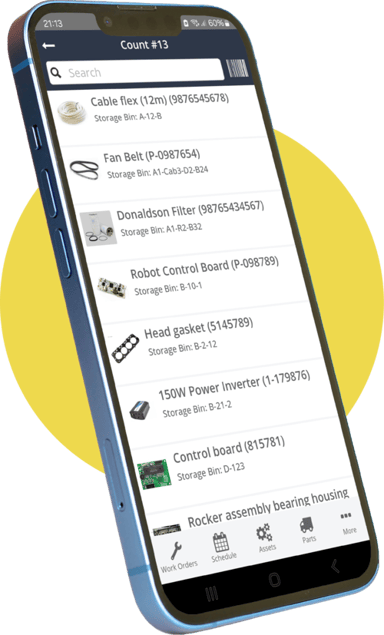
You can't fix what you don't have parts for. Every critical asset needs a digital bill of materials (BOM) so techs know exactly what to grab before they head to the machine. Set low-stock alerts to trigger automatically when you hit a minimum threshold.This prevents "part-out-of-stock" disasters that leave machines idle for days. By linking parts directly to work orders, you get 100% accurate cost tracking without the manual guesswork. If you want to get organized fast, chat with a product expert to see how these features work in real-time.
Cloud vs. On-Premise: Choosing a System That Doesn’t Require an IT Degree
The old-school belief that on-premise software is more secure is a myth that needs to die. Keeping a server in a dusty closet doesn't make your data safe; it just makes it vulnerable to hardware failure and local security gaps.
By 2026, cloud-based SaaS models will have become the undisputed standard for equipment maintenance management software. These systems live in high-security data centers with redundancies that your local IT department simply can't match on a mid-sized budget.
Speed is the biggest winner here. On-premise installations often drag on for months while you wait for hardware delivery and database configuration. Cloud systems deploy in minutes. You log in, invite your team, and start building your asset list immediately. This "minutes, not months" approach means you realize ROI before an on-premise competitor even finishes their first server backup.
The Total Cost of Ownership (TCO) is also significantly lower. You don't pay for server electricity, cooling, or the IT man-hours required to manually push updates. Everything stays current automatically.
The Accessibility Factor: Mobile Apps and SSO
Maintenance doesn't happen in an office. If your techs have to walk back to a desktop to close a work order, your data will be late and inaccurate. They need a mobile app that works on the plant floor. Modern systems use QR codes to make asset lookups stupid simple. A tech scans a tag on a motor and instantly sees its entire PM history.To keep the IT guys happy, ensure the system supports Single Sign-On (SSO). This allows your team to use their existing company credentials, which keeps the system secure without forcing everyone to memorize yet another password.
Real-Time Data and Analytics
Stop focusing on data collection and start looking for actionable insights. A dashboard should do more than show a list of tasks. It needs to identify "bad actor" machines. These are the specific assets draining your budget through constant repairs and unplanned downtime. In 2024, industry data showed that 20% of assets typically cause 80% of maintenance headaches.Your software must highlight these outliers so you can decide whether to repair or replace them. Additionally, the system should provide automated reports for OSHA compliance. This turns a week-long audit preparation into a two-minute task, keeping your facility safe and your records "stupid simple" to access.
The Step-by-Step Blueprint for Implementing New Maintenance Software
Software won't fix a broken process. It's a tool, not a miracle worker. If you feed it garbage data, it'll spit out garbage reports. Moving from a manual system to a digital one isn't an overnight task. A realistic timeline for a full rollout is four to eight weeks.
Don't try to boil the ocean on day one. Focus on quick wins to prove the value. Aim to get your first five preventative maintenance tasks (PMs) live within the first 48 hours. This immediate result shows the team that the equipment maintenance management software actually works.
Phase 1: Asset Audit and Data Cleanup
You can't manage what you haven't defined. Most facilities have 15% to 20% "ghost assets" on their lists. These are machines that were scrapped or sold years ago but still haunt your spreadsheets. Delete them. Before you import anything, categorize your assets by criticality.Use a Tier 1, 2, and 3 system. Tier 1 assets are the ones that stop production and cost you thousands per hour if they fail. Focus your data entry here first.
The secret to a clean import is consistent naming conventions. Don't use "Big Green Press" in one entry and "Press-01" in another. Stick to a rigid format like "DEPT-TYPE-ID." Gather your existing manuals and warranty PDFs now.
Put them in one digital folder so they're ready to attach to the asset record. This makes your equipment maintenance management software a single source of truth rather than a digital filing cabinet of mess.
Phase 2: Training Your Frontline Technicians
Your technicians determine if the software succeeds or fails. If they feel like it's just more "admin work," they won't use it. Pick a Software Champion on the floor. This should be a respected tech who is comfortable with a smartphone. Let them lead the charge. Their peer-to-peer influence is worth more than any corporate memo.Keep your training sessions short and practical. Don't spend two hours in a boardroom. Spend 15 minutes on the floor showing them how to close a work order on the mobile app. Address the "not another app" objection head-on. Show them how the software eliminates the need to hunt for paper manuals or decipher messy handwriting.
When a tech realizes they can save 30 minutes of paperwork per shift, the resistance disappears. It's about making their lives stupid simple.
Why Zoidii is the Straight-Shooting Choice for Modern Maintenance
Most equipment maintenance management software packages are bloated with features that look good in a sales deck but fail on the shop floor. They’re over-engineered, slow, and frustrating for the people actually doing the work. Zoidii rejects that approach. We built our platform to be "stupid simple" because we know that if a tool is hard to use, your techs won't use it. Our focus isn't on selling you a massive list of modules; it’s on helping you realize your operational goals.
Whether your facility is in Dublin, Toronto, or anywhere in between, we provide the global support you need to keep your assets running. We handle the heavy lifting of maintenance management so you don't have to. Our support team ensures that help is available regardless of your time zone. We’ve seen teams reduce their reactive maintenance by 25% within the first few months of implementation simply because the software stays out of the way.
Built for Techs, Designed for Managers
Maintenance teams need clarity, not more paperwork. Zoidii uses a visual Kanban maintenance board that transforms daily task management. Instead of scrolling through endless lists, your team can see exactly what's pending, what’s in progress, and what’s done at a glance. This visual workflow reduces errors and ensures nothing falls through the cracks. It allows managers to drag and drop work orders, instantly re-prioritizing tasks as production needs shift.We also simplified complex inventory and Bill of Materials (BOM) management. Zoidii links your BOM directly to your assets within the equipment maintenance management software. This means when a tech opens a work order, they see exactly which parts they need and where to find them. There’s no guessing and no wasted trips to the tool crib. The Zoidii philosophy is built on three pillars: reliability, authority, and ease of use. It’s a professional tool that feels like a modern app, not a legacy database from the 1990s. We’ve stripped away the fluff to give you a tool that works as hard as your team does.
Ready to Stop the Maintenance Chaos?
If you're tired of reactive firefighting and disorganized spreadsheets, it's time for a change. Transitioning to a structured system shouldn't be a multi-month ordeal.Our goal is to get you from chaos to organized maintenance as quickly as possible. Don't just sit through another generic sales video that doesn't answer your specific questions. We believe in direct communication. You can chat with a product expert who understands the unique challenges of your industry.
See the difference for yourself and take control of your facility today. It’s time to move toward a more predictable, reliable operation.
Stop Fighting Fires and Start Realizing Your Goals
The transition to 2026 requires a shift from reactive chaos to structured efficiency. You've learned that paper-based systems are a liability and that over-engineered IT projects rarely survive on the shop floor. By focusing on a cloud-first approach and a clear implementation blueprint, you can avoid the common pitfalls that stall operational growth.
The right equipment maintenance management software shouldn't be a burden. It needs to be powerful enough to handle your assets but stupid simple for your team to use every day.
Zoidii is the #1 cloud-based CMMS for simplicity, built specifically for teams that value their time. We're a G2 Top Rated Maintenance Software trusted by maintenance professionals in Dublin, Toronto, and across the globe.
Our platform strips away the fluff to ensure you get your PMs and work orders organized without the need for a dedicated IT department. It's time to ditch the spreadsheets and see why modern teams are making the switch to a more reliable system.
Book a demo with a Zoidii product expert to see how we can streamline your operations. You've got the plan; now let's get your facility running like clockwork.