
Every manufacturing facility faces the same tension: equipment needs maintenance to keep running reliably, but every hour spent on maintenance is an hour not spent on production. Get the balance wrong in either direction, and you pay the price — either through costly unplanned breakdowns or through excessive planned downtime that erodes output and efficiency.
The stakes in 2026 are higher than ever. According to Zoidii's 2026 Maintenance Statistics Report, the average large manufacturing plant loses $253 million per year due to unplanned downtime, with the average cost per hour of unplanned downtime ranging from $36,000 in FMCG to $2.3 million in automotive manufacturing. Meanwhile, the cost of downtime per hour in automotive has doubled since 2019, and in heavy industry it has quadrupled.
The answer isn't to cut back on maintenance — it's to do it smarter. And that starts with CMMS software.
Key Takeaways
- Scheduled maintenance done poorly is just as costly as no maintenance at all. Poor timing, missing parts, and lack of coordination routinely push planned maintenance windows well beyond their scheduled duration — eroding the production time you were trying to protect.
- CMMS software reduces downtime by an average of 20.1% by enabling smarter scheduling, standardized work orders, and real-time visibility across maintenance and production teams — replacing guesswork with data.
- The cost of unplanned downtime is rising even as incident frequency falls. The average repair time has climbed from 49 to 81 minutes since 2019, and downtime costs in automotive and heavy industry have doubled or quadrupled in the same period — making proactive, well-executed maintenance planning more critical than ever.
- Aging equipment and workforce make a CMMS non-negotiable in 2026. With industrial assets averaging 24 years old and roughly 69% of maintenance workers aged 50 or older, facilities that don't capture institutional knowledge and maintenance history in a structured system are accumulating serious operational risk.
- Right-sizing your PM schedule is as important as having one. Around 30% of preventive maintenance tasks are performed too frequently. A CMMS uses real usage data and equipment history to calibrate maintenance intervals accurately — saving labor, parts costs, and unnecessary downtime.
Why Scheduled Maintenance Still Causes Problems for Manufacturers
Planned downtime is often treated as the "good" kind of downtime because it's intentional. But poorly timed or poorly executed scheduled maintenance can be just as disruptive as an unexpected failure. Here's why it still creates headaches for most facilities:
Poor scheduling — Maintenance windows are set by calendar rather than actual equipment condition or production demand, leading to unnecessary downtime or, worse, maintenance performed too infrequently on heavily used assets.
Lack of coordination — When maintenance teams, production planners, and operations managers aren't working from the same system, scheduled work often conflicts with critical production runs, creating tension and last-minute rescheduling.
Incomplete work orders — Technicians arrive without the right parts, the right documentation, or enough time to complete the job — dragging planned downtime well beyond its scheduled window.
No data to optimize by — Without CMMS data, facilities are guessing at the right maintenance frequency. Research shows that around 30% of preventive maintenance tasks are performed too frequently, consuming labor and machine time that could be better allocated. Rising complexity — The average age of industrial equipment is now 24 years — the oldest in nearly seven decades. Aging assets are less predictable and require more careful, data-informed maintenance strategies to manage safely.
How CMMS Software Minimizes the Impact of Scheduled Maintenance
A CMMS doesn't just organize work orders — it fundamentally changes how maintenance is planned, communicated, and executed. Here are the key ways it reduces the disruption caused by scheduled maintenance in manufacturing environments.
1. Smarter Scheduling Built Around Production, Not Just the Calendar
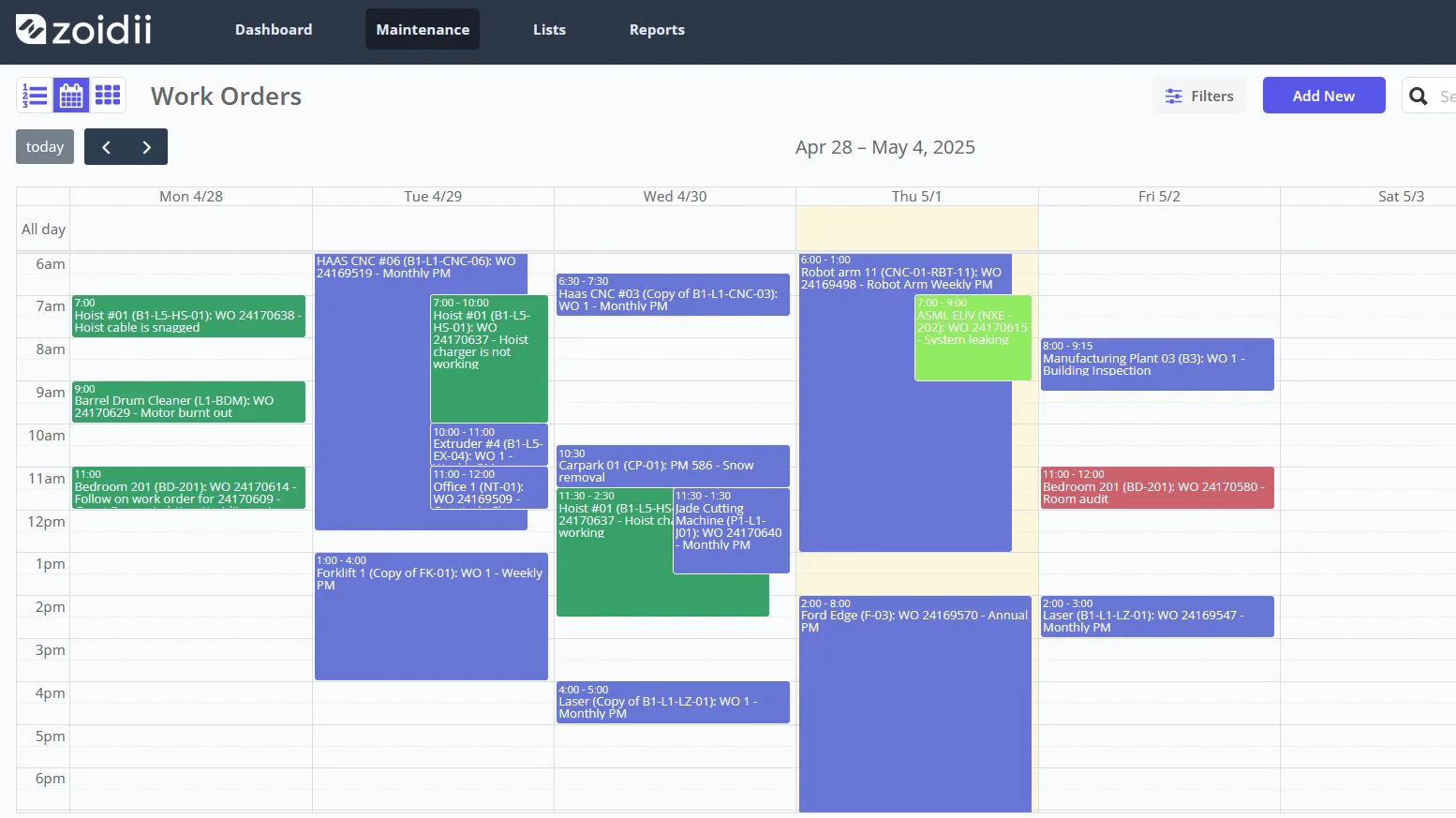
The most effective way to reduce the impact of scheduled maintenance is to plan it at the right time — when production impact will be lowest. With CMMS software, maintenance managers can view upcoming maintenance and coordinate with production schedules on when they can have the equipment for planned maintenance.
Also, rather than defaulting to a rigid time-based schedule, a CMMS allows you to build condition-based or meter-based triggers — so that maintenance is performed when an asset actually needs it, based on real usage data. This avoids over-maintaining assets that are running fine while also catching high-use equipment before it fails.
The data backs this up: CMMS implementation reduces downtime by an average of 20.1%, and facilities that shift from reactive to preventive strategies decrease overall downtime by an average of 44%.
2. Centralized Work Orders That Keep Everyone Aligned
One of the biggest sources of scheduled maintenance disruption isn't the maintenance itself — it's the miscommunication around it. When production managers don't know when a line will be down, they can't plan accordingly. When technicians don't have a clear work order with all the required information, jobs take longer than expected.
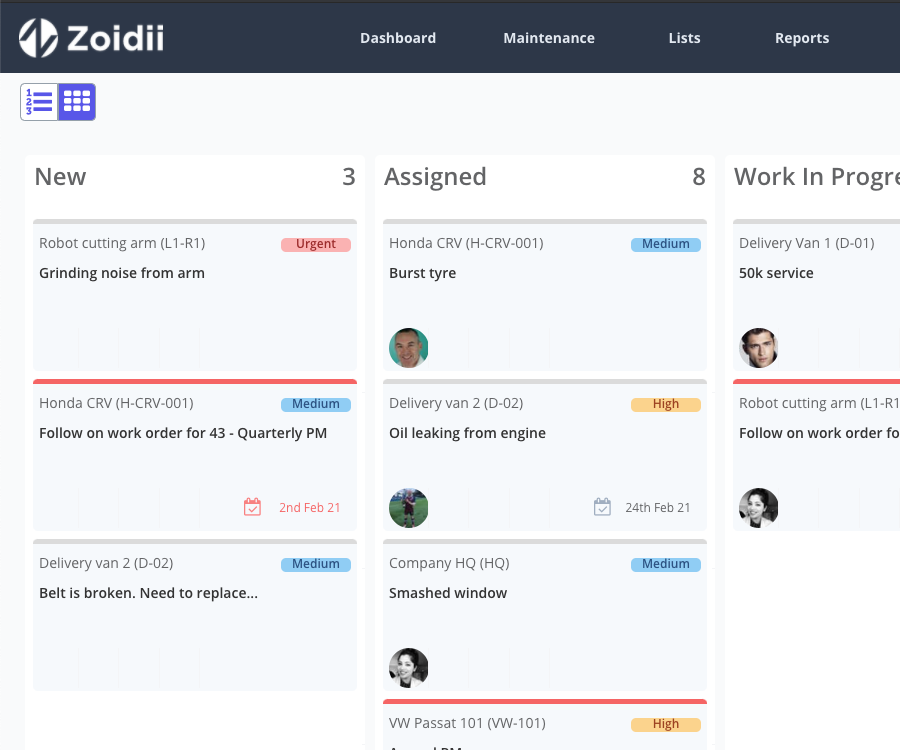
A CMMS creates a single source of truth for every maintenance activity. Work orders are created, assigned, and tracked in real time, with full visibility for all relevant stakeholders. Supervisors can see what's scheduled, what's in progress, and what's overdue — all from a web or mobile dashboard.
This coordination directly reduces the "planned downtime that runs over" problem that plagues facilities relying on paper-based or spreadsheet-driven maintenance tracking. Currently, 49% of facilities still rely on in-house spreadsheets for maintenance scheduling despite the availability of dedicated CMMS tools — a gap that consistently leads to miscommunication and missed windows.
3. Preventive Parts Management Eliminates Delays Mid-Job
Nothing extends a scheduled maintenance window like discovering mid-job that you don't have the right part in stock. This scenario — a planned two-hour maintenance task stretching to six because a critical component needs to be ordered — is one of the most common and preventable causes of excessive planned downtime.
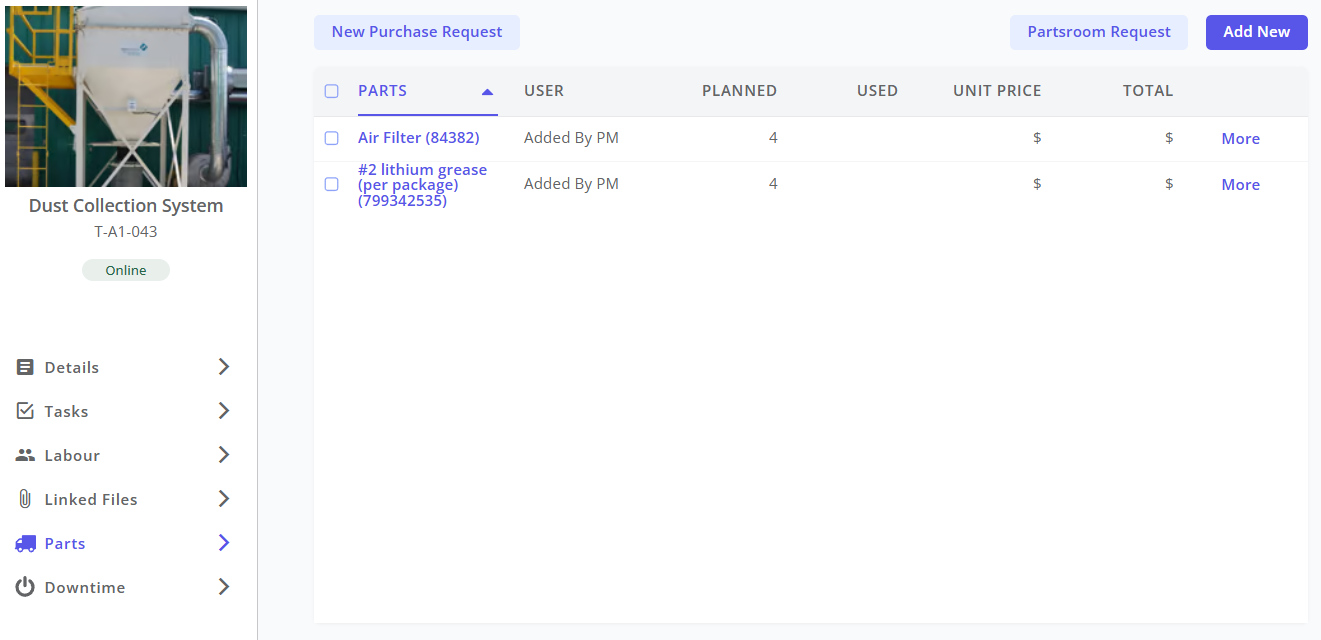
CMMS software solves this with integrated parts inventory management. Technicians can check parts availability before a job begins, and the system can automatically flag low-stock alerts for components tied to upcoming scheduled maintenance tasks. When parts are lined up in advance, jobs start and finish on time.
This is particularly important in 2026, given ongoing supply chain pressures: 55% of maintenance professionals now cite rising parts prices as the primary driver of increasing downtime costs — making proactive parts management a direct financial priority.
4. Standardized Checklists and SOPs That Speed Up Execution
Variability in how maintenance tasks are executed is a hidden driver of extended downtime. When different technicians approach the same job differently — skipping steps, improvising sequences, or relying on institutional knowledge that isn't written down — the result is inconsistent quality and unpredictable completion times.
CMMS software allows you to build standardized checklists and SOPs (Standard Operating Procedures) directly into every work order. When a technician opens a job on their mobile device, they see exactly what steps need to be completed in what order, what tools and parts are required, and what safety protocols apply.
These insights are especially critical as the manufacturing workforce ages. With approximately 69% of maintenance workers now aged 50 or older, knowledge transfer is one of the biggest operational risks in the industry. A CMMS captures that tribal knowledge in a structured, repeatable format — so it doesn't retire when your most experienced technicians do.
5. Data-Driven PM Optimization That Right-Sizes Your Maintenance Schedule
A common trap in preventive maintenance is treating every asset the same. Some equipment operates 24/7 under heavy load; other assets run intermittently and gently. Applying the same fixed maintenance schedule to both wastes resources on one and underserves the other.
CMMS software accumulates maintenance history, equipment runtime data, and failure records over time — giving managers the information they need to calibrate schedules precisely. High-criticality assets running continuously can be scheduled more frequently; lower-use equipment can be serviced less often without increasing risk.
This level of optimization has a measurable impact. Predictive and data-driven maintenance strategies reduce maintenance planning time by 20 to 50% and save between 5 and 10% in parts and materials costs, according to NIST research. As of 2026, approximately 90% of manufacturers now use some form of condition monitoring to inform their maintenance strategies — and nearly half have dedicated predictive maintenance teams.
6. Mobile Access Keeps Field Teams Responsive and On-Schedule
The best-planned maintenance window can still run over if technicians in the field can't access up-to-date information, record their progress in real time, or communicate quickly when an unexpected issue arises. Paper-based systems make this nearly impossible; phone calls and emails create delays and gaps in the record.
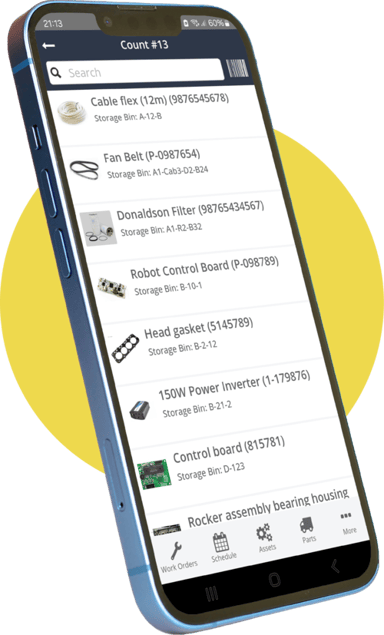
A cloud-based CMMS with mobile access changes the dynamic entirely. Technicians can receive work orders on their phones, check off steps as they complete them, capture photos AND vidoes of issues, request parts from the parts room, and mark jobs complete — all from the shop floor. Supervisors get real-time visibility into job status without having to check in physically.
The operational impact of mobile CMMS extends beyond convenience: companies using mobile maintenance apps report a 28% improvement in regulatory compliance related to downtime management, and digitizing clipboard-based workflows improves technician wrench time — the percentage of time actually spent on maintenance work — by up to 35%.
Balancing Scheduled Maintenance with Production Demands: Key Principles for 2026
Beyond the specific capabilities of a CMMS, there are broader principles that help manufacturing teams navigate the tension between maintenance and production:
Prioritize by criticality. Not all assets are created equal. Focus your maintenance planning energy on the 10–20% of machines that are responsible for 80% of your production risk. A CMMS helps you identify these assets through failure frequency and downtime cost data.
Schedule maintenance during planned production gaps. Shift changes, weekends, public holidays, and seasonal slowdowns are natural windows for scheduled maintenance. CMMS scheduling tools allow you to plan maintenance around the production calendar, not against it.
Track Mean Time to Repair (MTTR). One of the clearest signs that scheduled maintenance is running inefficiently is a rising MTTR. Industry-wide, the average time to repair has climbed from 49 minutes to 81 minutes between 2019 and 2024, driven largely by skills gaps and supply chain delays. Tracking MTTR in your CMMS helps identify which jobs, assets, or teams are the biggest contributors to extended downtime.
Involve production in maintenance planning. When maintenance is planned in isolation from production, conflicts are inevitable. A CMMS creates a shared visibility layer — giving production managers the visibility they need to plan around upcoming maintenance windows, and giving maintenance teams a clear picture of which production runs are highest priority.
The Bottom Line: Scheduled Maintenance Should Be a Strategic Advantage
When managed well, scheduled maintenance isn't a disruption — it's a competitive differentiator. Facilities that run disciplined, data-driven preventive maintenance programs experience fewer emergency breakdowns, lower repair costs, longer asset life spans, and more predictable production output. The average unplanned downtime incidents per plant per month have already dropped from 42 to 25 between 2019 and 2024 as more facilities have adopted structured maintenance programs — and that trend is accelerating.
The facilities falling behind are the ones still managing maintenance with spreadsheets, paper work orders, and reactive workflows. With 70% of companies lacking total awareness of when their equipment is due for maintenance, the opportunity to pull ahead by implementing a proper CMMS has never been clearer.
Frequently Asked Questions About Scheduled Maintenance and CMMS
Q: What is the difference between scheduled maintenance and preventive maintenance? Scheduled maintenance is the broader category — it refers to any maintenance activity that is planned rather than triggered by a failure. Preventive maintenance (PM) is a specific type of scheduled maintenance performed on a regular cadence (time-based, usage-based, or condition-based) to prevent equipment failure before it occurs. All preventive maintenance is scheduled maintenance, but not all scheduled maintenance is preventive — for example, a planned equipment upgrade or installation is scheduled but not strictly preventive. In a CMMS, both types are managed through the same work order and scheduling system.
Q: How does CMMS software reduce the impact of scheduled maintenance on production? A CMMS reduces production disruption from scheduled maintenance in several ways: it enables smarter scheduling that aligns maintenance windows with low-production periods, ensures technicians have the right parts and information before a job begins, standardizes procedures so jobs are completed faster and more consistently, and gives production managers real-time visibility into maintenance timelines. The combined effect is fewer overruns, fewer conflicts between maintenance and production schedules, and faster return-to-service after planned downtime.
Q: How often should scheduled maintenance be performed on manufacturing equipment? The right frequency depends on the asset, its criticality, its usage pattern, and the manufacturer's recommendations. A common mistake is applying a one-size-fits-all schedule — industry data suggests that roughly 30% of preventive maintenance tasks are performed too frequently, wasting labor and machine time. CMMS software helps you calibrate maintenance frequency based on actual usage data, failure history, and condition monitoring inputs, so each asset gets serviced at the right interval rather than a default one.
Q: What is Mean Time to Repair (MTTR) and why does it matter for scheduled maintenance? MTTR measures the average time it takes to complete a repair or maintenance job — from the moment work begins to the moment the asset is back in service. It's one of the most important KPIs in maintenance management because it directly determines how long your production line is down during a maintenance event. Industry-wide, MTTR has risen from an average of 49 minutes in 2019 to 81 minutes in 2024, driven by technician skills gaps and parts availability issues. Tracking MTTR in a CMMS helps you identify inefficiencies, benchmark against industry standards, and target improvements.
Q: Can a CMMS help manage maintenance scheduling for facilities with multiple production lines or sites? Yes — and this is one of the areas where a cloud-based CMMS delivers the most value. For facilities with multiple lines, a CMMS provides a unified view of all assets, all scheduled work, and all in-progress jobs across the entire operation. Maintenance managers can prioritize resources across lines, identify scheduling conflicts before they happen, and ensure that no single shift or line bears a disproportionate maintenance burden. For multi-site operations, cloud-based access means that central maintenance leadership can monitor and coordinate across all locations from a single dashboard.
Get Started with Zoidii CMMS
Zoidii is a cloud-based CMMS built for manufacturers who are ready to move beyond spreadsheets and paper-based maintenance tracking. With intuitive preventive maintenance scheduling, mobile work order management, parts inventory tracking, and asset management tools, Zoidii gives your team everything it needs to plan smarter, execute faster, and minimize the impact of maintenance on your production floor.
Start a free trial or book a demo at zoidii.com